
Inhaltsangabe
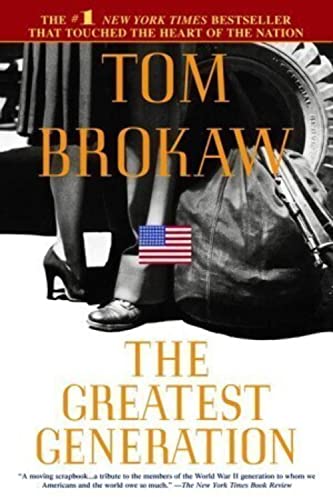
"They came of age during the Great Depression and the Second World War and went on to build modern America -- men and women whose everyday lives of duty, honor, achievement, and courage gave us the world we have today."
In this magnificent testament to a nation and her people, Tom Brokaw brings to life the extraordinary stories of a generation that gave new meaning to courage, sacrifice, honor.
From military heroes to community leaders to ordinary Americans, he profiles men and women who served their country with valor, then came home and transformed America: Senator Daniel Inouye, decorated at the front, fighting prejudice at home; Martha Putney, one of the first black women to serve in the newly formed WACs; Charles Van Gorder, a doctor who set up a MASH-like medical facility in the middle of battle, then came home to open a small clinic in his hometown; Navy pilot George Bush, assigned to read the mail of the enlisted men under him, who says that in doing so "I learned about life." And there are more, all seasoned by a time of tragedy and triumph.
To this generation who gave so much and asked so little, Brokaw offers eloquent tribute in true stories of everyday heroes in extraordinary times.
Die Inhaltsangabe kann sich auf eine andere Ausgabe dieses Titels beziehen.
Über die Autorin bzw. den Autor
Tom Brokaw, a native of South Dakota, graduated from the University of South Dakota with a degree in political science. He began his journalism career in Omaha and Atlanta before joining NBC News in 1966. Brokaw was the White House correspondent for NBC News during Watergate, and from 1976 to 1981 he anchored Today on NBC. He's been the sole anchor and managing editor of NBC Nightly News with Tom Brokaw since 1983. Brokaw has won every major award in broadcast journalism, including two DuPonts, a Peabody Award, and several Emmys. He lives in New York and Montana.
Auszug. © Genehmigter Nachdruck. Alle Rechte vorbehalten.
"This generation of Americans has a rendezvous with destiny."
-- Franklin Delano Roosevelt
The year of my birth, 1940, was the fulcrum of America in the twentieth century, when the nation was balanced precariously between the darkness of the Great Depression on one side and the storms of war in Europe and the Pacific on the other. It was a critical time in the shaping of this nation and the world, equal to the revolution of 1776 and the perils of the Civil War. Once again the American people understood the magnitude of the challenge, the importance of an unparalleled national commitment, and, most of all, the certainty that only one resolution was acceptable. The nation turned to its young to carry the heaviest burden, to fight in enemy territory and to keep the home front secure and productive. These young men and women were eager for the assignment. They understood what was required of them, and they willingly volunteered for their duty.
Many of them had been born just twenty years earlier than I, in a time of national promise, optimism, and prosperity, when all things seemed possible as the United States was swiftly taking its place as the most powerful nation in the world. World War I was over, America's industrial might was coming of age with the rise of the auto industry and the nascent communications industry, Wall Street was booming, and the popular culture was rich with the likes of Babe Ruth, Eugene O'Neill, D. W. Griffith, and a new author on the scene, F. Scott Fitzgerald. What those unsuspecting infants could not have realized, of course, was that these were temporary conditions, a false spring to a life that would be buffeted by winds of change dangerous and unpredictable, so fierce that they threatened not just America but the very future of the planet.
Nonetheless, 1920 was an auspicious year for a young person to enter the world as an American citizen. The U.S. population had topped 106 million people, and the landscape was changing rapidly from agrarian to urban, even though one in three Americans still lived on a farm. Women were gaining the right to vote with the ratification of the Nineteenth Amendment, and KDKA in Pittsburgh was broadcasting the first radio signals across the middle of America. Prohibition was beginning, but so was the roaring lifestyle that came with the flouting of Prohibition and the culture that produced it. In far-off Russia the Bolshevik revolution was a bloody affair, but its American admirers were unable to stir comparable passions here.
Five years later this American child born in 1920 still seemed to be poised for a life of ever greater prosperity, opportunity, and excitement. President Calvin "Silent Cal" Coolidge was a benign presence in the White House, content to let the bankers, industrialists, and speculators run the country as they saw fit.
As the twenties roared along, the Four Horsemen of Notre Dame were giving Saturdays new meaning with their college football heroics. Jack Dempsey and Gene Tunney were raising the spectacle of heavyweight boxing matches to new heights of frenzy. Baseball was a daytime game and a true national pastime, from the fabled Yankee Stadium to the sandlots in rural America.
The New Yorker was launched, and the place of magazines occupied a higher order. Flappers were dancing the Charleston; Fitzgerald was publishing The Great Gatsby; the Scopes trial was under way in Tennessee, with Clarence Darrow and William Jennings Bryan in a passionate and theatrical debate on evolution versus the Scriptures. A. Philip Randolph organized the Brotherhood of Sleeping Car Porters, the beginning of a long struggle to force America to face its shameful policies and practices on race.
By the time this young American who had such a promising start reached the age of ten, his earlier prospects were shattered; the fault lines were active everywhere: the stock market was struggling to recover from the crash of 1929, but the damage was too great. U.S. income was falling fast. Thirteen hundred banks closed. Businesses were failing everywhere, sending four and a half million people onto the streets with no safety net. The average American farm family had an annual cash income of four hundred dollars.
Herbert Hoover, as president, seemed to be paralyzed in the face of spreading economic calamity; he was a distant figure of stern bearing whose reputation as an engineering genius and management wizard was quickly replaced by cruel caricatures of his aloofness from the plight of the ever larger population of poor.
Congress passed the disastrous Smoot-Hawley Tariff Act, establishing barriers to world trade and exacerbating an already raging global recession. Yet Henry Luce managed to launch Fortune, a magazine specializing in business affairs. United Airlines and American Airlines, still in their infancy, managed to stay airborne. Lowell Thomas began a nightly national radio newscast on NBC and CBS. The Lone Ranger series was heard on radio.
Overseas, three men were plotting to change the world: Adolf Hitler in Germany, Joseph Stalin in Russia, and Mao Zedong in China. In American politics, the New York governor, Franklin Delano Roosevelt, was planning his campaign for the 1932 presidential election.
By 1933, when the baby born in 1920 was entering teenage years, the promise of that early childhood was shattered by crashing world economies. American farmers were able to produce only about sixteen bushels of corn per acre, and the prices were so low that it was more efficient to feed the corn to the hogs than take it to market. It was the year my mother moved with her parents and sister off their South Dakota farm and into a nearby small town, busted by the markets and the merciless drought. They took one milk cow, their pride, and their determination to just keep going somehow.
My mother, who graduated from high school at sixteen, had no hope of affording college, so she went to work in the local post office for a dollar a day. She was doing better than her father, who earned ten cents an hour working at a nearby grain elevator.
My father, an ambitious and skilled construction equipment operator, raced around the Midwest in his small Ford coupe, working hellishly long hours on road crews, hoping he could save enough in the warm weather months to get through another long winter back home in the small wood-frame hotel his sisters ran for railroad men, traveling salesmen, and local itinerants in the Great Plains village founded by his grandfather Richard Brokaw, a Civil War veteran who came to the Great Plains as a cook for railroad crews.
A mass of homeless and unemployed men drifted across the American landscape, looking for work or a handout wherever they could find it. More than thirty million Americans had no income of any kind. The American military had more horses than tanks, and its only action had been breaking up a demonstration of World War I veterans demanding their pension bonuses a year earlier.
Franklin Roosevelt took the oath of office as president of the United States, promising a New Deal for the beleaguered American people, declaring to a nation with more than fifteen million people out of work, "The only thing we have to fear is fear itself."
He pushed through an Emergency Banking Act, a Federal Emergency Relief Act, a National Industrial Recovery Act, and by 1935 set in motion the legislation that would become the Social Security system.
Not everyone was happy. Rich Americans led by the Du Ponts, the founders of General Motors, and big oil millionaires founded the Liberty League to oppose the New Deal. Privately, in the salons of the privileged, Roosevelt was branded a traitor to his class.
In Germany, a former painter with a spellbinding oratorical style took office as chancellor and...
„Über diesen Titel“ kann sich auf eine andere Ausgabe dieses Titels beziehen.
Weitere beliebte Ausgaben desselben Titels

Suchergebnisse für The Greatest Generation

Beispielbild für diese ISBN
The Greatest Generation
Anbieter: World of Books (was SecondSale), Montgomery, IL, USA
Verkäuferbewertung 5 von 5 Sternen

Zustand: Acceptable. Item in acceptable condition! Textbooks may not include supplemental items i.e. CDs, access codes etc. Artikel-Nr. 00093495614
Gebraucht kaufen
EUR 3,81
Versand gratis
Versand innerhalb von USA
Versand innerhalb von USA
Anzahl: 5 verfügbar
Beispielbild für diese ISBN
The Greatest Generation
Anbieter: World of Books (was SecondSale), Montgomery, IL, USA
Verkäuferbewertung 5 von 5 Sternen
Zustand: Good. Item in good condition. Textbooks may not include supplemental items i.e. CDs, access codes etc. Artikel-Nr. 00092918495
Gebraucht kaufen
EUR 3,81
Versand gratis
Versand innerhalb von USA
Versand innerhalb von USA
Anzahl: 20 verfügbar
Beispielbild für diese ISBN
The Greatest Generation
Anbieter: World of Books (was SecondSale), Montgomery, IL, USA
Verkäuferbewertung 5 von 5 Sternen
Zustand: Very Good. Item in very good condition! Textbooks may not include supplemental items i.e. CDs, access codes etc. Artikel-Nr. 00094063765
Gebraucht kaufen
EUR 3,81
Versand gratis
Versand innerhalb von USA
Versand innerhalb von USA
Anzahl: 1 verfügbar
Beispielbild für diese ISBN
The Greatest Generation
Anbieter: BooksRun, Philadelphia, PA, USA
Verkäuferbewertung 5 von 5 Sternen
Paperback. Zustand: Fair. 1. The item might be beaten up but readable. May contain markings or highlighting, as well as stains, bent corners, or any other major defect, but the text is not obscured in any way. Artikel-Nr. 0385334621-7-18
Gebraucht kaufen
EUR 5,80
Versand gratis
Versand innerhalb von USA
Versand innerhalb von USA
Anzahl: 1 verfügbar
Beispielbild für diese ISBN
The Greatest Generation
Anbieter: Wonder Book, Frederick, MD, USA
Verkäuferbewertung 5 von 5 Sternen
Zustand: Very Good. Very Good condition. A copy that may have a few cosmetic defects. May also contain light spine creasing or a few markings such as an owner's name, short gifter's inscription or light stamp. Artikel-Nr. U11C-06254
Gebraucht kaufen
EUR 6,33
Versand gratis
Versand innerhalb von USA
Versand innerhalb von USA
Anzahl: 6 verfügbar
Beispielbild für diese ISBN
The Greatest Generation
Anbieter: Wonder Book, Frederick, MD, USA
Verkäuferbewertung 5 von 5 Sternen
Zustand: As New. Like New condition. A near perfect copy that may have very minor cosmetic defects. Artikel-Nr. P06B-00935
Gebraucht kaufen
EUR 6,33
Versand gratis
Versand innerhalb von USA
Versand innerhalb von USA
Anzahl: 2 verfügbar
Beispielbild für diese ISBN
The Greatest Generation
Verlag:
Random House, Incorporated, 2002
ISBN 10: 0385334621
ISBN 13: 9780385334624
Gebraucht
Softcover
Erstausgabe
Anbieter: Better World Books, Mishawaka, IN, USA
Verkäuferbewertung 5 von 5 Sternen
Zustand: Good. 1st Edition. Former library copy. Pages intact with minimal writing/highlighting. The binding may be loose and creased. Dust jackets/supplements are not included. Includes library markings. Stock photo provided. Product includes identifying sticker. Better World Books: Buy Books. Do Good. Artikel-Nr. GRP18698039
Gebraucht kaufen
EUR 6,65
Versand gratis
Versand innerhalb von USA
Versand innerhalb von USA
Anzahl: 1 verfügbar
Beispielbild für diese ISBN
The Greatest Generation
Verlag:
Random House, Incorporated, 2002
ISBN 10: 0385334621
ISBN 13: 9780385334624
Gebraucht
Softcover
Erstausgabe
Anbieter: Better World Books, Mishawaka, IN, USA
Verkäuferbewertung 5 von 5 Sternen
Zustand: Very Good. 1st Edition. Pages intact with possible writing/highlighting. Binding strong with minor wear. Dust jackets/supplements may not be included. Stock photo provided. Product includes identifying sticker. Better World Books: Buy Books. Do Good. Artikel-Nr. 3234964-75
Gebraucht kaufen
EUR 6,65
Versand gratis
Versand innerhalb von USA
Versand innerhalb von USA
Anzahl: 1 verfügbar
Beispielbild für diese ISBN
The Greatest Generation
Anbieter: BooksRun, Philadelphia, PA, USA
Verkäuferbewertung 5 von 5 Sternen
Paperback. Zustand: Very Good. 1. It's a well-cared-for item that has seen limited use. The item may show minor signs of wear. All the text is legible, with all pages included. It may have slight markings and/or highlighting. Artikel-Nr. 0385334621-11-1
Gebraucht kaufen
EUR 6,94
Versand gratis
Versand innerhalb von USA
Versand innerhalb von USA
Anzahl: 1 verfügbar
Beispielbild für diese ISBN
The Greatest Generation
Anbieter: ThriftBooks-Phoenix, Phoenix, AZ, USA
Verkäuferbewertung 5 von 5 Sternen
Paperback. Zustand: As New. No Jacket. Pages are clean and are not marred by notes or folds of any kind. ~ ThriftBooks: Read More, Spend Less. Artikel-Nr. G0385334621I2N00
Gebraucht kaufen
EUR 9,04
Versand gratis
Versand innerhalb von USA
Versand innerhalb von USA
Anzahl: 1 verfügbar