
Inhaltsangabe
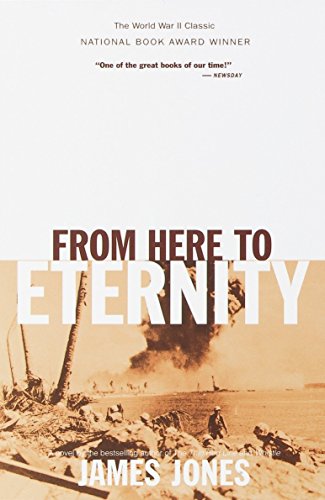
Diamond Head, Hawaii, 1941. Pvt. Robert E. Lee Prewitt is a champion welterweight and a fine bugler. But when he refuses to join the company's boxing team, he gets "the treatment" that may break him or kill him. First Sgt. Milton Anthony Warden knows how to soldier better than almost anyone, yet he's risking his career to have an affair with the commanding officer's wife. Both Warden and Prewitt are bound by a common bond: the Army is their heart and blood . . .and, possibly, their death.
In this magnificent but brutal classic of a soldier's life, James Jones portrays the courage, violence and passions of men and women who live by unspoken codes and with unutterable despair. . .in the most important American novel to come out of World War II, a masterpiece that captures as no ther the honor and savagery of men.
Die Inhaltsangabe kann sich auf eine andere Ausgabe dieses Titels beziehen.
Über die Autorin bzw. den Autor
James Jones (1921–1977), one of the major novelists of his generation, is known primarily as the author of fiction that probes the effects of World War II on the individual soldier. Born in Robinson, Illinois, Jones entered the U.S. Army and had the distinction of being the only individual who would become a major writer to witness the attack by the Japanese on Pearl Harbor. A member of the U.S. 27th Infantry Regiment, Jones was wounded at Guadalcanal and returned to Robinson, where he started to write about his experiences. After shelving his unpublished first novel, They Shall Inherit the Laughter, Jones completed the critically acclaimed international bestseller From Here to Eternity. Jones’s other novels are Some Came Running, The Pistol, The Thin Red Line, A Touch of Danger, and Whistle.
Von der hinteren Coverseite
Diamond Head, Hawaii, 1941. Pvt. Robert E. Lee Prewitt is a champion welterweight and a fine bugler. But when he refuses to join the company's boxing team, he gets "the treatment" that may break him or kill him. First Sgt. Milton Anthony Warden knows how to soldier better than almost anyone, yet he's risking his career to have an affair with the commanding officer's wife. Both Warden and Prewitt are bound by a common bond: the Army is their heart and blood . . .and, possibly, their death.
In this magnificent but brutal classic of a soldier's life, James Jones portrays the courage, violence and passions of men and women who live by unspoken codes and with unutterable despair. . .in the most important American novel to come out of World War II, a masterpiece that captures as no ther the honor and savagery of men.
"From the Paperback edition.
Aus dem Klappentext
, Hawaii, 1941. Pvt. Robert E. Lee Prewitt is a champion welterweight and a fine bugler. But when he refuses to join the company's boxing team, he gets "the treatment" that may break him or kill him. First Sgt. Milton Anthony Warden knows how to soldier better than almost anyone, yet he's risking his career to have an affair with the commanding officer's wife. Both Warden and Prewitt are bound by a common bond: the Army is their heart and blood . . .and, possibly, their death.
In this magnificent but brutal classic of a soldier's life, James Jones portrays the courage, violence and passions of men and women who live by unspoken codes and with unutterable despair. . .in the most important American novel to come out of World War II, a masterpiece that captures as no ther the honor and savagery of men.
From the Paperback edition.
Auszug. © Genehmigter Nachdruck. Alle Rechte vorbehalten.
Book One
The Transfer
Chapter 1
When he finished packing, he walked out on to the third-floor porch of the barracks brushing the dust from his hands, a very neat and deceptively slim young man in the summer khakis that were still early morning fresh.
He leaned his elbows on the porch ledge and stood looking down through the screens at the familiar scene of the barracks square laid out below with the tiers of porches dark in the faces of the three-story concrete barracks fronting on the square. He was feeling a half-sheepish affection for his vantage point that he was leaving.
Below him under the blows of the February Hawaiian sun the quadrangle gasped defenselessly, like an exhausted fighter. Through the heat haze and the thin mid-morning film of the parched red dust came up a muted orchestra of sounds: the clankings of steel-wheeled carts bouncing over brick, the slappings of oiled leather slingstraps, the shuffling beat of scorched shoesoles, the hoarse expletives of irritated noncoms.
Somewhere along the line, he thought, these things have become your heritage. You are multiplied by each sound that you hear. And you cannot deny them, without denying with them the purpose of your own existence. Yet now, he told himself, you are denying them, by renouncing the place that they have given you.
In the earthen square in the center of the quad a machine gun company went listlessly through the motions of its Loading Drill.
Behind him in the high-ceiling squadroom was the muffled curtain of sound that comes from men just waking and beginning to move around, testing cautiously the flooring of this world they had last night forsaken. He listened to it, hearing also the footsteps coming up behind him, but thinking of how good a thing it had been to sleep late every morning as a member of this Bugle Corps and wake up to the sounds of the line companies already outside at drill.
“You didnt pack my garrison shoes?” he asked the footsteps. “I meant to tell you. They scuff so easy.”
“They’re on the bed, both pair,” the voice behind him said. “With the clean uniforms from your wall locker you didnt want to get mussed up. I pack your diddy box and extra hangers and your field shoes in the extra barricks bag.”
“Then I guess thats everything,” the young man said. He stood up then, sighing, not a sigh of emotion but the sigh that is the relaxing of a tension. “Lets eat,” he said. “I got an hour yet before I have to report to G Company.”
“I still think you’re makin a bad mistake,” the man behind him said.
“Yeah I know; you told me. Every day for two weeks now. You just dont understand it, Red.”
“Maybe not,” the other said. “I aint no tempermental genius. But I understand somethin else. I’m a good bugler and I know it. But I cant touch you on a bugle. You’re the best bugler in this Regiment, bar none. Probly the best in Schofield Barricks.”
The young man thoughtfully agreed. “Thats true.”
“Well. Then why you want to quit and transfer?”
“I dont want to, Red.”
“But you are.”
“Oh no I’m not. You forget. I’m being transferred. Theres a difference.”
“Now listen,” Red said hotly.
“You listen, Red. Lets go over to Choy’s and get some breakfast. Before this crowd gets over there and eats up all his stock.” He jerked his head back at the awakening squadroom.
“You’re actin like a kid,” Red said. “You’re not bein transferred, any more than I am. If you hadnt of gone and shot your mouth off to Houston none of this would ever happened.”
“Thats right.”
“Maybe Houston did make his young punk First Bugler over you. So what? Its only a formality. You still got your rating. All the brunser gets out of it is to play the Taps for funerals and sound Retreat for the shorttimer parades.”
“Thats all.”
“It aint as if Houston had had you busted, and give the kid your rating. Then I wouldnt blame you. But you still got your rating.”
“No I aint. Not since Houston asked the Old Man to have me transferred.”
“If you’d go see the Old Man like I tell you and say one word only, you’d have it back. Chief Bugler Houston or no Chief Bugler Houston.”
“Thats right. And Houston’s punk would still be First Bugler. Besides, the papers’ve gone through already. Signed; sealed; and delivered.”
“Aw hell,” Red said disgustedly. “Signed papers you can stick up you know where, for all they mean. You’re on the inside, Prew, or at least you could be.”
“Do you want to eat with me?” the young man said, “or dont you?”
“I’m broke,” Red said.
“Did I ask you to pay? This is on me. I’m the one thats transferrin.”
“You better save your money. They can feed us in the kitchen.”
“I dont feel like eating that crap, not this morning.”
“They had fried eggs this morning,” Red corrected. “We can still get them hot. You’ll need your money where you’re goin.”
“All right, for Chrisake,” the young man admitted wearily. “Then this is just for the fucking hell of it. Because I want to spend it. Because I’m leavin and I want to spend it. Now do you want to go? or dont you?”
“I’ll go,” Red said disgustedly.
They walked down the flights of steps and out the walk in front of A Company, where the Bugle Corps was quartered, crossed the street and walked along Headquarters building to the sallyport. The sun heat hit them, bearing down, as they left the porch and left them just as sharply as they stepped inside the tunnel through Hq building that was called the sallyport now, in honor of the old days of the forts. It was painted emphatically with the Regimental colors and housed the biggest of the Regiment’s athletic trophies in their lacquered case.
“Its a bad thing,” Red said tentatively. “You’re gettin yourself a reputation as a bolshevik. You’re settin yourself up for all kinds of trouble, Prew.” Prew did not answer.
The restaurant was empty. Young Choy and his father, Old Choy, were chattering behind the counter. The white beard and black skull cap disappeared at once back into the kitchen and Young Choy, Young Sam Choy, waited on them.
“Herro, Prew,” Young Choy said. “Me hear you move ’closs stleet some time soon I think so maybe, eh?”
“Thats right,” Prew said. “Today.”
“Today!” Young Choy grinned. “You no snowem? Tlansfe’ today?”
“Thats her,” he said grudgingly. “Today.”
Young Choy, grinning, shook his head with sorrow. He looked at Red. “Clazy dogface. Do stlaight duty, ’stead of Bugle Corpse.”
“Listen,” Prew said. “How about bringin our goddam food?”
“Aw light,” Young Choy grinned. “Bling light now.”
He went behind the counter to the swinging kitchen door and Prew watched him. “Goddam gook,” he said.
“Young Choy’s all right,” Red said.
“Sure. So’s Old Choy all right.”
“He only wants to help.”
“Sure. Like everybody else.”
Red shrugged, sheepishly, and they sat silent in the dim comparative...
„Über diesen Titel“ kann sich auf eine andere Ausgabe dieses Titels beziehen.
Weitere beliebte Ausgaben desselben Titels

Suchergebnisse für From Here to Eternity: A Novel (Delta World War II...

Beispielbild für diese ISBN
From Here to Eternity (Delta W
Anbieter: World of Books (was SecondSale), Montgomery, IL, USA
Verkäuferbewertung 5 von 5 Sternen

Zustand: Very Good. Item in very good condition! Textbooks may not include supplemental items i.e. CDs, access codes etc. Artikel-Nr. 00104370597
Gebraucht kaufen
EUR 4,86
Versand gratis
Versand innerhalb von USA
Versand innerhalb von USA
Anzahl: 1 verfügbar
Beispielbild für diese ISBN
From Here to Eternity (Delta W
Anbieter: World of Books (was SecondSale), Montgomery, IL, USA
Verkäuferbewertung 5 von 5 Sternen
Zustand: Acceptable. Item in acceptable condition! Textbooks may not include supplemental items i.e. CDs, access codes etc. Artikel-Nr. 00099757939
Gebraucht kaufen
EUR 4,86
Versand gratis
Versand innerhalb von USA
Versand innerhalb von USA
Anzahl: 2 verfügbar
Beispielbild für diese ISBN
From Here to Eternity (Delta W
Anbieter: World of Books (was SecondSale), Montgomery, IL, USA
Verkäuferbewertung 5 von 5 Sternen
Zustand: Good. Item in good condition. Textbooks may not include supplemental items i.e. CDs, access codes etc. Artikel-Nr. 00103981701
Gebraucht kaufen
EUR 4,86
Versand gratis
Versand innerhalb von USA
Versand innerhalb von USA
Anzahl: 2 verfügbar
Foto des Verkäufers
From Here to Eternity
Anbieter: Dream Books Co., Denver, CO, USA
Verkäuferbewertung 5 von 5 Sternen
Zustand: good. Gently used with minimal wear on the corners and cover. A few pages may contain light highlighting or writing, but the text remains fully legible. Dust jacket may be missing, and supplemental materials like CDs or codes may not be included. May be ex-library with library markings. Ships promptly! Artikel-Nr. DBV.0385333641.G
Gebraucht kaufen
EUR 5,99
Versand gratis
Versand innerhalb von USA
Versand innerhalb von USA
Anzahl: 1 verfügbar
Beispielbild für diese ISBN
From Here to Eternity
Anbieter: ThriftBooks-Phoenix, Phoenix, AZ, USA
Verkäuferbewertung 5 von 5 Sternen
Paperback. Zustand: Fair. No Jacket. Readable copy. Pages may have considerable notes/highlighting. ~ ThriftBooks: Read More, Spend Less. Artikel-Nr. G0385333641I5N00
Gebraucht kaufen
EUR 6,45
Versand gratis
Versand innerhalb von USA
Versand innerhalb von USA
Anzahl: 1 verfügbar
Beispielbild für diese ISBN
From Here to Eternity
Anbieter: ThriftBooks-Reno, Reno, NV, USA
Verkäuferbewertung 5 von 5 Sternen
Paperback. Zustand: Fair. No Jacket. Missing dust jacket; Readable copy. Pages may have considerable notes/highlighting. ~ ThriftBooks: Read More, Spend Less. Artikel-Nr. G0385333641I5N01
Gebraucht kaufen
EUR 6,45
Versand gratis
Versand innerhalb von USA
Versand innerhalb von USA
Anzahl: 1 verfügbar
Beispielbild für diese ISBN
From Here to Eternity
Anbieter: ThriftBooks-Reno, Reno, NV, USA
Verkäuferbewertung 5 von 5 Sternen
Paperback. Zustand: Fair. No Jacket. Readable copy. Pages may have considerable notes/highlighting. ~ ThriftBooks: Read More, Spend Less. Artikel-Nr. G0385333641I5N00
Gebraucht kaufen
EUR 6,45
Versand gratis
Versand innerhalb von USA
Versand innerhalb von USA
Anzahl: 1 verfügbar
Beispielbild für diese ISBN
From Here to Eternity
Anbieter: ThriftBooks-Atlanta, AUSTELL, GA, USA
Verkäuferbewertung 5 von 5 Sternen
Paperback. Zustand: Fair. No Jacket. Readable copy. Pages may have considerable notes/highlighting. ~ ThriftBooks: Read More, Spend Less. Artikel-Nr. G0385333641I5N00
Gebraucht kaufen
EUR 6,51
Versand gratis
Versand innerhalb von USA
Versand innerhalb von USA
Anzahl: 1 verfügbar
Beispielbild für diese ISBN
From Here to Eternity
Anbieter: ThriftBooks-Dallas, Dallas, TX, USA
Verkäuferbewertung 5 von 5 Sternen
Paperback. Zustand: Good. No Jacket. Pages can have notes/highlighting. Spine may show signs of wear. ~ ThriftBooks: Read More, Spend Less. Artikel-Nr. G0385333641I3N00
Gebraucht kaufen
EUR 6,51
Versand gratis
Versand innerhalb von USA
Versand innerhalb von USA
Anzahl: 1 verfügbar
Beispielbild für diese ISBN
From Here to Eternity
Anbieter: ThriftBooks-Dallas, Dallas, TX, USA
Verkäuferbewertung 5 von 5 Sternen
Paperback. Zustand: Fair. No Jacket. Former library book; Readable copy. Pages may have considerable notes/highlighting. ~ ThriftBooks: Read More, Spend Less. Artikel-Nr. G0385333641I5N10
Gebraucht kaufen
EUR 6,51
Versand gratis
Versand innerhalb von USA
Versand innerhalb von USA
Anzahl: 1 verfügbar