
Inhaltsangabe
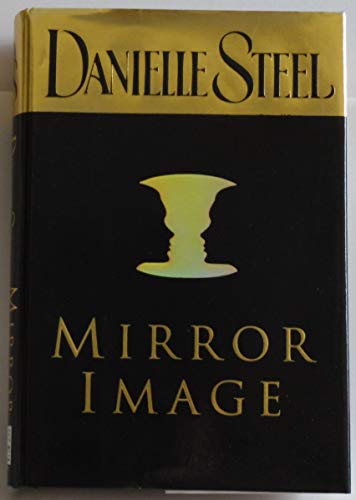
In her forty-fourth novel, the queen of the romance genre introduces Olivia and Victoria Henderson, two identical twins born at the turn of the century, who make an irrevocable decision that uproots them from their life of wealth and privilege.
Die Inhaltsangabe kann sich auf eine andere Ausgabe dieses Titels beziehen.
Über die Autorin bzw. den Autor
Danielle Steel has been hailed as one of the world’s most popular authors, with over 570 million copies of her novels sold. Her many international bestsellers include Amazing Grace, Bungalow 2, Sisters, H.R.H., Coming Out, The House, and other highly acclaimed novels. She is also the author of His Bright Light, the story of her son Nick Traina’s life and death.
From the Paperback edition.
Aus dem Klappentext
ne was to see the other. For family, even the girls' own father, it was a constant guessing game. For strangers, the surprise was overwhelming. And for the twins Olivia and Victoria Henderson, two remarkable young women coming of age at the turn of the century, their bond was mysterious, marvelous, and often playful--a secret realm only they inhabited.
Olivia and Victoria were the beloved daughters of a man who never fully recovered from his wife's death bearing them in 1893. Shy, serious Olivia, born eleven minutes before her sister, had taken over the role of mother in their lush New York estate, managing not only a household but her rebellious twin's flights of fancy. Free-spirited Victoria wanted to change the world. She embraced the women's suffrage movement and dreamed of sailing to war-torn Europe. Then, in the girls' twenty-first year, as the first world war escalated overseas, a fateful choice changed their lives forever.
It began when Victoria's life was about to be
Auszug. © Genehmigter Nachdruck. Alle Rechte vorbehalten.
The sound of the birds outside was muffled by the heavy brocade curtains of Henderson Manor, as Olivia Henderson pushed aside a lock of long dark hair, and continued her careful inventory of her father's china. It was a warm summer day and, as usual, her sister had gone off somewhere. Her father, Edward Henderson, was expecting a visit from his lawyers. Nestled as they were in Croton-on-Hudson, nearly a three-hour drive from New York, his attorneys came to see him fairly often. Edward Henderson ran all his investments from here, as well as overseeing the steel mills which still bore his name, but which he no longer ran himself. He had retired from business entirely, two years before, in 1911, maintaining all his holdings, but trusting entirely in his attorneys and the men who ran the mills for him. With no sons, he no longer had the interest in business that he once did. His daughters would never run his steel mills. He was only sixty-five, but his health had begun to fail over the past few years, and he preferred viewing the world from his peaceful perch in Croton-on-Hudson. Here, he could observe the world quietly, and it was a healthy, wholesome life for his two daughters. It was not exciting, admittedly, but they were never bored, and they had friends among all the grand families up and down the Hudson.
The Van Cortlandt manor was nearby, as were the Shepards on the old Lyndhurst estate. Helen Shepard's father had been Jay Gould, and he had died twenty years before, and left the extraordinary property to his daughter. She and her husband, Finley Shepard, ran it beautifully, and gave frequent parties for the young people nearby. The Rockefellers had finished building Kykuit in Tarrytown that year, with its splendid gardens and magnificent grounds, and a house which rivaled Edward Henderson's just north of them at Croton-on-Hudson.
Henderson Manor was a handsome home, and one which people came from miles to see, peering through the gates into the lovely gardens. They could barely see the house from where they stood, shielded as it was by tall trees, and little turns in the road which led to the formal driveway. The house itself sat high on a cliff, looking over the Hudson River. And Edward liked to sit in his study for hours, watching the world drift by, remembering times past, old friends, and the days when his life had moved a great deal more quickly . . . taking over his father's mills in the 1870's . . . being instrumental in the many industrial changes at the end of the last century. His life had been so busy then. When he was younger, his life had been so different. Edward Henderson had married when he was young, and lost a wife and a young son to diphtheria. After that he had been alone for many years, until Elizabeth came along. She had been everything any man could ever dream of, a bright shining streak of light, a comet in a summer sky, so ephemeral, so dazzling, so beautiful, and so much too quickly gone. They were married within the year they met. She was nineteen, and he was in his early forties. By twenty-one, she was gone. Much to Edward's horror, she had died in childbed. After her death, he had worked even harder than usual, driving himself until he was numb. He had left his daughters to the care of his housekeeper and their nurses, but finally, he realized that he had a responsibility to them. It was then that he began building Henderson Manor. He wanted them to have healthy, wholesome lives, out of the city. New York was no place for children in 1903. They had been ten when he'd actually moved them, and now they were twenty. He kept the house in the city and worked there, but he came up to see them as often as he could. At first only on weekends and then, as he fell in love with it, he began spending more time on the Hudson, rather than in New York, or Pittsburgh, or Europe. His heart was there in Croton with his daughters, as he watched them grow, and little by little his own life began moving more slowly. He loved being with them, and now he never left them anymore. For the past two years, he had gone absolutely nowhere. His health had begun to fail three or four years before. His heart was a problem, but only when he worked too hard, or let things upset him, or got terribly angry, which he seldom did now. He was happy in Croton with his daughters.
It had been twenty years since their mother had died in the spring of 1893, on a warm balmy day that had appeared to him to be God's ultimate betrayal. He had been waiting outside, filled with such pride, and so much excitement. He had never dreamed it could happen to him again. His first wife and infant son had died in an epidemic of diphtheria more than a dozen years before. But this time, losing Elizabeth had almost killed him. At forty-five, it was a near mortal blow to him, and he almost couldn't bear going on without her. She had died in their home in New York, and at first he felt her presence there. But after a while, he came to hate the emptiness of it, and he had hated being there. He had traveled off and on for months after that, but avoiding the house meant avoiding the two little girls Elizabeth had left him. And he couldn't bring himself to sell the house his father had built, and that he had grown up in. A traditionalist to the core, he felt an obligation to maintain it for his children. He had closed it eventually, and it had been two years since he'd been there. Now that he lived in Croton full-time, he never missed it. Neither the house, nor New York, nor the social life he'd left there.
And as the summer sounds droned on, Olivia continued her painstaking inventory of the china. She had long sheets of paper on which she wrote in her meticulous hand, making note of what they needed to replace, and what had to be ordered. Sometimes she sent one of the servants to the house in town to bring something up to them, but for the most part, the city house was closed, and they never went there. She knew her father didn't like it. Her father's health was frail, and, like him, she was happy here in their quiet life in Croton-on-Hudson. She had actually spent very little time in New York since she was a child, except for the brief time two years before, when her father had taken them to New York, to present them to society and all his friends. She had found it interesting, but truly exhausting. She was overwhelmed by the parties, the theater, the constant social demands made on them. She had felt as though she were onstage the entire time, and she hated the attention. It was Victoria who had thrived on it, and who had been in a state of total gloom when they returned to Croton at Christmas. Olivia had been relieved to return to her books, their home, her horses, her peaceful walks high on the cliff which led her sometimes to neighboring farms. She loved riding here, and listening to the sounds of spring, watching winter melt slowly away from them, seeing the splendor of the...
„Über diesen Titel“ kann sich auf eine andere Ausgabe dieses Titels beziehen.
Weitere beliebte Ausgaben desselben Titels

Suchergebnisse für Mirror Image

Beispielbild für diese ISBN
Mirror Image
Anbieter: World of Books (was SecondSale), Montgomery, IL, USA
Verkäuferbewertung 5 von 5 Sternen

Zustand: Acceptable. Item in very good condition! Textbooks may not include supplemental items i.e. CDs, access codes etc. Artikel-Nr. 00076903447
Gebraucht kaufen
EUR 3,91
Versand gratis
Versand innerhalb von USA
Versand innerhalb von USA
Anzahl: 1 verfügbar
Beispielbild für diese ISBN
Mirror Image
Anbieter: World of Books (was SecondSale), Montgomery, IL, USA
Verkäuferbewertung 5 von 5 Sternen
Zustand: Very Good. Item in very good condition! Textbooks may not include supplemental items i.e. CDs, access codes etc. Artikel-Nr. 00082606759
Gebraucht kaufen
EUR 3,92
Versand gratis
Versand innerhalb von USA
Versand innerhalb von USA
Anzahl: Mehr als 20 verfügbar
Beispielbild für diese ISBN
Mirror Image
Anbieter: World of Books (was SecondSale), Montgomery, IL, USA
Verkäuferbewertung 5 von 5 Sternen
Zustand: Good. Item in good condition. Textbooks may not include supplemental items i.e. CDs, access codes etc. Artikel-Nr. 00080857417
Gebraucht kaufen
EUR 3,92
Versand gratis
Versand innerhalb von USA
Versand innerhalb von USA
Anzahl: Mehr als 20 verfügbar
Beispielbild für diese ISBN
Mirror Image
Anbieter: World of Books (was SecondSale), Montgomery, IL, USA
Verkäuferbewertung 5 von 5 Sternen
Zustand: Acceptable. Item in acceptable condition! Textbooks may not include supplemental items i.e. CDs, access codes etc. Artikel-Nr. 00084440821
Gebraucht kaufen
EUR 3,92
Versand gratis
Versand innerhalb von USA
Versand innerhalb von USA
Anzahl: 16 verfügbar
Beispielbild für diese ISBN
Mirror Image
Anbieter: ThriftBooks-Reno, Reno, NV, USA
Verkäuferbewertung 5 von 5 Sternen
Hardcover. Zustand: As New. No Jacket. Pages are clean and are not marred by notes or folds of any kind. ~ ThriftBooks: Read More, Spend Less. Artikel-Nr. G0385315090I2N00
Gebraucht kaufen
EUR 5,77
Versand gratis
Versand innerhalb von USA
Versand innerhalb von USA
Anzahl: 1 verfügbar
Beispielbild für diese ISBN
Mirror Image
Anbieter: ThriftBooks-Dallas, Dallas, TX, USA
Verkäuferbewertung 5 von 5 Sternen
Hardcover. Zustand: As New. No Jacket. Pages are clean and are not marred by notes or folds of any kind. ~ ThriftBooks: Read More, Spend Less. Artikel-Nr. G0385315090I2N00
Gebraucht kaufen
EUR 5,77
Versand gratis
Versand innerhalb von USA
Versand innerhalb von USA
Anzahl: 1 verfügbar
Beispielbild für diese ISBN
Mirror Image
Anbieter: ThriftBooks-Atlanta, AUSTELL, GA, USA
Verkäuferbewertung 5 von 5 Sternen
Hardcover. Zustand: As New. No Jacket. Pages are clean and are not marred by notes or folds of any kind. ~ ThriftBooks: Read More, Spend Less. Artikel-Nr. G0385315090I2N00
Gebraucht kaufen
EUR 5,77
Versand gratis
Versand innerhalb von USA
Versand innerhalb von USA
Anzahl: 2 verfügbar
Beispielbild für diese ISBN
Mirror Image
Anbieter: ThriftBooks-Phoenix, Phoenix, AZ, USA
Verkäuferbewertung 5 von 5 Sternen
Hardcover. Zustand: As New. No Jacket. Pages are clean and are not marred by notes or folds of any kind. ~ ThriftBooks: Read More, Spend Less. Artikel-Nr. G0385315090I2N00
Gebraucht kaufen
EUR 5,77
Versand gratis
Versand innerhalb von USA
Versand innerhalb von USA
Anzahl: 1 verfügbar
Beispielbild für diese ISBN
Mirror Image
Verlag:
Random House Publishing Group, 1998
ISBN 10: 0385315090
ISBN 13: 9780385315098
Gebraucht
Hardcover
Anbieter: Better World Books, Mishawaka, IN, USA
Verkäuferbewertung 5 von 5 Sternen
Zustand: Good. Pages intact with minimal writing/highlighting. The binding may be loose and creased. Dust jackets/supplements are not included. Stock photo provided. Product includes identifying sticker. Better World Books: Buy Books. Do Good. Artikel-Nr. 38357205-6
Gebraucht kaufen
EUR 6,04
Versand gratis
Versand innerhalb von USA
Versand innerhalb von USA
Anzahl: 3 verfügbar
Beispielbild für diese ISBN
Mirror Image
Anbieter: Wonder Book, Frederick, MD, USA
Verkäuferbewertung 5 von 5 Sternen
Zustand: Very Good. Very Good condition. Very Good dust jacket. A copy that may have a few cosmetic defects. May also contain light spine creasing or a few markings such as an owner's name, short gifter's inscription or light stamp. Artikel-Nr. M03F-01647
Gebraucht kaufen
EUR 6,76
Versand gratis
Versand innerhalb von USA
Versand innerhalb von USA
Anzahl: 3 verfügbar