
Verwandte Artikel zu The Storyteller: Memory, Secrets, Magic and Lies
Inhaltsangabe
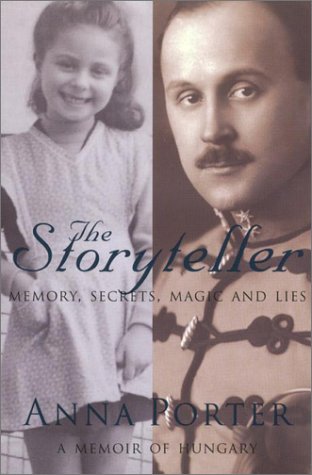
On long walks through the once-grand European capital of Budapest, set on the banks of the Danube, in confidences whispered in splendid fin-de-siècle coffee houses, Vili Racz shared his wisdom and his stories with his granddaughter Anna. Some of his stories were as old as the Carpathian basin and some still held the sting of recent war and hardship. Some were fanciful works of imagination. His tales encompassed the arrival of the Huns and later the Magyars in Europe. He told her of the Turkish wars, of the rise and fall of the House of Hapsburg, and of two devastating world wars. He continued telling her stories through the advent of the Communist era, the 1956 Revolution in Hungary, and the great migration that followed.
One day, Anna would have her own stories to tell. She was born during World War II, as bombs rained down on Budapest and a group of Jews hid in the basement of the family house. As Anna grows up in the beautiful but beleaguered city, her grandfather's stories of heroes and strife and survival give her a personal sense of history and of knowing what's right in a country the world seems to have forgotten.
The Storyteller is also a vivid and textured saga of the whole Rácz family. There is prejudice and pride, grief and frivolity, violence and glitter, loves, loyalties and betrayals in the tumultuous years from the Second World War to the 1956 revolution and the family's exile to New Zealand. During this time, young Anna briefly goes to prison with her mother, sees her beloved grandfather sentenced to hard labour by the Communists, and witnesses unspeakable human loss in the streets of Budapest at the height of the revolution in 1956. But always at the heart of this engrossing memoir are the amazing stories of her amazing grandfather.
Die Inhaltsangabe kann sich auf eine andere Ausgabe dieses Titels beziehen.
Über die Autorin bzw. den Autor
Anna Porter was born in Hungary. Her family settled in New Zealand after the 1956 Revolution. She began her publishing career in England, then moved to Canada in 1969. Anna Porter is publisher of Key Porter Books, and is one of Canada's most respected publishing professionals. She has lectured and given speeches about culture and publishing throughout Canada. She is the author of three crime novels, <i>Hidden Agenda, Mortal Sins</i> and <i>The Bookfair Murders</i>. An officer of the Order of Canada, Anna Porter lives in Toronto with her husband and two daughters.
Aus dem Klappentext
s through the once-grand European capital of Budapest, set on the banks of the Danube, in confidences whispered in splendid fin-de-siècle coffee houses, Vili Racz shared his wisdom and his stories with his granddaughter Anna. Some of his stories were as old as the Carpathian basin and some still held the sting of recent war and hardship. Some were fanciful works of imagination. His tales encompassed the arrival of the Huns and later the Magyars in Europe. He told her of the Turkish wars, of the rise and fall of the House of Hapsburg, and of two devastating world wars. He continued telling her stories through the advent of the Communist era, the 1956 Revolution in Hungary, and the great migration that followed. <br><br>One day, Anna would have her own stories to tell. She was born during World War II, as bombs rained down on Budapest and a group of Jews hid in the basement of the family house. As Anna grows up in the beautiful but beleaguered city, her grandfather's stories of heroes and str
Auszug. © Genehmigter Nachdruck. Alle Rechte vorbehalten.
My childhood was filled with my grandfather's stories. Some I remember so clearly that I still hear his voice in their telling and still see the pictures I saw when I first heard them. My whole family told stories — many true, a few imagined, others invented so long ago they had become true — but none were as full of life as my grandfather's.
There were wise witches and wily giants, magic horses and soothsayers who commanded ancient spells; there were princes and heroes who did battle against the powers of evil; there were grand viziers, and turbaned armies of merciless Turks; and there were our Hungarian ancestors, who never tired of wielding their broadswords in defense of our ancient lands. He told stories about glittering dances in bygone courts, and poets whose words could move more people than military commands ever had. There were stories about his three beautiful daughters and their gallant admirers, about his mother who told him her tales until late into the Bacska nights, about his grandfather who held court in Transylvania and was murdered at his own dinner table, and about his grandmother, the dark-eyed Petronella who escaped with her young son, then drove her wagon for three days and four nights to arrive at dawn in the tiny village of Kula in the southern Hungarian region of Bacska where my grandfather was born some fifty years later.
He was my childhood hero.
His name was Vili. Actually, his name was Vilmos but everyone called him Vili. He was a big raw-boned man, and even when I came along, and he was well into his fifties, he was extraordinarily strong. He used to demonstrate his strength by doing crazy things like lifting chairs with people sitting on them. To prove that both his arms were equally strong, he sometimes lifted two chairs and two people at once.
He would crouch down between the two chairs, grab one leg in each hand, take a deep breath, puffing up his chest and his cheeks, then lift. His back straight, his eyes focused on some midpoint over our heads, he would slowly stand up. The veins on the sides of his neck and down the centre of his forehead stood out like ropes. All the while the people on the chairs — usually his daughters or their rather temporary boyfriends or husbands — were stiff as statues. Everyone else applauded and Vili's bald head took an almost imperceptible bow. After that he'd quickly deposit his charges, rub his big palms together, and wink at his most appreciative audience — me.
He could stop ice carts by stepping in front of the horses, grabbing the pole between them and pushing back on it till their hoofs clawed the air; then he'd let them down gently, because he did not want to hurt the horses or let the ice blocks slide off and break. Back in the early fifties, ice still came by horse and cart to Budapest in the summer. On hot days my friends and I would run behind the carts, picking up bits of fallen ice and rubbing them over our faces or trying to stuff ice shards down each other's shirt fronts. We wrestled and shoved to get the best spots nearest the back wheels so we could soak in a freezing-cold shower when the cart stopped for its deliveries. The best showers were when my grand-father lifted the front of the cart.
When my grandfather was nineteen he represented Hungary in four events at the European Games. One of them was the shot-put, another the epee. I could never figure how he could shine at both events, since one required a heavy step while carrying something that weighed over sixteen pounds and for the other you had to be light on your feet. For a decade he held the European record in the one-hundred-yard dash. At the 1908 London Olympics, he finished fourth behind three Americans in that event, but he also took part in the pentathlon.
He became, quite accidentally, Hungarian heavyweight wrestling champion for a year. He had been sauntering past the elevated rink in the University Club gym when the tryouts ended. The guys were shouting, "Why don't you get up there, Vili, don't you have the courage to face the champ?" Vili was not from Budapest. He was a landowner's son from the South, a brawny boy. He needed to show he was better than anyone else. That was the only reason he won. The champion didn't have anything to prove.
He played soccer on the Budapest university team and impressed his colleagues with his ability to make the opposing team members laugh. He did magic tricks with the ball and with his kerchief and socks. Sometimes he made white pigeons appear from his pockets and let them fly away while his team scored a goal. He was an amateur magician. At my fourth birthday party, he conjured up a white rabbit, a turtle and two miniature pinschers who promptly started yelping and chasing the rabbit around the apartment, much to the delight of my friends and the distress of my grandmother, who told him he would have to return all the animals to wherever he'd found them. She told him we were no longer in our own house and could not afford to feed a menagerie.
Sometimes when we travelled on the Rakoczi Street streetcar, he'd make forints disappear. Or if there were children in the seats across from ours, he'd take the coins out of his pockets — those of a very respectable, well-dressed, elderly gentleman —examine them, pretend to taste them, then eat them. On our way to the exit, he'd make them reappear from the children's ears, and look most disapproving, surprised that they had somehow taken his repast of coins and hidden them so well. I remember the children's faces, at first embarrassed, then fascinated, then amazed, finally released into laughter when my grandfather stepped off the streetcar, adjusted his pocket handkerchief, and headed off toward one of his favourite coffee houses.
Of all his talents, I think he was proudest of his prowess with the sword. He had been, arguably, the best sword dueller in Budapest. His duels were mostly fought in the early hours, at five or six in the morning, somewhere in a park — Varosliget (City Park), for example, where you could barely see your opponent in the dawn fog. Yet a crowd gathered when Vili Racz fought. "Vili was a reprobate," his brother Bela told me, pursing his lips as he gazed off into his palinka-induced stillness. "A skirt-chaser. He should never have fought, knowing he was an Olympic champion, and the others backyard swordsmen. They didn't have a chance."
Young Vili barely attended his classes, spent his time perfecting his sporting skills both in the field and, Bela told me, in the bedroom. Once he moved to Budapest, he became one of the city's star bachelors. His apartment, on the Buda side overlooking the river, was a party centre for all his young friends. He had his own icebox, replenished each day with both ice and champagne. At least once a week he sent a dozen red roses to a woman. Most weeks there was a new woman. Each bouquet indicated another conquest.
Fortunately, the duels usually ended after first blood had been drawn. No one in my home liked to talk about my grandfather's duels. "It's because they were all about women," Bela told me. My first memory of Bela is of him smoking foul-smelling cigars in a tiny apartment full of dark furniture that was not to be sat upon or touched. It was hung with dusty velvet curtains, slimy to my fingers, and musty with age and perspiration, as were his ancient-looking clothes. Bela had small refined hands, a high forehead and a very red face. He was shorter than my grandfather and drank palinka — Hungarian plum brandy — because nothing else was available. He preferred Calvados. His breath was rancid with garlic, nicotine and alcohol. He said he had once been a very important person in Parliament.
When I relayed this information to my grandfather, he said, "Of...
„Über diesen Titel“ kann sich auf eine andere Ausgabe dieses Titels beziehen.
Suchergebnisse für The Storyteller: Memory, Secrets, Magic and Lies

Beispielbild für diese ISBN
The Storyteller: Memory, Secrets, Magic and Lies
Anbieter: World of Books (was SecondSale), Montgomery, IL, USA
Verkäuferbewertung 5 von 5 Sternen

Zustand: Very Good. Item in very good condition! Textbooks may not include supplemental items i.e. CDs, access codes etc. Artikel-Nr. 00094931970
Gebraucht kaufen
EUR 4,68
Versand gratis
Versand innerhalb von USA
Versand innerhalb von USA
Anzahl: 1 verfügbar
Beispielbild für diese ISBN
The Storyteller: Memory, Secrets, Magic and Lies
Verlag:
Doubleday Canada (edition First Edition), 2000
ISBN 10: 0385259565
ISBN 13: 9780385259569
Gebraucht
Hardcover
Erstausgabe
Anbieter: BooksRun, Philadelphia, PA, USA
Verkäuferbewertung 5 von 5 Sternen
Hardcover. Zustand: Very Good. First Edition. With dust jacket. It's a well-cared-for item that has seen limited use. The item may show minor signs of wear. All the text is legible, with all pages included. It may have slight markings and/or highlighting. Artikel-Nr. 0385259565-8-1-29
Gebraucht kaufen
EUR 4,69
Versand gratis
Versand innerhalb von USA
Versand innerhalb von USA
Anzahl: 1 verfügbar
Beispielbild für diese ISBN
Storyteller : Memory, Secrets, Magic and Lies - A Memoir of Hungary
Verlag:
Doubleday Canada, 2000
ISBN 10: 0385259565
ISBN 13: 9780385259569
Gebraucht
Hardcover
Erstausgabe
Anbieter: Better World Books, Mishawaka, IN, USA
Verkäuferbewertung 5 von 5 Sternen
Zustand: Very Good. 1ST. Former library copy. Pages intact with possible writing/highlighting. Binding strong with minor wear. Dust jackets/supplements may not be included. Includes library markings. Stock photo provided. Product includes identifying sticker. Better World Books: Buy Books. Do Good. Artikel-Nr. 3233801-6
Gebraucht kaufen
EUR 6,20
Versand gratis
Versand innerhalb von USA
Versand innerhalb von USA
Anzahl: 1 verfügbar
Beispielbild für diese ISBN
Storyteller : Memory, Secrets, Magic and Lies - A Memoir of Hungary
Verlag:
Doubleday Canada, 2000
ISBN 10: 0385259565
ISBN 13: 9780385259569
Gebraucht
Hardcover
Erstausgabe
Anbieter: Better World Books, Mishawaka, IN, USA
Verkäuferbewertung 5 von 5 Sternen
Zustand: Very Good. 1ST. Pages intact with possible writing/highlighting. Binding strong with minor wear. Dust jackets/supplements may not be included. Stock photo provided. Product includes identifying sticker. Better World Books: Buy Books. Do Good. Artikel-Nr. 3233800-6
Gebraucht kaufen
EUR 6,20
Versand gratis
Versand innerhalb von USA
Versand innerhalb von USA
Anzahl: 1 verfügbar
Beispielbild für diese ISBN
The Storyteller: Memory, Secrets, Magic and Lies
Anbieter: ThriftBooks-Reno, Reno, NV, USA
Verkäuferbewertung 5 von 5 Sternen
Hardcover. Zustand: Very Good. No Jacket. May have limited writing in cover pages. Pages are unmarked. ~ ThriftBooks: Read More, Spend Less. Artikel-Nr. G0385259565I4N00
Gebraucht kaufen
EUR 6,45
Versand gratis
Versand innerhalb von USA
Versand innerhalb von USA
Anzahl: 1 verfügbar
Beispielbild für diese ISBN
The Storyteller: Memory, Secrets, Magic and Lies
Anbieter: ThriftBooks-Atlanta, AUSTELL, GA, USA
Verkäuferbewertung 5 von 5 Sternen
Hardcover. Zustand: Very Good. No Jacket. May have limited writing in cover pages. Pages are unmarked. ~ ThriftBooks: Read More, Spend Less. Artikel-Nr. G0385259565I4N00
Gebraucht kaufen
EUR 6,49
Versand gratis
Versand innerhalb von USA
Versand innerhalb von USA
Anzahl: 1 verfügbar
Beispielbild für diese ISBN
The Storyteller: Memory, Secrets, Magic and Lies
Anbieter: ThriftBooks-Dallas, Dallas, TX, USA
Verkäuferbewertung 5 von 5 Sternen
Hardcover. Zustand: Very Good. No Jacket. May have limited writing in cover pages. Pages are unmarked. ~ ThriftBooks: Read More, Spend Less. Artikel-Nr. G0385259565I4N00
Gebraucht kaufen
EUR 6,49
Versand gratis
Versand innerhalb von USA
Versand innerhalb von USA
Anzahl: 1 verfügbar
Beispielbild für diese ISBN
The Storyteller: Memory, Secrets, Magic and Lies
Anbieter: ThriftBooks-Dallas, Dallas, TX, USA
Verkäuferbewertung 5 von 5 Sternen
Hardcover. Zustand: Very Good. No Jacket. Missing dust jacket; May have limited writing in cover pages. Pages are unmarked. ~ ThriftBooks: Read More, Spend Less. Artikel-Nr. G0385259565I4N01
Gebraucht kaufen
EUR 6,49
Versand gratis
Versand innerhalb von USA
Versand innerhalb von USA
Anzahl: 1 verfügbar
Beispielbild für diese ISBN
Storyteller : Memory, Secrets, Magic and Lies - A Memoir of Hungary
Verlag:
Doubleday Canada, 2000
ISBN 10: 0385259565
ISBN 13: 9780385259569
Gebraucht
Hardcover
Erstausgabe
Anbieter: Better World Books Ltd, Dunfermline, Vereinigtes Königreich
Verkäuferbewertung 5 von 5 Sternen
Zustand: Very Good. 1ST. Former library copy. Pages intact with possible writing/highlighting. Binding strong with minor wear. Dust jackets/supplements may not be included. Includes library markings. Stock photo provided. Product includes identifying sticker. Better World Books: Buy Books. Do Good. Artikel-Nr. 3233801-6
Gebraucht kaufen
EUR 7,40
EUR 5,83 Versand
Versand von Vereinigtes Königreich nach USA
Versand von Vereinigtes Königreich nach USA
Anzahl: 1 verfügbar
Beispielbild für diese ISBN
Storyteller: Memory, Secrets, Magic and Lies
Verlag:
Doubleday Canada October 2000, 2000
ISBN 10: 0385259565
ISBN 13: 9780385259569
Gebraucht
Hardcover
Anbieter: Old Goat Books, Waterloo, ON, Kanada
Verkäuferbewertung 3 von 5 Sternen

Hardcover. Zustand: As New. Condition: 'As New'. Artikel-Nr. 9794556
Gebraucht kaufen
EUR 15,71
EUR 15,68 Versand
Versand von Kanada nach USA
Versand von Kanada nach USA
Anzahl: 1 verfügbar