
Verwandte Artikel zu Last Chance in Texas: The Redemption of Criminal Youth
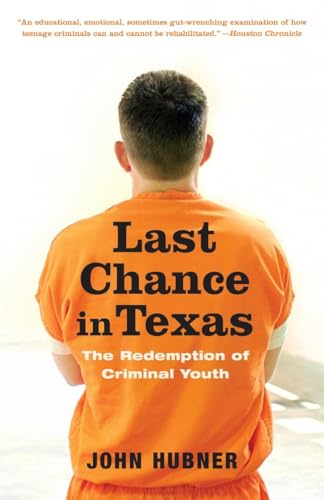
Inhaltsangabe
A powerful, bracing and deeply spiritual look at intensely, troubled youth, Last Chance in Texas gives a stirring account of the way one remarkable prison rehabilitates its inmates.
While reporting on the juvenile court system, journalist John Hubner kept hearing about a facility in Texas that ran the most aggressive–and one of the most successful–treatment programs for violent young offenders in America. How was it possible, he wondered, that a state like Texas, famed for its hardcore attitude toward crime and punishment, could be leading the way in the rehabilitation of violent and troubled youth?
Now Hubner shares the surprising answers he found over months of unprecedented access to the Giddings State School, home to “the worst of the worst”: four hundred teenage lawbreakers convicted of crimes ranging from aggravated assault to murder. Hubner follows two of these youths–a boy and a girl–through harrowing group therapy sessions in which they, along with their fellow inmates, recount their crimes and the abuse they suffered as children. The key moment comes when the young offenders reenact these soul-shattering moments with other group members in cathartic outpourings of suffering and anger that lead, incredibly, to genuine remorse and the beginnings of true empathy . . . the first steps on the long road to redemption.
Cutting through the political platitudes surrounding the controversial issue of juvenile justice, Hubner lays bare the complex ties between abuse and violence. By turns wrenching and uplifting, Last Chance in Texas tells a profoundly moving story about the children who grow up to inflict on others the violence that they themselves have suffered. It is a story of horror and heartbreak, yet ultimately full of hope.
Die Inhaltsangabe kann sich auf eine andere Ausgabe dieses Titels beziehen.
Über die Autorin bzw. den Autor
John Hubner is a former staff writer at the Boston Phoenix. He was also a magazine writer and investigative reporter for many years at the San Jose Mercury News, where he is now the regional editor. He lives with his wife and two children in Santa Cruz.
Auszug. © Genehmigter Nachdruck. Alle Rechte vorbehalten.
1. “LOOKING LIKE PSYCHOPATHS” “Tell us what you know about Capital Offenders,” Kelley asks the group. Up until this moment, the boys’ reactions have been as uniform as their haircuts and clothing. Heads nodded when a yes was required, went sideways when the answer was no. Now, the masks are coming off. The youth with one eye breaks into a slow grin. A boy with peaked features and startling blue eyes in the second row waves his hand in the air. He looks up, surprised to see it there. “Life Stories, miss. We’ll be telling our Life Stories,” says a small, somber black youth with large eyes. He inflects the words “Life Stories” in a way that makes it plain they are uppercase. Those two words are al- ways capitalized in the TYC resocialization dialect these young men have learned to speak. “You can’t leave anything out! You go over it and over it until it’s all out there in the open,’’ adds a youth with a solid-gold front tooth, the symbol of a successful drug dealer. “You can’t be fronting. No way can you front your way through,” declares a powerfully built young man in the first row. He is wearing granny glasses and could pass for a scholar-athlete if his forearms and biceps weren’t so heavily gang-tattooed. “You can’t front empathy,” agrees a slight, boyish Korean-American. “If it ain’t real, you got to get real. You can’t be hiding behind no thinking errors.” “Life stories.” “Empathy.” “Thinking errors.” It turns out that human behavior and the programs designed to alter it are inextricably tied to language. The fact that the national debate over delinquency issues rarely, if ever, reaches a level where language is explored is one reason why the more lofty the setting—a mahogany-paneled legislative hearing room in a state capital; a Senate subcommittee room with chandeliers and marble floors in Washington, D.C.—the more ersatz the debate. Frontline treatment specialists in Giddings take little heed of congressional hearings such as “Is Treating Juvenile Offenders Cost-Effective?” The people who actually do the work tend to view splashy hearings as little more than a platform for grandstanding politicians, one-issue zealots, and academics pushing a thesis. On the front lines, that question has been settled: treatment works. It is one thing to say that about programs in a state institution. Taxpayers are picking up the bills, and the outcomes, no matter how scientifically they are evaluated, remain suspect because state institutions collect their own data and measure their own results. It is quite another when the marketplace says that intense treatment changes the trajectory of troubled teenagers’ lives. The best evidence of that is the “emotional-growth boarding schools” that have sprung up west of the Rockies in the last twenty years at a rate that rivals the growth of traditional prep schools in New England in the nineteenth century. These schools cater to teenagers who are so deeply into drugs and self-destructive behavior, their parents are terrified they will not live to turn twenty. The tuition at CEDU, the oldest of the emotional-growth, or “therapeutic,” boarding schools (founded in 1967 in Palm Springs, California), is well over $100,000 a year. If the cost is astounding, so are the results. Families that can afford a six-figure annual tuition would not keep enrolling their children in CEDU if they did not see tremendous changes. CEDU is at one end of the socioeconomic spectrum, Giddings is at the other. And yet the programs they operate are very similar. In both places, teenagers begin by memorizing a language they will eventually internalize. In both schools, the students come close to running the programs themselves. The information the boys are practically shouting at Kelley did not come only from a manual or a lecture. Much of it came from their peers. They know so much about what is going to happen because after the eighteen boys were selected from the main Giddings population, they were transferred to Cottages 5-A and 5-B, where they moved in with a dozen students who had recently completed Capital Offenders. No introduction presented by a staff member, no matter how eloquent, carries the weight of a COG veteran who says, “Listen up, this is what they gonna have you do.’’ The eighteen boys in this room have spent the last two to four years immersed in the resocialization program that structures life in the State School. Resocialization is a rethinking of the oldest concept in juvenile justice—rehabilitation—and in some ways, the word is poorly chosen. It assumes that some early socialization occurred in the lives of these boys, and for a majority, that did not happen. An average, functioning family acts as a crucible where children are socialized, i.e., civilized, meaning they learn to relate to others through the relationships they form with parents and siblings. Most of the boys in this room come from families where the adults were drunk, high, street criminals, or in prison. In their families, “socialization” too often meant getting together to shoot hard drugs. Giddings is not an attempt to re-create the family. That never works, in institutions, group homes, or foster homes. Kids instinctively rebel—This is bullshit! You’re not my real dad! Instead, Giddings is a gigantic bell jar where 390 young offenders are under intense observation sixteen hours a day. Over the past few years, these boys have spent countless hours in one kind of a group or another, acquiring skills that were not ingrained in their families of origin. “Thinking errors” are at the heart of this process. Along with clothing, one of the first things a youth receives upon arriving in a TYC institution is Changing Course: A Student Workbook for Resocialization. As soon as he gets his layout down, he is told to turn to Chapter Three and memorize the list of nine thinking errors. They are: deceiving, downplaying, avoiding, blaming, making excuses, jumping to conclusions, acting helpless, overreacting, and feeling special. All of us employ these techniques at one time or another. These kids have used them in a way that has harmed others, and will allow them to keep on harming others, if their thought processes are not confronted and altered. “Thinking errors are used to justify criminal behavior,” says Linda Reyes. “The error is in the justification, not in the fact. A youth can state true facts: I was sexually abused. Therefore, I sexually abused my sister. The thinking error is not in the facts. It is in the justification based on the facts.” Do all newly incarcerated young felons hate memorizing thinking errors? They certainly do. Do they do it by rote, as if they were memorizing words in a foreign language? Of course. Learning a new language is like picking up a tool chest. The real work is learning to use those tools— sitting in a group and stopping a peer in midsentence with, “Hold on, right there. You just used a thinking error. Can you name it?” and then helping him see he is “avoiding” or “downplaying.” This is an arduous practice, akin to a young musician learning the scales. It goes on and on and on, day after day. Walk into any cottage after dinner and the boys are likely to be sitting in a circle, conducting a behavior group. Typically, a boy has erupted in anger at a juvenile corrections officer—“Jay-Ko” in the Giddings vernacular—who ordered him to clean up his “PA,” or personal area, a small...
„Über diesen Titel“ kann sich auf eine andere Ausgabe dieses Titels beziehen.
Suchergebnisse für Last Chance in Texas: The Redemption of Criminal Youth

Beispielbild für diese ISBN
Last Chance in Texas: The Redemption of Criminal Youth
Anbieter: World of Books (was SecondSale), Montgomery, IL, USA
Verkäuferbewertung 5 von 5 Sternen

Paperback. Zustand: Good. A powerful, bracing and deeply spiritual look at intensely, troubled youth, Last Chance in Texas gives a stirring account of the way one remarkable prison rehabilitates its inmates. While reporting on the juvenile court system, journalist John Hubner kept hearing about a facility in Texas that ran the most aggressive-and one of the most successful-treatment programs for violent young offenders in America. How was it possible, he wondered, that a state like Texas, famed for its hardcore attitude toward crime and punishment, could be leading the way in the rehabilitation of violent and troubled youth? Now Hubner shares the surprising answers he found over months of unprecedented access to the Giddings State School, home to the worst of the worst four hundred teenage lawbreakers convicted of crimes ranging from aggravated assault to murder. Hubner follows two of these youths-a boy and a girl-through harrowing group therapy sessions in which they, along with their fellow inmates, recount their crimes and the abuse they suffered as children. The key moment comes when the young offenders reenact these soul-shattering moments with other group members in cathartic outpourings of suffering and anger that lead, incredibly, to genuine remorse and the beginnings of true empathy . . . the first steps on the long road to redemption. Cutting through the political platitudes surrounding the controversial issue of juvenile justice, Hubner lays bare the complex ties between abuse and violence. By turns wrenching and uplifting, Last Chance in Texas tells a profoundly moving story about the children who grow up to inflict on others the violence that they themselves have suffered. It is a story of horror and heartbreak, yet ultimately full of hope. From the Hardcover edition. Artikel-Nr. 00099980613
Gebraucht kaufen
EUR 4,03
Versand gratis
Versand innerhalb von USA
Versand innerhalb von USA
Anzahl: 9 verfügbar
Beispielbild für diese ISBN
Last Chance in Texas: The Redemption of Criminal Youth
Anbieter: ThriftBooks-Reno, Reno, NV, USA
Verkäuferbewertung 5 von 5 Sternen
Paperback. Zustand: Fair. No Jacket. Readable copy. Pages may have considerable notes/highlighting. ~ ThriftBooks: Read More, Spend Less. Artikel-Nr. G0375759980I5N00
Gebraucht kaufen
EUR 5,96
Versand gratis
Versand innerhalb von USA
Versand innerhalb von USA
Anzahl: 1 verfügbar
Beispielbild für diese ISBN
Last Chance in Texas: The Redemption of Criminal Youth
Anbieter: ThriftBooks-Phoenix, Phoenix, AZ, USA
Verkäuferbewertung 5 von 5 Sternen
Paperback. Zustand: Fair. No Jacket. Readable copy. Pages may have considerable notes/highlighting. ~ ThriftBooks: Read More, Spend Less. Artikel-Nr. G0375759980I5N00
Gebraucht kaufen
EUR 5,96
Versand gratis
Versand innerhalb von USA
Versand innerhalb von USA
Anzahl: 1 verfügbar
Beispielbild für diese ISBN
Last Chance in Texas: The Redemption of Criminal Youth
Anbieter: ThriftBooks-Phoenix, Phoenix, AZ, USA
Verkäuferbewertung 5 von 5 Sternen
Paperback. Zustand: Good. No Jacket. Pages can have notes/highlighting. Spine may show signs of wear. ~ ThriftBooks: Read More, Spend Less. Artikel-Nr. G0375759980I3N00
Gebraucht kaufen
EUR 5,96
Versand gratis
Versand innerhalb von USA
Versand innerhalb von USA
Anzahl: 1 verfügbar
Beispielbild für diese ISBN
Last Chance in Texas: The Redemption of Criminal Youth
Anbieter: ThriftBooks-Dallas, Dallas, TX, USA
Verkäuferbewertung 5 von 5 Sternen
Paperback. Zustand: Good. No Jacket. Pages can have notes/highlighting. Spine may show signs of wear. ~ ThriftBooks: Read More, Spend Less. Artikel-Nr. G0375759980I3N00
Gebraucht kaufen
EUR 5,96
Versand gratis
Versand innerhalb von USA
Versand innerhalb von USA
Anzahl: 2 verfügbar
Beispielbild für diese ISBN
Last Chance in Texas: The Redemption of Criminal Youth
Anbieter: ThriftBooks-Atlanta, AUSTELL, GA, USA
Verkäuferbewertung 5 von 5 Sternen
Paperback. Zustand: Good. No Jacket. Pages can have notes/highlighting. Spine may show signs of wear. ~ ThriftBooks: Read More, Spend Less. Artikel-Nr. G0375759980I3N00
Gebraucht kaufen
EUR 5,96
Versand gratis
Versand innerhalb von USA
Versand innerhalb von USA
Anzahl: 2 verfügbar
Beispielbild für diese ISBN
Last Chance in Texas: The Redemption of Criminal Youth
Anbieter: ThriftBooks-Atlanta, AUSTELL, GA, USA
Verkäuferbewertung 5 von 5 Sternen
Paperback. Zustand: Fair. No Jacket. Readable copy. Pages may have considerable notes/highlighting. ~ ThriftBooks: Read More, Spend Less. Artikel-Nr. G0375759980I5N00
Gebraucht kaufen
EUR 5,96
Versand gratis
Versand innerhalb von USA
Versand innerhalb von USA
Anzahl: 1 verfügbar
Beispielbild für diese ISBN
Last Chance in Texas: The Redemption of Criminal Youth
Anbieter: ThriftBooks-Dallas, Dallas, TX, USA
Verkäuferbewertung 5 von 5 Sternen
Paperback. Zustand: Fair. No Jacket. Readable copy. Pages may have considerable notes/highlighting. ~ ThriftBooks: Read More, Spend Less. Artikel-Nr. G0375759980I5N00
Gebraucht kaufen
EUR 5,96
Versand gratis
Versand innerhalb von USA
Versand innerhalb von USA
Anzahl: 1 verfügbar
Beispielbild für diese ISBN
Last Chance in Texas: The Redemption of Criminal Youth
Anbieter: ThriftBooks-Reno, Reno, NV, USA
Verkäuferbewertung 5 von 5 Sternen
Paperback. Zustand: Good. No Jacket. Pages can have notes/highlighting. Spine may show signs of wear. ~ ThriftBooks: Read More, Spend Less. Artikel-Nr. G0375759980I3N00
Gebraucht kaufen
EUR 5,96
Versand gratis
Versand innerhalb von USA
Versand innerhalb von USA
Anzahl: 2 verfügbar
Beispielbild für diese ISBN
Last Chance in Texas : The Redemption of Criminal Youth
Verlag:
Random House Publishing Group, 2008
ISBN 10: 0375759980
ISBN 13: 9780375759987
Gebraucht
Softcover
Anbieter: Better World Books: West, Reno, NV, USA
Verkäuferbewertung 5 von 5 Sternen
Zustand: Good. Former library copy. Pages intact with minimal writing/highlighting. The binding may be loose and creased. Dust jackets/supplements are not included. Includes library markings. Stock photo provided. Product includes identifying sticker. Better World Books: Buy Books. Do Good. Artikel-Nr. 7521143-6
Gebraucht kaufen
EUR 6,19
Versand gratis
Versand innerhalb von USA
Versand innerhalb von USA
Anzahl: 1 verfügbar