
Verwandte Artikel zu Normal Girl: A Novel
Inhaltsangabe
"Randa, what's wrong with you?"
"Nothing. I mean, I'm a crazy cocaine addict with a hankering for heroin, but other than that, I'm just a nice Jewish girl from the Upper East Side with Prada shoes. How could anything be wrong?"
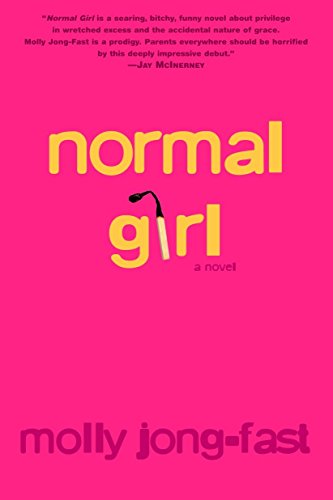
Molly Jong-Fast's Normal Girl is striking-and as funny as it as real. Inspired by her own experiences growing up in the decadent, fast-paced netherworld of New York City's jet set, Jong-Fast's debut novel is a hilarious, hard-edged walk past the velvet rope.
At just nineteen, Miranda Woke seems to have it all. Her parents are famous socialites, she's already been written up on Page Six sixteen times, she's on all the right invitation lists, and drugs and alcohol are never in short supply. But while her image screams "It girl," she'd rather be a normal girl, and the A-list feels even more uncomfortable than her Manolo Blahnik shoes. In fact, she's become the "living embodiment of an awkward phase" with "more issues than Harper's Bazaar." Neither Xanax nor Deepak Chopra tapes help. And now that her junkie party has trashed her parents' house, she has to liquidate her trust fund to pay Mom's decorator for a quick fix. But worst of all, Miranda thinks she just murdered her own boyfriend.
In an all-too-glamorous world where the cell phone is always ringing, Miranda sees no escape other than a downward spiral of cocaine, Valium, and heroin. It takes friends who offer more than air kisses to force Miranda to look in the mirror and get some help.
Die Inhaltsangabe kann sich auf eine andere Ausgabe dieses Titels beziehen.
Über die Autorin bzw. den Autor
Molly Jong-Fast is the author of Normal Girl, Girl, Maladjusted, and The Social Climber’s Handbook. She has written for many newspapers and magazines, including The New York Times, Harpers Bazaar, W Magazine, Cosmo, The Times (UK), and Marie Claire. She lives in Manhattan. She is married to a recovering academic. They have three very small children, all of whom like to talk to her when she is on the phone.
Von der hinteren Coverseite
"Randa, what's wrong with you?"
"Nothing. I mean, I'm a crazy cocaine addict with a hankering for heroin, but other than that, I'm just a nice Jewish girl from the Upper East Side with Prada shoes. How could anything be wrong?"
Molly Jong-Fast's Normal Girl is striking-and as funny as it as real. Inspired by her own experiences growing up in the decadent, fast-paced netherworld of New York City's jet set, Jong-Fast's debut novel is a hilarious, hard-edged walk past the velvet rope.
At just nineteen, Miranda Woke seems to have it all. Her parents are famous socialites, she's already been written up on Page Six sixteen times, she's on all the right invitation lists, and drugs and alcohol are never in short supply. But while her image screams "It girl," she'd rather be a normal girl, and the A-list feels even more uncomfortable than her Manolo Blahnik shoes. In fact, she's become the "living embodiment of an awkward phase" with "more issues than Harper's Bazaar." Neither Xanax nor Deepak Chopra tapes help. And now that her junkie party has trashed her parents' house, she has to liquidate her trust fund to pay Mom's decorator for a quick fix. But worst of all, Miranda thinks she just murdered her own boyfriend.
In an all-too-glamorous world where the cell phone is always ringing, Miranda sees no escape other than a downward spiral of cocaine, Valium, and heroin. It takes friends who offer more than air kisses to force Miranda to look in the mirror and get some help.
Aus dem Klappentext
;Randa, what's wrong with you?"
"Nothing. I mean, I'm a crazy cocaine addict with a hankering for heroin, but other than that, I'm just a nice Jewish girl from the Upper East Side with Prada shoes. How could anything be wrong?"
Molly Jong-Fast's Normal Girl is striking-and as funny as it as real. Inspired by her own experiences growing up in the decadent, fast-paced netherworld of New York City's jet set, Jong-Fast's debut novel is a hilarious, hard-edged walk past the velvet rope.
At just nineteen, Miranda Woke seems to have it all. Her parents are famous socialites, she's already been written up on Page Six sixteen times, she's on all the right invitation lists, and drugs and alcohol are never in short supply. But while her image screams "It girl," she'd rather be a normal girl, and the A-list feels even more uncomfortable than her Manolo Blahnik shoes. In fact, she's become the "living embodiment of an awkward phase" w
Auszug. © Genehmigter Nachdruck. Alle Rechte vorbehalten.
Chapter 1
I think it was Donna Rice or Donna Reed or maybe it was Diana Ross who said Andy Warhol's funeral was like a night at Studio 54. In that vein, Jeff's funeral is the equivalent of a night at Planet Hollywood. But it's all the same really: fast food, cocaine, and disco music. Nothing ever really changes, not around here anyway. Maybe disco has become techno, promiscuous sex has morphed into cautious promiscuous sex, and cell phones have replaced religion as the opiate of the masses, but our relentless obsession with The Next Best Thing-ism (T.N.B.T.-ism) remains the same.
If only it was as simple as me, the out-of-it-never-really-It girl, trying to snort a bump in a speeding taxi. Brushing the cigarette ash off my black tunic, I catch sight of a buttoned-down grandmother and her wiry granddaughter in her school kilt. Flying past them on Park Avenue, I have a brief moment of that there-is-something-really-wrong-with-my-life feeling. It passes before it can take me. The driver and I argue about which park crossing to take. Ignoring me, he turns abruptly, knocking my little pile of cocaine onto my suede boots. I run my fingers up and down my boots until I've wiped, sucked, and licked every particle of cocaine from within the grains of suede.
Call me an antisocial socialite, but this is my fifth funeral in September and I can't even keep my shoes clean. My grandmother, my aunt, three friends, and a distant cousin have died in the same ninety-one days, making funeral attendance my new profession. I have worn black more in the last three months than I did during my entire Pablo Neruda reading phase. But all this goes with the territory, or so I assume--it's not exactly as if they tell you how to behave when you've murdered your boyfriend. And there's certainly no chapter in Emily Post's etiquette book on the how-to's of attending your victim's funeral.
The temple grows out of the sidewalk on Fifth Avenue, a giant monument to rich Jews. The face of the building is slick, built with white bomb-shelter brick strong enough to withstand the Nazis. There is nothing that could ever affect its structure, not the multitude of deaths mourned here, not the anorexia that wastes the female congregation, not the Prozac that makes them comfortable, not even acid rain. I've been to lots of funerals at this temple; this is the first for someone I've murdered, though.
It's one of those rare hot, sticky, overcast days in September. The kind of day where your thighs stick to the vinyl taxi seats. It's been an exhausting week of hangovers, clumpy mascara, and working at the dreaded gallery. But it's over because it's Thursday and that's when my workweek ends. My plan is this: make an appearance at the funeral; mourn; spend no more than seven minutes alone with my mother; leave; go to Greenwich with some people I find at the funeral; when in Greenwich stay in mother's shrine to herself, raise my liver count, suppress my red-blood-cell count, deaden some nerve endings, and try to have a good time in the process. But I'm flex, except for the seven-minutes part.
Funerals are the cotillions of the nineties, where the young people meet and mingle. All this might seem abnormal to you--the fact that this congregation mourns the teenage sons of bankers every day.
Filling the sidewalk with chatter from their cell phones, these glossy blow-dried mourners shine like they've never had a problem in their perfectly choreographed lives. They aren't like us. The difficulties we normal people suffer slide right off their publicists' backs. Never having had an awkward phase, they live busy lives, adjusting their sunglasses and making sure their unborn children have a place on the waiting list for the Dayton School. Some of them half turn to look at me (maybe it's my dirty fingernails that make me not merit a full turn). I am the living embodiment of an awkward phase. But I must seem vaguely familiar to them--after all, I've been mentioned on Page Six sixteen times, and I'm only nineteen.
I barely have room to move at this movie premiere masquerading as a funeral. There's a paparazzi line and everything, leaving me to wonder who they got to cater the shiva. I really like chocolate rugelach. I noncalorically enjoy the smell of it.
My mother waits for me outside. She is clad in a high-waisted vintage Halston pants suit that's a little too tight for someone of her advanced age, somewhere in the ballpark of forty-five to sixty. Her almost invisible cellulite bubbles in a little bump around her waist. I love her small, doll-like features and her soft voice. I love her littleness. She is thin, in that willowy, dehydrated way all socialites are thin. Her short brown hair may have seen one too many hair dryers, but it still does the job of covering the scars behind her ears. She got her work done in Brazil, early eighties, hence the scars behind her ears. I lean down and kiss her forehead. Because both of us were calculating on the other's lateness, we have nearly missed each other.
"Are those my black burned-velvet pants?" Holding up the back of my shirt, she inspects my butt for a confirmation that they are indeed her pants. "Just making sure you've taken my favorite pants, the only pants that fit me, the ones with the green metallic lining and the feather attached to the back pocket."
"No, hello. No, how are you doing at this tragic time?"
"Sorry, sweetie." She takes my shoulders in a forced hug. I step back, choking on her sickly sweet perfume.
"Where did you get that perfume? It smells ... hum ... more dead cat than flower." She frowns and I realize I've hurt her feelings. "I'm sorry. It's nice, very nice and floral. Very floral." I'm trying to behave like nothing is wrong, but the chatter in my head about Jeff, perfume, and the fact that I'd love another bump makes me feel otherwise. A family tree that reads like other people's resumes should guarantee some peace of mind. But I have this feeling where the peace of mind should be, and when I get this feeling ...
"Miranda, go like this." She points a rounded pink nail in my direction.
"What? Could you not stick your finger in my face?"
"You have something in your teeth."
"Oh, where?" She points to my two front teeth.
"Right there." She sticks her fingernail into my teeth.
"Is it gone?" I look around to make sure that no one's looking at me, the tooth-picker. I have porcelain fronts on all my teeth, making it a challenge to extract things from in between them.
"Here." She pulls the piece of green foliage out. God knows how it got there. I haven't eaten solid food since the advent of Kate Moss, at least I think I haven't. "There." She smiles proudly. She's done with me, finished with her motherly moment. "Let's go."
We walk down the paparazzi line, like sad people at a funeral. Cameras flash but promptly stop when we pass in front of them--after all, an old socialite and her daughter, there's hardly a scandal in that. If they only knew.
"Should I smile?" I whisper. I just want to look normal. There is nothing wrong with me, no internal crisis that a Xanax couldn't reconcile.
"No, people don't smile at funerals. Keep your head down and look sad."
Mom vogues for the cameras. Like someone who knows how to stick out her neck so her jowls, the jowls of an aging socialite, are stretched out, obscured by her damaged brown hair.
"Right, yeah, sad." I'm not a shrink or anything, but I can say with some authority that it's been a long time since I've had a feeling that hasn't been a direct result of some drug I've taken. So the word sad just seems like another word that...
„Über diesen Titel“ kann sich auf eine andere Ausgabe dieses Titels beziehen.
Suchergebnisse für Normal Girl: A Novel

Beispielbild für diese ISBN
Normal Girl: A Novel
Anbieter: World of Books (was SecondSale), Montgomery, IL, USA
Verkäuferbewertung 5 von 5 Sternen

Paperback. Zustand: Fair. "Randa, what's wrong with you?" "Nothing. I mean, I'm a crazy cocaine addict with a hankering for heroin, but other than that, I'm just a nice Jewish girl from the Upper East Side with Prada shoes. How could anything be wrong?" Molly Jong-Fast's Normal Girl is striking-and as funny as it as real. Inspired by her own experiences growing up in the decadent, fast-paced netherworld of New York City's jet set, Jong-Fast's debut novel is a hilarious, hard-edged walk past the velvet rope. At just nineteen, Miranda Woke seems to have it all. Her parents are famous socialites, she's already been written up on Page Six sixteen times, she's on all the right invitation lists, and drugs and alcohol are never in short supply. But while her image screams "It girl," she'd rather be a normal girl, and the A-list feels even more uncomfortable than her Manolo Blahnik shoes. In fact, she's become the "living embodiment of an awkward phase" with "more issues than Harper's Bazaar." Neither Xanax nor Deepak Chopra tapes help. And now that her junkie party has trashed her parents' house, she has to liquidate her trust fund to pay Mom's decorator for a quick fix. But worst of all, Miranda thinks she just murdered her own boyfriend. In an all-too-glamorous world where the cell phone is always ringing, Miranda sees no escape other than a downward spiral of cocaine, Valium, and heroin. It takes friends who offer more than air kisses to force Miranda to look in the mirror and get some help. Artikel-Nr. 00107380025
Gebraucht kaufen
EUR 3,78
Versand gratis
Versand innerhalb von USA
Versand innerhalb von USA
Anzahl: 1 verfügbar
Beispielbild für diese ISBN
Normal Girl: A Novel
Anbieter: World of Books (was SecondSale), Montgomery, IL, USA
Verkäuferbewertung 5 von 5 Sternen
Paperback. Zustand: Good. "Randa, what's wrong with you?" "Nothing. I mean, I'm a crazy cocaine addict with a hankering for heroin, but other than that, I'm just a nice Jewish girl from the Upper East Side with Prada shoes. How could anything be wrong?" Molly Jong-Fast's Normal Girl is striking-and as funny as it as real. Inspired by her own experiences growing up in the decadent, fast-paced netherworld of New York City's jet set, Jong-Fast's debut novel is a hilarious, hard-edged walk past the velvet rope. At just nineteen, Miranda Woke seems to have it all. Her parents are famous socialites, she's already been written up on Page Six sixteen times, she's on all the right invitation lists, and drugs and alcohol are never in short supply. But while her image screams "It girl," she'd rather be a normal girl, and the A-list feels even more uncomfortable than her Manolo Blahnik shoes. In fact, she's become the "living embodiment of an awkward phase" with "more issues than Harper's Bazaar." Neither Xanax nor Deepak Chopra tapes help. And now that her junkie party has trashed her parents' house, she has to liquidate her trust fund to pay Mom's decorator for a quick fix. But worst of all, Miranda thinks she just murdered her own boyfriend. In an all-too-glamorous world where the cell phone is always ringing, Miranda sees no escape other than a downward spiral of cocaine, Valium, and heroin. It takes friends who offer more than air kisses to force Miranda to look in the mirror and get some help. Artikel-Nr. 00099824961
Gebraucht kaufen
EUR 3,78
Versand gratis
Versand innerhalb von USA
Versand innerhalb von USA
Anzahl: 8 verfügbar
Beispielbild für diese ISBN
Normal Girl: A Novel
Anbieter: World of Books (was SecondSale), Montgomery, IL, USA
Verkäuferbewertung 5 von 5 Sternen
Paperback. Zustand: Very Good. "Randa, what's wrong with you?" "Nothing. I mean, I'm a crazy cocaine addict with a hankering for heroin, but other than that, I'm just a nice Jewish girl from the Upper East Side with Prada shoes. How could anything be wrong?" Molly Jong-Fast's Normal Girl is striking-and as funny as it as real. Inspired by her own experiences growing up in the decadent, fast-paced netherworld of New York City's jet set, Jong-Fast's debut novel is a hilarious, hard-edged walk past the velvet rope. At just nineteen, Miranda Woke seems to have it all. Her parents are famous socialites, she's already been written up on Page Six sixteen times, she's on all the right invitation lists, and drugs and alcohol are never in short supply. But while her image screams "It girl," she'd rather be a normal girl, and the A-list feels even more uncomfortable than her Manolo Blahnik shoes. In fact, she's become the "living embodiment of an awkward phase" with "more issues than Harper's Bazaar." Neither Xanax nor Deepak Chopra tapes help. And now that her junkie party has trashed her parents' house, she has to liquidate her trust fund to pay Mom's decorator for a quick fix. But worst of all, Miranda thinks she just murdered her own boyfriend. In an all-too-glamorous world where the cell phone is always ringing, Miranda sees no escape other than a downward spiral of cocaine, Valium, and heroin. It takes friends who offer more than air kisses to force Miranda to look in the mirror and get some help. Artikel-Nr. 00094254184
Gebraucht kaufen
EUR 3,78
Versand gratis
Versand innerhalb von USA
Versand innerhalb von USA
Anzahl: 1 verfügbar
Beispielbild für diese ISBN
Normal Girl: A Novel
Verlag:
Random House Publishing Group (edition Reprint), 2001
ISBN 10: 0375757597
ISBN 13: 9780375757594
Gebraucht
Paperback
Anbieter: BooksRun, Philadelphia, PA, USA
Verkäuferbewertung 5 von 5 Sternen
Paperback. Zustand: Very Good. Reprint. It's a well-cared-for item that has seen limited use. The item may show minor signs of wear. All the text is legible, with all pages included. It may have slight markings and/or highlighting. Artikel-Nr. 0375757597-8-1
Gebraucht kaufen
EUR 4,95
Versand gratis
Versand innerhalb von USA
Versand innerhalb von USA
Anzahl: 1 verfügbar
Beispielbild für diese ISBN
Normal Girl: A Novel
Verlag:
Random House Publishing Group, 2001
ISBN 10: 0375757597
ISBN 13: 9780375757594
Gebraucht
Softcover
Anbieter: Wonder Book, Frederick, MD, USA
Verkäuferbewertung 5 von 5 Sternen
Zustand: Very Good. Very Good condition. A copy that may have a few cosmetic defects. May also contain light spine creasing or a few markings such as an owner's name, short gifter's inscription or light stamp. Artikel-Nr. L09C-05028
Gebraucht kaufen
EUR 6,45
Versand gratis
Versand innerhalb von USA
Versand innerhalb von USA
Anzahl: 1 verfügbar
Beispielbild für diese ISBN
Normal Girl : A Novel
Verlag:
Random House Publishing Group, 2001
ISBN 10: 0375757597
ISBN 13: 9780375757594
Gebraucht
Softcover
Anbieter: Better World Books, Mishawaka, IN, USA
Verkäuferbewertung 5 von 5 Sternen
Zustand: Good. Pages intact with minimal writing/highlighting. The binding may be loose and creased. Dust jackets/supplements are not included. Stock photo provided. Product includes identifying sticker. Better World Books: Buy Books. Do Good. Artikel-Nr. 2295897-75
Gebraucht kaufen
EUR 6,60
Versand gratis
Versand innerhalb von USA
Versand innerhalb von USA
Anzahl: 2 verfügbar
Beispielbild für diese ISBN
Normal Girl : A Novel
Verlag:
Random House Publishing Group, 2001
ISBN 10: 0375757597
ISBN 13: 9780375757594
Gebraucht
Softcover
Anbieter: Better World Books, Mishawaka, IN, USA
Verkäuferbewertung 5 von 5 Sternen
Zustand: Very Good. Pages intact with possible writing/highlighting. Binding strong with minor wear. Dust jackets/supplements may not be included. Stock photo provided. Product includes identifying sticker. Better World Books: Buy Books. Do Good. Artikel-Nr. 2295898-6
Gebraucht kaufen
EUR 6,60
Versand gratis
Versand innerhalb von USA
Versand innerhalb von USA
Anzahl: 1 verfügbar
Beispielbild für diese ISBN
Normal Girl
Anbieter: ThriftBooks-Phoenix, Phoenix, AZ, USA
Verkäuferbewertung 5 von 5 Sternen
Paperback. Zustand: Very Good. No Jacket. May have limited writing in cover pages. Pages are unmarked. ~ ThriftBooks: Read More, Spend Less. Artikel-Nr. G0375757597I4N00
Gebraucht kaufen
EUR 6,68
Versand gratis
Versand innerhalb von USA
Versand innerhalb von USA
Anzahl: 1 verfügbar
Beispielbild für diese ISBN
Normal Girl
Anbieter: ThriftBooks-Reno, Reno, NV, USA
Verkäuferbewertung 5 von 5 Sternen
Paperback. Zustand: Very Good. No Jacket. May have limited writing in cover pages. Pages are unmarked. ~ ThriftBooks: Read More, Spend Less. Artikel-Nr. G0375757597I4N00
Gebraucht kaufen
EUR 6,68
Versand gratis
Versand innerhalb von USA
Versand innerhalb von USA
Anzahl: 1 verfügbar
Beispielbild für diese ISBN
Normal Girl
Anbieter: ThriftBooks-Dallas, Dallas, TX, USA
Verkäuferbewertung 5 von 5 Sternen
Paperback. Zustand: Very Good. No Jacket. May have limited writing in cover pages. Pages are unmarked. ~ ThriftBooks: Read More, Spend Less. Artikel-Nr. G0375757597I4N00
Gebraucht kaufen
EUR 6,71
Versand gratis
Versand innerhalb von USA
Versand innerhalb von USA
Anzahl: 1 verfügbar