
Verwandte Artikel zu The Dying Animal (Vintage International)
Inhaltsangabe
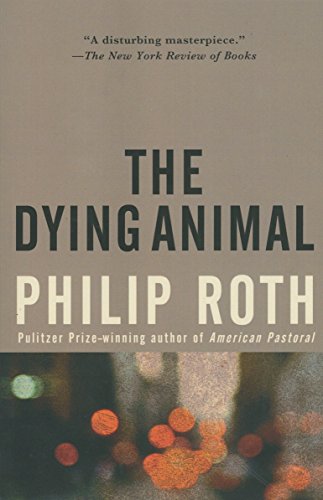
The unforgettable story of an affair between a star lecturer at a New York college and the beautiful daughter of Cuban exiles—and the quagmire of sexual jealousy and loss that ensues—from the renowned Pulitzer Prize–winning author of American Pastoral.
“[A] disturbing masterpiece.” —The New York Review of Books
No matter how much you know, no matter how much you think, no matter how much you plot and you connive and you plan, you’re not superior to sex. With these words our most unflaggingly energetic and morally serious novelist launches perhaps his fiercest book. The speaker is David Kepesh, white-haired and over sixty, an eminent cultural critic and star lecturer at a New York college—as well as an articulate propagandist of the sexual revolution. For years he has made a practice of sleeping with adventurous female students while maintaining an aesthete’s critical distance. But now that distance has been annihilated.
The agency of Kepesh’s undoing is Consuela Castillo, the decorous and humblingly beautiful 24-year-old daughter of Cuban exiles. When he becomes involved with her, Kepesh finds himself dragged—helplessly, bitterly, furiously—into jealousy and loss. In chronicling this descent, Philip Roth performs a breathtaking set of variations on the themes of eros and mortality, license and repression, selfishness and sacrifice. The Dying Animal is a burning coal of a book, filled with intellectual heat and not a little danger.
Die Inhaltsangabe kann sich auf eine andere Ausgabe dieses Titels beziehen.
Über die Autorin bzw. den Autor
PHILIP ROTH won the Pulitzer Prize for American Pastoral. In 1998 he received the National Medal of Arts at the White House and in 2002 the highest award of the American Academy of Arts and Letters, the Gold Medal in Fiction. He twice won the National Book Award and the National Book Critics Circle Award. He won the PEN/Faulkner Award three times. In 2005 The Plot Against America received the Society of American Historians’ Prize for “the outstanding historical novel on an American theme for 2003–2004.” Roth received PEN’s two most prestigious awards: in 2006 the PEN/Nabokov Award and in 2007 the PEN/Bellow Award for achievement in American fiction. In 2011 he received the National Humanities Medal at the White House, and was later named the fourth recipient of the Man Booker International Prize. He died in 2018.
Von der hinteren Coverseite
"No matter how much you know, no matter how much you think, no matter how much you plot and you connive and you plan, you're not superior to sex. With these words our most unflaggingly energetic and morally serious novelist launches perhaps his fiercest book. The speaker is David Kepesh, white-haired and over sixty, an eminent cultural critic and star lecturer at a New York college-as well as an articulate propagandist of the sexual revolution. For years he has made a practice of sleeping with adventurous female students while maintaining an aesthete's critical distance. But now that distance has been annihilated.
The agency of Kepesh's undoing is Consuela Castillo, the decorous and humblingly beautiful 24-year-old daughter of Cuban exiles. When he becomes involved with her, Kepesh finds himself dragged-helplessly, bitterly, furiously-into the quagmire of sexual jealousy and loss. In chronicling this descent, Philip Roth performs a breathtaking set of variations on the themes of eros and mortality, license and repression, selfishness and sacrifice. The Dying Animal is a burning coal of a book, filled with intellectual heat and not a little danger.
Auszug. © Genehmigter Nachdruck. Alle Rechte vorbehalten.
Excerpt
I knew her eight years ago. She was in my class. I don"t teach full-
time anymore, strictly speaking don"t teach literature at all-for
years now just the one class, a big senior seminar in critical
writing called Practical Criticism. I attract a lot of female
students. For two reasons. Because it"s a subject with an alluring
combination of intellectual glamour and journalistic glamour and
because they"ve heard me on NPR reviewing books or seen me on
Thirteen talking about culture. Over the past fifteen years, being
cultural critic on the television program has made me fairly well
known locally, and they"re attracted to my class because of that. In
the beginning, I didn"t realize that talking on TV once a week for
ten minutes could be so impressive as it turns out to be to these
students. But they are helplessly drawn to celebrity, however
inconsiderable mine may be.
Now, I"m very vulnerable to female beauty, as you know. Everybody"s
defenseless against something, and that"s it for me. I see it and it
blinds me to everything else. They come to my first class, and I know
almost immediately which is the girl for me. There is a Mark Twain
story in which he runs from a bull, and the bull looks up to him when
he"s hiding in a tree, and the bull thinks, "You are my meat, sir."
Well, that "sir" is transformed into "young lady" when I see them in
class. It is now eight years ago-I was already sixty-two, and the
girl, who is called Consuela Castillo, was twenty-four. She is not
like the rest of the class. She doesn"t look like a student, at least
not like an ordinary student. She"s not a demi-adolescent, she"s not
a slouching, unkempt, "like"-ridden girl. She"s well spoken, sober,
her posture is perfect-she appears to know something about adult
life along with how to sit, stand, and walk. As soon as you enter the
class, you see that this girl either knows more or wants to. The way
she dresses. It isn"t ex-actly what"s called chic, she"s certainly
not flamboyant, but, to begin with, she"s never in jeans, pressed or
unpressed. She dresses carefully, with quiet taste, in skirts,
dresses, and tailored pants. Not to desen-sualize herself but more,
it would seem, to professionalize herself, she dresses like an
attractive secretary in a prestigious legal firm. Like the secretary
to the bank chairman. She has a cream-colored silk blouse under a
tailored blue blazer with gold buttons, a brown pocketbook with the
patina of expensive leather, and little ankle boots to match, and she
wears a slightly stretchy gray knitted skirt that re-veals her body
lines as subtly as such a skirt possibly could. Her hair is done in a
natural but cared-for manner. She has a pale complexion, the mouth is
bowlike though the lips are full, and she has a rounded forehead, a
polished forehead of a smooth Brancusi elegance. She is Cuban. Her
family are prosperous Cubans living in Jersey, across the river in
Bergen County. She has black, black hair, glossy but ever so slightly
coarse. And she"s big. She"s a big woman. The silk blouse is
unbuttoned to the third button, and so you see she has powerful,
beauti-
ful breasts. You see the cleavage immediately. And you see she knows
it. You see, despite the decorum, the meticulousness, the cautiously
soigné style-or because of them-that she"s aware of herself. She
comes to the first class with the jacket buttoned over her blouse,
yet some five minutes into the session, she has taken it off. When I
glance her way again, I see that she"s put it back on. So you
understand that she"s aware of her power but that she isn"t sure yet
how to use it, what to do with it, how much she
even wants it. That body is still new to her, she"s still trying it
out, thinking it through, a bit like a kid walking the streets with a
loaded gun and deciding whether he"s packing it to protect himself or
to begin a life of crime.
And she"s aware of something else, and this I couldn"t know from the
one class meeting: she finds culture important in a reverential, old-
fashioned way. Not that it"s something she wishes to live by. She
doesn"t and she couldn"t-too traditionally well brought up for that-
but it"s important and wonderful as nothing else she knows is. She"s
the one who finds the Impressionists ravishing but must look long and
hard-and always with a sense of nagging confoundment-at a Cubist
Picasso, trying with all her might to get the idea. She stands there
waiting for the surprising new sensation, the new thought, the new
emotion, and when it won"t come, ever, she chides herself for being
inadequate and lacking . . . what? She chides herself for not even
knowing what it is she lacks. Art that smacks of modernity leaves her
not merely puzzled but disappointed in herself. She would love for
Picasso to matter more, perhaps to transform her, but there"s a scrim
drawn across the proscenium of genius that obscures her vision and
keeps her worshiping at a bit of a distance. She gives to art, to all
of art, far more than she gets back, a sort of earnestness that isn"t
without its poignant appeal. A good heart, a lovely face, a gaze at
once invit-
ing and removed, gorgeous breasts, and so newly hatched as a woman
that to find fragments of broken shell adhering to that ovoid
forehead wouldn"t have been a surprise. I saw right away that this
was going to be my girl.
Now, I have one set rule of some fifteen years" standing that I never
break. I don"t any longer get in touch with them on a private basis
until they"ve completed their final exam and received their grade and
I am no longer officially in loco parentis. In spite of temptation-
or even a clear-cut signal to begin the flirtation and make the
approach-I haven"t broken this rule since, back in the mid-eighties,
the phone number of the sexual harassment hotline was first posted
outside my office door. I don"t get in touch with them any earlier so
as not to run afoul of those in the university who, if they could,
would seriously impede my enjoyment of life.
I teach each year for fourteen weeks, and during that time I don"t
have affairs with them. I play a trick instead. It"s an honest trick,
it"s an open and aboveboard trick, but it is a trick nonetheless.
After the final examination and once the grades are in, I throw a
party in my apartment for the students. It is always a success and it
is always the same. I invite them
for a drink at about six o"clock. I say that from six to eight we are
going to have a drink, and they always stay till two in the morning.
The bravest ones, after ten o"clock, develop into lively characters
and tell me what they really are interested in. In the Practical
Criticism seminar there are about twenty students, sometimes as many
as twenty-five, so there will be fifteen, sixteen girls and five or
six boys, of whom two or three are straight. Half of this group has
left the party by ten. Generally, one straight boy, maybe one gay
boy, and some nine girls will stay. They"re invariably the most
cultivated, intelligent, and spirited of the lot. They talk about
what they"re reading, what they"re listening to, what art shows
they"ve seen-enthusiasms that they don"t normally go on about with
their elders or necessarily with their friends. They find one another
in my class. And they find me. During the party they suddenly see I
am a human being. I"m not their teacher, I"m not my reputation, I"m
not their parent. I have a pleasant, orderly duplex apartment, they
see my large library, aisles of double-faced...
„Über diesen Titel“ kann sich auf eine andere Ausgabe dieses Titels beziehen.
Suchergebnisse für The Dying Animal (Vintage International)

Beispielbild für diese ISBN
The Dying Animal Vintage Inter
Anbieter: World of Books (was SecondSale), Montgomery, IL, USA
Verkäuferbewertung 5 von 5 Sternen

Zustand: Very Good. Item in very good condition! Textbooks may not include supplemental items i.e. CDs, access codes etc. Artikel-Nr. 00106311443
Gebraucht kaufen
EUR 3,82
Versand gratis
Versand innerhalb von USA
Versand innerhalb von USA
Anzahl: 3 verfügbar
Beispielbild für diese ISBN
The Dying Animal Vintage Inter
Anbieter: World of Books (was SecondSale), Montgomery, IL, USA
Verkäuferbewertung 5 von 5 Sternen
Zustand: Good. Item in good condition. Textbooks may not include supplemental items i.e. CDs, access codes etc. Artikel-Nr. 00097549060
Gebraucht kaufen
EUR 3,82
Versand gratis
Versand innerhalb von USA
Versand innerhalb von USA
Anzahl: 8 verfügbar
Beispielbild für diese ISBN
The Dying Animal
Verlag:
Knopf Doubleday Publishing Group, 2002
ISBN 10: 037571412X
ISBN 13: 9780375714122
Gebraucht
Softcover
Anbieter: Better World Books: West, Reno, NV, USA
Verkäuferbewertung 5 von 5 Sternen
Zustand: Good. Reprint. Pages intact with minimal writing/highlighting. The binding may be loose and creased. Dust jackets/supplements are not included. Stock photo provided. Product includes identifying sticker. Better World Books: Buy Books. Do Good. Artikel-Nr. 2296568-6
Gebraucht kaufen
EUR 5,98
Versand gratis
Versand innerhalb von USA
Versand innerhalb von USA
Anzahl: 2 verfügbar
Beispielbild für diese ISBN
The Dying Animal
Verlag:
Knopf Doubleday Publishing Group, 2002
ISBN 10: 037571412X
ISBN 13: 9780375714122
Gebraucht
Softcover
Anbieter: Better World Books: West, Reno, NV, USA
Verkäuferbewertung 5 von 5 Sternen
Zustand: Very Good. Reprint. Pages intact with possible writing/highlighting. Binding strong with minor wear. Dust jackets/supplements may not be included. Stock photo provided. Product includes identifying sticker. Better World Books: Buy Books. Do Good. Artikel-Nr. 3963731-6
Gebraucht kaufen
EUR 5,98
Versand gratis
Versand innerhalb von USA
Versand innerhalb von USA
Anzahl: 1 verfügbar
Beispielbild für diese ISBN
The Dying Animal
Verlag:
Knopf Doubleday Publishing Group, 2002
ISBN 10: 037571412X
ISBN 13: 9780375714122
Gebraucht
Softcover
Anbieter: Better World Books, Mishawaka, IN, USA
Verkäuferbewertung 5 von 5 Sternen
Zustand: Good. Reprint. Pages intact with minimal writing/highlighting. The binding may be loose and creased. Dust jackets/supplements are not included. Stock photo provided. Product includes identifying sticker. Better World Books: Buy Books. Do Good. Artikel-Nr. 2296568-6
Gebraucht kaufen
EUR 5,98
Versand gratis
Versand innerhalb von USA
Versand innerhalb von USA
Anzahl: 2 verfügbar
Beispielbild für diese ISBN
The Dying Animal
Anbieter: ThriftBooks-Dallas, Dallas, TX, USA
Verkäuferbewertung 5 von 5 Sternen
Paperback. Zustand: Very Good. No Jacket. May have limited writing in cover pages. Pages are unmarked. ~ ThriftBooks: Read More, Spend Less. Artikel-Nr. G037571412XI4N00
Gebraucht kaufen
EUR 6,11
Versand gratis
Versand innerhalb von USA
Versand innerhalb von USA
Anzahl: 1 verfügbar
Beispielbild für diese ISBN
The Dying Animal
Anbieter: ThriftBooks-Dallas, Dallas, TX, USA
Verkäuferbewertung 5 von 5 Sternen
Paperback. Zustand: Very Good. No Jacket. Former library book; May have limited writing in cover pages. Pages are unmarked. ~ ThriftBooks: Read More, Spend Less. Artikel-Nr. G037571412XI4N10
Gebraucht kaufen
EUR 6,11
Versand gratis
Versand innerhalb von USA
Versand innerhalb von USA
Anzahl: 1 verfügbar
Beispielbild für diese ISBN
The Dying Animal
Anbieter: ThriftBooks-Atlanta, AUSTELL, GA, USA
Verkäuferbewertung 5 von 5 Sternen
Paperback. Zustand: Very Good. No Jacket. May have limited writing in cover pages. Pages are unmarked. ~ ThriftBooks: Read More, Spend Less. Artikel-Nr. G037571412XI4N00
Gebraucht kaufen
EUR 6,11
Versand gratis
Versand innerhalb von USA
Versand innerhalb von USA
Anzahl: 1 verfügbar
Beispielbild für diese ISBN
The Dying Animal
Verlag:
Vintage (edition Reprint), 2002
ISBN 10: 037571412X
ISBN 13: 9780375714122
Gebraucht
Paperback
Anbieter: BooksRun, Philadelphia, PA, USA
Verkäuferbewertung 5 von 5 Sternen
Paperback. Zustand: Very Good. Reprint. It's a well-cared-for item that has seen limited use. The item may show minor signs of wear. All the text is legible, with all pages included. It may have slight markings and/or highlighting. Artikel-Nr. 037571412X-11-1
Gebraucht kaufen
EUR 6,15
Versand gratis
Versand innerhalb von USA
Versand innerhalb von USA
Anzahl: 1 verfügbar
Beispielbild für diese ISBN
The Dying Animal
Verlag:
Vintage (edition Reprint), 2002
ISBN 10: 037571412X
ISBN 13: 9780375714122
Gebraucht
Paperback
Anbieter: BooksRun, Philadelphia, PA, USA
Verkäuferbewertung 5 von 5 Sternen
Paperback. Zustand: Very Good. Reprint. It's a well-cared-for item that has seen limited use. The item may show minor signs of wear. All the text is legible, with all pages included. It may have slight markings and/or highlighting. Artikel-Nr. 037571412X-11-18
Gebraucht kaufen
EUR 6,50
Versand gratis
Versand innerhalb von USA
Versand innerhalb von USA
Anzahl: 1 verfügbar