
Inhaltsangabe
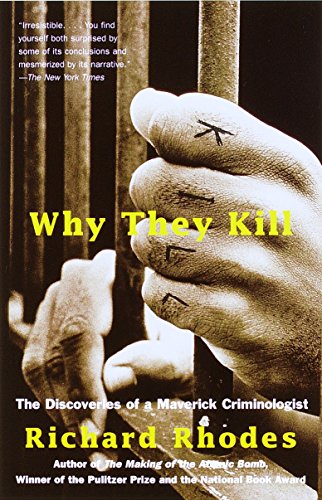
Richard Rhodes, Pulitzer Prize-winning author of The Making of the Atomic Bomb, brings his inimitable vision, exhaustive research, and mesmerizing prose to this timely book that dissects violence and offers new solutions to the age old problem of why people kill.
Lonnie Athens was raised by a brutally domineering father. Defying all odds, Athens became a groundbreaking criminologist who turned his scholar's eye to the problem of why people become violent. After a decade of interviewing several hundred violent convicts--men and women of varied background and ethnicity, he discovered "violentization," the four-stage process by which almost any human being can evolve into someone who will assault, rape, or murder another human being. Why They Kill is a riveting biography of Athens and a judicious critique of his seminal work, as well as an unflinching investigation into the history of violence.
Die Inhaltsangabe kann sich auf eine andere Ausgabe dieses Titels beziehen.
Über die Autorin bzw. den Autor
Richard Rhodes lives in rural Connecticut.
Von der hinteren Coverseite
Richard Rhodes, Pulitzer Prize-winning author of The Making of the Atomic Bomb, brings his inimitable vision, exhaustive research, and mesmerizing prose to this timely book that dissects violence and offers new solutions to the age old problem of why people kill.
Lonnie Athens was raised by a brutally domineering father. Defying all odds, Athens became a groundbreaking criminologist who turned his scholar's eye to the problem of why people become violent. After a decade of interviewing several hundred violent convicts--men and women of varied background and ethnicity, he discovered "violentization," the four-stage process by which almost any human being can evolve into someone who will assault, rape, or murder another human being. Why They Kill is a riveting biography of Athens and a judicious critique of his seminal work, as well as an unflinching investigation into the history of violence.
Auszug. © Genehmigter Nachdruck. Alle Rechte vorbehalten.
The James River flows through Richmond, Virginia, like human time. Turbulent above, where the fresh Appalachian water breaks white across the rocky shoals of the fall line, it rushes purposefully past the old Confederate stronghold only to stall and forget itself and slacken to tidal meanders below. Life is contention, and violent homicide has troubled the passage of the river since aboriginal days. It pushed up from Jamestown in 1607 with English adventurers hunting for gold, darkened the bloody ground of civil war, spills through the drug-divided city today and always aggrieves with private murder. If murder is madness, why does its run reach so far? Why has violent death undone so many?
In Jamestown days homicide rates in the West were already declining. Contending human beings had murdered one another in medieval Europe at rates comparable to those in the most murderous American cities today. Urban and rural patterns reversed in that ungoverned age: Medieval cities were safer than the violent peasant countryside. In the seventeenth century new monopolies of state began sequestering violence in police forces and armies. A civilizing process displaced murderous disputes from the street to the courtroom; homicides declined dramatically to historic lows early in the twentieth century before the modern urban rise after the Second World War.
When Lonnie Athens remembers the river running through Richmond, he remembers the Manchester Cafe, his grandfather Lombros Zaharias's diner for mill hands, set on a narrow triangle of land wedged among paper mills and cigarette factories in southside Richmond, at the end of the Mayo Bridge. Athens's mother christened him with his grandfather's name, transliterating Lombros into Lonnie to shield him from the ridicule the rednecks heaped on Greeks in Richmond. More than anyone else Pop Zaharias steadied Athens's turbulent childhood.
The Manchester Cafe was an Edward Hopper scene. The mill hands called it a slop joint: big plate glass windows, separate entrances for whites and colored and divided service inside; marble countertops where burly tattooed men in undershirts leaned on their elbows drinking buttermilk; dark booths stained with sweat; a chalkboard listing the tabs that Pop let regulars run up between paychecks; a menu of hotcakes, hamburgers, salt herring, Pop's legendary bean soup, black coffee, orange Tru-Ade, apple wine and Richbrau beer; cigarettes and chewing tobacco for sale at the register; Hank Williams's "Lovesick Blues" or Woody Guthrie's "Philadelphia Lawyer" on the Wurlitzer jukebox; coal smoke from the mills billowing past like cloud shadows and Pop's flowers and fig trees taking refuge in the garden behind. "There was always plenty of good plain food to eat," Athens remembers, "colorful scenes to watch, humorous stories to hear and no blows to fear." No lack of colorful scenes at home either, but their auras signaled storms of family violence.
Violence might have come from that violence. Instead, partly because Pop knew how to keep the peace at the Manchester Cafe, Athens would eventually earn a doctorate in criminology at the University of California at Berkeley. A compact, handsome man with an explosive laugh, coiled and intensely focused, he would talk his way into prisons past hostile guards to interview convicted rapists and murderers, alone and unprotected, sometimes at the risk of his life. Searching the heinous narratives for the tracks of the beast, he would find the rude, brutal, informal and probably universal program that creates dangerous violent criminals.
He would discover for the first time definitively what generations of his colleagues in psychiatry, psychology, sociology and criminology had glimpsed piecemeal but failed to comprehend: the malevolent logic of violent acts. He would publish two brilliant, original books. And then he would spend twenty years beating his head against the brick wall of professional resistance to his hard truths -- truths that might inform strategies of prevention and guide the criminal justice system to identify and sequester violent recidivists.
Pop's sheltered daughter Irene married wild Petros Athens, who called himself Pete the Greek. Pete strolled into the Manchester Cafe in his army uniform one day near the end of the Second World War, ordered a beer and asked to talk to Mr. Zaharias. When Pop came over, Pete switched to Greek and told him he'd met his daughter at a church picnic. The young soldier was due for discharge soon; Irene thought her father might hire him. Bridling at the impropriety, Pop warned Pete not to speak to Irene again unless her mother was on hand to chaperone. He didn't need help in the café, but he believed in Greek helping Greek, so he agreed to try out Pete at the front counter.
Pete combed his thick, coal-black hair straight back on his large head. He was broad-shouldered and barrel-chested, with hard biceps and powerful forearms, but he was short in the leg. Pop thought he looked like Jim Londos, the "Golden Greek," the professional heavyweight wrestling champion of the world. Pete thought so too. Londos was one of Pete's heroes. The other was Rocky Marciano.
Pete married Irene and joined the family, but he didn't last long as Pop's front counterman, slinging hamburgers under the Dr Pepper clock. The mill hands called Greeks "flat-footed guineas" and ridiculed the sound of their language: Quack-quack-quack, quack-quack. "You weren't black," Athens explains, "and you weren't white. You were just some type of strange foreigner caught between two groups and marginalized." Pop shrugged it off as the price of doing business. He had started out in the 1920s with a pushcart selling doughnuts and coffee and expanded to a shack, and now he owned his own restaurant and a nice house on Byrd Park and had money in the bank.
Pete had a different program. Pete had a bold demeanor: Bring it on if you want, and if you don't, fine. He had grown up in Pennsylvania, where his father had been a brickyard worker and a professional wrestler -- a brutal, hard-core, hand-to-mouth peasant from Sparta. Pete's mother had died in her son's arms, decapitated in a car accident. When the mill hands hassled Pete at the Manchester Cafe, he took off his apron, debouched from behind the counter and beat them senseless. "He threw one guy through the plate glass window," Athens says. "Unfortunately another guy he almost killed was the foreman at Standard Paper Company, and they boycotted my grandfather's café. So my grandfather told Pete, 'We're not here to beat up people, we're here to make money. I've had enough of this crap about Greek pride. If you have money you have pride. You don't have pride if you don't have any damn money. What the hell are you doing? You want to be a wrestler, become a professional wrestler.' So he let him go." Pete found a job at the Lucky Strike factory.
Lonnie's older brother, Rico, was born in 1945. Lonnie came along in 1949. There were sisters born before and after Lonnie and a baby brother later, but the two older boys and their mother carried the burden of Pete's domination. "Man, woman or child," Athens remembers Pete lecturing them, "it's up to you. I didn't tell you to disrespect me. You told your fucking self to do that. If you're big enough to disrespect your father, you're big enough to get what you get." He knew what he was talking about. Pete's father's hands had been callused from the brickyard, and when he had hit Pete he'd busted his lips. Pete told Lonnie they had almost starved to death the year his father had smashed another laborer in the head with a two-by-four and the brickyard had laid him off. Pete left home when his father took after him with a hot poker and almost killed him. He shined shoes at a...
„Über diesen Titel“ kann sich auf eine andere Ausgabe dieses Titels beziehen.
Weitere beliebte Ausgaben desselben Titels

Suchergebnisse für Why They Kill: The Discoveries of a Maverick Criminologist...

Beispielbild für diese ISBN
Why They Kill The Discoveries
Verlag:
Knopf Doubleday Publishing Group, 2000
ISBN 10: 0375702482
ISBN 13: 9780375702488
Gebraucht
Softcover
Anbieter: World of Books (was SecondSale), Montgomery, IL, USA
Verkäuferbewertung 5 von 5 Sternen

Zustand: Good. Item in good condition. Textbooks may not include supplemental items i.e. CDs, access codes etc. Artikel-Nr. 00099808904
Gebraucht kaufen
EUR 4,48
Versand gratis
Versand innerhalb von USA
Versand innerhalb von USA
Anzahl: 6 verfügbar
Beispielbild für diese ISBN
Why They Kill The Discoveries
Verlag:
Knopf Doubleday Publishing Group, 2000
ISBN 10: 0375702482
ISBN 13: 9780375702488
Gebraucht
Softcover
Anbieter: World of Books (was SecondSale), Montgomery, IL, USA
Verkäuferbewertung 5 von 5 Sternen
Zustand: Very Good. Item in very good condition! Textbooks may not include supplemental items i.e. CDs, access codes etc. Artikel-Nr. 00106613157
Gebraucht kaufen
EUR 4,48
Versand gratis
Versand innerhalb von USA
Versand innerhalb von USA
Anzahl: 1 verfügbar
Beispielbild für diese ISBN
Why They Kill: The Discoveries of a Maverick Criminologist
ISBN 10: 0375702482
ISBN 13: 9780375702488
Gebraucht
Paperback
Anbieter: BooksRun, Philadelphia, PA, USA
Verkäuferbewertung 5 von 5 Sternen
Paperback. Zustand: Very Good. First Vintage Books. It's a well-cared-for item that has seen limited use. The item may show minor signs of wear. All the text is legible, with all pages included. It may have slight markings and/or highlighting. Artikel-Nr. 0375702482-11-1
Gebraucht kaufen
EUR 4,54
Versand gratis
Versand innerhalb von USA
Versand innerhalb von USA
Anzahl: 1 verfügbar
Beispielbild für diese ISBN
Why They Kill: The Discoveries of a Maverick Criminologist
Verlag:
Knopf Doubleday Publishing Group, 2000
ISBN 10: 0375702482
ISBN 13: 9780375702488
Gebraucht
Paperback
Anbieter: ThriftBooks-Atlanta, AUSTELL, GA, USA
Verkäuferbewertung 5 von 5 Sternen
Paperback. Zustand: Very Good. No Jacket. May have limited writing in cover pages. Pages are unmarked. ~ ThriftBooks: Read More, Spend Less. Artikel-Nr. G0375702482I4N00
Gebraucht kaufen
EUR 5,94
Versand gratis
Versand innerhalb von USA
Versand innerhalb von USA
Anzahl: 1 verfügbar
Beispielbild für diese ISBN
Why They Kill: The Discoveries of a Maverick Criminologist
Verlag:
Knopf Doubleday Publishing Group, 2000
ISBN 10: 0375702482
ISBN 13: 9780375702488
Gebraucht
Paperback
Anbieter: ThriftBooks-Reno, Reno, NV, USA
Verkäuferbewertung 5 von 5 Sternen
Paperback. Zustand: Very Good. No Jacket. May have limited writing in cover pages. Pages are unmarked. ~ ThriftBooks: Read More, Spend Less. Artikel-Nr. G0375702482I4N00
Gebraucht kaufen
EUR 5,94
Versand gratis
Versand innerhalb von USA
Versand innerhalb von USA
Anzahl: 1 verfügbar
Beispielbild für diese ISBN
Why They Kill: The Discoveries of a Maverick Criminologist
Verlag:
Knopf Doubleday Publishing Group, 2000
ISBN 10: 0375702482
ISBN 13: 9780375702488
Gebraucht
Paperback
Anbieter: ThriftBooks-Phoenix, Phoenix, AZ, USA
Verkäuferbewertung 5 von 5 Sternen
Paperback. Zustand: Very Good. No Jacket. May have limited writing in cover pages. Pages are unmarked. ~ ThriftBooks: Read More, Spend Less. Artikel-Nr. G0375702482I4N00
Gebraucht kaufen
EUR 5,94
Versand gratis
Versand innerhalb von USA
Versand innerhalb von USA
Anzahl: 1 verfügbar
Beispielbild für diese ISBN
Why They Kill: The Discoveries of a Maverick Criminologist
Verlag:
Knopf Doubleday Publishing Group, 2000
ISBN 10: 0375702482
ISBN 13: 9780375702488
Gebraucht
Paperback
Anbieter: ThriftBooks-Dallas, Dallas, TX, USA
Verkäuferbewertung 5 von 5 Sternen
Paperback. Zustand: Very Good. No Jacket. May have limited writing in cover pages. Pages are unmarked. ~ ThriftBooks: Read More, Spend Less. Artikel-Nr. G0375702482I4N00
Gebraucht kaufen
EUR 5,94
Versand gratis
Versand innerhalb von USA
Versand innerhalb von USA
Anzahl: 1 verfügbar
Beispielbild für diese ISBN
Why They Kill : The Discoveries of a Maverick Criminologist
Verlag:
Knopf Doubleday Publishing Group, 2000
ISBN 10: 0375702482
ISBN 13: 9780375702488
Gebraucht
Softcover
Anbieter: Better World Books, Mishawaka, IN, USA
Verkäuferbewertung 5 von 5 Sternen
Zustand: Good. 1st Vintage Books Ed. Former library copy. Pages intact with minimal writing/highlighting. The binding may be loose and creased. Dust jackets/supplements are not included. Includes library markings. Stock photo provided. Product includes identifying sticker. Better World Books: Buy Books. Do Good. Artikel-Nr. GRP71351485
Gebraucht kaufen
EUR 6,09
Versand gratis
Versand innerhalb von USA
Versand innerhalb von USA
Anzahl: 1 verfügbar
Beispielbild für diese ISBN
Why They Kill : The Discoveries of a Maverick Criminologist
Verlag:
Knopf Doubleday Publishing Group, 2000
ISBN 10: 0375702482
ISBN 13: 9780375702488
Gebraucht
Softcover
Anbieter: Better World Books, Mishawaka, IN, USA
Verkäuferbewertung 5 von 5 Sternen
Zustand: Very Good. 1st Vintage Books Ed. Former library copy. Pages intact with possible writing/highlighting. Binding strong with minor wear. Dust jackets/supplements may not be included. Includes library markings. Stock photo provided. Product includes identifying sticker. Better World Books: Buy Books. Do Good. Artikel-Nr. 10385486-6
Gebraucht kaufen
EUR 6,09
Versand gratis
Versand innerhalb von USA
Versand innerhalb von USA
Anzahl: 1 verfügbar
Beispielbild für diese ISBN
Why They Kill : The Discoveries of a Maverick Criminologist
Verlag:
Knopf Doubleday Publishing Group, 2000
ISBN 10: 0375702482
ISBN 13: 9780375702488
Gebraucht
Softcover
Anbieter: Better World Books, Mishawaka, IN, USA
Verkäuferbewertung 5 von 5 Sternen
Zustand: Good. 1st Vintage Books Ed. Pages intact with minimal writing/highlighting. The binding may be loose and creased. Dust jackets/supplements are not included. Stock photo provided. Product includes identifying sticker. Better World Books: Buy Books. Do Good. Artikel-Nr. 2295856-75
Gebraucht kaufen
EUR 6,09
Versand gratis
Versand innerhalb von USA
Versand innerhalb von USA
Anzahl: 2 verfügbar