
Verwandte Artikel zu The New Work of Dogs: Tending to Life, Love, and Family
Inhaltsangabe
“Sometimes human-dog relationships are simple, unrelated to the emotional lives and histories of either species. But often people acquire and love dogs with little awareness that they might have complex and revealing reasons for choosing the dog or pet they choose, loving it the way they do.”
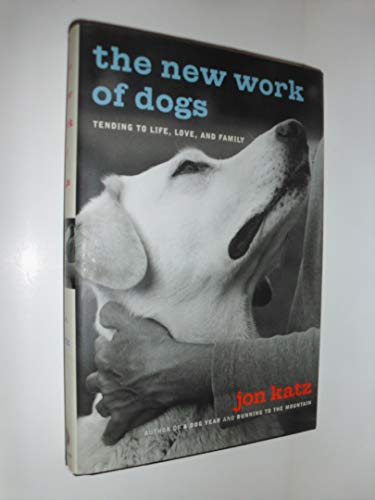
Writing about his own dogs in A Dog Year, Jon Katz became immersed in a larger community of dog lovers and came to realize that in an increasingly fragmented and disconnected society, dogs are often treated not as pets, but as family members and human surrogates.
The New Work of Dogs profiles a dozen such relationships in a New Jersey town, like the story of Harry, a Welsh corgi who provides sustaining emotional strength for a woman battling terminal breast cancer; Cherokee, companion of a man who has few human friends and doesn’t know how to talk to his own family; the Divorced Dogs Club, whose funny, acerbic, and sometimes angry women turn to their dogs to help them rebuild their lives; and Betty Jean, the frantic founder of a tiny rescue group that has saved five hundred dogs from abuse or abandonment in recent years.
Drawn from hundreds of interviews and conversations with dog owners and lovers, breeders, veterinarians, rescuers, trainers, behaviorists, and psychiatrists, The New Work of Dogs combines compelling personal narratives with a penetrating look at human/animal attachment, and questions whether this relationship shift is an entirely positive phenomenon for both species. Katz offers us a portrait of a community, and by extension a country, that is turning to its pets for emotional support and stability―a difficult job that more and more dogs are expected to do every day. The New Work of Dogs is a provocative and moving exploration of the evolving role dogs play in a changing and uncertain world.
Die Inhaltsangabe kann sich auf eine andere Ausgabe dieses Titels beziehen.
Über die Autorin bzw. den Autor
Jon Katz has written twelve books―six novels and six works of nonfiction. A two-time finalist for
the National Magazine Award, he has written for The New York Times, The Wall Street Journal, Rolling Stone, and Wired. He is a contributing editor to public radio’s Marketplace and to Bark magazine. A member of the Association of Pet Dog Trainers, he lives in northern New Jersey with his wife, Paula Span, a reporter for
The Washington Post; their college-student daughter, Emma Span; and their two dogs. Katz is working on his next book, which is about women and dogs. He can be e-mailed at jonkatz3@comcast.net.
Auszug. © Genehmigter Nachdruck. Alle Rechte vorbehalten.
chapter one
dogville, u.s.a.
A as gracious as the shady township of Montclair is, as hip and pricey as it is becoming, there’s no escaping the fact that it sits squarely in New Jersey, a beacon in the vast sea of ugly industrial and suburban sprawl that is the state’s most famous characteristic. Malls and condo complexes lap at its lush borders from every side.
But Montclair remains an enclave of old homes on streets lined with giant oaks and maples planted eighty years ago, some of which fall in every big storm. It has more movie screens than hardware stores and more Thai and Japanese restaurants than fast-food outlets. It is utterly obsessed with education and the present and future development of its much-attended-to children.
Founded as a summer retreat for wealthy New Yorkers, it also reflects the sobering disparities in wealth that characterize contemporary America. Along the ridges of the Watchung Hills, the living rooms of vast, meticulously maintained mansions have clear views of the Manhattan skyline. In the South End, small apartments and houses are home to most of the town’s poor residents.
For reasons few can recall, Montclair is actually divided into two parts—Upper Montclair and plain old Montclair. The two Montclairs share the same government, municipal services, and school system, but Upper Montclair is richer and whiter, with an upscale shopping area and its own zip code.
Partly because of its proximity to the cultural and media institutions along Manhattan’s West Side, Montclair attracts rafts of writers, artists, editors, journalists, TV producers, and other media people. So even minor civic squabbles tend to make their way onto the pages of The New York Times, since half the people who work at the paper live here, or so it sometimes seems.
Montclair is, for much of the surrounding area, a Manhattan surrogate, a place to go for indie movies or fusion cuisine.
It’s commonplace to go out for a walk and see a commercial being shot at the picturesque train station down the street, to encounter a New Yorker writer or a soap-opera star at church or at the organic-foods supermarket, or to spot Yogi Berra, the New York Yankee legend, getting his SUV serviced downtown.
Less-celebrated residents commute into Manhattan or out to the exurban office complexes and business parks that stain the surrounding countryside. A growing number sit by their computers all day in home offices, visited at intervals by UPS and Fed-Ex trucks, with whose drivers they are on a first-name basis.
Newcomers—drawn by improved rail lines into the city, the town’s growing rep for sophisticated cultural offerings, and its deserved tolerance for diversity (all driving real estate prices through the clouds)—are streaming in from Brooklyn and Manhattan. They bring an informed, somewhat combative, politically correct edge to the civic life of a town that was fairly intense to start with.
Montclair is also something of a social laboratory, where trends and traits pop up before hitting the rest of the country. Moms leaving home for work, kids strollered around by nannies, dads staying at home, then moms growing disillusioned with the workplace and returning home to raise their kids—we could track it all as we walked our dogs. We saw the influx of families with two mommies or two daddies. We watched the town become a magnet for interracial couples. An already successful and settled black professional class expanded. The Wall Streeters stayed with their Beamers and Mercedes.
In fact, Montclair seems to include some of everything and everyone. WASP country-clubbers live more or less harmoniously with Jews and blacks; single professionals from Manhattan coexist with kid-crazed boomers from Brooklyn; ardent liberal professors and Republicans and conservatives manage to get along; lesbian and gay families mingle with Asian immigrants.
Of Montclair’s 38,977 inhabitants, 23,000 are white and 13,000 African-American. The 2000 census also found 73 American Indian or Alaskan natives, 1,300 Asians, and nearly 2,000 Hispanics.
Maybe they get along reasonably well because there is no mistaking what Montclair is primarily about: children. Kids are why most people move here or stay here, why they sound off angrily at school board meetings and gather intelligence on math teachers and soccer coaches with the same ruthlessness and determination that archaeologists comb desert sites for dinosaur bones.
Day and night, station wagons, SUVs, and vans zip back and forth between friends’ houses and hockey and lacrosse games, karate classes and art lessons. For Montclair’s hyperstimulated middle-class children, a day without a positive educational or social experience is—well, there hardly are such days.
But high up on the list of things this polyglot town cares most deeply about—close behind real estate values—comes dogs.
Montclair, it turns out, is Dogville, U.S.A. According to the American Veterinary Association’s U.S. Pet Ownership and Demographic Sourcebook, Montclair almost perfectly exemplifies the American dog-owning population—educated, affluent, child-centered, and middle-class to the core.
Dog ownership increases as family income rises. Nearly 40 percent of American households with annual incomes of $60,000 or more own a dog, compared with fewer than a quarter of households with less than $25,000 in income.
More than three-quarters of dog owners nationwide are home owners, and dog owners are much more likely to be highly educated than the population as a whole. This is Montclair.
As is obvious on TV every night, dogs have become part of the American Dream package, that vision of supposed success and joy that includes a house, a patch of lawn, kids, and a car or two. An affectionate canine companion completes the picture.
In Montclair, people focus on their dogs with much the same intensity they apply to their children, the difference being that dogs can’t play sports, take music lessons, or apply to college, fortunately for them.
I’ve been walking dogs—first Clarence, a golden retriever; then two yellow Labs named Julius and Stanley; now two border collies named Devon and Homer—in and around Montclair for nearly two decades.
So have a lot of other people, raising all the policy issues that have cropped up in every town with dogs: Should dogs walk off-leash? Should they be permitted to run freely in parks, or, for that matter, be admitted to parks at all? How much barking constitutes a nuisance? Should people be permitted to own so-called “dangerous” breeds like pit bulls? How vigorously should the police enforce clean-up laws? What if people want to own more than one dog or two?
Such questions have become so sensitive that what a big-city newspaper would refer to as “a senior police official” would agree to meet with me only on condition of anonymity. He also insisted on leaving the jurisdiction: we met at the Eagle Rock Diner in adjacent West Orange. “In my shoes,” he told me in a hushed voice over coffee, “there is just no percentage in talking publicly about dogs. Every dog call is bad. Either there’s a nasty biter loose, or some dog ran away, or there’s a dogfight, or somebody’s dog is barking late at night. It’s nothing but trouble. Whatever you do, you lose. People will fight harder for their dogs than they do for themselves.”
The township issued 1,049 licenses for dogs in 2001, but officials think at least three times that number are in residence without licenses. Although local ordinances require vaccinations and licensure, the senior police official confided what dog owners already...
„Über diesen Titel“ kann sich auf eine andere Ausgabe dieses Titels beziehen.
Suchergebnisse für The New Work of Dogs: Tending to Life, Love, and Family

Beispielbild für diese ISBN
New Work of Dogs, the
Anbieter: World of Books (was SecondSale), Montgomery, IL, USA
Verkäuferbewertung 5 von 5 Sternen

Hardback. Zustand: Good. In an increasingly fragmented and disconnected society, dogs are often treated not as pets, but as family members and human surrogates. The New Work of Dogs profiles a dozen such relationships in a New Jersey town, like the story of Harry, a Welsh corgi who provides sustaining emotional strength for a woman battling terminal breast cancer; Cherokee, companion of a man who has few friends and doesn't know how to talk to his family; the Divorced Dogs Club, whose funny, acerbic, and sometimes angry women turn to their dogs to help them rebuild their lives; and Betty Jean, the frantic founder of a tiny rescue group that has saved five hundred dogs from abuse or abandonment in recent years. Drawn from hundreds of interviews and conversations with dog lovers and canine professionals, The New Work of Dogs combines compelling personal narratives with a penetrating look at human/animal attachment, and it presents a vivid portrait of a community--and, by extension, an entire nation--that is turning to its pets for emotional support and stability in a changing and uncertain world. Artikel-Nr. 00095369569
Gebraucht kaufen
EUR 3,87
Versand gratis
Versand innerhalb von USA
Versand innerhalb von USA
Anzahl: 4 verfügbar
Beispielbild für diese ISBN
New Work of Dogs, the
Anbieter: World of Books (was SecondSale), Montgomery, IL, USA
Verkäuferbewertung 5 von 5 Sternen
Hardback. Zustand: Very Good. In an increasingly fragmented and disconnected society, dogs are often treated not as pets, but as family members and human surrogates. The New Work of Dogs profiles a dozen such relationships in a New Jersey town, like the story of Harry, a Welsh corgi who provides sustaining emotional strength for a woman battling terminal breast cancer; Cherokee, companion of a man who has few friends and doesn't know how to talk to his family; the Divorced Dogs Club, whose funny, acerbic, and sometimes angry women turn to their dogs to help them rebuild their lives; and Betty Jean, the frantic founder of a tiny rescue group that has saved five hundred dogs from abuse or abandonment in recent years. Drawn from hundreds of interviews and conversations with dog lovers and canine professionals, The New Work of Dogs combines compelling personal narratives with a penetrating look at human/animal attachment, and it presents a vivid portrait of a community--and, by extension, an entire nation--that is turning to its pets for emotional support and stability in a changing and uncertain world. Artikel-Nr. 00095569383
Gebraucht kaufen
EUR 3,87
Versand gratis
Versand innerhalb von USA
Versand innerhalb von USA
Anzahl: 3 verfügbar
Beispielbild für diese ISBN
The New Work of Dogs: Tending to Life, Love, and Family
Anbieter: BooksRun, Philadelphia, PA, USA
Verkäuferbewertung 5 von 5 Sternen
Hardcover. Zustand: Very Good. 1. With dust jacket. It's a well-cared-for item that has seen limited use. The item may show minor signs of wear. All the text is legible, with all pages included. It may have slight markings and/or highlighting. Artikel-Nr. 0375508147-11-1-29
Gebraucht kaufen
EUR 4,55
Versand gratis
Versand innerhalb von USA
Versand innerhalb von USA
Anzahl: 1 verfügbar
Beispielbild für diese ISBN
The New Work of Dogs: Tending to Life, Love, and Family
Anbieter: ThriftBooks-Dallas, Dallas, TX, USA
Verkäuferbewertung 5 von 5 Sternen
Hardcover. Zustand: As New. No Jacket. Pages are clean and are not marred by notes or folds of any kind. ~ ThriftBooks: Read More, Spend Less. Artikel-Nr. G0375508147I2N00
Gebraucht kaufen
EUR 5,96
Versand gratis
Versand innerhalb von USA
Versand innerhalb von USA
Anzahl: 1 verfügbar
Beispielbild für diese ISBN
The New Work of Dogs: Tending to Life, Love, and Family
Anbieter: ThriftBooks-Atlanta, AUSTELL, GA, USA
Verkäuferbewertung 5 von 5 Sternen
Hardcover. Zustand: Very Good. No Jacket. May have limited writing in cover pages. Pages are unmarked. ~ ThriftBooks: Read More, Spend Less. Artikel-Nr. G0375508147I4N00
Gebraucht kaufen
EUR 5,96
Versand gratis
Versand innerhalb von USA
Versand innerhalb von USA
Anzahl: 1 verfügbar
Beispielbild für diese ISBN
The New Work of Dogs: Tending to Life, Love, and Family
Anbieter: ThriftBooks-Atlanta, AUSTELL, GA, USA
Verkäuferbewertung 5 von 5 Sternen
Hardcover. Zustand: As New. No Jacket. Pages are clean and are not marred by notes or folds of any kind. ~ ThriftBooks: Read More, Spend Less. Artikel-Nr. G0375508147I2N00
Gebraucht kaufen
EUR 5,96
Versand gratis
Versand innerhalb von USA
Versand innerhalb von USA
Anzahl: 1 verfügbar
Beispielbild für diese ISBN
The New Work of Dogs: Tending to Life, Love, and Family
Anbieter: Wonder Book, Frederick, MD, USA
Verkäuferbewertung 5 von 5 Sternen
Zustand: As New. Like New condition. Like New dust jacket. A near perfect copy that may have very minor cosmetic defects. Artikel-Nr. E07A-04458
Gebraucht kaufen
EUR 6,43
Versand gratis
Versand innerhalb von USA
Versand innerhalb von USA
Anzahl: 1 verfügbar
Beispielbild für diese ISBN
The New Work of Dogs: Tending to Life, Love, and Family
Anbieter: Wonder Book, Frederick, MD, USA
Verkäuferbewertung 5 von 5 Sternen
Zustand: As New. Signed Copy . Very Good dust jacket. Signed by author on dedication page. Artikel-Nr. Y00G-00251
Gebraucht kaufen
EUR 6,43
Versand gratis
Versand innerhalb von USA
Versand innerhalb von USA
Anzahl: 1 verfügbar
Beispielbild für diese ISBN
The New Work of Dogs: Tending to Life, Love, and Family
Anbieter: Wonder Book, Frederick, MD, USA
Verkäuferbewertung 5 von 5 Sternen
Zustand: Very Good. Very Good condition. Very Good dust jacket. A copy that may have a few cosmetic defects. May also contain light spine creasing or a few markings such as an owner's name, short gifter's inscription or light stamp. Artikel-Nr. N06C-04068
Gebraucht kaufen
EUR 6,43
Versand gratis
Versand innerhalb von USA
Versand innerhalb von USA
Anzahl: 2 verfügbar
Beispielbild für diese ISBN
The New Work of Dogs : Tending to Life, Love, and Family
Verlag:
Random House Publishing Group, 2003
ISBN 10: 0375508147
ISBN 13: 9780375508141
Gebraucht
Hardcover
Erstausgabe
Anbieter: Better World Books, Mishawaka, IN, USA
Verkäuferbewertung 5 von 5 Sternen
Zustand: Very Good. 1st. Pages intact with possible writing/highlighting. Binding strong with minor wear. Dust jackets/supplements may not be included. Stock photo provided. Product includes identifying sticker. Better World Books: Buy Books. Do Good. Artikel-Nr. GRP94859872
Gebraucht kaufen
EUR 6,57
Versand gratis
Versand innerhalb von USA
Versand innerhalb von USA
Anzahl: 1 verfügbar