
Verwandte Artikel zu Stepin Fetchit: The Life And Times Of Lincoln Perry
Inhaltsangabe
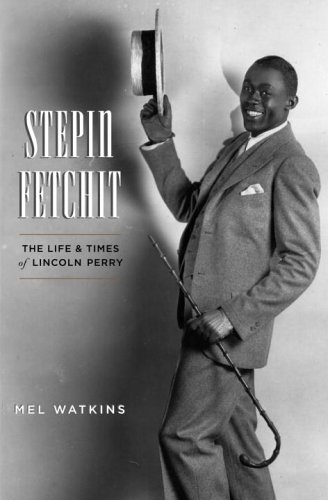
The first African American movie star, Lincoln Perry, a.k.a. Stepin Fetchit, is an iconic figure in the history of American popular culture. In the late 1920s and ’30s he was both renowned and reviled for his surrealistic portrayals of the era’s most popular comic stereotype—the lazy, shiftless Negro. After his breakthrough role in the 1929 film Hearts in Dixie, Perry was hailed as “the best actor that the talking pictures have produced” by the critic Robert Benchley.
Having run away from his Key West home in his early teens, Perry found success as a vaude-
villian before making his way to California. The tall, lanky actor became the first millionaire black movie star when he appeared in a string of hit movies as the whiny, ever-perplexed, slow-talking comic sidekick. Perry was the highest paid and most popular black comedian in America during Hollywood’s Golden Age, but his ongoing battles with movie executives, his rowdy offscreen behavior, and his extravagant spending kept him in gossip-column headlines. Perry’s spendthrift ways and exorbitant lifestyle hastened his decline and, in 1947, having squandered or given away his fortune, he was forced to declare bankruptcy.
In 1964 Perry was discovered in the charity ward of Chicago’s Cook County Hospital; he later turned up in Muhammad Ali’s entourage. In 1972 he unsuccessfully sued CBS for defamation because of a television program that ridiculed the type of characters he had portrayed. But his achievements were eventually acknowledged: in 1976 the Hollywood chapter of the NAACP gave him its Special Image Award for having opened the door for many a succeeding African American film star, and in 1978 he was inducted into the Black Filmmakers Hall of Fame. In Stepin Fetchit, Mel Watkins has given us the first definitive, full-scale biography of an entertainment legend.
Die Inhaltsangabe kann sich auf eine andere Ausgabe dieses Titels beziehen.
Über die Autorin bzw. den Autor
Mel Watkins, a former editor and writer for The New York Times Book Review, is the author of Dancing with Strangers, a Literary Guild Selection, and of the highly acclaimed On the Real Side: A History of African American Comedy. He lives in New York City.
Auszug. © Genehmigter Nachdruck. Alle Rechte vorbehalten.
In the late 1800s, Key West, Florida, still bore a faint resemblance to the barren wilderness described in settlers' colorful tales about the island's fierce Calusa Indians or the marauding pirates who had kept the eighteenth-century French and Spanish pioneers at bay for decades. The four-mile-long sand and coral island had officially become part of the United States in 1826. Only ninety miles from Havana, Cuba, it was the southernmost settlement in the continental United States and still had the untamed aura of a frontier outpost. By 1860, as the nation moved inevitably toward the Civil War, it had become the wealthiest city per capita in America despite not having a rail link to the Florida mainland. At the time, its economy relied on shipbuilding, sponging, cigar packing, and the harvesting of snail, shrimp, lobster, and stone crab.
The island's prosperity was fleeting, however. Still, the mid-nineteenth-century boom along with the island's natural beauty and reputation as an exotic getaway made it a haven and magnet for adventurers, artists, eccentrics, and tourists, as well as for a growing number of West Indians for whom it was a doorway to the United States. Among the latter group were Joseph H. Perry, a skilled Jamaican cigar wrapper, cook, and would-be entertainer, and Dora Monroe, a Bahamian seamstress who grew up in Nassau. They were married in 1898 and, leaving Nassau, arrived in Key West in 1902.
In addition to being something of a womanizer and traveling man, Joseph Perry was, by many accounts, a fair hoofer, singer, and an aspiring minstrel stage performer. He was a gregarious, cocky man who took great pride in his Caribbean background and his status as a subject of the British Crown--a fact of which he regularly boasted, particularly when dealing with African Americans.
Joseph and Dora had three children. Their second child, Lincoln, would go on to far surpass his father's wildest aspirations.
Lincoln Perry was born on May 30, 1902, in Key West. He later claimed that his father named him for four presidents; his full name was Lincoln Theodore Monroe Andrew Perry. According to one account, "he was born as an American by a few hours only," since his parents arrived in the Keys just prior to his birth. His older sister, Lucille, had been born two years earlier, and his younger sister, Mary, who later changed her name to Marie, was born a year and a half later. Lincoln and his siblings rarely discussed their childhood or family life publicly, and since no personal letters or firsthand accounts related to that period have been found, the actor's early years in Key West and his adolescent years in Tampa after the family moved to the mainland are shrouded in mystery.
Apparently, Lincoln Perry did not suffer from a lack of confidence. Like many other Caribbean immigrants, the Perry family reportedly displayed an assertiveness that, at the time, was most often held in check by former African American slaves and their descendants. Years after he reigned as a Hollywood star, Perry suggested that his youthful self-esteem was derived from his Caribbean background.
"I'm a descendant of the West Indies," Perry told a reporter. "I had talent all my life." Far from being "lazy and stupid . . . the white man's fool" that many made him out to be, he insisted that he was "the first Negro militant."
It was a defense of his by-then-tainted reputation and an affirmation of pride in his West Indian heritage. Perry's attitude reflected a culturally based rift between American-born and Caribbean-born blacks that in the early twentieth century frequently sparked heated clashes.
Despite the mumbling, ostensibly cowering screen character that he later immortalized as Stepin Fetchit, Lincoln Perry displayed his aggressive racial and cultural pride in offscreen relationships with both whites and blacks throughout his career.
Ironically, when his double-talk and roundabout public statements are scrutinized, when his extravagant spending, cavalier lifestyle and frequent clashes with the producers and moguls who controlled the Hollywood studio system are put into context, Perry surfaces in sharp contrast to the image inspired by previous knee-jerk assumptions. Uneducated, but shrewdly intelligent, he parlayed his considerable talent and folk wit (the equivalent of today's street smarts) into screen stardom during a period of blatant racial oppression and intolerance that make conditions in the twenty-first-century "hood" look like a model of racial harmony and equality.
He was far deeper and much more volatile and complicated than the portrait of a shallow, ingratiating buffoon drawn by many historians and critics. Pronouncements of religious fervor aside, he was no choirboy. Hot-tempered, prone to violent outbursts, egotistical, and, at heart, a bit of a scoundrel--he was as confounding as any black star who took to the stage and screen in the twentieth century. But when the character he created on stage and in pictures is considered as a carefully molded caricature that burlesqued mainstream America's contemptuous vision of Negroes, Perry also emerges as a cagey self-publicist and brilliant comic actor. Perhaps most surprisingly, when his on-set hassles with studio executives are viewed in the context of the era's twisted racial arrangements and his pioneer achievements in the film industry are weighed objectively, he rears as a prideful, race-conscious agitator for equal treatment in the entertainment field. He was, and still is, largely misunderstood. If not quite the "militant" that he sometimes claimed, he was a sly provocateur. "I didn't fight my way in," he once said, "I eased in." At the time, it was realistically the only way of bucking the system.
Pride and Caribbean heritage aside, the racial tenor of early-twentieth-century America dictated that Perry and his family exercise some caution around white Americans. Like many American Negroes, they often resorted to a bit of subterfuge and trickery developed in Southern slave quarters as well as the West Indies--a survival tactic that would be sustained long after slaves were freed. It was perhaps best described by the old saw "Got one mind for white folks to see; 'nother for what I know is me." The tactic found its most frequent expression in what slaves had called "puttin' on ole massa." Lincoln Perry was an expert at it.
At the peak of his Hollywood stardom--when nearly every black shoeshine boy in America began copying his lazy drawl and slow, shambling gait, and motion-picture-cartoon representations of Negroes were invariably modeled on the character he created--Lincoln Perry doggedly adhered to that bit of black folk wisdom. He misled interviewers with fanciful anecdotes about his past, distorting and reshaping facts regarding his childhood as well as other aspects of his personal life in nearly all comments to the press, and, until his last years, generally bedeviled any attempt to expose the real person behind his carefully concocted public persona. For Perry the ruse was also an expression of the waggish delight he took in mocking America's middle-class mores by confounding and often outfoxing assumedly "superior" adversaries.
The rambling, circuitous accounts of his past with which he regaled reporters were often calculated misdirections, reflecting a roguish temperament and sly, double-edged wit that, despite his stature as one of America's best-known comedians, most observers were reluctant to concede he possessed....
„Über diesen Titel“ kann sich auf eine andere Ausgabe dieses Titels beziehen.
Suchergebnisse für Stepin Fetchit: The Life And Times Of Lincoln Perry

Beispielbild für diese ISBN
Stepin Fetchit: The Life and Times of Lincoln Perry
Anbieter: ThriftBooks-Atlanta, AUSTELL, GA, USA
Verkäuferbewertung 5 von 5 Sternen

Hardcover. Zustand: Good. No Jacket. Pages can have notes/highlighting. Spine may show signs of wear. ~ ThriftBooks: Read More, Spend Less. Artikel-Nr. G0375423826I3N00
Gebraucht kaufen
EUR 8,25
Versand gratis
Versand innerhalb von USA
Versand innerhalb von USA
Anzahl: 1 verfügbar
Beispielbild für diese ISBN
Stepin Fetchit: The Life and Times of Lincoln Perry
Anbieter: ThriftBooks-Dallas, Dallas, TX, USA
Verkäuferbewertung 5 von 5 Sternen
Hardcover. Zustand: Good. No Jacket. Pages can have notes/highlighting. Spine may show signs of wear. ~ ThriftBooks: Read More, Spend Less. Artikel-Nr. G0375423826I3N00
Gebraucht kaufen
EUR 8,25
Versand gratis
Versand innerhalb von USA
Versand innerhalb von USA
Anzahl: 1 verfügbar
Beispielbild für diese ISBN
Stepin Fetchit: The Life and Times of Lincoln Perry
Anbieter: ThriftBooks-Atlanta, AUSTELL, GA, USA
Verkäuferbewertung 5 von 5 Sternen
Hardcover. Zustand: Fair. No Jacket. Missing dust jacket; Readable copy. Pages may have considerable notes/highlighting. ~ ThriftBooks: Read More, Spend Less. Artikel-Nr. G0375423826I5N01
Gebraucht kaufen
EUR 8,25
Versand gratis
Versand innerhalb von USA
Versand innerhalb von USA
Anzahl: 1 verfügbar
Beispielbild für diese ISBN
Stepin Fetchit: The Life and Times of Lincoln Perry
Anbieter: ThriftBooks-Dallas, Dallas, TX, USA
Verkäuferbewertung 5 von 5 Sternen
Hardcover. Zustand: Fair. No Jacket. Readable copy. Pages may have considerable notes/highlighting. ~ ThriftBooks: Read More, Spend Less. Artikel-Nr. G0375423826I5N00
Gebraucht kaufen
EUR 8,25
Versand gratis
Versand innerhalb von USA
Versand innerhalb von USA
Anzahl: 1 verfügbar
Beispielbild für diese ISBN
Stepin Fetchit : The Life and Times of Lincoln Perry
Verlag:
Knopf Doubleday Publishing Group, 2005
ISBN 10: 0375423826
ISBN 13: 9780375423826
Gebraucht
Hardcover
Anbieter: Better World Books, Mishawaka, IN, USA
Verkäuferbewertung 5 von 5 Sternen
Zustand: Good. Pages intact with minimal writing/highlighting. The binding may be loose and creased. Dust jackets/supplements are not included. Stock photo provided. Product includes identifying sticker. Better World Books: Buy Books. Do Good. Artikel-Nr. 8609508-6
Gebraucht kaufen
EUR 8,34
Versand gratis
Versand innerhalb von USA
Versand innerhalb von USA
Anzahl: 3 verfügbar
Beispielbild für diese ISBN
Stepin Fetchit : The Life and Times of Lincoln Perry
Verlag:
Knopf Doubleday Publishing Group, 2005
ISBN 10: 0375423826
ISBN 13: 9780375423826
Gebraucht
Hardcover
Anbieter: Better World Books, Mishawaka, IN, USA
Verkäuferbewertung 5 von 5 Sternen
Zustand: Good. Former library copy. Pages intact with minimal writing/highlighting. The binding may be loose and creased. Dust jackets/supplements are not included. Includes library markings. Stock photo provided. Product includes identifying sticker. Better World Books: Buy Books. Do Good. Artikel-Nr. 471212-6
Gebraucht kaufen
EUR 8,34
Versand gratis
Versand innerhalb von USA
Versand innerhalb von USA
Anzahl: 1 verfügbar
Foto des Verkäufers
Stepin Fetchit: the Life and Times of Lincoln Perry
Verlag:
Pantheon, New York, 2005
ISBN 10: 0375423826
ISBN 13: 9780375423826
Gebraucht
Hardcover
Erstausgabe
Anbieter: Old Book Shop of Bordentown (ABAA, ILAB), Bordentown, NJ, USA
Verkäuferbewertung 3 von 5 Sternen

Hardcover. Zustand: Fine. Zustand des Schutzumschlags: fine. First edition. First printing. Fine in fine dust jacket. Hardcover. 338 pp. with index. Illustrated with photos. Biography of one of the most recognizable Black character actors og the first half of the 20th century, Lincoln Perry, known to audiences as his chatacter "Steppin Fetchit". A native of Key West, he ran away from home in his teens and found success in vaudeville before making his way to California. He became an iconic figure in American culture in the 1920s and 30s, both renwned and reviled for his portrayals of the era's most popular comic sterotype--the lazy, shiftless Negro. But his movie career (his breakthrogh role was in the 1929 "Hearts of Dixie") made him the first millionaire Black movie star. As he aged, however, his battles with movie producers, rowdy offscreen behavior, and extravagent spending hastened his decline and he was forced to declare bankruptcy in 1947. In 1964, he was discovered in a Chicago charity ward. Later he turned up in Muhammad Ali's entourage; in1972 he sued CBS for defamation because a TV program that ridiclued the type of characters he portrayed. It was not until the mid-1970s that his achievments were recognized with an NAACP Special Image Award and induction to the Black Filmmakers Hall of Fame. Perry died in 1985. Artikel-Nr. E31454
Gebraucht kaufen
EUR 22,51
EUR 4,45 Versand
Versand innerhalb von USA
Versand innerhalb von USA
Anzahl: 1 verfügbar
Beispielbild für diese ISBN
Stepin Etchit: The life and times of Lincoln Perry
Anbieter: Hollywood Canteen Inc., Toronto, ON, Kanada
Verkäuferbewertung 5 von 5 Sternen
Hardcover. Zustand: Good. 2020 edge wear to jacket/two small tears on top front. Artikel-Nr. 99301728
Gebraucht kaufen
EUR 22,96
EUR 5,80 Versand
Versand von Kanada nach USA
Versand von Kanada nach USA
Anzahl: 1 verfügbar
Beispielbild für diese ISBN
Dancing With Strangers: A Memoir
Verlag:
Simon and Schuster, (New York), 1998
ISBN 10: 0375423826
ISBN 13: 9780375423826
Gebraucht
Hardcover
Erstausgabe
Signiert
Anbieter: Between the Covers-Rare Books, Inc. ABAA, Gloucester City, NJ, USA
Verkäuferbewertung 5 von 5 Sternen
Hardcover. Zustand: Fine. Zustand des Schutzumschlags: Fine. First Edition. First edition. Tall quarto. 320pp. Fine in fine dust jacket with a single tiny tear. Nicely Inscribed to Graham Hodges, a historian and author: "For Graham - Can't wait to see your history of our love of meat - it sounds fascinating. Glad also to see you at Colgate , it's changed since the descriptions in this book! Best, Mel Watkins." Watkins attended Colgate; Hodges teaches there. Scarce signed. Signed. Artikel-Nr. 627127
Gebraucht kaufen
EUR 183,72
EUR 4,91 Versand
Versand innerhalb von USA
Versand innerhalb von USA
Anzahl: 1 verfügbar
Beispielbild für diese ISBN
Stepin Fetchit: The Life and Times of Lincoln Perry
Verlag:
Pantheon Books, New York, 2005
ISBN 10: 0375423826
ISBN 13: 9780375423826
Gebraucht
Hardcover
Erstausgabe
Signiert
Anbieter: Between the Covers-Rare Books, Inc. ABAA, Gloucester City, NJ, USA
Verkäuferbewertung 5 von 5 Sternen
Hardcover. Zustand: Fine. Zustand des Schutzumschlags: Fine. First Edition. First edition. Tall octavo. 338, [2]pp. Illustrated. Fine in fine dust jacket. Nicely Inscribed to Graham Hodges, a historian and author: "For Graham - Sorry it took so long to get this to you. Anyway, hope you're enjoying the time away from Colgate & finishing another book. Best, Mel Watkins.". Signed. Artikel-Nr. 627109
Gebraucht kaufen
EUR 229,65
EUR 4,91 Versand
Versand innerhalb von USA
Versand innerhalb von USA
Anzahl: 1 verfügbar