Inhaltsangabe
Describes a group of friends, black and white, growing up radical amid the turbulence of the 1960s and 1970s, following them from their 1960 sixth-grade class from Great Neck, the impact of the murder of an older brother of one of them during Freedom Summer, and their involvement in the civil rights and peace movements. 25,000 first printing.
Die Inhaltsangabe kann sich auf eine andere Ausgabe dieses Titels beziehen.
Über die Autorin bzw. den Autor
Jay Cantor is the author of two previous novels, The Death of Che Guevara and Krazy Kat, and two books of essays, The Space Between: Literature and Politics and On Giving Birth to One’s Own Mother. A MacArthur Prize Fellow, Cantor teaches at Tufts University and lives in Cambridge, Massachusetts, with his wife, Melinda Marble, and their daughter, Grace.
Aus dem Klappentext
From the much-praised author of Krazy Kat and The Death of Che Guevara, the tumultuous story of a group of friends growing up idealistic, radical, and romantic in the sixties and seventies.
We enter their lives in 1960 as a sixth-grade class of Great Neck kids most of them Jewish learns for the first time, in horrifying detail, about the Holocaust, with its moral imperative to make justice in the world. When the older brother of one of the students is murdered in Mississippi during Freedom Summer, they think they have found their mission, and when they receive letters from him seemingly written after his death, a heady mystical dimension is added that impels them into the civil rights and peace movements, joining their lives to a multitude of others.
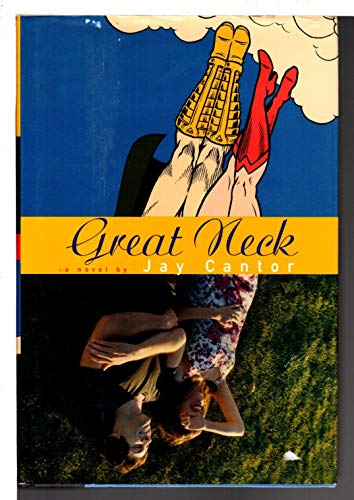
Among the huge cast of characters: a boy-genius comic-book artist, who transforms their gang into Superheroes. The lovely long-legged sister of the boy who was murdered and the brilliant kid brother of the black activist killed with him. The gay son of a wealthy art collector, who introduces his friends
to the wild and sometimes dangerous New York art scene. The beautiful daughter of a Holocaust survivor, who joins the ultraradical Weathermen; the quantum physics whiz and Christian mystic who becomes her bomb-maker; and a Black Power leader, who will accompany her and others into their last and most extreme act.
Great Neck brings us inside privileged Long Island childhoods and into the churches and juke joints
and jails of Mississippi, into underground meetings and protest marches fueled by a potent mix of sex, politics, and drugs. It reminds us of the optimism, courage, and dangerous dreams of a generation who sometimes seemed to think they must be superheroes. Above all, Great Neck is the compelling portrait of complex, appealing young men and women shaping and being shaped by the momentous events of their time.
Auszug. © Genehmigter Nachdruck. Alle Rechte vorbehalten.
1978: SIDEBAR
On the morning of his thirtieth birthday, Arthur Kaplan-nicknamed Arkey by his brother-in-law and transformed to OurKey in the BillyBooks series Tales from the Kabbalah-bounced nervously in a taxi, bumping along on an Israeli jockey's Island City route to the courtroom. Asleep or awake, in long reveries and fleeting images, Arkey Kaplan was given to dreaming, mixtures of memory and longing that transformed and commanded him. Today, a sentient corpse ordered him to pat his jacket pocket to make sure he had his checkbook-in case he needed to pay his childhood friend Beth Jacobs bail for not showing up for trial in Chicago nearly a decade before. Or for setting bombs throughout this great land of ours. Or for God knows what else.
Can you actually pay bail with a personal check? Distracted, Arkey forgot to tell the cab driver to take the bridge. Too late. The Israeli jockey had thrust them into the line for the Holland Tunnel-that insecure Dutch dike against the river, that clammy, oppressive place, that long, tight ceramic tomb.
Ghouls and coffins were much on Arkey's mind. Perhaps they always had been, but a year and a day ago, Arkey had had his second operation for skin cancer at the Beth Israel Hospital in Boston. "Happy Birthday," his surgeon had said as Arkey lay nauseous in the recovery room, dreaming of the time he'd opened a mojo hand's rolled scroll and so put a curse on himself. "The margins were very good," the doctor had said. "We got it all." His savior had looked down at his chart then and had added, mildly, "Probably."
Arkey wore his long-sleeved shirt buttoned to the top so the sun couldn't tickle his weak-willed skin. He had a white scarf around his neck and a Panama on his head, and he even kept his hands in his pockets. Moisture bloomed under his arms, formed a fragrant acid-and-roses river with the Guerlain cologne he wore to mask his continual sweating. How had Billy Green managed to predict that in his comic books?
And how much longer would this damn tunnel go on for? Any dark enclosed space made Arkey feel already trapped in his grave. How long, each bump said, how long, how long? This fucking tunnel ends in Pardes, Arkey dreamt, and the cab would take him to join the person he had most respected, his grandfather Abraham, the shop steward, now one month in his own tomb. The word reminded him of the Tombs, where Beth waited, just as Granddad had predicted, Avraham having found strength to denounce her, among others, before he died, this allrightnick's Eleventh-and scrupulously observed-Commandment being Thou shalt criticize others. "She was never part of the world she supposedly wanted to save, Arthur. She acted without guidance from any class organization. No discipline. No solidarity."
"They had solidarity, Granddad. With the Third World."
"Baloney!" Abe's once strong voice was now a harsh whisper. "A fantasy," he gasped-magisterially. His finger, skinny but for the swollen knuckles, tapped a temple. "She and her pals really served their own meshuginah psychologies. That's it!"
Thank God, Arkey had thought, I've always remained faithful to long dead socialist organizations-for avoiding Abe's poking finger had been, since childhood, Arthur Kaplan's Eleventh Commandment. And Abe's approval? That miracle was reserved for the great-the greatly moral, observers of the mitzvahs, heroes of labor. I.e., not Arkey, who was merely a historian of the movement, not a participant.
His grandfather had coughed, the ratchets of his lungs grinding on each other. A claw reached toward the night table for Kleenex, scattering bottles, letters, flowers, capless ballpoints. Arkey had knelt to pick things up, bobbed up and down by the bedside, trying to arrange things by category, with the long black box of the nurse's call button in front.
"Thank you," Avraham said. "You are a pillar for me, Arkey."
Well, Arkey tidied, Arkey loved, but on the whole Avraham didn't make much distinction between Beth Jacobs, for example, and the rest of Arkey's generation, including the grandson himself. "It was never a revolutionary situation in this country," Avraham had said, that visit. "She was putting on a show for herself and her friends with those bombings. America is a stage set for her psychodrama. The audience stops watching, boychick, she'll get bored and surrender."
Apparently true. Anyway, according to Jesse Kelman, at least Arkey and his friends had nothing to worry about from Beth's trial. The State, he said, didn't know anything more than before about the MIT bombing-or anyway, it couldn't prove anything-so long as Michael Healy didn't talk. And as for what Beth might have done after that, well, whatever it had been, other parts of the Weather Underground-known as the Eggplant, at least in their own frenetic, whimsical imaginations-had gotten wrist slaps when they'd surfaced: suspended sentences, probation, tiny morsels of county time. Mark Rudd had-in Eggplant patois-inverted a year before Beth. He'd gotten off with a two-thousand-dollar fine and some probation time. Only Cathy Wilkerson, Jesse said, might get more-her parents had owned the town house, which put her in legal possession of the dynamite. But all the government could hang on Beth Jacobs was being there. Or so Jesse Kelman had said. And, as always, his friends had rested themselves in Jesse's quiet certainties, his You're home now, I'll take care of you tone. Thus his nom de BillyBooks: The Defender, with its overtones, rare for Billy's work, of Campbell's Soup and Mom.
Special Agent Olson, still especially piqued with Beth, had managed to delay her bail hearing a week with jive about a vast international terrorist network still crouching in the American night. But even Olson couldn't jerk off to that fantasy for long. Beth's hearing this morning, Jesse said, would be brief and pro forma. She would probably walk out with them this afternoon, bored with setting bombs, ready for a new life; the final bow of the Weathermen-with most of the audience already at their summerhouses.
But when a brusque guard stopped Arkey in the courthouse lobby and passed a metal detector's curved rods over the legs of his seersucker suit and into his sweaty crotch, Arkey knew there'd been a glitch. Jesse had got it wrong. Maybe Beth had been heedless again, suffering from a masochistic desire for a restrictive, punishing authority (her psychoanalyst father's theory) or just from an upper-middle-class certainty that the world would once again conform to her fantasies.
A Hispanic TAC Squad officer holding a rifle with a curved clip stood next to the guard. He glared at Arkey as he walked past him into the courtroom, probably able to tell from Arkey's long nose that he was a friend of the guard's hated enemy, the defendant, the notorious comic book star Beth Jacobs, i.e., Athena X, or Ninja B., or (in the Justice series) Deborah, AKA the Prophet. The guard muttered something. A curse?
Arkey loosened his scarf as he walked to the front of the court and took a seat next to his friend Jeffrey Schell. The guard, Arkey knew, wanted him to die. He needed wood to knock on, to stop new tumor cells from sprouting. This must be the throne room of Zargon, or of the devil himself! Only concrete everywhere! Arkey tapped his own head lightly, clearly wood through and through, Avraham often said. Arkey knew superstitions meant religion had failed him; or he'd failed it, Arkey fitfully observant only for the last six months and lacking the hefty Abe-style moral greatness that might provoke God's protection. Besides, old habits die hard; probably after the person, even. Had he been this bad, he wondered, before the melanoma?
"Yeah," Laura had said, last time...
„Über diesen Titel“ kann sich auf eine andere Ausgabe dieses Titels beziehen.
Weitere beliebte Ausgaben desselben Titels

Suchergebnisse für Great Neck

Beispielbild für diese ISBN
Great Neck
Anbieter: Wonder Book, Frederick, MD, USA
Verkäuferbewertung 5 von 5 Sternen

Zustand: Very Good. Very Good condition. Good dust jacket. A copy that may have a few cosmetic defects. May also contain light spine creasing or a few markings such as an owner's name, short gifter's inscription or light stamp. Artikel-Nr. L07B-01352
Gebraucht kaufen
EUR 6,37
Versand gratis
Versand innerhalb von USA
Versand innerhalb von USA
Anzahl: 1 verfügbar
Beispielbild für diese ISBN
Great Neck
Verlag:
Knopf Doubleday Publishing Group, 2003
ISBN 10: 0375413944
ISBN 13: 9780375413940
Gebraucht
Hardcover
Anbieter: Better World Books, Mishawaka, IN, USA
Verkäuferbewertung 5 von 5 Sternen
Zustand: Good. Used book that is in clean, average condition without any missing pages. Artikel-Nr. 8292354-75
Gebraucht kaufen
EUR 6,72
Versand gratis
Versand innerhalb von USA
Versand innerhalb von USA
Anzahl: 1 verfügbar
Beispielbild für diese ISBN
Great Neck
Verlag:
Knopf Doubleday Publishing Group, 2003
ISBN 10: 0375413944
ISBN 13: 9780375413940
Gebraucht
Hardcover
Anbieter: Better World Books, Mishawaka, IN, USA
Verkäuferbewertung 5 von 5 Sternen
Zustand: Good. Former library book; may include library markings. Used book that is in clean, average condition without any missing pages. Artikel-Nr. 38367988-6
Gebraucht kaufen
EUR 6,72
Versand gratis
Versand innerhalb von USA
Versand innerhalb von USA
Anzahl: 1 verfügbar
Beispielbild für diese ISBN
Great Neck
Anbieter: ThriftBooks-Dallas, Dallas, TX, USA
Verkäuferbewertung 5 von 5 Sternen
Hardcover. Zustand: Very Good. No Jacket. Former library book; May have limited writing in cover pages. Pages are unmarked. ~ ThriftBooks: Read More, Spend Less 2.65. Artikel-Nr. G0375413944I4N10
Gebraucht kaufen
EUR 6,80
Versand gratis
Versand innerhalb von USA
Versand innerhalb von USA
Anzahl: 1 verfügbar
Beispielbild für diese ISBN
Great Neck
Anbieter: ThriftBooks-Dallas, Dallas, TX, USA
Verkäuferbewertung 5 von 5 Sternen
Hardcover. Zustand: Very Good. No Jacket. May have limited writing in cover pages. Pages are unmarked. ~ ThriftBooks: Read More, Spend Less 2.65. Artikel-Nr. G0375413944I4N00
Gebraucht kaufen
EUR 6,80
Versand gratis
Versand innerhalb von USA
Versand innerhalb von USA
Anzahl: 1 verfügbar
Beispielbild für diese ISBN
Great Neck
Anbieter: ThriftBooks-Dallas, Dallas, TX, USA
Verkäuferbewertung 5 von 5 Sternen
Hardcover. Zustand: Good. No Jacket. Pages can have notes/highlighting. Spine may show signs of wear. ~ ThriftBooks: Read More, Spend Less 2.65. Artikel-Nr. G0375413944I3N00
Gebraucht kaufen
EUR 6,80
Versand gratis
Versand innerhalb von USA
Versand innerhalb von USA
Anzahl: 1 verfügbar
Beispielbild für diese ISBN
Great Neck
Anbieter: Books From California, Simi Valley, CA, USA
Verkäuferbewertung 5 von 5 Sternen
Hardcover. Zustand: Very Good. First Edition. First edition. Minor wear on the covers, corners, and the edges. Like shelf wear. May contain some writing and or highlighting within the pages and covers. Artikel-Nr. mon0002229453
Gebraucht kaufen
EUR 3,53
EUR 4,29 shipping
Versand innerhalb von USA
Versand innerhalb von USA
Anzahl: 1 verfügbar
Beispielbild für diese ISBN
Great Neck
Anbieter: Books Do Furnish A Room, Durham, NC, USA
Verkäuferbewertung 4 von 5 Sternen

Hardcover. Zustand: Very Good. First Edition. Pages unmarked. Glossy dust jacket edgeworn. Binding square & firm. Artikel-Nr. 84542
Gebraucht kaufen
EUR 3,99
EUR 4,64 shipping
Versand innerhalb von USA
Versand innerhalb von USA
Anzahl: 1 verfügbar
Beispielbild für diese ISBN
Great Neck
Anbieter: Books End Bookshop, Syracuse, NY, USA
Verkäuferbewertung 4 von 5 Sternen
Hardcover. Zustand: Very Good+. Zustand des Schutzumschlags: Very Good+. First Edition; First Printing. 9.56 X 6.62 X 1.80 inches. Artikel-Nr. 148160
Gebraucht kaufen
EUR 4,43
EUR 5,16 shipping
Versand innerhalb von USA
Versand innerhalb von USA
Anzahl: 1 verfügbar
Beispielbild für diese ISBN
Great Neck
Verlag:
Alfred A. Knopf, New York, 2003
ISBN 10: 0375413944
ISBN 13: 9780375413940
Gebraucht
Hardcover
Erstausgabe
Anbieter: Abacus Bookshop, Pittsford, NY, USA
Verkäuferbewertung 5 von 5 Sternen
hardcover. Zustand: Fine copy in fine dust jacket. 1st. 8vo, 703 pp. Artikel-Nr. 082686
Gebraucht kaufen
EUR 8,86
EUR 3,44 shipping
Versand innerhalb von USA
Versand innerhalb von USA
Anzahl: 1 verfügbar