
Verwandte Artikel zu Samaritan
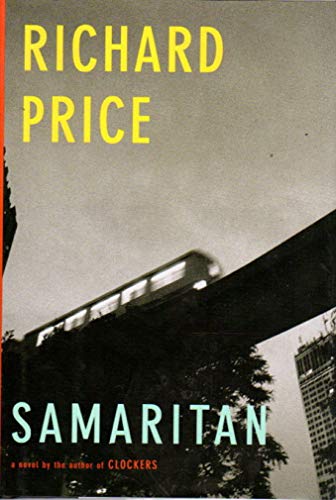
Inhaltsangabe
After a lucrative television writing career comes to an abrupt end, ex–high school teacher Ray Mitchell returns to the New Jersey city of his birth—to rethink his life, reconnect with his teenage daughter and to spread the wealth on the housing project that reared him. He begins teaching again, embarks on an affair with a married woman from the old neighborhood and becomes a mentor to a former student recently released from jail.
Then, disaster: he is found beaten nearly to death in his own apartment. He knows who did it, but he’s not talking, and he refuses to press charges.
It is up to Detective Nerese Ammons—a childhood acquaintance from the projects—to get Ray to tell her what happened.
Alternating between investigations of the people in Ray’s life most likely to do him harm and listening to his fevered ramblings about their shared past as he slips in and out of consciousness, Nerese is charged not only with uncovering the perpetrator of this assault but with understanding what kind of victim is more afraid of
the truth than of his potential murderer.
The Washington Post Book World has hailed Richard Price as having “the best equipment a novelist can have—that combination of muscularity, insight and compassion we might call heart.” Samaritan is an electrifying story of crime and punishment, of character and place, of children and their keepers—a novel of literary suspense that explores what happens when, caught up in the drama of one’s own generosity, too little is given, too little is understood and the results threaten to prove both tragic and deadly.
Die Inhaltsangabe kann sich auf eine andere Ausgabe dieses Titels beziehen.
Über die Autorin bzw. den Autor
Richard Price is the author of six previous novels, including the national best-sellers Freedomland and Clockers, which was nominated for the National Book Critics Circle Award. In 1999 he received an Award in Litera-
ture from the American Academy of Arts and Letters. His fiction, articles and essays have appeared in Best American Essays 2002, the New York Times, the New York Times Book Review, The New Yorker, Esquire, The Village Voice and Rolling Stone. He has also written numerous screenplays, including Sea of Love, Ransom and The Color of Money. He lives in New York City with his wife, the painter Judith Hudson, and his two daughters.
Von der hinteren Coverseite
“A whodunit with substance and suspense…Price is known for terrific dialogue, and there are moments when you feel as if you are listening to [his characters] speak, not just reading words on a page…It’s the most interesting kind of mystery–one in which the villain is not so easy to spot even when we know who committed the crime.”
–Anne Stephenson, USA Today
“Engaging…provocative…Price has a fine ear for the subtle tension between sentimentality and real devotion, and he understands the way that chronic black poverty plays into the needs of ‘the selflessly selfish.’ If this is a novel that raps the knuckles of a helping hand, it’s nonetheless one to grab on to.”
–Ron Charles, The Christian Science Monitor
“It’s a tribute to Price’s originality that [his] characters become as distinct and real as they do…Well-intentioned Ray [is] enigmatic and fresh…Price has a great way with dialogue, [and] a better-developed-than-usual sense of structure. Samaritan unfolds on twin time tracks, [and the] carpentry works…Price’s revelation of the culprit is absolutely consistent with his characters and thematically right on the money…Anyone who thinks fiction or literature too small a shelf to include the other stands to learn a lot from Richard Price.”
–David Kipen, San Francisco Chronicle
“Giving new meaning to the term “inner city,” Price yields up not just the familiar, blanched moonscape of urban blight but the inner lives and jackhammering hearts of those who pace and patrol it.”
–The New Yorker
“A dream of a book…a supremely suspenseful novel (with a denouement that will leave you marveling at how artfully the author kept us from guessing the perpetrator’s identity), but to call it a thriller would be selling it short. Part police procedural, part high-wire psychodrama, part social study, it’s a wholly engrossing hybrid that packs an emotional wallop….”
–Tom Sinclair, Entertainment Weekly
“Dazzling…The perfect pace of a superb storyteller is but one of the gifts Mr. Price brings to Samaritan. Razor-sharp dialogue is another, as well as his urban-poetic descriptive flair. It all makes for an extraordinary novel, with the gritty plot of a hard-edged thriller and the cosmic concerns of a streetcorner Dostoyevsky.”
–Tom Nolan, Wall Street Journal
“A whodunit only in format, Samaritan is that rarity, a novel of race relations written with authority, panache and heart.”
–Dan Cryer, Newsday
“Powerful…Wise…The novel is alive because writers like Price are crafting books like Samaritan, about a guy who discovers the hard way what a complicated transactions charity can be…For all the homework that went into Clockers, Price was never a dealer or a cop. But he has been what Ray is in Samaritan, an intruder in other people’s lives. His fellow feeling with this character goes deep. What he knows about Ray you don’t learn by researching the streets. Instead, you prowl your own heart. It’s one more beat that Price knows how to walk with authority.”
–Richard Lecayo, Time
“Without dictating Price’s fiction, reality inspires his imagination, provoking a finely detailed and immensely readable inquiry into what might be called the double nature of benevolence…Where a typical crime novel would traffic in surprises and twists, Price has always eschewed the formula. The wisdom and impact of his recent books derive from his insight into just how unspectacular crime can be. The perpetrators in Price’s fiction act less out of passion or greed than drudgery and shattered hope…On the narrative journey from mystery to resolution, Price demonstrates his usual gifts for dialogue, detail and empathetic portraiture…When a novelist stays that close to the ground, there is no confusing illusion with actuality…Wrenching.”
–Samuel G. Freedman, Chicago Tribune (front page)
“Price is renowned for in-your-face fiction: violent, fast-paced, yet morally complex…He’s also demonstrated a flair for believable dialogue and visual detail…[Samaritan is] another of Price’s first-rate urban morality plays–a compassionate, politically savvy whodunit that reads like Dostoevsky circa 2003…He proves himself to be one of our best chroniclers of big-city experience.”
–Paul Evans, Book
“A full-to-bursting package held together by a strong, suspenseful plot… Unknowability is the key to Ray Mitchell, the essence of what makes him such a fascinating saint…Ray is preternaturally alert, alive to the mental states of those around him. Price, through Ray’s alertness, gives even minor characters a real, if temporary, being. And yet–and here’s the miracle–because it’s Ray’s alertness, the novel, though various and populous, feels centered on his character and therefore strong. Price does this in few words. It’s not a function of I.Q. It’s not articulate. It’s more like a prickling of the flesh…A demographic epic filled with little people who command true human feeling…”
–Mark Costello, New York Times
“Price’s seventh novel ranks with the best of the others…His books have the gutsy appeal of the classiest hard-boiled mysteries: fast pace, tripping idiomatic dialogue, unpredictable plot swerves, zingy sex, and genuine suspense…But [Samaritan] also possesses philosophical breadth, clearheaded social commentary, and a fine facility with language…Price’s vivid documentation may tease us into thinking we are in Dempsy, New Jersey, but in fact we are in existentialist territory… So quirky a mix of virtues makes [Price] unique…Terrific.”
–Lynne Sharon Schwartz, The New Leader
“[Samaritan] hurtles along like the PATH train that traverses Price’s urban landscape, weaving back and forth, before and after the severe beating of Ray Mitchell [whose] complexity is matched by the detective investigating the crime…Price’s dialogue rings true throughout, and his sense of place is solid and of the moment.”
–Ellen Rubin, Elle
“Price is not just a gifted writer but also one who thinks long and hard about human behavior...We know from page one that we’re in good hands, with masterful detail, vivid scene-setting, and acutely observed, naturalistic dialogue. The crime-solving framework pulls us forward but is unencumbered by the pedantic detail of a police procedural, and the depth of the characterizations is magnificent: [The main characters] and the considerable supporting cast are fully imagined beings who surprise us but never test our credulity. Enmeshed in this taut storytelling is a meditation on the complicated nature of giving, and a caution that, with ill-considered charity, we can hurt others even when we think we’re doing them a favor. Superb.”
–Keir Graff, Booklist (starred and boxed review)
“Richard Price is, without a doubt, one of our greatest living novelists. His voice is comic, skeptical, and at all times, deeply humane. Samaritan is a masterpiece, a novel that is actually about–surprise of surprises–the world we live in now. Violent, tender, hilarious, and heartbreaking, it is a world that, in Price’s hands, is so ably rendered that even its smallest truths attain the power of universal myth.”
–Dennis Lehane, author of Mystic River
“It seems to me that Richard Price has taken his gifts for rendering human speech and for describing the jittery uncertainty of life at the bottom, and created a narrative filled with the sweet despair such as would come from angels looking down on us and watching us suffer.”
–Scott Spencer
“The great literature of the world is derived from the mean streets, and no American writer knows them better, or can drive a story line harder, than Richard Price. Samaritan burns, not only with stylistic eloquence but with relentless certainty–from each richly evocative scene, each amazingly felt character, to the next. Price writes the way an architect builds, sketching out his plan, thinking it over to the most minute details. Thus the foundations of Samaritan are so fundamentally valid that its presentation is a masterpiece of the form. Price has artfully concealed a haunting treatise on the nuances and ambiguities of human decency, compassion, and generosity in the guise of a superlative thriller. Samaritan is Price’s best book to date.”
–Thom Jones, author of The Pugilist at Rest
“One has come to expect from Richard Price, the most brilliant of sardonic ironists, an eye for revelation in the commonplace, even a kind of modern social history. But Samaritan is also a subtle story of seduction and abandonment, of the dangerous luxury of responsibility, and the risks that are inevitable when one is capable of love.”
–Susanna Moore, author of In the Cut
“The mastery of urban melodrama that Price demonstrated in literate blockbusters like Clockers (1992) and Freedomland (1998) keeps growing and deepening–as evidenced in [this] story of a neighborhood and of conflicting ways of life…A virtuoso alternation of advancing action with detailed flashbacks shows how…this mystery raises troublesome ghosts from the past, while also introducing a boldly drawn gallery of involved and potentially guilty characters...A ferocious admixture of bleak wit and sorrowful compassion…The story positively vibrates with Price’s trademark virtues of pinpoint observation and punchy dialogue…And the killer climax and ironic denouement couldn’t be improved upon. Magnificent stuff. If Elmore Leonard broke out of genre and were 30 years younger, he’d be Richard Price.”
–Kirkus (starred review)
“Richard Price’s Samaritan is gripping, ambitious, and resonant entertainment, everything you hope to find in an American novel and so rarely do. This is the work of a fiercely honest writer at the top of his game.” –George Pelecanos, author of Hell to Pay
“I read Richard Price for the cool, spare sound of his writing, his words, the language he has in his bag that fits so exactly in his settings. The characters talk the talk; the main one, Nerese Ammons, a gem, 20 years a cop in the NY-NJ iron triangle, lays open the plot, scene after scene, at a beautiful pace. Richard Price has written a terrific novel.” –Elmore Leonard
“Samaritan blew my mind . . . I don’t think anyone ever sent me a book in hopes of a comment that was this good . . . An absolutely riveting story. The reader is hooked from the first page . . .” –Stephen King
“The mastery of urban melodrama that Price demonstrated in literate blockbusters like Clockers (1992) and Freedomland (1998) keeps growing and deepening–as evidenced in [this] story of a neighborhood and of conflicting ways of life…A virtuoso alternation of advancing action with detailed flashbacks shows how…this mystery raises troublesome ghosts from the past, while also introducing a boldly drawn gallery of involved and potentially guilty characters...A ferocious admixture of bleak wit and sorrowful compassion…The story positively vibrates with Price’s trademark virtues of pinpoint observation and punchy dialogue…And the killer climax and ironic denouement couldn’t be improved upon. Magnificent stuff. If Elmore Leonard broke out of genre and were 30 years younger, he’d be Richard Price.” –Kirkus (starred review)
Aus dem Klappentext
After a lucrative television writing career comes to an abrupt end, ex?high school teacher Ray Mitchell returns to the New Jersey city of his birth?to rethink his life, reconnect with his teenage daughter and to spread the wealth on the housing project that reared him. He begins teaching again, embarks on an affair with a married woman from the old neighborhood and becomes a mentor to a former student recently released from jail.
Then, disaster: he is found beaten nearly to death in his own apartment. He knows who did it, but he?s not talking, and he refuses to press charges.
It is up to Detective Nerese Ammons?a childhood acquaintance from the projects?to get Ray to tell her what happened.
Alternating between investigations of the people in Ray?s life most likely to do him harm and listening to his fevered ramblings about their shared past as he slips in and out of consciousness, Nerese is charged not only with uncovering the perpetrator of this assault but with understanding what kind of victim is more afraid of
the truth than of his potential murderer.
The Washington Post Book World has hailed Richard Price as having ?the best equipment a novelist can have?that combination of muscularity, insight and compassion we might call heart.? Samaritan is an electrifying story of crime and punishment, of character and place, of children and their keepers?a novel of literary suspense that explores what happens when, caught up in the drama of one?s own generosity, too little is given, too little is understood and the results threaten to prove both tragic and deadly.
Rezensionen
A success story who has returned to the housing project where he was raised, Ray has been badly beaten but refuses to reveal his attacker. It's up to Detective Nerese Ammons, who knew him back when, to get Ray to open up.
Copyright 2002 Reed Business Information, Inc.
Nobody does urban grit better than Price-or so it was said in the '90s upon the publication of Clockers and Freedomland. Price's first novel in four years doesn't belie that claim, but it isn't his best, despite some wonderful writing. Most impressive are the characters-and not only the principals, Ray Mitchell, a white TV writer recently returned to his predominantly black home city of Dempsey, N.J., only to wind up in an ICU with a crushed skull, and Nerese Ammons, black, Ray's childhood friend, now a cop determined to find out who swung the vase that put Ray down. The supporting characters, too, are blazing with life, as is Price's rich evocation of Dempsey's blasted cityscape. It's the plotting that's relatively weak. The novel is woven of two chronological strands, one starting with Ray's time in the ICU and focusing on Nerese's investigation, the other beginning with Ray's arrival in Dempsey and emphasizing his troubled relationship with his alienated wife and daughter; with his new girlfriend from the projects, Danielle; and with himself-for Ray is a self-loathing former cokehead whose desperate need for approval clouds his judgment time and again. The binary plotting is interesting, but a bit gimmicky and doesn't help the book's pace, and a narrative turn near the end involving Ray and his daughter feels contrived. Since Ray's need for approval prevents him from telling Nerese who conked him, the book is basically a whodunit. Few readers will guess the real culprit: is it Danielle's jealous jailbird husband? The erratic street artist Ray is supporting? Danielle? The questions will hold readers' interest but not seize it, and while many will enjoy as well as admire the novel, most won't be blown away by it. 150,000 first printing; simultaneous Random House Audio.
Copyright 2002 Reed Business Information, Inc.
For more than two decades, in gaunt, endlessly alert prose, Price has embraced areas of the city which have most novelists rolling up their car windows. Here Ray Mitchell, a New Jersey schoolteacher who has quit his job writing for a schmaltzy TV show and now tries to sell ghetto kids on the charms of creative writing, answers his door and gets his skull bashed in. Ray—whether out of fear or shame—refuses to say a word about what has happened to him, but, digging in his past, the investigating cop finds plenty to give her pause: a coke habit, a neglected daughter, and a recent affair with a drug dealer's wife. This is a crime in which the victim is the real mystery. Giving new meaning to the term "inner city," Price yields up not just the familiar, blanched moonscape of urban blight but the inner lives and jackhammering hearts of those who pace and patrol it.
Copyright © 2005 The New Yorker
*Starred Review* Price (Freedomland, 1998; Clockers, 1992) wastes no time starting his story: Ray Mitchell, an Emmy-nominated TV writer who returned to teach pro bono at his old high school amid the projects of Dempsy, New Jersey, has had his head bashed in. Nerese Ammons, a cop 10 weeks from retirement, takes the case personally because of a good turn Ray did her when they were children. But Ray, deteriorating in the hospital, doesn't want to tell her who attacked him. Why not? And why has Ray, a compulsive do-gooder, had such wrong done to him? As Nerese's investigation moves forward, Price deftly fills in the past so that each new revelation is charged with significance. And because Price is not just a gifted writer but also one who thinks long and hard about human behavior, when we learn the answers, we understand why they are complicated. We know from page one, though, that we're in good hands, with masterful detail, vivid scene-setting, and acutely observed, naturalistic dialogue. The crime-solving framework pulls us forward but is unencumbered by the pedantic detail of a police procedural, and the depth of the characterizations is magnificent: Ray, Nerese, and the considerable supporting cast are fully imagined beings who surprise us but never test our credulity. Enmeshed in this taut storytelling is a meditation on the complicated nature of giving and a caution that, with ill-considered charity, we can hurt others even when we think we're doing them a favor. Superb. Keir Graff
Copyright © American Library Association. All rights reserved
Auszug. © Genehmigter Nachdruck. Alle Rechte vorbehalten.
Prologue: OUT OF TIME
Ray - January 10
Ray Mitchell, white, forty-three, and his thirteen-year-old daughter, Ruby, sat perched on the top slat of a playground bench in the heart of the Hopewell Houses, a twenty-four-tower low-income housing project in the city of Dempsy, New Jersey.
It was just after sundown: a clear winter's night, the sky still holding on to that last tinge of electric blue. Directly above their heads, sneaker-fruit and snagged plastic bags dangled from bare tree limbs; above that, an encircling ring of fourteen-story buildings; hundreds of aluminum-framed eyes twitching TV-light silver, and above all, the stars, faintly panting, like dogs at rest.
They were alone, but Ray wasn't too concerned about it-he had grown up in these houses; eighteen years ending in college, and naive or not he just couldn't quite regard Hopewell as an alien nation. Besides, a foot and a half of snow had fallen in the last two days and that kind of drama tended to put a hush on things, herd most of the worrisome stuff indoors.
Not that it was even all that cold-they were reasonably comfortable sitting there under the yellow glow of sodium lights, looking out over the pristine crust under which, half-buried, were geodesic monkey bars, two concrete crawl-through barrels and three cement seals, only their snouts and eyes visible above the snow line, as if they were truly at sea.
Two Hispanic teenaged girls cocooned inside puffy coats and speaking through their scarves walked past the playground, talking to each other about various boys' hair. Ray attempted to catch his daughter's eye to see if she had overheard any of that but Ruby, embarrassed about being here, about not belonging here, studied her boots.
As the girls walked out of earshot, the snowy silence returned, a phenomenal silence for a place so huge, the only sounds the fitful rustling of the plastic bags skewered on the branches overhead, the sporadic buzzing of front-door security locks in the buildings behind them and the occasional crunching tread of a tenant making their way along the snowpacked footpaths.
"Dad?" Ruby said in a soft high voice. "When you were a child, did Grandma and Grandpa like living here?"
"When I was a child?" Ray touched by her formality. "I guess. I mean, here was here, you know what I'm saying? People lived where they lived. At least, back then they did."
At the low end of the projects, along Rocker Drive, an elevated PATH train shot past the Houses, briefly visible to them through a gap in the buildings.
"Tell me another one," Ruby said, her breath curling in the air.
"Another story?"
"Yeah."
"About Prince and Dub?"
"Tell me some more names."
"More?" He had already rattled off at least a dozen. "Jesus, okay, hang on...There was Butchie, Big Chief, Psycho, Hercules, Little Psycho-no relation to regular Psycho-Cookie, Tweetie..."
"Tell me a story about Tweetie."
"About Tweetie? OK. Oh. How about one with Tweetie and Dub?"
"Sure."
"OK. When I was twelve? Dub's thirteen, we're playing stickball on the sidewalk in front of the building, about eight guys. You know what stickball is?"
"Yes."
"How do you..."
"Just go."
"OK. We're playing on the sidewalk. Dub's standing there at the plate, got the bat..."
Ray slipped off the bench, struck a pose.
"Ball comes in..." He took a full swing. "And behind him is this girl Tweetie, she's just like, daydreaming or whatever, and the stick, on the backswing, like, clips her right over the eye like, zzzip...Slices off half of her eyebrow, the skin, the flesh-"
"Stop." Ruby hissed, jiggling her knees.
"Dub, he doesn't even know he did it. But she's standing there, and you know, like Dub she was black, Tweetie, very dark-skinned, and it's like all of a sudden over her eye there's this deep bright pink gash, totally dry, she says, 'Oh Dub,' in a shock voice, not mad, more like upset, or scared. And, I remember what was freaky to me, was that from the waist up she was calm, but below? Her legs were running in place. And in the next second, that dry pink gash? It just fills up with blood. And now Dub sees what he did, everybody sees it, and I remember, she says, 'Oh Dub,' again, in this fluty voice and then the blood just...spills, comes down over that side of her face like someone had turned on a faucet, and everybody just freaks, just...We're all twelve, thirteen years old, Tweetie is like, ten, but when we saw all that blood? People, the guys, everybody freaked and most of them, they ran away, they just ran, except me, I'm standing there, and Dub. Dub is still holding the stickbat and he has this angry look on his face like, it's not, it's more like he's stunned, he knows he's in trouble, he knows he should do something, apologize, explain why it's not his fault, but he can't, he can't even move, you know, the blood, and now she's crying, Tweetie, and me, I'm as freaked as anybody but I just wound up going robot on it. What I do is, I pull off my sweaty T-shirt, a white T-shirt, roll it up in a ball and I go over and put it on her eyebrow, like a compress. I'm holding it there with one hand, and I put my arm around her shoulder, she was a short little pudgy kid, a butterball, and I steer her to the curb and we sit on the curb rib to rib. I'm holding my T-shirt to that gash, I got my arm around her, and we just sit there. I have no idea what to do, what I'm doing, she's crying, and Dub, he's still standing there with the stickbat. He looks fierce, like he wants to punch somebody, but he is stone paralyzed...
"We're sitting there maybe three minutes, me and Tweetie, I think I got the blood stopped, Dub's playing statue, and all of a sudden I look at him and his eyes go, Pop! Buggin'. And he's, someone's coming from the other direction and just like that he drops the stickbat and hauls ass out of there. And he could run, Dub, but this wasn't running, this was freight-training, he was pumping so hard he could've gone through a wall.
"So I turn to see what made him go off? It's Eddie Paris, his dad. Eddie doesn't chase him or anything. He just crouches down in front of me and Tweetie on the curb, you know, like squatting on the balls of his feet? And he's calm, got a cigarette hanging from his lips, got his hair all processed, you know, marcelled back and I'm like, finally we got a grownup there, thank God, but instantly Tweetie starts saying, 'Mr. Paris, it's not Dub's fault, he didn't see me, it's my fault,' because she, I mean, everybody knew how Eddie lit into his kids when they screwed up and it was- I guess she was a nice enough person, a kid, I didn't really know her but...
"She says all this stuff to get Dub off the hook, but Eddie, it's like he's not even paying attention to her. He just puts his hand on my hand holding that T-shirt, I mean that thing was a big red sponge by this point, and he tells me to let go and he starts trying to tease the shirt off the gash to see the damage? But he can't. The cotton has meshed with the wound and was like stuck to it so he takes my hand, puts it back on the T-shirt, says, 'Just sit tight.' And that's what we did..."
"Where was Tweetie's dad?"
"I don't think she had one. Her family, her mother was some kind of wino or something, had this crackly voice, dragged herself around in a housedress."
"A what?"
"Bathrobe, always smoking, and she had two older brothers, Tweetie, one was like this ghetto-style drag queen, Antoine, he'd go around in flip-flops and a hair net. He'd like, camel-walk like..."
Ray got up again and took a few steps in a languid undulating mime, his eyes both sleepy and predatory. "You know, hung around the boys' room at school, tell you you were standing too close to the urinal, make you take a step back to see what..." Ray broke it off. "Anyways, Antoine, he stabbed someone, went to reform school, came out, stabbed someone else, went to jail. And she had this other brother Butchie, in and out of jail, real hard-core tough guy, stickups, drugs, guns, no sense of humor..."
"What do you mean no sense..."
"I'm, it's a joke."
Ruby stared at him, the story getting away from her.
"OK. Five minutes after he left us, Eddie Paris pulls up to the curb in his station wagon and he puts me and Tweetie in the backseat. We're like Siamese twins connected by a T-shirt.
"He drives us to the Dempsy Medical Center, I'm still with no shirt on and I'm wearing white dungarees."
"Dungarees?"
"Jeans. They just started selling white ones that summer. White, so you can imagine what they looked like with all that blood.
"We go into the emergency room. I'm topless, sitting there with her a half hour on the benches until she gets called. The doctor finally takes over on the T-shirt-holding job, they give me a hospital smock to wear and they let me watch as they kind of wash the T-shirt away from her eyebrow, little by little; then they sew her up, guy looked like he was lacing a boot.
"Eddie drives us back home, not saying a word, and little Tweetie, she just keeps up this line of 'Mr. Paris, Dub didn't see me, it's not his fault, it was an accident,' which is pretty amazing that a ten-year-old could have that awareness of other people, the trouble they were in, you know what I'm saying?"
"Go on..."
"Eddie just keeps driving, doesn't say a word, takes us back to Hopewell and that was it."
"Did she say thank you?"
"To who."
"To you."
"Nope."
"Why not?"
"I don't know. She was a little kid."
„Über diesen Titel“ kann sich auf eine andere Ausgabe dieses Titels beziehen.
Suchergebnisse für Samaritan

Beispielbild für diese ISBN
Samaritan
Anbieter: World of Books (was SecondSale), Montgomery, IL, USA
Verkäuferbewertung 5 von 5 Sternen

Zustand: Good. Item in good condition. Textbooks may not include supplemental items i.e. CDs, access codes etc. Artikel-Nr. 00079592583
Gebraucht kaufen
EUR 3,43
Versand gratis
Versand innerhalb von USA
Versand innerhalb von USA
Anzahl: 11 verfügbar
Beispielbild für diese ISBN
Samaritan
Anbieter: World of Books (was SecondSale), Montgomery, IL, USA
Verkäuferbewertung 5 von 5 Sternen
Zustand: Acceptable. Item in acceptable condition! Textbooks may not include supplemental items i.e. CDs, access codes etc. Artikel-Nr. 00094979703
Gebraucht kaufen
EUR 3,43
Versand gratis
Versand innerhalb von USA
Versand innerhalb von USA
Anzahl: 2 verfügbar
Beispielbild für diese ISBN
Samaritan
Verlag:
Alfred A. Knopf (edition First Edition), 2003
ISBN 10: 0375411151
ISBN 13: 9780375411151
Gebraucht
Hardcover
Erstausgabe
Anbieter: BooksRun, Philadelphia, PA, USA
Verkäuferbewertung 5 von 5 Sternen
Hardcover. Zustand: Fair. First Edition. The item might be beaten up but readable. May contain markings or highlighting, as well as stains, bent corners, or any other major defect, but the text is not obscured in any way. Artikel-Nr. 0375411151-7-1
Gebraucht kaufen
EUR 5,15
Versand gratis
Versand innerhalb von USA
Versand innerhalb von USA
Anzahl: 1 verfügbar
Beispielbild für diese ISBN
Samaritan
Anbieter: ThriftBooks-Atlanta, AUSTELL, GA, USA
Verkäuferbewertung 5 von 5 Sternen
Hardcover. Zustand: Very Good. No Jacket. Missing dust jacket; May have limited writing in cover pages. Pages are unmarked. ~ ThriftBooks: Read More, Spend Less. Artikel-Nr. G0375411151I4N01
Gebraucht kaufen
EUR 5,73
Versand gratis
Versand innerhalb von USA
Versand innerhalb von USA
Anzahl: 1 verfügbar
Beispielbild für diese ISBN
Samaritan
Anbieter: ThriftBooks-Atlanta, AUSTELL, GA, USA
Verkäuferbewertung 5 von 5 Sternen
Hardcover. Zustand: Very Good. No Jacket. May have limited writing in cover pages. Pages are unmarked. ~ ThriftBooks: Read More, Spend Less. Artikel-Nr. G0375411151I4N00
Gebraucht kaufen
EUR 5,73
Versand gratis
Versand innerhalb von USA
Versand innerhalb von USA
Anzahl: 1 verfügbar
Beispielbild für diese ISBN
Samaritan
Anbieter: ThriftBooks-Atlanta, AUSTELL, GA, USA
Verkäuferbewertung 5 von 5 Sternen
Hardcover. Zustand: As New. No Jacket. Pages are clean and are not marred by notes or folds of any kind. ~ ThriftBooks: Read More, Spend Less. Artikel-Nr. G0375411151I2N00
Gebraucht kaufen
EUR 5,73
Versand gratis
Versand innerhalb von USA
Versand innerhalb von USA
Anzahl: 1 verfügbar
Beispielbild für diese ISBN
Samaritan
Anbieter: ThriftBooks-Dallas, Dallas, TX, USA
Verkäuferbewertung 5 von 5 Sternen
Hardcover. Zustand: Very Good. No Jacket. May have limited writing in cover pages. Pages are unmarked. ~ ThriftBooks: Read More, Spend Less. Artikel-Nr. G0375411151I4N00
Gebraucht kaufen
EUR 5,73
Versand gratis
Versand innerhalb von USA
Versand innerhalb von USA
Anzahl: 1 verfügbar
Beispielbild für diese ISBN
Samaritan
Anbieter: Wonder Book, Frederick, MD, USA
Verkäuferbewertung 5 von 5 Sternen
Zustand: Very Good. Very Good condition. Very Good dust jacket. A copy that may have a few cosmetic defects. May also contain light spine creasing or a few markings such as an owner's name, short gifter's inscription or light stamp. Artikel-Nr. A16K-00228
Gebraucht kaufen
EUR 6,18
Versand gratis
Versand innerhalb von USA
Versand innerhalb von USA
Anzahl: 3 verfügbar
Beispielbild für diese ISBN
Samaritan
Verlag:
Alfred A. Knopf, 2003
ISBN 10: 0375411151
ISBN 13: 9780375411151
Gebraucht
Hardcover
Signiert
Anbieter: Wonder Book, Frederick, MD, USA
Verkäuferbewertung 5 von 5 Sternen
Zustand: Good. Signed Copy . Very Good dust jacket. Signed by author on title page. Slightly foxed. In protective mylar cover. Artikel-Nr. J00C-03338
Gebraucht kaufen
EUR 6,18
Versand gratis
Versand innerhalb von USA
Versand innerhalb von USA
Anzahl: 2 verfügbar
Beispielbild für diese ISBN
Samaritan
Anbieter: Wonder Book, Frederick, MD, USA
Verkäuferbewertung 5 von 5 Sternen
Zustand: As New. Like New condition. Like New dust jacket. A near perfect copy that may have very minor cosmetic defects. Artikel-Nr. H13L-00413
Gebraucht kaufen
EUR 6,18
Versand gratis
Versand innerhalb von USA
Versand innerhalb von USA
Anzahl: 1 verfügbar