
Verwandte Artikel zu Stuffed: Adventures of a Restaurant Family
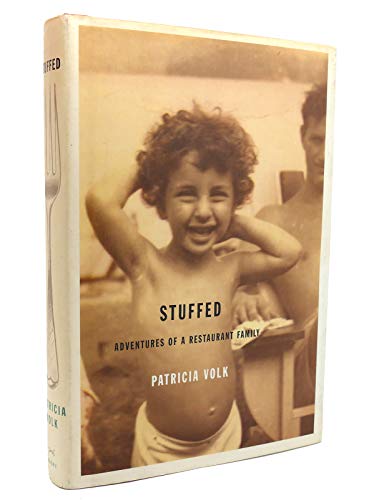
Inhaltsangabe
The author chronicles her restaurant family's arrival in America from Austria at the turn of the century and subsequent struggle to survive and prosper in a poignant but humorous celebration of family life and history. 35,000 first printing.
Die Inhaltsangabe kann sich auf eine andere Ausgabe dieses Titels beziehen.
Über die Autorin bzw. den Autor
Patricia Volk is the author of the novel White Light and two collections of short stories, All It Takes and The Yellow Banana. She has published stories, book reviews, and essays in dozens of magazines, including The Atlantic Monthly, the New York Times Magazine, the New York Times Book Review, New York, The New Yorker, Playboy, Redbook, GQ, Parents, and O, the Oprah Magazine. She was a weekly columnist for New York Newsday, and she lives in New York City.
Auszug. © Genehmigter Nachdruck. Alle Rechte vorbehalten.
Chapter 1
what we ate
Our hallway was the color of ballpark mustard. The living room was cocoa, my mother's wall-to-wall, iceberg green. The floor of the lobby was maroon-and-white terrazzo, like Genoa salami. When our elevator went self-service, the wood was replaced by enameled walls that looked like Russian dressing, the lumpy pink kind our housekeeper, Mattie, made by lightly folding Hellmann's mayonnaise into Heinz ketchup with a fork. Daisies were the fried eggs of flowers, gladioli the asparagus. We were a restaurant family, four generations in a six-block radius. When you opened our fridge, food fell on your feet.
The restaurant was at 141 West Thirty-eighth Street, in the heart of the garment center.
Designers, models, and buyers buzzed in, looked each other over, and stopped by tables to say, "Hey there!" or "How long you in town?" They dressed to show what they were capable of. "Sir!" Dad said with a military snap, flaring open your menu. He'd pull your chair and straighten your salt and pepper shakers whether you were Pauline Trigère or not. "Gus!" He'd raise a finger. "Ice water at twenty!" He set a hard party rhythm. He table-hopped. He had a story for you. On the floor, because he was so tall, he floated above hunched diners and waltzing waiters wearing red weskits he designed.
The garment center was a ghost town on weekends, so Saturdays Dad worked half a day. Late in the afternoon he'd come home hoisting a corrugated carton on his shoulder precision-packed with two pounds of sliced turkey breast, sliced ham, sliced Swiss, a side of bacon cut into rashers, fat-marbled steaks wrapped like presents in waxed paper, a rack of lamb, round white cardboard containers filled with number 20 shrimps (twenty to the pound), almond crescents, strawberry tarts glazed with strawberry gelatin, brown bags of Vassilaros Brothers coffee, whole smoked fish the color of my grandmother's bangle bracelets, and Danish butter strip sold directly from the store to Nedick's, the only product Nedick's bought retail. Melons, string beans, celery like trees, cauliflower as big as the moon, pigs' feet in aspic, and a glass jar of pickled green tomatoes. A quart of Russian dressing, a quart of Roquefort, a pint of cocktail sauce. A brace of mahogany ducks with a quart container of Sauce Montmorency. And a quart of my father's famous Swedish mustard sauce:
1.Take equal parts Dusseldorf mustard and sugar
2.Add a little bit of oil and chopped chives
Those were the basics.
"Are you sick?" my mother would ask if I left a scrap from a twelve-ounce Delmonico. You weren't considered fed unless you were in pain. The more somebody loved you, the more they wanted you to eat. In a restaurant family, you're never hungry, you're starving. And you're never full, you're stuffed. When anyone rose from the table without a two-handed boost, my grandmother wailed, "Please, God, don't let him have gallbladder!"
I couldn't walk down the street without running into someone whose hand-me-downs I wore, or who wore mine, or whose house I ate at, or someone I was glad to see even if it was only Nick the Popsicle Man, or Jimmy the old doorman, or Pat the building driver who chauffeured us the two blocks to school on days it snowed. Between Eighty-first Street and Eighty-seventh, from Riverside Drive to West End Avenue, my aunts and uncles lived, along with my great-grandparents, grandparents, friends, and even Benny, the man who sold penny candy, sunflower seeds, chewable lips, and tiny wax bottles filled with sugar syrup my sister told me would automatically fill up again if I could just touch the bottom of one with a bobby pin and not break it-an impossible thing to do.
Morgen's was the restaurant, but we called it the store. It was the place I was a princess. Waiters winked at me. They plucked the white linen napkin from under my fork, twirled it high in the air, then draped it over my lap. They nodded when I ordered, admiring my choices. They told me jokes. And when I asked for a hamburger, my grandfather would raise his forearm, then smash through the kitchen in door and grind a steak himself. On a good week I'd see my father twice: Saturday afternoon, when he got back from the store. And Sunday, our day. My sister and I would race to his bed, then snuggle. We'd kiss his cheeks. He'd suck our earlobes, then turn to my mother and say, "Audrey, I think this needs a little salt!" He'd press the soles of his feet against our stomachs and straighten his legs, and we'd be in the air, "Flying Angels." Then Dad would drive us to woods, find a snake, and skin it. Or dissect a chicken in the kitchen and explain how the pebbles in its crop worked. Or we'd take the car to the Coney Island Freak Show and gape at the Walrus Woman, the Leopard Lady, and the Human Bullet, who was bald and had no arms and typed with his toes. We'd eat pink cotton candy on paper cones, then throw it up on the Tilt-a-Whirl. Starving, we'd head for dinner at Charda's, Luchow's, or the Maharajah Room at The Pierre. Before fusion cooking, before Austro-Asian, Afro-Shtetl, and Thai-Inuit hit New York, most restaurants focused on the food of a single country. In fancy places, it was served by people in regional costumes, and you were serenaded with "Oh, Chichorneya," "Allez-vous En," or "The Mexican Hat Dance." You'd have to eat, listen, and smile while someone plinked a balalaika at you. If I misbehaved in the restaurant, my mother would walk me outside to where the car was parked and lock me in until the meal was over. I would breathe against the window and write words in my wet breath: ass, bitch, whore. When I got home, I would take out my Christmas Book, a small spiral notebook with a list of everyone I made presents for. I'd draw a black tree next to my mother's name, which meant one more Christmas she wouldn't get a gift.
"What did I do that was so bad I had to be locked in a car?" I ask my sister.
"You were . . . oppositional," she says, then adds with a voice full of sorrow, "I forgot about that."
At the height of her anger, the apex of her rage, my mother used to say she was sending us to Mrs. Brown's Orphanage.
"I don't believe you," I'd say.
"Is that so?" She'd pick up the phone and dial a number. My sister and I would listen in on the extension.
"Hello?" a woman's voice said.
"Hello, Mrs. Brown? This is Mrs. Volk, and my terrible daughters are acting up again."
"Oh really, Mrs. Volk?"
"Yes. Can I drop them at the orphanage tomorrow?"
Mrs. Brown would say why certainly, she had two empty beds, she'd be delighted to have us the very next day.
Although my sister was older, she'd burst into tears. She'd promise to be good. I was ready to go to Mrs. Brown's. If my mother didn't want me, I didn't want her. In my sixth-grade autograph book she wrote:
If all your friends desert you
Pray don't look for another
But come to the one who loves you best
Your dearest friend, your mother
Years later she told us her old friend Ruth Kahn had played the part of Mrs. Brown.
We were allowed to stare at freaks on Coney Island because they expected to be stared at. It was how they made a living. Staring at them was good for us. It would reinforce how lucky we were by sensitizing us to chance. But there were people in our neighborhood we had to pretend we didn't see. The Tongue Lady had a green tongue that hung down her chest then rolled up fast as a lizard's. On Broadway, the Glass Man had no legs and made music by tapping a spoon against eight glasses filled with graduated heights of water. One block north, the Organ...
„Über diesen Titel“ kann sich auf eine andere Ausgabe dieses Titels beziehen.
Suchergebnisse für Stuffed: Adventures of a Restaurant Family

Beispielbild für diese ISBN
Stuffed: Adventures of a Resta
Anbieter: World of Books (was SecondSale), Montgomery, IL, USA
Verkäuferbewertung 5 von 5 Sternen

Zustand: Acceptable. Item in acceptable condition! Textbooks may not include supplemental items i.e. CDs, access codes etc. Artikel-Nr. 00103124724
Gebraucht kaufen
EUR 4,67
Versand gratis
Versand innerhalb von USA
Versand innerhalb von USA
Anzahl: 1 verfügbar
Beispielbild für diese ISBN
Stuffed: Adventures of a Resta
Anbieter: World of Books (was SecondSale), Montgomery, IL, USA
Verkäuferbewertung 5 von 5 Sternen
Zustand: Good. Good condition ex-library book with usual library markings and stickers. Artikel-Nr. 00108041152
Gebraucht kaufen
EUR 4,67
Versand gratis
Versand innerhalb von USA
Versand innerhalb von USA
Anzahl: 1 verfügbar
Beispielbild für diese ISBN
Stuffed: Adventures of a Restaurant Family
Anbieter: BooksRun, Philadelphia, PA, USA
Verkäuferbewertung 5 von 5 Sternen
Hardcover. Zustand: Very Good. With dust jacket. It's a well-cared-for item that has seen limited use. The item may show minor signs of wear. All the text is legible, with all pages included. It may have slight markings and/or highlighting. Artikel-Nr. 0375411062-11-1-29
Gebraucht kaufen
EUR 6,07
Versand gratis
Versand innerhalb von USA
Versand innerhalb von USA
Anzahl: 1 verfügbar
Beispielbild für diese ISBN
Stuffed : Adventures of a Restaurant Family
Verlag:
Knopf Doubleday Publishing Group, 2001
ISBN 10: 0375411062
ISBN 13: 9780375411069
Gebraucht
Hardcover
Anbieter: Better World Books, Mishawaka, IN, USA
Verkäuferbewertung 5 von 5 Sternen
Zustand: Good. Pages intact with minimal writing/highlighting. The binding may be loose and creased. Dust jackets/supplements are not included. Stock photo provided. Product includes identifying sticker. Better World Books: Buy Books. Do Good. Artikel-Nr. GRP92628361
Gebraucht kaufen
EUR 6,73
Versand gratis
Versand innerhalb von USA
Versand innerhalb von USA
Anzahl: 1 verfügbar
Beispielbild für diese ISBN
Stuffed : Adventures of a Restaurant Family
Verlag:
Knopf Doubleday Publishing Group, 2001
ISBN 10: 0375411062
ISBN 13: 9780375411069
Gebraucht
Hardcover
Anbieter: Better World Books, Mishawaka, IN, USA
Verkäuferbewertung 5 von 5 Sternen
Zustand: Very Good. Pages intact with possible writing/highlighting. Binding strong with minor wear. Dust jackets/supplements may not be included. Stock photo provided. Product includes identifying sticker. Better World Books: Buy Books. Do Good. Artikel-Nr. GRP96065838
Gebraucht kaufen
EUR 6,73
Versand gratis
Versand innerhalb von USA
Versand innerhalb von USA
Anzahl: 1 verfügbar
Beispielbild für diese ISBN
Stuffed: Adventures of a Restaurant Family
Anbieter: ThriftBooks-Dallas, Dallas, TX, USA
Verkäuferbewertung 5 von 5 Sternen
Hardcover. Zustand: Very Good. No Jacket. May have limited writing in cover pages. Pages are unmarked. ~ ThriftBooks: Read More, Spend Less. Artikel-Nr. G0375411062I4N00
Gebraucht kaufen
EUR 8,06
Versand gratis
Versand innerhalb von USA
Versand innerhalb von USA
Anzahl: 1 verfügbar
Beispielbild für diese ISBN
Stuffed: Adventures of a Restaurant Family
Anbieter: ThriftBooks-Phoenix, Phoenix, AZ, USA
Verkäuferbewertung 5 von 5 Sternen
Hardcover. Zustand: Very Good. No Jacket. May have limited writing in cover pages. Pages are unmarked. ~ ThriftBooks: Read More, Spend Less. Artikel-Nr. G0375411062I4N00
Gebraucht kaufen
EUR 8,06
Versand gratis
Versand innerhalb von USA
Versand innerhalb von USA
Anzahl: 1 verfügbar
Beispielbild für diese ISBN
Stuffed: Adventures of a Restaurant Family
Anbieter: Wonder Book, Frederick, MD, USA
Verkäuferbewertung 5 von 5 Sternen
Zustand: Good. Good condition. Very Good dust jacket. From the collection of Robyn (Mrs. Charles) Krauthammer. A copy that has been read but remains intact. May contain markings such as bookplates, stamps, limited notes and highlighting, or a few light stains. Artikel-Nr. G06B-01632
Gebraucht kaufen
EUR 9,14
Versand gratis
Versand innerhalb von USA
Versand innerhalb von USA
Anzahl: 1 verfügbar
Beispielbild für diese ISBN
Stuffed : Adventures of a Restaurant Family
Verlag:
Knopf Doubleday Publishing Group, 2001
ISBN 10: 0375411062
ISBN 13: 9780375411069
Gebraucht
Hardcover
Anbieter: Better World Books Ltd, Dunfermline, Vereinigtes Königreich
Verkäuferbewertung 5 von 5 Sternen
Zustand: Good. Pages intact with minimal writing/highlighting. The binding may be loose and creased. Dust jackets/supplements are not included. Stock photo provided. Product includes identifying sticker. Better World Books: Buy Books. Do Good. Artikel-Nr. GRP92628361
Gebraucht kaufen
EUR 8,64
EUR 5,93 Versand
Versand von Vereinigtes Königreich nach USA
Versand von Vereinigtes Königreich nach USA
Anzahl: 1 verfügbar
Foto des Verkäufers
Stuffed: Adventures of a Restaurant Family
Verlag:
Alfred A. Knopf, 2001
ISBN 10: 0375411062
ISBN 13: 9780375411069
Gebraucht
Hardcover
Erstausgabe
Signiert
Anbieter: Palimpsest Scholarly Books & Services, Brooktondale, NY, USA
Verkäuferbewertung 5 von 5 Sternen
Hardcover. Zustand: Fine. Zustand des Schutzumschlags: Fine. 1st Edition. Author-signed first edition. Volume, measuring approximately 6.25" x 9", is bound in quarter light brown cloth and cream paper-covered boards, with stamped black lettering to spine and front cover. Book and dust jacket display very light shelfwear. Binding is firm. Interior is clean and bright. Jacket is preserved in mylar cover. ix/242 pages. Inscription on title page reads "For Ellen, / With thanks for / putting STUFFED on the / table!! / Patricia Volk / New York 2001". "In a restaurant family, you're never just hungryyou're starving to death. And you're never fullyou're stuffed. Patricia Volk's family is as American (background: Austrian-Jewish) as "Rhapsody in Blue." They came to these shores determined to make their mark; each of them is a piquant morsel of history. Great-grandfather Sussman Volk brought pastrami to the New World. Grandfather Jacob was known as "the Most Destructive Force on Wall Street" and was memorialized by E. B. White as "the greatest wrecker of all time" for his innovative method of demolition. Uncle Albert was the first man to stir scallions into cream cheese. The last of Grandfather Herman Morgen's fourteen restaurants was a famous garment center hangout. One grandmother won the 1916 trophy for "Best Legs in Atlantic City." The other was a three-hundred-pound calendar girl. Ms. Volk's handsome, demanding restaurateur father invented the Six-color Retractable Pen and Pencil Set and the Double-sided Cigarette Lighter (so you never have to worry which end is up). For three generations, just about every Volk and Morgen (with the exception of Uncle Al, who had an eleven-year affair with Aunt Lil and then refused to marry her because she wasn't a virgin) has, no matter what the circumstances, exhibited a terrifyingly positive attitude. With a cosmic disdain for the status quo, all of themthe tyrants, do-gooders, lovers, martyrs, and fakeslived at full tilt. Stuffed is a wildly funny yet unsparing look at how families work.". Inscribed by Author(s). Artikel-Nr. ABE-1605842156480
Gebraucht kaufen
EUR 27,49
EUR 5,78 Versand
Versand innerhalb von USA
Versand innerhalb von USA
Anzahl: 1 verfügbar