
Verwandte Artikel zu Magic Seeds (Naipaul, V. S.)
Inhaltsangabe
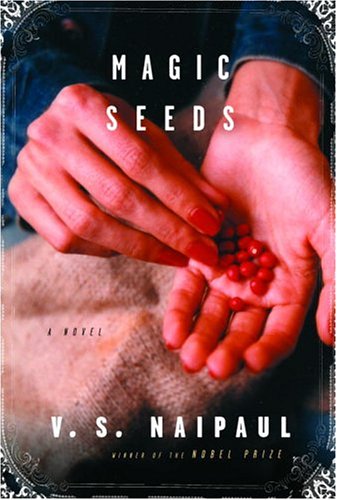
Willie Chandran - whom we first met in Half a Life - is a man who has allowed one identity after another to be thrust upon him. Now, in his early forties, after a peripatetic life, he succumbs to the demanding encouragement of his sister - and his own listlessness - and joins an underground movement in India ostensibly devoted to unfettering the lower castes. But seven years of revolutionary campaigns and several years in jail convince him that the revolution 'had nothing to do with the village people we said we were fighting for,' and he feels himself further than ever 'from his own history and...from the ideas of himself that might have come to him with that history.' When he returns to England where, thirty years before, his psychological and physical wanderings began, he finds the fruit of another unexpected social revolution (more magic seeds), and he comes to see himself as a man 'serving an endless prison sentence' - a revelation that may finally release him into his true self.
Die Inhaltsangabe kann sich auf eine andere Ausgabe dieses Titels beziehen.
Über die Autorin bzw. den Autor
V. S. Naipaul was born in Trinidad in 1932. After four years at University College, Oxford, he began to write, and since then has followed no other profession. His books include Literary Occasions, A House for Mr. Biswas and The Enigma of Arrival. In 2001 he was awarded the Nobel Prize in Literature.
Von der hinteren Coverseite
A stunning novel of the present moment that takes us into the hearts and minds of those who use terrorism as an ideal and a way of life, and those who aspire to the frightening power of wealth.
Abandoning a life he felt was not his own, Willie Chandran (the hero of Half a Life) moves to Berlin where his sister’s radical political awakening inspires him to join a liberation movement in India. There, in the jungles and dirt-poor small villages, through months of secrecy and night marches, Willie — a solitary, inward man — discovers both the idealism and brutality of guerilla warfare. When he finally escapes the movement, he is imprisoned for the murder of three policemen. Released unexpectedly on condition he return to England, he attempts to climb back into life in the West, but his experience of wealth, love and despair in London only bedevils him further.
Magic Seeds is a moving tale of a man searching for his life and fearing he has wasted it, and a testing study of the conflicts between the rich and the poor, and the struggles within each. Its spare, elegant prose sizzles with devastating psychological analysis, bleak humour and astonishing characters. Only V. S. Naipaul could have written a novel so attuned to the world and so much a challenge to it.
Aus dem Klappentext
A stunning novel of the present moment that takes us into the hearts and minds of those who use terrorism as an ideal and a way of life, and those who aspire to the frightening power of wealth.
Abandoning a life he felt was not his own, Willie Chandran (the hero of Half a Life) moves to Berlin where his sister s radical political awakening inspires him to join a liberation movement in India. There, in the jungles and dirt-poor small villages, through months of secrecy and night marches, Willie a solitary, inward man discovers both the idealism and brutality of guerilla warfare. When he finally escapes the movement, he is imprisoned for the murder of three policemen. Released unexpectedly on condition he return to England, he attempts to climb back into life in the West, but his experience of wealth, love and despair in London only bedevils him further.
Magic Seeds is a moving tale of a man searching for his life and fearing he has wasted it, and a testing study of the conflicts between the rich and the poor, and the struggles within each. Its spare, elegant prose sizzles with devastating psychological analysis, bleak humour and astonishing characters. Only V. S. Naipaul could have written a novel so attuned to the world and so much a challenge to it.
Auszug. © Genehmigter Nachdruck. Alle Rechte vorbehalten.
It had begun many years before, in Berlin. Another world. He was living there in a temporary, half-and-half way with his sister Sarojini. After Africa it had been a great refreshment, this new kind of protected life, being almost a tourist, without demands and without anxiety. It had to end, of course; and it began to end the day Sarojini said to him, "You've been here for six months. I may not be able to get your visa renewed again. You know what that means. You may not be able to stay here. That's the way the world is made. You can't object to it. You've got to start thinking of moving on. Do you have any idea of where you can go? Is there anything you feel you want to do?"
Willie said, "I know about the visa. I've been thinking about it."
Sarojini said, "I know your kind of thinking. It means putting something to the back of your mind."
Willie said, "I don't see what I can do. I don't know where I can go."
"You've never felt there was anything for you to do. You've never understood that men have to make the world for themselves."
"You're right."
"Don't talk to me like that. That's the way the oppressor class thinks. They've just got to sit tight, and the world will continue to be all right for them."
Willie said, "It doesn't help me when you twist things. You know very well what I mean. I feel a bad hand was dealt me. What could I have done in India? What could I have done in England in 1957 or 1958? Or in Africa?"
"Eighteen years in Africa. Your poor wife. She thought she was getting a man. She should have talked to me."
Willie said, "I was always someone on the outside. I still am. What can I do here in Berlin?"
"You were on the outside because you wanted to be. You've always preferred to hide. It's the colonial psychosis, the caste psychosis. You inherited it from your father. You were in Africa for eighteen years. There was a great guerrilla war there. Didn't you know?"
"It was always far away. It was a secret war, until the very end."
"It was a glorious war. At least in the beginning. When you think about it, it can bring tears to the eyes. A poor and helpless people, slaves in their own land, starting from scratch in every way. What did you do? Did you seek them out? Did you join them? Did you help them? That was a big enough cause to anyone looking for a cause. But no. You stayed in your estate house with your lovely little half-white wife and pulled the pillow over your ears and hoped that no bad black freedom Þghter was going to come in the night with a gun and heavy boots and frighten you."
"It wasn't like that, Sarojini. In my heart of hearts I was always on the Africans' side, but I didn't have a war to go to."
"If everybody had said that, there would never have been any revolution anywhere. We all have wars to go to."
They were in a café in the Knesebeckstrasse. In the winter it had been warm and steamy and civilized with its student waiters and waitresses and welcoming to Willie. Now in late summer it was stale and oppressive, its rituals too well known, a reminder to Willie-in spite of what Sarojini said-of time passing fruitlessly by, calling up the mysterious sonnet they had had to learn by heart in the mission school. And yet this time removed was summer's time . . .
A young Tamil man came in selling long-stemmed red roses. Sarojini made a small gesture with her hand and began to look in her bag. The Tamil came and held the roses to them, but his eyes made no contact with theirs. He claimed no kinship with them. He was self-possessed, the rose-seller, full of the idea of his own worth. Willie, not looking at the man's face, concentrating on his brown trousers (made by tailors far away) and the too-big gold-plated watch and wristlet (perhaps not really gold) on his hairy wrist, saw that in his own setting the rose-seller would have been someone of no account, someone unseeable. Here, in a setting which perhaps he understood as little as Willie did, a setting which perhaps he had not yet learned to see, he was like a man taken out of himself. He had become someone else.
Willie had met a man like that one day, some weeks before, when he had gone out on his own. He had stopped outside a South Indian restaurant, without customers, with a few þies crawling on the plate-glass windows above the potted plants and the display plates of rice and dosas, and with small amateurish-looking waiters (perhaps not really waiters, perhaps something else, perhaps electricians or accountants illegally arrived) lurking in the interior gloom against the cheap glitter of somebody's idea of oriental decoration. An Indian or Tamil man had come up to Willie then. Soft-bodied, but not fat, with a broad soft face, and with a þat grey cap marked with thin blue lines in a wide check pattern, like the "Kangol" golfer's caps that Willie remembered seeing advertised on the back pages of the early Penguin books: perhaps the style had come to the man from those old advertisements.
The man began to talk to Willie about the great guerrilla war to come. Willie was interested, even friendly. He liked the soft, smiling face. He was held by the þat cap. He liked the conspiratorial talk, the idea it carried of a world about to be astonished. But when the man began to talk of the great need for money, when this talk became insistent, Willie became worried, then frightened, and he began to back away from the restaurant window with the trapped, drowsy þies. And even while the man still appeared to smile there came from his soft lips a long and harsh and profound religious curse delivered in Tamil, which Willie still half understood, at the end of which the man's smile had gone and his face below the blue-checked golf cap had twisted into a terrible hate.
It unsettled Willie, the sudden use of Tamil, the ancient religious curse into which the man had put all his religious faith, the deep and abrupt hate, like a knife thrust. Willie didn't tell Sarojini about the meeting with this man. This habit of keeping things to himself had been with him since childhood, at home and at school; it had developed during his time in London, and had become an absolute part of his nature during the eighteen years he had spent in Africa, when he had had to hide so many obvious things from himself. He allowed people to tell him things he knew very well, and he did so not out of deviousness, not out of any settled plan, but out of a wish not to offend, to let things run on smoothly.
Sarojini, now, lay the rose beside her plate. She followed the rose-seller with her eyes as he walked between the tables. When he went out again she said to Willie, "I don't know what you feel about that man. But he is worth far more than you."
Willie said, "I'm sure."
"Don't irritate me. That smart way of talking may work with outsiders. It doesn't work with me. Do you know why that man is worth more than you? He has found his war. He could have hidden from it. He could have said he had other things to do. He could have said he had a life to live. He could have said, 'I'm in Berlin. It's cost me a lot to get here. All the false papers and visas and hiding. But now that's done. I've got away from home and all that I was. I will pretend to be part of this rich new place. I will watch television and get to know the foreign programmes and start to think that they are really mine. I will go to the KDW and eat at the restaurants. I will learn to drink whisky and wine, and soon I will be counting my money and driving my car and I will feel that I am like the people in the advertisements. I will Þnd that, really, it wasn't hard at all to change worlds,...
„Über diesen Titel“ kann sich auf eine andere Ausgabe dieses Titels beziehen.
Suchergebnisse für Magic Seeds (Naipaul, V. S.)

Beispielbild für diese ISBN
Magic Seeds
Anbieter: World of Books (was SecondSale), Montgomery, IL, USA
Verkäuferbewertung 5 von 5 Sternen

Hardback. Zustand: Good. A stunning novel of the present moment that takes us into the hearts and minds of those who use terrorism as an ideal and a way of life, and those who aspire to the frightening power of wealth. Abandoning a life he felt was not his own, Willie Chandran (the hero of Half a Life) moves to Berlin where his sister's radical political awakening inspires him to join a liberation movement in India. There, in the jungles and dirt-poor small villages, through months of secrecy and night marches, Willie -- a solitary, inward man -- discovers both the idealism and brutality of guerilla warfare. When he finally escapes the movement, he is imprisoned for the murder of three policemen. Released unexpectedly on condition he return to England, he attempts to climb back into life in the West, but his experience of wealth, love and despair in London only bedevils him further. Magic Seeds is a moving tale of a man searching for his life and fearing he has wasted it, and a testing study of the conflicts between the rich and the poor, and the struggles within each. Its spare, elegant prose sizzles with devastating psychological analysis, bleak humour and astonishing characters. Only V. S. Naipaul could have written a novel so attuned to the world and so much a challenge to it. From the Hardcover edition. Artikel-Nr. 00109242238
Gebraucht kaufen
EUR 4,10
Versand gratis
Versand innerhalb von USA
Versand innerhalb von USA
Anzahl: 2 verfügbar
Beispielbild für diese ISBN
Magic Seeds (Naipaul, V. S.)
Anbieter: ThriftBooks-Dallas, Dallas, TX, USA
Verkäuferbewertung 5 von 5 Sternen
Hardcover. Zustand: Very Good. No Jacket. May have limited writing in cover pages. Pages are unmarked. ~ ThriftBooks: Read More, Spend Less. Artikel-Nr. G0375407367I4N00
Gebraucht kaufen
EUR 6,12
Versand gratis
Versand innerhalb von USA
Versand innerhalb von USA
Anzahl: 1 verfügbar
Beispielbild für diese ISBN
Magic Seeds (Naipaul, V. S.)
Anbieter: Wonder Book, Frederick, MD, USA
Verkäuferbewertung 5 von 5 Sternen
Zustand: Good. Good condition. Good dust jacket. A copy that has been read but remains intact. May contain markings such as bookplates, stamps, limited notes and highlighting, or a few light stains. Artikel-Nr. A14K-00704
Gebraucht kaufen
EUR 6,47
Versand gratis
Versand innerhalb von USA
Versand innerhalb von USA
Anzahl: 1 verfügbar
Beispielbild für diese ISBN
Magic Seeds : A Novel
Verlag:
Knopf Doubleday Publishing Group, 2004
ISBN 10: 0375407367
ISBN 13: 9780375407369
Gebraucht
Hardcover
Anbieter: Better World Books, Mishawaka, IN, USA
Verkäuferbewertung 5 von 5 Sternen
Zustand: Good. Former library copy. Pages intact with minimal writing/highlighting. The binding may be loose and creased. Dust jackets/supplements are not included. Includes library markings. Stock photo provided. Product includes identifying sticker. Better World Books: Buy Books. Do Good. Artikel-Nr. 8060794-6
Gebraucht kaufen
EUR 8,63
Versand gratis
Versand innerhalb von USA
Versand innerhalb von USA
Anzahl: 1 verfügbar
Beispielbild für diese ISBN
Magic Seeds (Naipaul, V. S.)
Anbieter: Wonder Book, Frederick, MD, USA
Verkäuferbewertung 5 von 5 Sternen
Zustand: Very Good. First edition copy. . Very Good dust jacket. 1st American edition. (east indians, british, india, psychological fiction, revolutionaries). Artikel-Nr. Q20R-00449
Gebraucht kaufen
EUR 10,96
Versand gratis
Versand innerhalb von USA
Versand innerhalb von USA
Anzahl: 1 verfügbar
Beispielbild für diese ISBN
Magic Seeds : A Novel
Verlag:
Knopf Doubleday Publishing Group, 2004
ISBN 10: 0375407367
ISBN 13: 9780375407369
Gebraucht
Hardcover
Anbieter: Better World Books Ltd, Dunfermline, Vereinigtes Königreich
Verkäuferbewertung 5 von 5 Sternen
Zustand: Good. Pages intact with minimal writing/highlighting. The binding may be loose and creased. Dust jackets/supplements are not included. Stock photo provided. Product includes identifying sticker. Better World Books: Buy Books. Do Good. Artikel-Nr. 3222707-75
Gebraucht kaufen
EUR 6,12
EUR 5,98 Versand
Versand von Vereinigtes Königreich nach USA
Versand von Vereinigtes Königreich nach USA
Anzahl: 1 verfügbar
Beispielbild für diese ISBN
Magic Seeds
Verlag:
Alfred A. Knopf, New York, 2004
ISBN 10: 0375407367
ISBN 13: 9780375407369
Gebraucht
Hardcover
Erstausgabe
Anbieter: Abacus Bookshop, Pittsford, NY, USA
Verkäuferbewertung 5 von 5 Sternen
hardcover. Zustand: Fine copy in fine dust jacket. 1st. 8vo, 280 pp. Artikel-Nr. 094513
Gebraucht kaufen
EUR 9,26
EUR 3,59 Versand
Versand innerhalb von USA
Versand innerhalb von USA
Anzahl: 1 verfügbar
Foto des Verkäufers
Magic Seeds
Verlag:
Alfred A. Knopf, New York, 2004
ISBN 10: 0375407367
ISBN 13: 9780375407369
Gebraucht
Hardcover
Erstausgabe
Anbieter: Sekkes Consultants, North Dighton, MA, USA
Verkäuferbewertung 5 von 5 Sternen
Hardcover. Zustand: As new. Zustand des Schutzumschlags: As new. First Edition. Magic Seeds is a philosophical novel exploring issues of personal identity and meaning in individual and political contexts. 6" - 8½". book. Artikel-Nr. 276429
Gebraucht kaufen
EUR 16,66
Versand gratis
Versand innerhalb von USA
Versand innerhalb von USA
Anzahl: 1 verfügbar
Beispielbild für diese ISBN
Magic Seeds
Verlag:
Alfred A. Knopf, New York, 2004
ISBN 10: 0375407367
ISBN 13: 9780375407369
Gebraucht
Hardcover
Erstausgabe
Anbieter: Ken Sanders Rare Books, ABAA, Salt Lake City, UT, USA
Verkäuferbewertung 5 von 5 Sternen
Hardcover. Zustand: As NEW. First edition. 280 pp. First Edition. Hardcover. As New. Nobel Laureate Naipaul's novel about Willie Chadran who was first introduced to readers in Half a Life and his return to England after serving time in jail for working with revolutionaries in his native India. After arriving in England he comes to find himself once again attracted to underground revolutionary movements and he begins to wonder if his life will amount to anything more than "an endless prison sentence.". Artikel-Nr. 5589
Gebraucht kaufen
EUR 13,89
EUR 6,74 Versand
Versand innerhalb von USA
Versand innerhalb von USA
Anzahl: 1 verfügbar
Beispielbild für diese ISBN
Magic seeds
Anbieter: Robinson Street Books, IOBA, Binghamton, NY, USA
Verkäuferbewertung 4 von 5 Sternen

Hardcover with. Zustand: good. Prompt Shipment, shipped in Boxes, Tracking PROVIDEDPsychological fiction; GOOD EX-LIBRARY HARDCOVER WITH DUST JACKET GLUED TO BOARDS, POCKET, LABEL AND STAMPS, PROMPT SHIPPING WITH TRACKING. Artikel-Nr. NTBING758JM057
Gebraucht kaufen
EUR 12,50
EUR 8,54 Versand
Versand innerhalb von USA
Versand innerhalb von USA
Anzahl: 1 verfügbar