
Verwandte Artikel zu The Yellow Cross: The Story of the Last Cathars 1290-1329
Inhaltsangabe
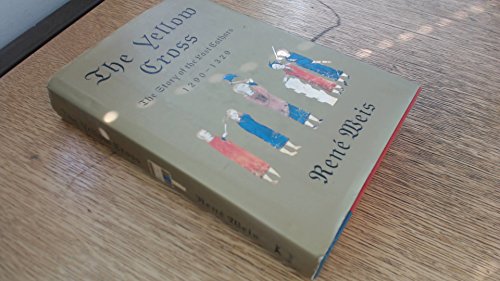
Provides an in-depth study of the medieval Cathar community, which, during the thirteenth century, became the focus of systematic repression by the Catholic Church, were branded as heretics, and suffered successive waves of persecution and execution, but whose faith led them to defy the Catholic Church and the Inquisition for more than thirty years. 17,500 first printing.
Die Inhaltsangabe kann sich auf eine andere Ausgabe dieses Titels beziehen.
Über die Autorin bzw. den Autor
René Weis is Professor of English Literature at University College London. He is the author of numerous scholarly publications and of Criminal Justice: The True Story of Edith Thompson, published to critical acclaim in Britain in 1988.
Auszug. © Genehmigter Nachdruck. Alle Rechte vorbehalten.
Chapter 1
When B?atrice de Planisolles arrived in Montaillou to be married, the village counted some thirty-five separate family names and nearly fifty families, if the different branches of the same family are counted separately. The family names of Montaillou in the last decade of the thirteenth century were Argelier, Arzelier, Authi? (not related to the Axian Perfects and passim Authi? [B]), Az?ma, Baille, Bar, Belot, Benet, Bonclergue, Capelle, Caravessas, Castanier, Clergue, Clergue (B), Faure, Ferri?, Fort, Fournier, Guilabert, Julia, Lizier, Mamol (?), Martre, Marty, Maurs, Maury, Moyshen, P?lissier, Pourcel, Rives, Rous (alias "Colel"), Savenac, Tavernier (?), Teisseyre, Trilhe (or Trialh?), and Vital.
For the purpose of counting the people of Montaillou over a period of eighteen years, the years from c. 1291, the arrival of B?atrice, to 1308, the year the village was raided, seem an appropriate time-span since they coincide with the main Cathar episode. In this period the majority of the villagers whom we will encounter in these pages were born, or grew from their teens and twenties into early middle age. My focus therefore will be mostly the 1280s to mid-1290s generation.
Some 160 of the men, women and children of Montaillou can be identified by name, and there were probably some 250 people living in the village, if the average household is conservatively estimated at five bodies, to include two parents and at least three children per family. Various illegitimate children as well as grandparents and servants were also looked after in nuclear families. In addition there may have been a handful of families residing in the village whose presence is not specifically recorded in the Registers. And the figure of 250 does not include the occupants of the castle, the ch?telaine, her husband, their children and their staff.
In this deeply rural culture men and women needed to be able to depend mutually on one another for survival, hence family links were a bastion of strength. It was the blood ties between clans and families that ultimately provided the Authi?s, and other local Perfects such as Prades Tavernier, Pons Sicre and Arnaud Marty, with a century-old safety net that could never quite be shredded by the Inquisition. Even the Bishop of Pamiers would be aided in his task by family connections. For that reason it is essential to map out the major families of Montaillou before proceeding any further; families from other villages and towns, notably Prades, Ax, Luzenac, Larnat, Tarascon and Junac, and from the Toulousain also played a leading role in the dissemination of Catharism, and they will be met in due course.
Although it is not possible to locate with certainty the whereabouts in the village of all the participants, the homes of the most important among them can be identified on the grid with some confidence (Map 3). My conclusions are generated from a mosaic of mutually corroborative, and mostly incidental, remarks by various witnesses. These are crucially complemented by a striking passage in Pierre Maury's testimony, which appears to offer a semi-structured survey of the village's households (FR, f.257v; see below, page 34). It is a major source for confirming and, in some cases, determining the location in Montaillou of several among the lesser houses in the village.
In the 1290s and in the early years of the fourteenth century Montaillou was dominated by four powerful and variously affluent clans whose houses clustered in the vicinity of the square of Montaillou. They were called Belot, Benet, Rives and Clergue.
The Cathar trio and the Clergues
The houses of the Belots, Benets and Rives were built into the slope of the hill on the north-western side of the main artery so that their fronts faced south or south-east. These properties occupied the space between the junction of capanal den belot and the village square itself, and they were easily overlooked from the plateau. In clement weather their back-roofs provided a favourite place for the social and physical ritual of mutual delousing. All three were substantial dwellings with barns, vegetable gardens and dry-walled courtyards with gates or portals which verged on the village's track. Even the poorer houses of Montaillou usually had vegetable and herb gardens at the front, as did some of the houses in the square. Some properties, like the P?lissiers', were separated from the road by hedges.
The Belots: This large house was low-roofed (bassum) at the back, because of the slope and the convex arching of the "inner" path to Prades which ran down past it into capanal den belot (FR, f.60v). In front of its substantial porch extended the Belots' south-east-facing courtyard, which overlooked the Clergues. It was an obvious place for gossiping matriarchs to take the sun. Slightly apart from the porch was a spot called "las penas," which may have been reserved for servants, and from here the servants would eavesdrop on their mistress's conversations. The Belots were the second-wealthiest clan in the village. They were rich enough to recruit and employ servants, and the boundaries between servant and master were repeatedly transgressed in this household, which was a hive of sexual activity.
There were two parents, four sons and two (or perhaps three) daughters.The sons were called Raymond, Bernard, Guillaume and Arnaud, and the daughters were Raymonde and Alazais, and perhaps Arnaude. The Belot patriarch's name is not known, but he may have been dead by the end of the 1290s because by then the Belots' house was commonly called "Raymond Belot's house," which probably indicates that Raymond was the eldest son and the new head of the family; unless, of course, the father was also called Raymond, in which case the name of the house simply continued. That the Belot brothers Raymond and Bernard shared the house as owners was noted by the new ch?telaine when she lived in the village during this period. The younger Belot brothers were ruffians, and while Bernard Belot sexually assaulted the wife of another Montalionian, his brother Arnaud fathered an illegitimate child called ?tienne when he was still, it seems, in his teens. The Belot mother was called Guillemette, and she would have been in her forties or early fifties in the 1290s. She was on intimate terms with her neighbour and contemporary Mengarde Clergue, the matriarch of the richest and most powerful family in Montaillou. In their devotion to the Cathar cause the Belots did not lag far behind the illustriously connected Benets.
The Benets: The Benets' house stood a few yards north-east and down the hill from the Belots'. It was their home which provided the initial channel for the Cathar reawakening in Montaillou, because Guillaume Benet of Montaillou was the uncle of the Perfect Guillaume Authi?'s wife.
Guillaume and Guillemette Benet had three sons and four daughters. When Montane Benet was born c. 1301-2 her sisters Esclarmonde and Guillemette were "little girls," and her brother Bernard was still only a child in 1308. The relative youth of the Benet children suggests that Guillemette, the mother of the household, was younger than either of the neighbouring matriarchs Guillemette Belot and Mengarde Clergue, who were direct contemporaries. Guillemette Benet may not have been much older than B?atrice de Planisolles. She repeatedly expressed her horror of the pain inflicted by fire, and later had to endure the agony of seeing her brother-in-law being burnt at the stake.
Whereas all the major houses owned livestock and farmed, there was also a need for skilled craftsmen. Just as there were weavers in the village, so the Benets may have been builders, that is masons or roofers, because they owned tools. It is significant that the rich Belots' extension was built for them rather than by...
„Über diesen Titel“ kann sich auf eine andere Ausgabe dieses Titels beziehen.
Suchergebnisse für The Yellow Cross: The Story of the Last Cathars 1290-1329

Beispielbild für diese ISBN
The Yellow Cross: The Story of
Anbieter: World of Books (was SecondSale), Montgomery, IL, USA
Verkäuferbewertung 5 von 5 Sternen

Zustand: Good. Good condition ex-library book with usual library markings and stickers. Artikel-Nr. 00104021205
Gebraucht kaufen
EUR 4,56
Versand gratis
Versand innerhalb von USA
Versand innerhalb von USA
Anzahl: 1 verfügbar
Beispielbild für diese ISBN
The Yellow Cross: The Story of the Last Cathars
Anbieter: ThriftBooks-Atlanta, AUSTELL, GA, USA
Verkäuferbewertung 5 von 5 Sternen
Hardcover. Zustand: Very Good. No Jacket. May have limited writing in cover pages. Pages are unmarked. ~ ThriftBooks: Read More, Spend Less. Artikel-Nr. G0375404902I4N00
Gebraucht kaufen
EUR 5,78
Versand gratis
Versand innerhalb von USA
Versand innerhalb von USA
Anzahl: 1 verfügbar
Beispielbild für diese ISBN
The Yellow Cross: The Story of the Last Cathars
Anbieter: ThriftBooks-Dallas, Dallas, TX, USA
Verkäuferbewertung 5 von 5 Sternen
Hardcover. Zustand: Very Good. No Jacket. May have limited writing in cover pages. Pages are unmarked. ~ ThriftBooks: Read More, Spend Less. Artikel-Nr. G0375404902I4N00
Gebraucht kaufen
EUR 5,78
Versand gratis
Versand innerhalb von USA
Versand innerhalb von USA
Anzahl: 1 verfügbar
Beispielbild für diese ISBN
The Yellow Cross: The Story of the Last Cathars
Anbieter: ThriftBooks-Dallas, Dallas, TX, USA
Verkäuferbewertung 5 von 5 Sternen
Hardcover. Zustand: Good. No Jacket. Former library book; Pages can have notes/highlighting. Spine may show signs of wear. ~ ThriftBooks: Read More, Spend Less. Artikel-Nr. G0375404902I3N10
Gebraucht kaufen
EUR 5,78
Versand gratis
Versand innerhalb von USA
Versand innerhalb von USA
Anzahl: 1 verfügbar
Beispielbild für diese ISBN
The Yellow Cross: The Story of the Last Cathars
Anbieter: ThriftBooks-Dallas, Dallas, TX, USA
Verkäuferbewertung 5 von 5 Sternen
Hardcover. Zustand: Very Good. No Jacket. Former library book; May have limited writing in cover pages. Pages are unmarked. ~ ThriftBooks: Read More, Spend Less. Artikel-Nr. G0375404902I4N10
Gebraucht kaufen
EUR 5,78
Versand gratis
Versand innerhalb von USA
Versand innerhalb von USA
Anzahl: 1 verfügbar
Beispielbild für diese ISBN
The Yellow Cross : The Story of the Last Cathars
Verlag:
Knopf Doubleday Publishing Group, 2001
ISBN 10: 0375404902
ISBN 13: 9780375404900
Gebraucht
Hardcover
Anbieter: Better World Books, Mishawaka, IN, USA
Verkäuferbewertung 5 von 5 Sternen
Zustand: Very Good. 1 Amer ed. Pages intact with possible writing/highlighting. Binding strong with minor wear. Dust jackets/supplements may not be included. Stock photo provided. Product includes identifying sticker. Better World Books: Buy Books. Do Good. Artikel-Nr. 4677776-6
Gebraucht kaufen
EUR 6,29
Versand gratis
Versand innerhalb von USA
Versand innerhalb von USA
Anzahl: 1 verfügbar
Beispielbild für diese ISBN
The Yellow Cross : The Story of the Last Cathars
Verlag:
Knopf Doubleday Publishing Group, 2001
ISBN 10: 0375404902
ISBN 13: 9780375404900
Gebraucht
Hardcover
Anbieter: Better World Books, Mishawaka, IN, USA
Verkäuferbewertung 5 von 5 Sternen
Zustand: Good. 1 Amer ed. Pages intact with minimal writing/highlighting. The binding may be loose and creased. Dust jackets/supplements are not included. Stock photo provided. Product includes identifying sticker. Better World Books: Buy Books. Do Good. Artikel-Nr. 4447694-6
Gebraucht kaufen
EUR 6,29
Versand gratis
Versand innerhalb von USA
Versand innerhalb von USA
Anzahl: 1 verfügbar
Beispielbild für diese ISBN
The Yellow Cross : The Story of the Last Cathars
Verlag:
Knopf Doubleday Publishing Group, 2001
ISBN 10: 0375404902
ISBN 13: 9780375404900
Gebraucht
Hardcover
Anbieter: Better World Books: West, Reno, NV, USA
Verkäuferbewertung 5 von 5 Sternen
Zustand: Very Good. 1 Amer ed. Pages intact with possible writing/highlighting. Binding strong with minor wear. Dust jackets/supplements may not be included. Stock photo provided. Product includes identifying sticker. Better World Books: Buy Books. Do Good. Artikel-Nr. 4677776-6
Gebraucht kaufen
EUR 6,29
Versand gratis
Versand innerhalb von USA
Versand innerhalb von USA
Anzahl: 1 verfügbar
Beispielbild für diese ISBN
The Yellow Cross : The Story of the Last Cathars
Verlag:
Knopf Doubleday Publishing Group, 2001
ISBN 10: 0375404902
ISBN 13: 9780375404900
Gebraucht
Hardcover
Anbieter: Better World Books: West, Reno, NV, USA
Verkäuferbewertung 5 von 5 Sternen
Zustand: Good. 1 Amer ed. Former library copy. Pages intact with minimal writing/highlighting. The binding may be loose and creased. Dust jackets/supplements are not included. Includes library markings. Stock photo provided. Product includes identifying sticker. Better World Books: Buy Books. Do Good. Artikel-Nr. 4002998-6
Gebraucht kaufen
EUR 6,29
Versand gratis
Versand innerhalb von USA
Versand innerhalb von USA
Anzahl: 1 verfügbar
Beispielbild für diese ISBN
The Yellow Cross: The Story of the Last Cathars
Anbieter: Wonder Book, Frederick, MD, USA
Verkäuferbewertung 5 von 5 Sternen
Zustand: Good. Good condition. Good dust jacket. A copy that has been read but remains intact. May contain markings such as bookplates, stamps, limited notes and highlighting, or a few light stains. Artikel-Nr. V13C-03670
Gebraucht kaufen
EUR 6,33
Versand gratis
Versand innerhalb von USA
Versand innerhalb von USA
Anzahl: 1 verfügbar