
Verwandte Artikel zu Evening
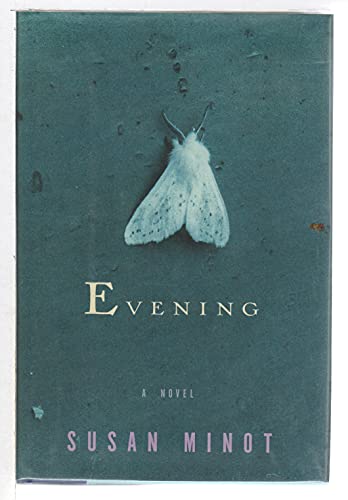
Inhaltsangabe
With two novels and one short story collection published to overwhelming critical acclaim ("Monkeys takes your breath away," said Anne Tyler; "heartbreaking, exhilarating," raved the New York Times Book Review), Susan Minot has emerged as one of the most gifted writers in America, praised for her ability to strike at powerful emotional truths in language that is sensual and commanding, mesmerizing in its vitality and intelligence. Now, with Evening, she gives us her most ambitious novel, a work of surpassing beauty. During a summer weekend on the coast of Maine, at the wedding of her best friend, Ann Grant fell in love. She was twenty-five. Forty years later--after three marriages and five children--Ann Lord finds herself in the dim claustrophobia of illness, careening between lucidity and delirium and only vaguely conscious of the friends and family parading by her bedside, when the memory of that weekend returns to her with the clarity and intensity of a fever-dream. Evening unfolds in the rushlight of that memory, as Ann relives those three vivid days on the New England coast, with motorboats buzzing and bands playing in the night, and the devastating tragedy that followed a spectacular wedding. Here, in the surge of hope and possibility that coursed through her at twenty-five--in a singular time of complete surrender--Ann discovers the highest point of her life. Superbly written and miraculously uplifting, Evening is a stirring exploration of time and memory, of love's transcendence and of its failure to transcend--a rich testament to the depths of grief and passion, and a stunning achievement.
Die Inhaltsangabe kann sich auf eine andere Ausgabe dieses Titels beziehen.
Über die Autorin bzw. den Autor
Susan Minot was born in Boston, Massachusetts, and grew up in Manchester-by-the-Sea. She studied writing and painting at Brown University and received an MFA in writing from Columbia University. After publishing short stories in <i>Grand Street</i> and <i>The New Yorker</i> she was offered a contract for a novel by the legendary publisher Seymour Lawrence, who was to publish her next three books. His initial support for "a work of fiction" became <i>Monkeys</i>, nine stories which together make up a novel about the Vincent family, a New England family of seven children with a Catholic mother and Brahmin-background father. The stories cover twelve years in the life of the children, their mother's "monkeys," during which a tragic accident alters their lives. It was published in a dozen countr
Aus dem Klappentext
els and one short story collection published to overwhelming critical acclaim ("<i>Monkeys</i> takes your breath away," said Anne Tyler; "heartbreaking, exhilarating," raved the <i>New York Times Book Review</i>), Susan Minot has emerged as one of the most gifted writers in America, praised for her ability to strike at powerful emotional truths in language that is sensual and commanding, mesmerizing in its vitality and intelligence. Now, with Evening, she gives us her most ambitious novel, a work of surpassing beauty. During a summer weekend on the coast of Maine, at the wedding of her best friend, Ann Grant fell in love. She was twenty-five. Forty years later--after three marriages and five children--Ann Lord finds herself in the dim claustrophobia of illness, careening between lucidity and delirium and only vaguely conscious of the friends and family parading by her bedside, when the memory of that weekend returns to her with the clarity and intensity of a fever-dream
Auszug. © Genehmigter Nachdruck. Alle Rechte vorbehalten.
A new lens passed over everything she saw, the shadows moved on the wall like skeletons handing things to each other. Her body was flung back over a thousand beds in a thousand other rooms. She was undergoing a revolution, she felt split open. In her mattress there beat the feather of a wild bird.
Where were you all this time? she said. Where have you been?
I guess far away.
Yes you were. Too far away.
They sat in silence.
You know you frightened me a little, she said. At the beginning.
No.
You did.
He smiled at that.
You looked as if you didn't need anyone, she said.
But those are the ones who need the most, he said. Don't you know that?
I do now, she said. Too late.
Never too late to know something, he said.
Maybe not, she said. But too late to do any good.
She lifted the yellow suitcase and banged it against her leg. She dragged it over the polished floor. The ceiling of Grand Central towered above her with arches and glass panes and squares of sunlight.
She was not late and did not have to hurry. The clerk in the window bowed his forehead like a priest in confession and pushed her ticket through. Across the great domed room she spotted a redcap with a cart and though she usually would have carried her bag to save money decided this was a special occasion. She was on her way to a wedding. She signaled to him.
The redcap flung her suitcase onto his cart. Whoever you're going to meet, he said, he's a lucky guy.
The heat in New York had been terrible and the air underground at the gate was heavy and close. When the train came out of the tunnel she saw thunderheads turning the sky yellow and grey. The rain started, ticking the window with scratches then pouring over it in streams. Crowds of cat-o'-nine-tails surged in a wave as the train blew past. By the time they reached Providence the rain had stopped and it was hot again with a hot wind blowing in the open doors. The engine shut off and they waited in the station. No new passengers got on. It was as if the world had paused on this late morning in July. She held her book loosely and watched out the window.
The station in Boston was shadowed in scaffolding dark as a cave with bands of light on the paneled benches and few travelers. The redcap who took her bag was young and did not say a word. He pushed a contraption with a bad wheel and had trouble steering through the door. She came out of the damp entranceway into the brightness of the turn-around beyond where she saw among the parked cars the dark green MG. The doors were open and she saw in front Buddy Wittenborn and in the driver's seat Ralph Eastman and a third person with his back to her. The person was standing with one foot up on the running board. When she got close Ralph caught sight of her and jumped out of the car and Buddy looked over with a lazy smile. Only when she was near did the back turn around and the long leg come off the running board and she saw the man's face. He was wearing squarish dark glasses so she couldn't see his eyes. She noticed his mouth was full though set in a particular firm way, the combination of which affected her curiously. She felt as if she'd been struck on the forehead with a brick.
The person's face seemed lit from within.
Ralph Eastman gave her a kiss on the cheek asking how was the career girl from New York and Buddy Wittenborn slid off the front seat and hugged her and ducked back turning his head and pushing his glasses back on his nose. He was wearing a disheveled shirt buttoned up wrong and a belt outside the belt loops and even with the beanie on his head looked as always handsome.
Ralph tipped the redcap, taking charge of the bags. She was trying to look at any other place other than at the person in the sunglasses.
Oh, Buddy said. This is Arden.
She was far enough away from the person that not to shake his hand was not rude. She didn't dare shake his hand. Hi, she said and smiled brightly. Her handbag fell to the ground.
That's Ann, Buddy said.
Hello Ann. The person had a deep voice which came from somewhere deep in his chest. We've been waiting for you, Ann. It was also kind of rough.
She caught a lipstick rolling and looked up. The person was not smiling. She blushed and looked back down. Am I that late? We stopped for a while in Providence . . . She felt the black glasses facing her.
Ralph slammed the back hatch. A late train has been figured into the calculations.
He's sure we'll miss the ferry, Buddy said.
On the contrary, just what I plan to avoid. So let's go.
The person was walking away from the car. He bent to pick something off the ground.
Harris, Ralph called, starting the car.
The person came back on long slow legs and got into the backseat beside Ann. It was an MG station wagon and the windows tilted in. He held up some keys attached to a Saint Christopher medal. These yours? he said.
God, Ann said, taking her keys. Thank you. That was idiotic. She looked straight at him. Which is your name?
They both are.
In what order?
Which is better? The face was placid and she could not read the eyes behind the glasses.
I don't know. They're both good.
No, the person said and he smiled for the first time. One is always better.
It was 1954 and Ann Grant was twenty-five years old.
They drove north. She liked being the girl in a car with three boys. They drove through Revere where the water was purple at the shore and the highway was raised above the tract houses, past gas stations with enormous signs shaped like horses, and miniature golf courses with waterfalls and orange dinosaurs. They passed motels with teepee cabins and restaurants shaped like pagodas and restaurants shaped like barns with plastic cows outside. They exited to Danvers winding past steeples and fudge stores with pink script writing back onto the highway where green countryside flickered out the window behind the person's profile. His name was Harris, Ralph was the one to say, Harris Arden. She sat beside Harris Arden in the backseat and they talked and now and then he turned toward her. He'd grown up in Virginia, was born in Turkey, had lived in Switzerland. His father was a diplomat, raised in St. Louis, his mother was Turkish which explained his coloring. Harris Arden lived in Chicago now, he said, and worked in a hospital.
Then Ann Grant realized who he was. He was Doctor R, Carl's friend, whom he'd served with in Korea. But it wasn't Doctor R as she had thought but Doctor Ar for Arden. She had pictured someone older.
You're the musician, she said.
Not so much anymore.
Isn't your band playing at the wedding?
What's left of it.
And you're a doctor too? Buddy said, prying open a beer with a Swiss Army knife. Who wants a cold one?
No one took him up on it. The person didn't seem to hear and stared out the window.
Ann sings, Ralph said, facing forward driving.
Does she? The person looked interested.
Just for fun, Ann said. Just in little places.
In New York little places are pretty big.
These really are little, she said. It's not even my job.
Ann's a pretty good singer, Buddy said.
I'd like to hear her sing, said the person in the sunglasses looking ahead.
Have you moved her?
She was sitting up this morning. Mrs....
„Über diesen Titel“ kann sich auf eine andere Ausgabe dieses Titels beziehen.
Suchergebnisse für Evening

Beispielbild für diese ISBN
Evening
Anbieter: World of Books (was SecondSale), Montgomery, IL, USA
Verkäuferbewertung 5 von 5 Sternen

Zustand: Very Good. Item in very good condition! Textbooks may not include supplemental items i.e. CDs, access codes etc. Artikel-Nr. 00106429113
Gebraucht kaufen
EUR 4,23
Versand gratis
Versand innerhalb von USA
Versand innerhalb von USA
Anzahl: 2 verfügbar
Beispielbild für diese ISBN
Evening
Anbieter: World of Books (was SecondSale), Montgomery, IL, USA
Verkäuferbewertung 5 von 5 Sternen
Zustand: Acceptable. Item in good condition. Textbooks may not include supplemental items i.e. CDs, access codes etc. Artikel-Nr. 00059379798
Gebraucht kaufen
EUR 4,23
Versand gratis
Versand innerhalb von USA
Versand innerhalb von USA
Anzahl: 1 verfügbar
Beispielbild für diese ISBN
Evening
Anbieter: World of Books (was SecondSale), Montgomery, IL, USA
Verkäuferbewertung 5 von 5 Sternen
Zustand: Good. Item in good condition. Textbooks may not include supplemental items i.e. CDs, access codes etc. Artikel-Nr. 00060142548
Gebraucht kaufen
EUR 4,23
Versand gratis
Versand innerhalb von USA
Versand innerhalb von USA
Anzahl: 9 verfügbar
Beispielbild für diese ISBN
Evening
Anbieter: Wonder Book, Frederick, MD, USA
Verkäuferbewertung 5 von 5 Sternen
Zustand: Very Good. Very Good condition. Very Good dust jacket. In protective mylar cover. A copy that may have a few cosmetic defects. May also contain light spine creasing or a few markings such as an owner's name, short gifter's inscription or light stamp. Artikel-Nr. Y05J-00172
Gebraucht kaufen
EUR 5,71
Versand gratis
Versand innerhalb von USA
Versand innerhalb von USA
Anzahl: 1 verfügbar
Beispielbild für diese ISBN
Evening
Anbieter: ThriftBooks-Atlanta, AUSTELL, GA, USA
Verkäuferbewertung 5 von 5 Sternen
Hardcover. Zustand: Very Good. No Jacket. May have limited writing in cover pages. Pages are unmarked. ~ ThriftBooks: Read More, Spend Less. Artikel-Nr. G0375400370I4N00
Gebraucht kaufen
EUR 5,77
Versand gratis
Versand innerhalb von USA
Versand innerhalb von USA
Anzahl: 1 verfügbar
Beispielbild für diese ISBN
Evening
Anbieter: ThriftBooks-Dallas, Dallas, TX, USA
Verkäuferbewertung 5 von 5 Sternen
Hardcover. Zustand: Very Good. No Jacket. May have limited writing in cover pages. Pages are unmarked. ~ ThriftBooks: Read More, Spend Less. Artikel-Nr. G0375400370I4N00
Gebraucht kaufen
EUR 5,77
Versand gratis
Versand innerhalb von USA
Versand innerhalb von USA
Anzahl: 1 verfügbar
Beispielbild für diese ISBN
Evening
Anbieter: ThriftBooks-Dallas, Dallas, TX, USA
Verkäuferbewertung 5 von 5 Sternen
Hardcover. Zustand: Very Good. No Jacket. Missing dust jacket; May have limited writing in cover pages. Pages are unmarked. ~ ThriftBooks: Read More, Spend Less. Artikel-Nr. G0375400370I4N01
Gebraucht kaufen
EUR 5,77
Versand gratis
Versand innerhalb von USA
Versand innerhalb von USA
Anzahl: 1 verfügbar
Beispielbild für diese ISBN
Evening
Anbieter: Wonder Book, Frederick, MD, USA
Verkäuferbewertung 5 von 5 Sternen
Zustand: Very Good. Very Good condition. Good dust jacket. A copy that may have a few cosmetic defects. May also contain light spine creasing or a few markings such as an owner's name, short gifter's inscription or light stamp. Artikel-Nr. O11J-01332
Gebraucht kaufen
EUR 6,16
Versand gratis
Versand innerhalb von USA
Versand innerhalb von USA
Anzahl: 2 verfügbar
Beispielbild für diese ISBN
Evening
Verlag:
Knopf Doubleday Publishing Group, 1998
ISBN 10: 0375400370
ISBN 13: 9780375400377
Gebraucht
Hardcover
Anbieter: Better World Books, Mishawaka, IN, USA
Verkäuferbewertung 5 von 5 Sternen
Zustand: Good. Former library copy. Pages intact with minimal writing/highlighting. The binding may be loose and creased. Dust jackets/supplements are not included. Includes library markings. Stock photo provided. Product includes identifying sticker. Better World Books: Buy Books. Do Good. Artikel-Nr. GRP29633946
Gebraucht kaufen
EUR 6,47
Versand gratis
Versand innerhalb von USA
Versand innerhalb von USA
Anzahl: 1 verfügbar
Beispielbild für diese ISBN
Evening
Verlag:
Knopf Doubleday Publishing Group, 1998
ISBN 10: 0375400370
ISBN 13: 9780375400377
Gebraucht
Hardcover
Anbieter: Better World Books, Mishawaka, IN, USA
Verkäuferbewertung 5 von 5 Sternen
Zustand: Good. Pages intact with minimal writing/highlighting. The binding may be loose and creased. Dust jackets/supplements are not included. Stock photo provided. Product includes identifying sticker. Better World Books: Buy Books. Do Good. Artikel-Nr. GRP9532179
Gebraucht kaufen
EUR 6,47
Versand gratis
Versand innerhalb von USA
Versand innerhalb von USA
Anzahl: 2 verfügbar