
Verwandte Artikel zu The Confirmation
Inhaltsangabe
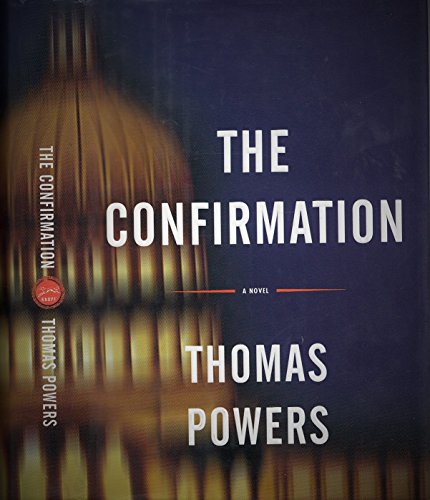
Confirmation hearings for a prospective CIA director are threatened by potentially damaging revelations from the man's past, in a debut novel from the critically acclaimed author of The Man Who Kept the Secrets. 30,000 first printing.
Die Inhaltsangabe kann sich auf eine andere Ausgabe dieses Titels beziehen.
Über die Autorin bzw. den Autor
Thomas Powers is a Pulitzer Prize-winning journalist whose most recent book, Heisenberg's War: The Secret History of the German Bomb, was published simultaneously in four countries -- the United States, Germany, France, and Britain -- where it received wide notice and sparked continuing controversy. He has written frequently about intelligence organizations since the publication of The Man Who Kept the Secrets: Richard Helms and the CIA (1979). His other books include Thinking About the Next War; The War at Home: Vietnam and the American People; and Diana: The Making of a Terrorist. He lives in Vermont with his wife. This is his first novel.
Aus dem Klappentext
igh-stakes political intrigue on the shadowy side of Washington, The Confirmation sheds light on the men who run the Central Intelligence Agency, on investigative journalists, and on government officials fighting for control of the nation's secrets.
The confirmation of the seemingly spotless nominee Frank Cabot as Director of Central Intelligence is jeopardized when Brad Cameron, a young CIA officer looking for evidence of American prisoners left behind after the Vietnam war, uncovers a suppressed report -- a claim by a convicted American spy that Cabot cooperated with the Russians in a shameful cover-up twenty years earlier. As Cabot attempts to clear his name, reporter George Tater digs relentlessly for the story that will revive his career and Cameron doggedly pursues the truth about what happened. The result is a full-scale Washington media circus, as a host of interested parties -- the president, the press, the senators who must vote yea or nay on Cabot's nomination, an
Auszug. © Genehmigter Nachdruck. Alle Rechte vorbehalten.
From Chapter One
Brad liked Cabot's way of talking, his modesty. But the truth was he'd been talking to the White House for weeks; it was a done deal, yet he told no one. Not even his wife had known ten days ago. Now Brad's life was about to change, and he didn't need a wise if exotic bird like Hugh Diamond to explain why. It was all right there on the front page of the morning's Washington Post, face out in the newspaper vending machines Brad passed every block or two on his way down Nineteenth through the freezing slush toward the Mall. Two columns, off-lead, befitting big news in a company town:ANDERSON SIDES WITH OLD BOYS,
PICKS COLD WAR PRO FOR CIAThe light changed and Brad Cameron jogged across the street toward the Mall, head down against the wet snow. By now it was seven or a little later. Brad ran every morning, summer and winter, sun or rain, no matter how cold it got and, more to the point, no matter how hot. Brad's third summer in Washington was coming up; he hated the 100-degree days with a humidity reading one point short of being underwater. Brad was a true child of New England; what he loved were winters on snowshoes and summers in the cool pine forests of Maine. These Washington summers gave him serious pause. But whatever the weather he ran eight-minute miles till his body glowed pink and his yellow hair lay flat with sweat. He'd been running since he was sent off to boarding school in midterm when he was ten years old. Running gave him a feeling of peace.
Franklin S. Cabot. Years passed before most young new intelligence officers had a word alone with the man running the CIA. Some never did. Brad saw him every week or so to report the status of news -- usually none -- about members of the U.S. military services carried for thirty years on the Pentagon's official roster of those reported Missing in Action in Vietnam. Frank Cabot was very, very attentive to this subject, and it hadn't taken Brad long to understand why -- MIAs were the passion of the chairman of the Senate's Select Committee on Intelligence.
Cabot had been friendly even before Jenny came into Brad's life. He had none of the bluff swagger of some officers in the upper ranks of the CIA who were plainly anticipating greater things. His businesslike manner did not change during the weeks while the naming of the new Director of Central Intelligence had been the principal smoke-break and lunchtime game at the Agency, ever since Patrick Delaney had announced on New Year's Day that he was resigning as DCI to spend more time with his family. He was running the outfit one week, gone the next. The rumor was he rubbed the president the wrong way. But even after Cabot was named acting director, no one called him a front-runner. Too quiet, too professional, too identified with the Cold War, too . . . pick your reason. Perhaps it was his calm style; he didn't seem ready to die or kill for the job.
Over lunch in the cafeteria, or on the second floor where Brad had a windowless cubicle in the East Asia Division, or down in Records in the sub-basement where Brad spent two or three afternoons a week reading MIA files at one of the big oak tables, or in the halls and on the way out to one of the far parking lots, the names were floated and then picked apart. In the bowels of the Agency many believed that the natural and logical choice for Director of Central Intelligence was Joe Flint, Deputy Director for Operations, venerable old boy, once the fair-haired protege of the legendary Allen Dulles. The fair hair was thin now, but Flint had the respect of the professionals. In addition, he had done at least one important favor for every president since John F. Kennedy. They loved him on the Hill, they hated him at Harvard, he had never been caught in a lie, it was widely accepted in Washington that among many other exploits he had personally recruited the secretary of a member of the old Soviet Politburo in 1979, and he had no enemies at the Pentagon. Flint had earned his shot at the job.
But Joe Flint had at least one blot in his copybook. A dozen years back he had informed an unmarried but pregnant case officer working for him in the Tel Aviv station that he was going to ship her home unless she got an abortion. God knows what was going through his mind. She got a lawyer, and the CIA's general counsel unwisely asked this lawyer for a couple of days to consider their offer to settle.
The next day The Washington Post ran a front-page story by Faith Osborne reporting the awful facts. Osborne had a way with stories about the treatment of women by men in Washington. First she reported the crime. Then she reported the inadequate and self-serving official response to the crime. Then she reported the spreading national indignation of politically active organizations at attempts to cover up the crime. Faith Osborne kept Joe Flint's name on the front page for a week, and despite Flint's eventual apology -- and a cash settlement sufficient to send the infant to the private school, college, and law school of his choice -- it was considered something of a miracle, much later, when Flint was appointed the Agency's Deputy Director for Operations and actually assumed the post.
"But that was all years ago," said Brad at lunch one day with Hugh. Brad had seen Flint only once, in the auditorium, at a memorial service for a recently deceased old boy. Flint was just about the last of his generation -- he had joined up during the Korean War -- but there was no stoop to his shoulders, no slack to his chin or gut. Sitting in the second row of the Bubble, exchanging an occasional word with Deputy Director for Intelligence Frank Cabot, next to him, a rival of many years' standing, Flint looked weathered but vigorous. Everything was still new to Brad at the time; he gawked when he saw these legends in the flesh.
Flint had risen in his turn and spoke of the deceased briefly but with feeling as a man you could trust with your life; he knew, he had done it.
"Few people recognized him in the halls," said Flint. "Fewer knew his role in creating this agency. Running a secret intelligence organization requires silence while other men are giving press conferences. You young men and women out there -- we were like you once, fresh out of college, full of ambition and love of country, ready to lay down our lives. Some of us did; you've all seen their names and stars in the main hall. But trust me, the time will come when it will seem easier to die than to hold your tongue."
Flint made a strong impression. He seemed like the sort of man Brad's father had known in the Agency just after the Korean War. Some flap ended his dad's career: Brad's mother was vague; his uncle Max said the simple answer was Joe McCarthy. That was as close as Brad could get. After leaving the Agency, Brad's father went to law school, married late, and died at sixty when Brad was only ten. But Uncle Max often said how much his father's Agency years meant to him. He invited Brad home often for weekends during the bleak boarding-school years and helped him get into college. It was Uncle Max who introduced him, one memorable night at the St. Botolph Club, to the correct method for making a martini and brought him as a teenager to Washington to meet some of his father's old Agency friends. In the absence of Brad's mother, whose chief talent was for marrying rich husbands, Uncle Max had exerted a powerful influence on Brad's life.
"Flint will never be DCI," said Hugh Diamond. "Faith Osborne isn't the only one with a long memory in this town. That kid is probably a cute little tyke with freckles by now and you can bet the rent money that Faith knows exactly where to find him. Trust me. Flint's days are numbered. The new DCI is going to want his own DDO."
Hugh had taken Brad under his wing soon...
„Über diesen Titel“ kann sich auf eine andere Ausgabe dieses Titels beziehen.
Suchergebnisse für The Confirmation

Beispielbild für diese ISBN
The Confirmation
Anbieter: World of Books (was SecondSale), Montgomery, IL, USA
Verkäuferbewertung 5 von 5 Sternen

Hardback. Zustand: Good. Artikel-Nr. 00095954224
Gebraucht kaufen
EUR 4,49
Versand gratis
Versand innerhalb von USA
Versand innerhalb von USA
Anzahl: 2 verfügbar
Beispielbild für diese ISBN
The Confirmation
Anbieter: World of Books (was SecondSale), Montgomery, IL, USA
Verkäuferbewertung 5 von 5 Sternen
Hardback. Zustand: Very Good. Artikel-Nr. 00106067781
Gebraucht kaufen
EUR 4,49
Versand gratis
Versand innerhalb von USA
Versand innerhalb von USA
Anzahl: 1 verfügbar
Beispielbild für diese ISBN
The Confirmation
Verlag:
Knopf (edition First Edition), 2000
ISBN 10: 0375400206
ISBN 13: 9780375400209
Gebraucht
Hardcover
Erstausgabe
Anbieter: BooksRun, Philadelphia, PA, USA
Verkäuferbewertung 5 von 5 Sternen
Hardcover. Zustand: Very Good. First Edition. With dust jacket. It's a well-cared-for item that has seen limited use. The item may show minor signs of wear. All the text is legible, with all pages included. It may have slight markings and/or highlighting. Artikel-Nr. 0375400206-11-1-29
Gebraucht kaufen
EUR 6,74
Versand gratis
Versand innerhalb von USA
Versand innerhalb von USA
Anzahl: 1 verfügbar
Beispielbild für diese ISBN
The Confirmation
Anbieter: Wonder Book, Frederick, MD, USA
Verkäuferbewertung 5 von 5 Sternen
Zustand: Very Good. Signed Copy . Very Good dust jacket. Signed/Inscribed by author on half title page. Artikel-Nr. SA02OS-00755
Gebraucht kaufen
EUR 6,99
Versand gratis
Versand innerhalb von USA
Versand innerhalb von USA
Anzahl: 1 verfügbar
Beispielbild für diese ISBN
The Confirmation
Verlag:
Knopf Doubleday Publishing Group, 2000
ISBN 10: 0375400206
ISBN 13: 9780375400209
Gebraucht
Hardcover
Anbieter: Better World Books, Mishawaka, IN, USA
Verkäuferbewertung 5 von 5 Sternen
Zustand: Good. Pages intact with minimal writing/highlighting. The binding may be loose and creased. Dust jackets/supplements are not included. Stock photo provided. Product includes identifying sticker. Better World Books: Buy Books. Do Good. Artikel-Nr. GRP93888780
Gebraucht kaufen
EUR 10,64
Versand gratis
Versand innerhalb von USA
Versand innerhalb von USA
Anzahl: 3 verfügbar
Beispielbild für diese ISBN
The Confirmation
Anbieter: Robinson Street Books, IOBA, Binghamton, NY, USA
Verkäuferbewertung 4 von 5 Sternen

Hardcover. Zustand: As New. Prompt Shipment, shipped in Boxes, Tracking PROVIDEDTips lightly bumped else near fine in near fine dust jacket. First edition *. Artikel-Nr. ware77kk4658
Gebraucht kaufen
EUR 12,40
EUR 8,47 Versand
Versand innerhalb von USA
Versand innerhalb von USA
Anzahl: 1 verfügbar
Beispielbild für diese ISBN
The Confirmation
Verlag:
Alfred A. Knopf, New York, 2000
ISBN 10: 0375400206
ISBN 13: 9780375400209
Gebraucht
Hardcover
Erstausgabe
Anbieter: Between the Covers-Rare Books, Inc. ABAA, Gloucester City, NJ, USA
Verkäuferbewertung 5 von 5 Sternen
Hardcover. Zustand: Fine. Zustand des Schutzumschlags: Fine. First Edition. First edition. Fine in fine dust jacket. Hardcover and dust jacket. Clean text. Nice clean copy. Artikel-Nr. 247855
Gebraucht kaufen
EUR 17,91
EUR 4,90 Versand
Versand innerhalb von USA
Versand innerhalb von USA
Anzahl: 1 verfügbar
Foto des Verkäufers
The Confirmation
Verlag:
Alfred A. Knopf, New York, 2000
ISBN 10: 0375400206
ISBN 13: 9780375400209
Gebraucht
Hardcover
Erstausgabe
Anbieter: Between the Covers-Rare Books, Inc. ABAA, Gloucester City, NJ, USA
Verkäuferbewertung 5 von 5 Sternen
Hardcover. Zustand: Fine. Zustand des Schutzumschlags: Fine. First Edition. First edition. Fine in fine dustwrapper. Although not marked in any way, this copy is from the distinguished modern first edition collection of Bruce Kahn. Artikel-Nr. 301802
Gebraucht kaufen
EUR 25,71
EUR 4,90 Versand
Versand innerhalb von USA
Versand innerhalb von USA
Anzahl: 1 verfügbar
Beispielbild für diese ISBN
The Confirmation
Verlag:
Alfred A. Knopf, New York, 2000
ISBN 10: 0375400206
ISBN 13: 9780375400209
Gebraucht
Hardcover
Erstausgabe
Anbieter: Ground Zero Books, Ltd., Silver Spring, MD, USA
Verkäuferbewertung 5 von 5 Sternen
Hardcover. 413, [3] p. The author is a Pulitizer Prize-winning journalist who wrote Heisenberg's War, the Man Who Kept the Secrets, Diana, The Making of a Terrorist, and Thinking About the Next War. This is the author's first novel. This novel about the power brokers in Washington D.C. revolves around a nominee for CIA director who is forced to confront a dangerous secret from this past. Among those caught up in the ordeal are an idealistic CIA analyst, an old bull of the Senate, an unprincipled investigative reporter, and two disgruntled war veterans. Very good in very good dust jacket. DJ has slight wear and soiling, with small edge wear. First edition. Stated. Presumed first printing. Artikel-Nr. 60467
Gebraucht kaufen
EUR 26,17
EUR 4,46 Versand
Versand innerhalb von USA
Versand innerhalb von USA
Anzahl: 1 verfügbar
Beispielbild für diese ISBN
The Confirmation
Anbieter: Revaluation Books, Exeter, Vereinigtes Königreich
Verkäuferbewertung 5 von 5 Sternen
Hardcover. Zustand: Brand New. 413 pages. 9.50x7.00x1.50 inches. In Stock. Artikel-Nr. 0375400206
Neu kaufen
EUR 31,77
EUR 14,91 Versand
Versand von Vereinigtes Königreich nach USA
Versand von Vereinigtes Königreich nach USA
Anzahl: 1 verfügbar