
Inhaltsangabe
An acclaimed journalist and novelist explores the legacy and future of American liberalism through the history of his family's politically active history
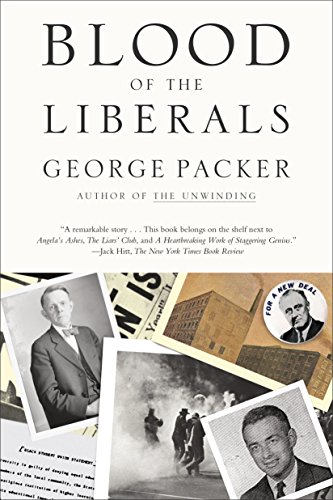
George Packer's maternal grandfather, George Huddleston, was a populist congressman from Alabama in the early part of the century-an agrarian liberal in the Jacksonian mold who opposed the New Deal. Packer's father was a Kennedy-era liberal, a law professor and dean at Stanford whose convictions were sorely-and ultimately fatally-tested in the campus upheavals of the 1960s. The inheritor of two sometimes conflicting strains of the great American liberal tradition, Packer discusses the testing of ideals in the lives of his father and grandfather and his own struggle to understand the place of the progressive tradition in our currently polarized political climate. Searching, engrossing, and persuasive, Blood of the Liberals is an original, intimate examination of the meaning of politics in American lives.
Die Inhaltsangabe kann sich auf eine andere Ausgabe dieses Titels beziehen.
Über die Autorin bzw. den Autor
GEORGE PACKER is a staff writer at The Atlantic and the author of The Assassins' Gate: America in Iraq, which received several prizes and was named one of the ten best books of 2005 by The New York Times Book Review. He is also the author of two novels, The Half Man and Central Square, and two other works of nonfiction, including The Village of Waiting. His play, Betrayed, ran for five months in 2008 and won the Lucille Lortel Award for Outstanding Play. His most recent book is Our Man: Richard Holbrooke and the End of the American Century. He lives in Brooklyn.
Auszug. © Genehmigter Nachdruck. Alle Rechte vorbehalten.
Blood of the Liberals
By George PackerFarrar Straus Giroux
Copyright © 2001 George PackerAll right reserved.
ISBN: 9780374527785
Chapter One
A Thomas Jefferson Democrat
In the year of my grandfather's birth, 1869, Ulysses S. Grant becamePresident and General Nathan Bedford Forrest (CSA) resigned asGrand Wizard and dissolved the recently formed Invisible Empireof the Ku Klux Klan, fifty miles south of my grandfather's birthplace inTennessee. On the day of my grandfather's death in 1960, John F.Kennedy was campaigning for the Democratic nomination for Presidentand Martin Luther King, Jr., was holding a strategy session inMontgomery, Alabama, on the new student sit-in movement. The year1869 is almost as close to 1776 as to 1960. Born in the nineteenth century,dying in the twentieth, George Huddleston lived mentally in theeighteenth, the century of yeoman farmers and revolutionary democrats.His congressional career stretched from 1915 to 1937, and hisviews won him, at various turns, the labels Bolshevik, socialist, liberal,and finally "the conservative gentleman from Birmingham, Alabama,"and "the darling of Wall Street." But at the most difficult moments,when his political life was on the line, he always called himself "aThomas Jefferson Democrat." To him the meaning was self-evident;in fact, the term encompassed a set of complications, even contradictions,that originate in Jefferson himself and the revolutionary age,when the new republic was working out what kind of society it wantedto be. By our standards, George Huddleston ended his career repudiatingeverything he had stood for at the start. By his own lights, heremained true to a core of belief?the heartwood within the ringsof modern interpretation, something old and hard and knotty. Hebelieved in the right and ability of ordinary people to run their ownlives, and he distrusted any concentration of wealth or power thatthreatened to take that right away. This core sustained him until theage moved on, and then it brought him to grief, public defeat added toprivate misery, leaving him with not much more than his fierce pride.
When I was a boy my grandfather meant little to me. He was theSolomonic figure at the center of my mother's tales about a raucoushousehold of five children. The stories always followed the samepath?from civil war or rebellion to gruff, essentially good-humoredrestoration. These were comedies, and to me their moral was that a bigfamily, with lots of children and dogs, was happier than my own. Thedogs made a far deeper impression on me than my grandfather, especiallythe heroic Great Dane, Duke, whom a cop shot through theneck as the dog chased a bicycle. Duke survived, but the cop, whosebullet just missed hitting my mother, was suspended from the force onorders of Representative Huddleston. He was the unquestionedauthority who only had to utter a name to quiet the thousand petty disputesthat broke out daily among his offspring. I knew that he wasnearly twice as old as my grandmother when he married at age forty-eight,and ninety when he died, and though he died just six monthsbefore my birth I always assumed that he'd been dead for decades. Mymain impression was that he was old, impossibly old. When I was thirteenand my grandmother died, I inherited my grandfather's pocketwatch, a pair of Civil War muskets, his infantryman's sword from theSpanish-American War, and a set of brass knuckles, all of which deepenedmy sense that he and I belonged to different civilizations.
A few years ago I asked my mother if her father's family had ownedslaves. She sighed, as if I'd finally raised the subject she'd alwaysdreaded. Only a dozen, she said, and not on a cotton plantation but ona hardscrabble farm in the bluegrass country of middle Tennessee, allof them freed (by defeat in the Civil War) several years before mygrandfather was born. Still, slave owners. The stain of the South, evena small one, lay upon us. The news shocked me, though it seemed toimplicate her rather than me, as if the sins of the fathers have a statuteof limitations at the third generation. Instead of personal culpability orthe heavy hand of ancestral guilt, I felt mildly excited to learn of thefamily's connection to the great American crime. History, any history,confers meaning on a life.
The truth is, I already should have known. My mother had publisheda collection of essays about her father, most of them writtenwhen I was a boy. In "Lee's Lieutenants" she wrote: "My father saidthat before the Civil War his grandfather had a fairly large farm workedby ten or twelve hands." I read this sentence several times over theyears without stopping to consider just who those "hands" were?I'dalways pictured young white hires, like the ranch hands on Bonanza.Perhaps some scruple had kept my mother from using the word"slaves."
When she was twelve, eager to assert her regional pride amongclassmates at a new school, she announced that she wished the Southhad won the war, slavery or no slavery. That night she boasted of herrebel stand to her father.
"Don't talk like an ass," he told her. "Slavery is a terrible evil. Itdegrades both sides."
"The Confederates must have believed it was all right," she said.
"I'm sorry to say that at that time most Southerners did think it wasall right. And the South paid for it."
"I thought you would have been a Confederate," she said.
"No doubt I would have been with my people," her father admitted,"right or wrong, foolish or wise."
She absorbed both lessons, about slavery and loyalty?"and I wouldbe forever escaping the ambivalence toward love and conscience thattrapped me then."
The father in her book is not without faults, too forbidding to belovable, but an admirable man of the crotchety, set-in-his-ways sort,whose role is to teach integrity to the children, tease his volatile wife,and impose his law on the house with a quick clearing of the throat."None of it is false," my mother once told me, "but it isn't the wholetruth." She placed kin ahead of candor and spared both her parents thepain of exposure?for, as I would come to learn, there was plenty ofpain to expose, stories she didn't write, ones she's since told me or I'vediscovered on my own, leaving me to work out my own ambivalencetoward love and conscience.
Reading my grandfather's speeches in crumbling red-leather-boundvolumes of the Congressional Record?alive all these years laterwith his quick wit, his love of a righteous fight?I often heard mymother's voice. She's my link to him, his values and his world, and insearching for my grandfather, dead before I was born, I came to knowa woman who's been there since my birth.
When I went down to Lebanon, Tennessee, and browsed throughthe Wilson County archives, I discovered that at the start of the CivilWar the Huddlestons owned a total of thirty-four slaves, lodged in sixslave houses, which made them one of the country's larger slave-owningfamilies. On June 16, 1860, my grandfather's grandfather?alsoGeorge Huddleston?was deeded a "negro woman Martha and 5children" by his oldest son. A year later that son joined the 7th TennesseeInfantry; a year after that he was killed at Antietam, one of23,000 casualties on the single bloodiest day in U.S. military history.Another of my grandfather's uncles, Billy, lost a leg in a Yankee prisoncamp. But my...
„Über diesen Titel“ kann sich auf eine andere Ausgabe dieses Titels beziehen.
Weitere beliebte Ausgaben desselben Titels

Suchergebnisse für Blood of the Liberals

Beispielbild für diese ISBN
Blood of the Liberals
Verlag:
Farrar, Straus and Giroux, 2001
ISBN 10: 0374527784
ISBN 13: 9780374527785
Gebraucht
Softcover
Anbieter: World of Books (was SecondSale), Montgomery, IL, USA
Verkäuferbewertung 5 von 5 Sternen

Zustand: Good. Item in good condition. Textbooks may not include supplemental items i.e. CDs, access codes etc. Artikel-Nr. 00095523683
Gebraucht kaufen
EUR 4,93
Versand gratis
Versand innerhalb von USA
Versand innerhalb von USA
Anzahl: 1 verfügbar
Beispielbild für diese ISBN
Blood of the Liberals
Verlag:
Farrar, Straus and Giroux, 2001
ISBN 10: 0374527784
ISBN 13: 9780374527785
Gebraucht
Softcover
Anbieter: World of Books (was SecondSale), Montgomery, IL, USA
Verkäuferbewertung 5 von 5 Sternen
Zustand: Very Good. Item in very good condition! Textbooks may not include supplemental items i.e. CDs, access codes etc. Artikel-Nr. 00094975611
Gebraucht kaufen
EUR 4,93
Versand gratis
Versand innerhalb von USA
Versand innerhalb von USA
Anzahl: 1 verfügbar
Beispielbild für diese ISBN
Blood of the Liberals
Verlag:
Farrar, Straus and Giroux (edition First Edition), 2001
ISBN 10: 0374527784
ISBN 13: 9780374527785
Gebraucht
Paperback
Erstausgabe
Anbieter: BooksRun, Philadelphia, PA, USA
Verkäuferbewertung 5 von 5 Sternen
Paperback. Zustand: Very Good. First Edition. It's a well-cared-for item that has seen limited use. The item may show minor signs of wear. All the text is legible, with all pages included. It may have slight markings and/or highlighting. Artikel-Nr. 0374527784-11-1
Gebraucht kaufen
EUR 5,56
Versand gratis
Versand innerhalb von USA
Versand innerhalb von USA
Anzahl: 1 verfügbar
Beispielbild für diese ISBN
Blood of the Liberals
Verlag:
Farrar, Strauss & Giroux-3pl, 2001
ISBN 10: 0374527784
ISBN 13: 9780374527785
Gebraucht
Paperback
Anbieter: ThriftBooks-Dallas, Dallas, TX, USA
Verkäuferbewertung 5 von 5 Sternen
Paperback. Zustand: Fair. No Jacket. Readable copy. Pages may have considerable notes/highlighting. ~ ThriftBooks: Read More, Spend Less. Artikel-Nr. G0374527784I5N00
Gebraucht kaufen
EUR 7,49
Versand gratis
Versand innerhalb von USA
Versand innerhalb von USA
Anzahl: 1 verfügbar
Beispielbild für diese ISBN
Blood of the Liberals
Verlag:
Farrar, Strauss & Giroux-3pl, 2001
ISBN 10: 0374527784
ISBN 13: 9780374527785
Gebraucht
Paperback
Anbieter: ThriftBooks-Atlanta, AUSTELL, GA, USA
Verkäuferbewertung 5 von 5 Sternen
Paperback. Zustand: Very Good. No Jacket. May have limited writing in cover pages. Pages are unmarked. ~ ThriftBooks: Read More, Spend Less. Artikel-Nr. G0374527784I4N00
Gebraucht kaufen
EUR 7,49
Versand gratis
Versand innerhalb von USA
Versand innerhalb von USA
Anzahl: 1 verfügbar
Beispielbild für diese ISBN
Blood of the Liberals
Verlag:
Farrar, Strauss & Giroux-3pl, 2001
ISBN 10: 0374527784
ISBN 13: 9780374527785
Gebraucht
Paperback
Anbieter: ThriftBooks-Phoenix, Phoenix, AZ, USA
Verkäuferbewertung 5 von 5 Sternen
Paperback. Zustand: Good. No Jacket. Pages can have notes/highlighting. Spine may show signs of wear. ~ ThriftBooks: Read More, Spend Less. Artikel-Nr. G0374527784I3N00
Gebraucht kaufen
EUR 7,49
Versand gratis
Versand innerhalb von USA
Versand innerhalb von USA
Anzahl: 1 verfügbar
Beispielbild für diese ISBN
Blood of the Liberals
Verlag:
Farrar, Strauss & Giroux-3pl, 2001
ISBN 10: 0374527784
ISBN 13: 9780374527785
Gebraucht
Paperback
Anbieter: ThriftBooks-Dallas, Dallas, TX, USA
Verkäuferbewertung 5 von 5 Sternen
Paperback. Zustand: Good. No Jacket. Pages can have notes/highlighting. Spine may show signs of wear. ~ ThriftBooks: Read More, Spend Less. Artikel-Nr. G0374527784I3N00
Gebraucht kaufen
EUR 7,49
Versand gratis
Versand innerhalb von USA
Versand innerhalb von USA
Anzahl: 1 verfügbar
Beispielbild für diese ISBN
Blood of the Liberals
Verlag:
Farrar, Straus & Giroux, 2001
ISBN 10: 0374527784
ISBN 13: 9780374527785
Gebraucht
Softcover
Anbieter: Better World Books, Mishawaka, IN, USA
Verkäuferbewertung 5 von 5 Sternen
Zustand: Fine. Used book that is in almost brand-new condition. May contain a remainder mark. Better World Books: Buy Books. Do Good. Artikel-Nr. 52108063-6
Gebraucht kaufen
EUR 7,93
Versand gratis
Versand innerhalb von USA
Versand innerhalb von USA
Anzahl: 1 verfügbar
Beispielbild für diese ISBN
Blood of the Liberals
Verlag:
Farrar, Straus and Giroux August 2001, 2001
ISBN 10: 0374527784
ISBN 13: 9780374527785
Gebraucht
Trade Paperback
Anbieter: Books End Bookshop, Syracuse, NY, USA
Verkäuferbewertung 4 von 5 Sternen

Trade Paperback. Zustand: Very Good+. Zustand des Schutzumschlags: None. 1.11 x 8.27 x 5.5 Inches; 416 pages. Artikel-Nr. 58057
Gebraucht kaufen
EUR 3,99
EUR 5,16 Versand
Versand innerhalb von USA
Versand innerhalb von USA
Anzahl: 1 verfügbar
Beispielbild für diese ISBN
Blood of the Liberals
Verlag:
Farrar, Straus and Giroux, 2001
ISBN 10: 0374527784
ISBN 13: 9780374527785
Gebraucht
Paperback
Anbieter: WorldofBooks, Goring-By-Sea, WS, Vereinigtes Königreich
Verkäuferbewertung 5 von 5 Sternen
Paperback. Zustand: Very Good. The book has been read, but is in excellent condition. Pages are intact and not marred by notes or highlighting. The spine remains undamaged. Artikel-Nr. GOR013864558
Gebraucht kaufen
EUR 8,84
EUR 6,48 Versand
Versand von Vereinigtes Königreich nach USA
Versand von Vereinigtes Königreich nach USA
Anzahl: 1 verfügbar