
Verwandte Artikel zu REAL LIFE OF ALEJANDRO MAYTA PA
Inhaltsangabe
WINNER OF THE NOBEL PRIZE IN LITERATURE
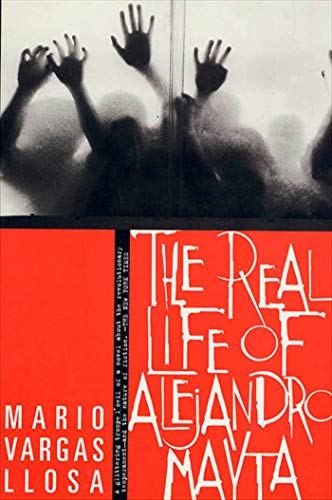
The Real Life of Alejandro Mayta is an astute psychological portrait of a modern revolutionary and a searching account of an old friend's struggle to understand him. First published in English in 1986, the novel probes the long and checkered history of radical politics in Latin America.
Die Inhaltsangabe kann sich auf eine andere Ausgabe dieses Titels beziehen.
Über die Autorin bzw. den Autor
Mario Vargas Llosa was born in Peru in 1936. He was awarded the Nobel Prize in Literature "for his cartography of structures of power and his trenchant images of the individual's resistance, revolt, and defeat." He also won the Miguel de Cervantes Prize, the Spanish-speaking world's most distinguished literary honor. His many works of fiction and nonfiction include The Feast of the Goat, In Praise of the Stepmother, and Aunt Julia and the Scriptwriter, all published by FSG. He died in Lima at age 89 in 2025.
Auszug. © Genehmigter Nachdruck. Alle Rechte vorbehalten.
The Real Life of Alejandro Mayta
By Mario Vargas Llosa, Alfred Mac AdamFarrar, Straus and Giroux
Copyright © 1984 Mario Vargas Llosa
All rights reserved.
ISBN: 978-0-374-52555-2All rights reserved.
CHAPTER 1
A morning jog along the Malecón de Barranco, when the dew still hangs heavy in the air and makes the sidewalks slippery and shiny, is just the way to start off the day. Even in summer, the sky is gray, because the sun never shines on this neighborhood before ten. The fog blurs the edges of things — the profiles of sea gulls, the pelican that flies over the broken line of cliffs that run along the sea. The water looks like lead, dark green, smoking, rough, with patches of foam. The waves form parallel rows as they roll in, and sometimes a fishing boat bounces over them. Sometimes a gust of wind parts the clouds, and out in the distance La Punta and the ocher islands of San Lorenzo and El Frontón materialize. It's beautiful, as long as you concentrate on the landscape and the birds, because everything man-made there is ugly.
The houses are ugly, imitations of imitations. Fear, in the shape of gates, walls, sirens, and spotlights, suffocates them. Television antennas form a ghostly forest. Ugly, too, is the garbage that piles up on the outer edge of the Malecón and spills down its face. Why is it that this part of the city — which has the best view — is a garbage dump? Laziness. Why don't the property owners tell their servants to stop dumping garbage right under their noses? Because they know that if theirs didn't, the neighbors' servants or the workers from the Parque de Barranco would. Even the regular garbagemen do: I see them while I'm running, throwing garbage down there they should be carrying to the dump. That's why people have resigned themselves to the vultures, roaches, mice, and the stinking garbage dump whose birth and growth I've witnessed on my morning runs: a daily vision of stray dogs scratching in the dump under clouds of flies. Over the past few years, I've also gotten used to seeing stray kids, stray men, and stray women along with the stray dogs, all painstakingly digging through the trash looking for something to eat, something to sell, something to wear. The spectacle of misery was once limited exclusively to the slums, then it spread downtown, and now it is the common property of the whole city, even the exclusive residential neighborhoods — Miraflores, Barranco, San Isidro. If you live in Lima, you can get used to misery and grime, you can go crazy, or you can blow your brains out.
But I'm sure Mayta never got used to any of it. At the Salesian School, we'd be about to take the bus to Magdalena, where we both lived, when he'd suddenly run to give don Medaro, a ragged blind man with an out-of-tune violin who was always standing at the door of the María Auxiliadora Church, the bread-and-cheese snack the priests gave us at our last recess. And on Monday he would give don Medaro a real, which he must have saved from his own allowance. Once, during one of our Communion classes, he made Father Luis jump by asking him point-blank, "Why are there rich and poor people, Father? Aren't we all God's children?" He was always talking about the poor, the blind, the lame, the orphaned, the mad people wandering the streets. The last time I saw him, years after we had left the Salesian School, he brought up his old theme while we were having coffee in the Plaza San Martín: "Have you seen how many beggars there are in Lima? Thousands upon thousands." Even before his famous hunger strike, lots of us in the class thought he would become a priest. In those days, to care about the poor was something we thought only a future priest would do, not something a revolutionary would do. Back then, we knew a lot about religion, very little about politics, and absolutely nothing about revolution. Mayta was a curly-haired, pudgy kid with flat feet and wide spaces between his teeth. He waddled: his feet looked like clock hands permanently set at ten minutes to two. He always wore short pants, a sweater with green stripes, and a scarf to keep warm. He would even keep that scarf on during class. We would tease him a lot for worrying about the poor, for serving at Mass, for praying and crossing himself so devoutly, for being so bad at soccer, and, most of all, for being named Mayta. All he'd say was, "Go pick your noses."
Even though his family was of modest means, he wasn't the poorest student in the school. The Salesian students could pass for public- school kids because our school wasn't just for the lily-whites, as Santa María or La Inmaculada were, but for poorer kids from the lower middle class — the children of bureaucrats, petty officials, soldiers, unsuccessful professional men, artisans, and even the children of skilled laborers. Pure whites were a minority at our school: there were lots of mulattoes, black-and-Indian combinations, Chinese, Japs, "almost whites," and tons of Indians. But even though many of us had copper-colored skin, high cheekbones, flat noses, and coarse hair, the only one I can remember with an Indian name was Mayta. Otherwise, he was no more Indian than the rest of us. His pale skin was greenish, his hair curly, and his features typically Peruvian — a mestizo.
He lived around the corner from La Magdalena Church, in a narrow house with its paint peeling off and no back yard. I got to know the place very well because over the course of a month I went there every afternoon. We read The Count of Monte Cristo aloud to each other. I got the book for my birthday, and we both loved it. Mayta's mother worked as a nurse in the maternity ward and gave people shots at home. We would see her from the bus when she opened the door for Mayta. She was a robust woman with gray hair, and she would always give her son a quick kiss as if he were late. We never saw his father, and I was sure he didn't exist. Mayta swore he was always on the road doing some job or other: he was an engineer (the most respected profession at the time).
I've finished running. Twenty minutes out and back between Parque Salazar and my house seems appropriate. Besides, as I ran I managed to forget I was running, and I dredged up memories of the classes at the Salesian School, Mayta's superserious face, his waddle, and his high-pitched voice. There he is, I see him, I hear him, and I will go on seeing and hearing him as I catch my breath, leaf through the paper, eat breakfast, shower, and begin work.
His mother died when we were in our third year and Mayta went to live with an aunt who was also his godmother. He always spoke tenderly of her and told us how she gave him Christmas presents, birthday presents, and took him to the movies. She really must have been a good person, because Mayta kept up his relationship with doña Josefa after he was out on his own. Despite his irregular life, he went on visiting her over the years, and it was in her house that he had that encounter with Vallejos. I wonder how doña Josefa Arrisueño is doing now, twenty-five years after that party. I've been wondering ever since I called her, overcame her misgivings, and persuaded her to let me visit her. I'm still wondering as I get off the bus that leaves me on the corner of Paseo de la República and Avenida Angamos, where the Surquillo district begins. It's a neighborhood I know well. When I was a kid, I'd come here with my friends on party nights to drink beer in El Triunfo, or I'd bring shoes to be fixed or clothes to be altered, or I'd come to see cowboy films in the neighborhood's uncomfortable, smelly theaters — the Primavera, the Leoncio Prado, and...
„Über diesen Titel“ kann sich auf eine andere Ausgabe dieses Titels beziehen.
Weitere beliebte Ausgaben desselben Titels

Suchergebnisse für REAL LIFE OF ALEJANDRO MAYTA PA

Beispielbild für diese ISBN
REAL LIFE OF ALEJANDRO MAYTA PA
Verlag:
Farrar, Straus and Giroux, 1998
ISBN 10: 0374525552
ISBN 13: 9780374525552
Gebraucht
Softcover
Anbieter: World of Books (was SecondSale), Montgomery, IL, USA
Verkäuferbewertung 5 von 5 Sternen

Zustand: Good. Item in good condition. Textbooks may not include supplemental items i.e. CDs, access codes etc. Artikel-Nr. 00043249499
Gebraucht kaufen
EUR 4,63
Versand gratis
Versand innerhalb von USA
Versand innerhalb von USA
Anzahl: 1 verfügbar
Beispielbild für diese ISBN
REAL LIFE OF ALEJANDRO MAYTA PA
Verlag:
Farrar, Straus and Giroux (edition First Edition), 1998
ISBN 10: 0374525552
ISBN 13: 9780374525552
Gebraucht
Paperback
Erstausgabe
Anbieter: BooksRun, Philadelphia, PA, USA
Verkäuferbewertung 5 von 5 Sternen
Paperback. Zustand: Very Good. First Edition. It's a well-cared-for item that has seen limited use. The item may show minor signs of wear. All the text is legible, with all pages included. It may have slight markings and/or highlighting. Artikel-Nr. 0374525552-11-1
Gebraucht kaufen
EUR 4,64
Versand gratis
Versand innerhalb von USA
Versand innerhalb von USA
Anzahl: 1 verfügbar
Beispielbild für diese ISBN
The Real Life of Alejandro Mayta
Verlag:
Farrar, Straus and Giroux, 1998
ISBN 10: 0374525552
ISBN 13: 9780374525552
Gebraucht
Paperback
Anbieter: ThriftBooks-Atlanta, AUSTELL, GA, USA
Verkäuferbewertung 5 von 5 Sternen
Paperback. Zustand: Good. No Jacket. Pages can have notes/highlighting. Spine may show signs of wear. ~ ThriftBooks: Read More, Spend Less. Artikel-Nr. G0374525552I3N00
Gebraucht kaufen
EUR 5,76
Versand gratis
Versand innerhalb von USA
Versand innerhalb von USA
Anzahl: 1 verfügbar
Beispielbild für diese ISBN
The Real Life of Alejandro Mayta
Verlag:
Farrar, Straus and Giroux, 1998
ISBN 10: 0374525552
ISBN 13: 9780374525552
Gebraucht
Paperback
Anbieter: ThriftBooks-Dallas, Dallas, TX, USA
Verkäuferbewertung 5 von 5 Sternen
Paperback. Zustand: Very Good. No Jacket. May have limited writing in cover pages. Pages are unmarked. ~ ThriftBooks: Read More, Spend Less. Artikel-Nr. G0374525552I4N00
Gebraucht kaufen
EUR 5,76
Versand gratis
Versand innerhalb von USA
Versand innerhalb von USA
Anzahl: 1 verfügbar
Beispielbild für diese ISBN
The Real Life of Alejandro Mayta
Verlag:
Farrar, Straus and Giroux, 1998
ISBN 10: 0374525552
ISBN 13: 9780374525552
Gebraucht
Paperback
Anbieter: ThriftBooks-Dallas, Dallas, TX, USA
Verkäuferbewertung 5 von 5 Sternen
Paperback. Zustand: As New. No Jacket. Pages are clean and are not marred by notes or folds of any kind. ~ ThriftBooks: Read More, Spend Less. Artikel-Nr. G0374525552I2N00
Gebraucht kaufen
EUR 5,76
Versand gratis
Versand innerhalb von USA
Versand innerhalb von USA
Anzahl: 1 verfügbar
Beispielbild für diese ISBN
The Real Life of Alejandro Mayta
Verlag:
Farrar, Straus and Giroux, 1998
ISBN 10: 0374525552
ISBN 13: 9780374525552
Gebraucht
Paperback
Anbieter: ThriftBooks-Dallas, Dallas, TX, USA
Verkäuferbewertung 5 von 5 Sternen
Paperback. Zustand: Good. No Jacket. Pages can have notes/highlighting. Spine may show signs of wear. ~ ThriftBooks: Read More, Spend Less. Artikel-Nr. G0374525552I3N00
Gebraucht kaufen
EUR 5,76
Versand gratis
Versand innerhalb von USA
Versand innerhalb von USA
Anzahl: 1 verfügbar
Beispielbild für diese ISBN
The Real Life of Alejandro Mayta
Verlag:
Farrar, Straus & Giroux Inc, 2000
ISBN 10: 0374525552
ISBN 13: 9780374525552
Gebraucht
Paperback
Anbieter: AwesomeBooks, Wallingford, Vereinigtes Königreich
Verkäuferbewertung 5 von 5 Sternen
Paperback. Zustand: Very Good. The Real Life of Alejandro Mayta This book is in very good condition and will be shipped within 24 hours of ordering. The cover may have some limited signs of wear but the pages are clean, intact and the spine remains undamaged. This book has clearly been well maintained and looked after thus far. Money back guarantee if you are not satisfied. See all our books here, order more than 1 book and get discounted shipping. . Artikel-Nr. 7719-9780374525552
Gebraucht kaufen
EUR 8,73
EUR 4,80 Versand
Versand von Vereinigtes Königreich nach USA
Versand von Vereinigtes Königreich nach USA
Anzahl: 1 verfügbar
Beispielbild für diese ISBN
The Real Life of Alejandro Mayta
Verlag:
Farrar, Straus & Giroux Inc 31/01/2000, 2000
ISBN 10: 0374525552
ISBN 13: 9780374525552
Gebraucht
Paperback
Anbieter: Bahamut Media, Reading, Vereinigtes Königreich
Verkäuferbewertung 5 von 5 Sternen
Paperback. Zustand: Very Good. Shipped within 24 hours from our UK warehouse. Clean, undamaged book with no damage to pages and minimal wear to the cover. Spine still tight, in very good condition. Remember if you are not happy, you are covered by our 100% money back guarantee. Artikel-Nr. 6545-9780374525552
Gebraucht kaufen
EUR 8,73
EUR 8,13 Versand
Versand von Vereinigtes Königreich nach USA
Versand von Vereinigtes Königreich nach USA
Anzahl: 1 verfügbar
Beispielbild für diese ISBN
The Real Life of Alejandro Mayta: A Novel
Verlag:
Farrar, Straus and Giroux, 1998
ISBN 10: 0374525552
ISBN 13: 9780374525552
Gebraucht
Softcover
Anbieter: Ammareal, Morangis, Frankreich
Verkäuferbewertung 5 von 5 Sternen
Softcover. Zustand: Très bon. Ammareal reverse jusqu'à 15% du prix net de cet article à des organisations caritatives. ENGLISH DESCRIPTION Book Condition: Used, Very good. Ammareal gives back up to 15% of this item's net price to charity organizations. Artikel-Nr. F-748-638
Gebraucht kaufen
EUR 6,17
EUR 16,50 Versand
Versand von Frankreich nach USA
Versand von Frankreich nach USA
Anzahl: 1 verfügbar
Beispielbild für diese ISBN
The Real Life of Alejandro Mayta: A Novel
Verlag:
Farrar, Straus and Giroux, 1998
ISBN 10: 0374525552
ISBN 13: 9780374525552
Gebraucht
Softcover
Anbieter: Ammareal, Morangis, Frankreich
Verkäuferbewertung 5 von 5 Sternen
Softcover. Zustand: Très bon. Ammareal reverse jusqu'à 15% du prix net de cet article à des organisations caritatives. ENGLISH DESCRIPTION Book Condition: Used, Very good. Ammareal gives back up to 15% of this item's net price to charity organizations. Artikel-Nr. F-748-701
Gebraucht kaufen
EUR 6,17
EUR 16,50 Versand
Versand von Frankreich nach USA
Versand von Frankreich nach USA
Anzahl: 1 verfügbar