
Verwandte Artikel zu Dom Casmurro (FSG Classics)
Inhaltsangabe
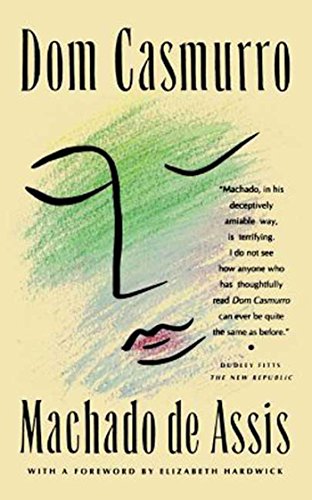
First published in 1900, Dom Casmurro, widely considered Machado de Assis's greatest novel and a classic of Brazilian literature, is a brilliant retelling of the classic adultery tale—a sad and darkly comic novel about love and the corrosive power of jealousy.
Bento Santiago, the wildly unreliable narrator of Dom Casmurro, believes that he has been cuckolded—he suspects that his wife has cheated on him with his best friend and that her child is not his. Has Capitú, his love since childhood, really been unfaithful to him? Or is the evidence of her betrayal merely the product of a paranoid mind?
"Deftly translated, Dom Casmurro is a book full of humor, sweetness and a tender melancholy--a book that deserves to be read." - Publishers Weekly
Die Inhaltsangabe kann sich auf eine andere Ausgabe dieses Titels beziehen.
Über die Autorin bzw. den Autor
Machado de Assis (1839–1908) was born in Rio de Janeiro. Among his many novels are Philosopher or Dog? and Epitaph of a Small Winner.
Von der hinteren Coverseite
Praise for author Machado de Assis
"[Machado de Assis] is a great ironist, a tragic comedian. In his books, in their most comic moments, he underlines the suffering by making us laugh."—Philip Roth
"Machado de Assis is a kind of miracle." —Harold Bloom
"I am astonished that a writer of such greatness does not yet occupy the place he deserves." —Susan Sontag
"Machado retrieves from Cervantes the origins of the novel as illusion, play, ambiguity and adventure."—K. David Jacks on, The New York Times Book Review
Aus dem Klappentext
Praise for author Machado de Assis
"[Machado de Assis] is a great ironist, a tragic comedian. In his books, in their most comic moments, he underlines the suffering by making us laugh." Philip Roth
"Machado de Assis is a kind of miracle." Harold Bloom
"I am astonished that a writer of such greatness does not yet occupy the place he deserves." Susan Sontag
"Machado retrieves from Cervantes the origins of the novel as illusion, play, ambiguity and adventure." K. David Jacks on, The New York Times Book Review
„Über diesen Titel“ kann sich auf eine andere Ausgabe dieses Titels beziehen.
Suchergebnisse für Dom Casmurro (FSG Classics)

Foto des Verkäufers
Dom Casmurro: A Novel (FSG Classics)
Verlag:
Farrar, Straus and Giroux, 2009
ISBN 10: 0374523037
ISBN 13: 9780374523039
Gebraucht
Softcover
Anbieter: Dream Books Co., Denver, CO, USA
Verkäuferbewertung 5 von 5 Sternen

Zustand: acceptable. This copy has clearly been enjoyedâ"expect noticeable shelf wear and some minor creases to the cover. Binding is strong, and all pages are legible. May contain previous library markings or stamps. Artikel-Nr. DBV.0374523037.A
Gebraucht kaufen
EUR 5,33
Versand gratis
Versand innerhalb von USA
Versand innerhalb von USA
Anzahl: 1 verfügbar
Beispielbild für diese ISBN
Dom Casmurro : A Novel
Verlag:
Farrar, Straus & Giroux, 2009
ISBN 10: 0374523037
ISBN 13: 9780374523039
Gebraucht
Softcover
Anbieter: Better World Books: West, Reno, NV, USA
Verkäuferbewertung 5 von 5 Sternen
Zustand: Good. Pages intact with minimal writing/highlighting. The binding may be loose and creased. Dust jackets/supplements are not included. Stock photo provided. Product includes identifying sticker. Better World Books: Buy Books. Do Good. Artikel-Nr. 4307887-6
Gebraucht kaufen
EUR 7,21
Versand gratis
Versand innerhalb von USA
Versand innerhalb von USA
Anzahl: 1 verfügbar
Beispielbild für diese ISBN
Dom Casmurro : A Novel
Verlag:
Farrar, Straus & Giroux, 2009
ISBN 10: 0374523037
ISBN 13: 9780374523039
Gebraucht
Softcover
Anbieter: Better World Books: West, Reno, NV, USA
Verkäuferbewertung 5 von 5 Sternen
Zustand: Very Good. Pages intact with possible writing/highlighting. Binding strong with minor wear. Dust jackets/supplements may not be included. Stock photo provided. Product includes identifying sticker. Better World Books: Buy Books. Do Good. Artikel-Nr. 3963317-6
Gebraucht kaufen
EUR 7,21
Versand gratis
Versand innerhalb von USA
Versand innerhalb von USA
Anzahl: 2 verfügbar
Beispielbild für diese ISBN
DOM Casmurro
Verlag:
Farrar, Straus and Giroux, 2009
ISBN 10: 0374523037
ISBN 13: 9780374523039
Gebraucht
Paperback
Anbieter: ThriftBooks-Dallas, Dallas, TX, USA
Verkäuferbewertung 5 von 5 Sternen
Paperback. Zustand: Fair. No Jacket. Readable copy. Pages may have considerable notes/highlighting. ~ ThriftBooks: Read More, Spend Less. Artikel-Nr. G0374523037I5N00
Gebraucht kaufen
EUR 7,40
Versand gratis
Versand innerhalb von USA
Versand innerhalb von USA
Anzahl: 1 verfügbar
Beispielbild für diese ISBN
Dom Casmurro
Anbieter: Majestic Books, Hounslow, Vereinigtes Königreich
Verkäuferbewertung 4 von 5 Sternen

Zustand: New. pp. xxii + 263. Artikel-Nr. 8161156
Neu kaufen
EUR 23,17
EUR 7,76 Versand
Versand von Vereinigtes Königreich nach USA
Versand von Vereinigtes Königreich nach USA
Anzahl: 3 verfügbar
Beispielbild für diese ISBN
Dom Casmurro (FSG Classics)
Anbieter: Kennys Bookstore, Olney, MD, USA
Verkäuferbewertung 5 von 5 Sternen
Zustand: New. 2009. Reprint. Paperback. . . . . . Books ship from the US and Ireland. Artikel-Nr. V9780374523039
Neu kaufen
EUR 23,73
EUR 9,37 Versand
Versand innerhalb von USA
Versand innerhalb von USA
Anzahl: 11 verfügbar
Beispielbild für diese ISBN
Dom Casmurro
Anbieter: Revaluation Books, Exeter, Vereinigtes Königreich
Verkäuferbewertung 5 von 5 Sternen
Paperback. Zustand: Brand New. reprint edition. 288 pages. 8.00x5.50x0.75 inches. In Stock. Artikel-Nr. __0374523037
Neu kaufen
EUR 21,48
EUR 11,94 Versand
Versand von Vereinigtes Königreich nach USA
Versand von Vereinigtes Königreich nach USA
Anzahl: 1 verfügbar
Foto des Verkäufers
DOM Casmurro
Verlag:
Farrar, Straus And Giroux Sep 2009, 2009
ISBN 10: 0374523037
ISBN 13: 9780374523039
Neu
Taschenbuch
Anbieter: AHA-BUCH GmbH, Einbeck, Deutschland
Verkäuferbewertung 5 von 5 Sternen
Taschenbuch. Zustand: Neu. Neuware - First published in 1900, Dom Casmurro, widely considered Machado de Assis's greatest novel and a classic of Brazilian literature, is a brilliant retelling of the classic adultery tale-a sad and darkly comic novel about love and the corrosive power of jealousy.Bento Santiago, the wildly unreliable narrator of Dom Casmurro, believes that he has been cuckolded-he suspects that his wife has cheated on him with his best friend and that her child is not his. Has Capitú, his love since childhood, really been unfaithful to him Or is the evidence of her betrayal merely the product of a paranoid mind 'Deftly translated, Dom Casmurro is a book full of humor, sweetness and a tender melancholy--a book that deserves to be read.' - Publishers Weekly. Artikel-Nr. 9780374523039
Neu kaufen
EUR 31,15
EUR 35,00 Versand
Versand von Deutschland nach USA
Versand von Deutschland nach USA
Anzahl: 1 verfügbar
Foto des Verkäufers
Dom Casmurro
Anbieter: moluna, Greven, Deutschland
Verkäuferbewertung 5 von 5 Sternen
Zustand: New. Über den AutorMachado de Assis Translated from the Portuguese by Helen CaldwellKlappentextrnrnFirst published in 1900, Dom Casmurro, widely considered Machado de Assis s greatest novel and a classic. Artikel-Nr. 897909433
Neu kaufen
EUR 23,21
EUR 48,99 Versand
Versand von Deutschland nach USA
Versand von Deutschland nach USA
Anzahl: Mehr als 20 verfügbar