Inhaltsangabe
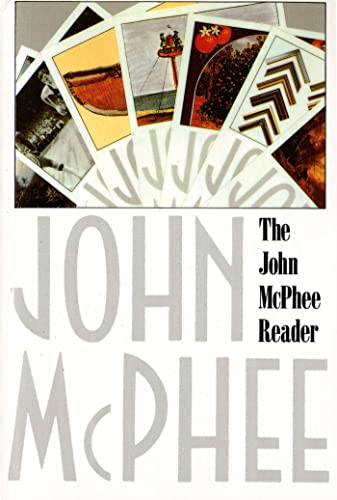
The John McPhee Reader, first published in 1976, is comprised of selections from the author's first twelve books. In 1965, John McPhee published his first book, A Sense of Where You Are; a decade later, he had published eleven others. His fertility, his precision and grace as a stylist, his wit and uncanny brilliance in choosing subject matter, his crack storytelling skills have made him into one of our best writers: a journalist whom L.E. Sissman ranked with Liebling and Mencken, who Geoffrey Wolff said "is bringing his work to levels that have no measurable limit," who has been called "a master craftsman" so many times that it is pointless to number them.
Die Inhaltsangabe kann sich auf eine andere Ausgabe dieses Titels beziehen.
Über die Autorin bzw. den Autor
John McPhee was born in Princeton, New Jersey, and was educated at Princeton University and Cambridge University. His writing career began at Time magazine and led to his long association with The New Yorker, where he has been a staff writer since 1965. Also in 1965, he published his first book, A Sense of Where You Are, with Farrar, Straus and Giroux, and in the years since, he has written nearly 30 books, including Oranges (1967), Coming into the Country (1977), The Control of Nature (1989), The Founding Fish (2002), Uncommon Carriers (2007), and Silk Parachute (2011). Encounters with the Archdruid (1972) and The Curve of Binding Energy (1974) were nominated for National Book Awards in the category of science. McPhee received the Award in Literature from the Academy of Arts and Letters in 1977. In 1999, he was awarded the Pulitzer Prize for Annals of the Former World. He lives in Princeton, New Jersey.
Auszug. © Genehmigter Nachdruck. Alle Rechte vorbehalten.
The John McPhee Reader
By John McPheeFarrar, Straus and Giroux
Copyright © 1982 John McPheeAll right reserved.
ISBN: 9780374517199
John McPhee Reader, The
A Sense of Where You Are
McPhee first saw Bill Bradley on a basketball court in 1962, the winter of Bradley's freshman year at Princeton. McPhee knew a thing or two about basketball, having served on Princeton's freshman team himself, but watching Bradley play was a revelation: "Every motion developed in its simplest form. Every motion repeated itself precisely when he used it again. He was remarkably fast, but he ran easily. His passes were so good they were difficult to follow. Every so often, and not often enough, I thought, he stopped and went high into the air with the ball ... and a long jump shot would go into the net."
The same estimate can apply to McPhee's story of Bradley, which developed two years later in a simple form, first as a long "Profile" for The New Yorker, then as a book-length narrative for Farrar, Straus and Giroux. This sequence, repeated with seeming precision and ease ever since, established the hallmarks of McPhee's brand of writing: exact details, shrewd observation, gifted phrasing, an orderly format. Less innovative than his later works, A Sense of Where You Are still has passes so good they are difficult to follow, and long jump shots that loft high in the air on their way to the net. The following extract is from McPhee's original "Profile." Other chapters in the book version record the triumphs of Bradley's senior year, when he became an Ivy League champion, N.C.A.A. semifinalist, Rhodes Scholar, and a lasting friend of his profiler.--WLH
Bradley is one of the few basketball players who have ever been appreciatively cheered by a disinterested away-from-home crowd while warming up. This curious event occurred last March, just before Princeton eliminated the Virginia Military Institute, the year's Southern Conferencechampion, from the N.C.A.A. championships. The game was played in Philadelphia and was the last of a tripleheader. The people there were worn out, because most of them were emotionally committed to either Villanova or Temple--two local teams that had just been involved in enervating battles with Providence and Connecticut, respectively, scrambling for a chance at the rest of the country. A group of Princeton boys shooting basketballs miscellaneously in preparation for still another game hardly promised to be a high point of the evening, but Bradley, whose routine in the warmup time is a gradual crescendo of activity, is more interesting to watch before a game than most players are in play. In Philadelphia that night, what he did was, for him, anything but unusual. As he does before all games, he began by shooting set shots close to the basket, gradually moving back until he was shooting long sets from twenty feet out, and nearly all of them dropped into the net with an almost mechanical rhythm of accuracy. Then he began a series of expandingly difficult jump shots, and one jumper after another went cleanly through the basket with so few exceptions that the crowd began to murmur. Then he started to perform whirling reverse moves before another cadence of almost steadily accurate jump shots, and the murmur increased. Then he began to sweep hook shots into the air. He moved in a semicircle around the court. First with his right hand, then with his left, he tried seven of these long, graceful shots--the most difficult ones in the orthodoxy of basketball--and ambidextrously made them all. The game had not even begun, but the presumably unimpressible Philadelphians were applauding like an audience at an opera.
Bradley has a few unorthodox shots, too. He dislikes flamboyance, and, unlike some of basketball's greatest stars, has apparently never made a move merely to attract attention. While some players are eccentric in their shooting, his shots, with only occasional exceptions, are straightforward and unexaggerated. Nonetheless, he does make something of a spectacle of himself when he moves in rapidly parallel to the baseline, glides through the air with his back to the basket, looks for a teammate he can pass to, and, finding none, tosses the ball into the basket over one shoulder, like a pinch of salt. Only when the ball is actually dropping through the net does he look around to see what has happened, on the chance that something might have gone wrong, in which case he would have to go for the rebound. That shot has the essential characteristics of a wild accident, which is what many people stubbornly think they have witnessed until they see him do it for the third time in a row. All shots in basketball are supposed to have names--the set, the hook, thelay-up, the jump shot, and so on--and one weekend last July, while Bradley was in Princeton working on his senior thesis and putting in some time in the Princeton gymnasium to keep himself in form for the Olympics, I asked him what he called his over-the-shoulder shot. He said that he had never heard a name for it, but that he had seen Oscar Robertson, of the Cincinnati Royals, and Jerry West, of the Los Angeles Lakers, do it, and had worked it out for himself. He went on to say that it is a much simpler shot than it appears to be, and, to illustrate, he tossed a ball over his shoulder and into the basket while he was talking and looking me in the eye. I retrieved the ball and handed it back to him. "When you have played basketball for a while, you don't need to look at the basket when you are in close like this," he said, throwing it over his shoulder again and right through the hoop. "You develop a sense of where you are."
Bradley is not an innovator. Actually, basketball has had only a few innovators in its history--players like Hank Luisetti, of Stanford, whose introduction in 1936 of the running one-hander did as much to open up the game for scoring as the forward pass did for football; and Joe Fulks, of the old Philadelphia Warriors, whose twisting two-handed heaves, made while he was leaping like a salmon, were the beginnings of the jump shot, which seems to be basketball's ultimate weapon. Most basketball players appropriate fragments of other players' styles, and thus develop their own. This is what Bradley has done, but one of the things that set him apart from nearly everyone else is that the process has been conscious rather than osmotic. His jump shot, for example, has had two principal influences. One is Jerry West, who has one of the best jumpers in basketball. At a summer basketball camp in Missouri some years ago, West told Bradley that he always gives an extra hard bounce to the last dribble before a jump shot, since this seems to catapult him to added height. Bradley has been doing that ever since. Terry Dischinger, of the Detroit Pistons, has told Bradley that he always slams his foot to the floor on the last step before a jump shot, because this stops his momentum and thus prevents drift. Drifting while aloft is the mark of a sloppy jump shot.
Bradley's graceful hook shot is a masterpiece of eclecticism. It consists of the high-lifted knee of the Los Angeles Lakers' Darrall Imhoff, the arms of Bill Russell, of the Boston Celtics, who extends his idle hand far under his shooting arm and thus magically stabilizes the shot, and the general corporeal form of Kentucky's Cotton Nash, a rookie this year with the Lakers. Bradley carries his analyses of shots further thanmerely identifying them with pieces of other people. "There are five parts to the hook shot," he explains to anyone...
„Über diesen Titel“ kann sich auf eine andere Ausgabe dieses Titels beziehen.
Weitere beliebte Ausgaben desselben Titels

Suchergebnisse für The John McPhee Reader

Beispielbild für diese ISBN
The John McPhee Reader
Verlag:
Farrar, Straus and Giroux, 1982
ISBN 10: 0374517193
ISBN 13: 9780374517199
Gebraucht
Paperback
Anbieter: ThriftBooks-Atlanta, AUSTELL, GA, USA
Verkäuferbewertung 5 von 5 Sternen

Paperback. Zustand: Good. No Jacket. Pages can have notes/highlighting. Spine may show signs of wear. ~ ThriftBooks: Read More, Spend Less. Artikel-Nr. G0374517193I3N00
Beispielbild für diese ISBN
The John McPhee Reader
Verlag:
Farrar, Straus and Giroux, 1982
ISBN 10: 0374517193
ISBN 13: 9780374517199
Gebraucht
Paperback
Anbieter: ThriftBooks-Reno, Reno, NV, USA
Verkäuferbewertung 5 von 5 Sternen
Paperback. Zustand: Good. No Jacket. Pages can have notes/highlighting. Spine may show signs of wear. ~ ThriftBooks: Read More, Spend Less. Artikel-Nr. G0374517193I3N00
Beispielbild für diese ISBN
The John McPhee Reader
Verlag:
Farrar, Straus and Giroux, 1982
ISBN 10: 0374517193
ISBN 13: 9780374517199
Gebraucht
Paperback
Anbieter: ThriftBooks-Phoenix, Phoenix, AZ, USA
Verkäuferbewertung 5 von 5 Sternen
Paperback. Zustand: Good. No Jacket. Pages can have notes/highlighting. Spine may show signs of wear. ~ ThriftBooks: Read More, Spend Less. Artikel-Nr. G0374517193I3N00
Beispielbild für diese ISBN
The John McPhee Reader
Verlag:
Farrar, Straus and Giroux, 1982
ISBN 10: 0374517193
ISBN 13: 9780374517199
Gebraucht
Paperback
Anbieter: ThriftBooks-Dallas, Dallas, TX, USA
Verkäuferbewertung 5 von 5 Sternen
Paperback. Zustand: Good. No Jacket. Pages can have notes/highlighting. Spine may show signs of wear. ~ ThriftBooks: Read More, Spend Less. Artikel-Nr. G0374517193I3N00
Beispielbild für diese ISBN
The John McPhee Reader
Verlag:
Farrar, Straus & Giroux, 1982
ISBN 10: 0374517193
ISBN 13: 9780374517199
Gebraucht
Softcover
Anbieter: Better World Books, Mishawaka, IN, USA
Verkäuferbewertung 5 von 5 Sternen
Zustand: Good. Used book that is in clean, average condition without any missing pages. Artikel-Nr. 4264936-6
Beispielbild für diese ISBN
The John McPhee Reader
Verlag:
Farrar, Straus & Giroux, 1982
ISBN 10: 0374517193
ISBN 13: 9780374517199
Gebraucht
Softcover
Anbieter: Better World Books: West, Reno, NV, USA
Verkäuferbewertung 5 von 5 Sternen
Zustand: Good. Used book that is in clean, average condition without any missing pages. Artikel-Nr. 4264936-6
Beispielbild für diese ISBN
The John McPhee Reader
Verlag:
Farrar, Straus and Giroux, 1982
ISBN 10: 0374517193
ISBN 13: 9780374517199
Gebraucht
paperback
Anbieter: Heisenbooks, Fairless Hills, PA, USA
Verkäuferbewertung 3 von 5 Sternen

paperback. Zustand: Very Good. US Soft Cover Edition. Book is in great condition! Little to no damage present on cover, pages, spine, or corners. Amazing buy! Artikel-Nr. WI-KF-vg-0374517193-john
Beispielbild für diese ISBN
The John McPhee Reader
Verlag:
Farrar, Straus and Giroux, 1982
ISBN 10: 0374517193
ISBN 13: 9780374517199
Gebraucht
paperback
Anbieter: Books From California, Simi Valley, CA, USA
Verkäuferbewertung 5 von 5 Sternen
paperback. Zustand: Very Good. The pages are lightly tanned. The copy shows minor external wear, but is in otherwise clean condition. Artikel-Nr. mon0003940447
Beispielbild für diese ISBN
The John McPhee Reader
Verlag:
Farrar, Straus and Giroux, 1982
ISBN 10: 0374517193
ISBN 13: 9780374517199
Gebraucht
paperback
Anbieter: Roundabout Books, Greenfield, MA, USA
Verkäuferbewertung 4 von 5 Sternen

paperback. Zustand: Near Fine. Excellent, unmarked copy with little wear and tight binding. We ship in recyclable American-made mailers. 100% money-back guarantee on all orders. Artikel-Nr. 1652092
Beispielbild für diese ISBN
The John McPhee Reader
Anbieter: AwesomeBooks, Wallingford, Vereinigtes Königreich
Verkäuferbewertung 5 von 5 Sternen
Paperback. Zustand: Very Good. The John McPhee Reader This book is in very good condition and will be shipped within 24 hours of ordering. The cover may have some limited signs of wear but the pages are clean, intact and the spine remains undamaged. This book has clearly been well maintained and looked after thus far. Money back guarantee if you are not satisfied. See all our books here, order more than 1 book and get discounted shipping. Artikel-Nr. 7719-9780374517199
Gebraucht kaufen
EUR 13,02
Versand:
EUR 5,71
Von Vereinigtes Königreich nach USA
Anzahl: 2 verfügbar