
Verwandte Artikel zu The Assistant (FSG Classics)
Inhaltsangabe
An Intimate Window into the American Immigrant Experience
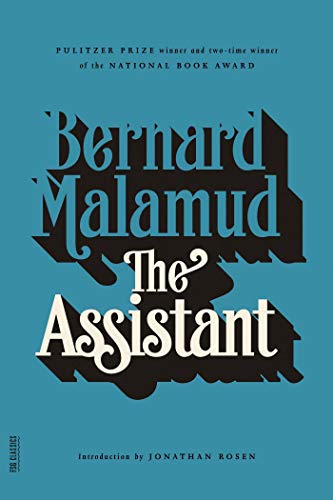
Morris Bober, the family patriarch, yearns for better fortune as he runs a grocery store, never expecting how two robbers would change his life. Working alongside Morris, Frank Alpine, with his own complex relationship with the Jewish community, finds himself entangled in a web of emotions and conflicting actions. As he becomes smitten with Helen Bober, he simultaneously finds himself embroiled in acts of theft.
This tale of love, family, and ambition sits within the broader landscape of a New York cityscape steeped in a vibrant mix of Italian-American and Jewish cultures. The stark realities of 1950s Brooklyn color this narrative in a way that is as vivid as it is compelling.
Like Malamud's best stories, this novel unerringly evokes an immigrant world of cramped circumstances and great expectations. With a blend of contemporary American literature and psychological fiction, Malamud offers an inimitable insight into the nuances of immigrant family life while shedding light on the universal human experience.
Die Inhaltsangabe kann sich auf eine andere Ausgabe dieses Titels beziehen.
Über die Autorin bzw. den Autor
Bernard Malamud (1914–86) wrote eight novels; he won the Pulitzer Prize and a National Book Award for The Fixer, and the National Book Award for The Magic Barrel. Born in Brooklyn, he taught for many years at Bennington College in Vermont.
Auszug. © Genehmigter Nachdruck. Alle Rechte vorbehalten.
The Assistant
By Bernard MalamudFarrar, Straus and Giroux
Copyright © 2003 Bernard MalamudAll right reserved.
ISBN: 9780374504847
The Assistant
The early November street was dark though night had ended, but the wind, to the grocer's surprise, already clawed. It flung his apron into his face as he bent for the two milk cases at the curb. Morris Bober dragged the heavy boxes to the door, panting. A large brown bag of hard rolls stood in the doorway along with the sour-faced, gray-haired Poilisheh huddled there, who wanted one.
"What's the matter so late?"
"Ten after six," said the grocer.
"Is cold," she complained.
Turning the key in the lock he let her in. Usually he lugged in the milk and lit the gas radiators, but the Polish woman was impatient. Morris poured the bag of rolls into a wire basket on the counter and found an unseeded one for her. Slicing it in halves, he wrapped it in white store paper. She tucked the roll into her cord market bag and left three pennies on the counter. He rang up the sale on an old noisy cash register, smoothed and put away the bag the rolls had come in, finished pulling in the milk, and stored the bottles at the bottom of the refrigerator. He lit the gas radiator at the front of the store and went into the back to light the one there.
He boiled up coffee in a blackened enamel pot and sippedit, chewing on a roll, not tasting what he was eating. After he had cleaned up he waited; he waited for Nick Fuso, the upstairs tenant, a young mechanic who worked in a garage in the neighborhood. Nick came in every morning around seven for twenty cents' worth of ham and a loaf of bread.
But the front door opened and a girl of ten entered, her face pinched and eyes excited. His heart held no welcome for her.
"My mother says," she said quickly, "can you trust her till tomorrow for a pound of butter, loaf of rye bread and a small bottle of cider vinegar?"
He knew the mother. "No more trust."
The girl burst into tears.
Morris gave her a quarter-pound of butter, the bread and vinegar. He found a penciled spot on the worn counter, near the cash register, and wrote a sum under "Drunk Woman." The total now came to $2.03, which he never hoped to see. But Ida would nag if she noticed a new figure, so he reduced the amount to $1.61. His peace--the little he lived with--was worth forty-two cents.
He sat in a chair at the round wooden table in the rear of the store and scanned, with raised brows, yesterday's Jewish paper that he had already thoroughly read. From time to time he looked absently through the square windowless window cut through the wall, to see if anybody had by chance come into the store. Sometimes when he looked up from his newspaper, he was startled to see a customer standing silently at the counter.
Now the store looked like a long dark tunnel.
The grocer sighed and waited. Waiting he thought he did poorly. When times were bad time was bad. It died as he waited, stinking in his nose.
A workman came in for a fifteen-cent can of King Oscar Norwegian sardines.
Morris went back to waiting. In twenty-one years the store had changed little. Twice he had painted all over, once added new shelving. The old-fashioned double windows atthe front a carpenter had made into a large single one. Ten years ago the sign hanging outside fell to the ground but he had never replaced it. Once, when business hit a long good spell, he had had the wooden icebox ripped out and a new white refrigerated showcase put in. The showcase stood at the front in line with the old counter and he often leaned against it as he stared out of the window. Otherwise the store was the same. Years ago it was more a delicatessen; now, though he still sold a little delicatessen, it was more a poor grocery.
A half-hour passed. When Nick Fuso failed to appear, Morris got up and stationed himself at the front window, behind a large cardboard display sign the beer people had rigged up in an otherwise empty window. After a while the hall door opened, and Nick came out in a thick, hand-knitted green sweater. He trotted around the corner and soon returned carrying a bag of groceries. Morris was now visible at the window. Nick saw the look on his face but didn't look long. He ran into the house, trying to make it seem it was the wind that was chasing him. The door slammed behind him, a loud door.
The grocer gazed into the street. He wished fleetingly that he could once more be out in the open, as when he was a boy --never in the house, but the sound of the blustery wind frightened him. He thought again of selling the store but who would buy? Ida still hoped to sell. Every day she hoped. The thought caused him grimly to smile, although he did not feel like smiling. It was an impossible idea so he tried to put it out of his mind. Still, there were times when he went into the back, poured himself a spout of coffee and pleasantly thought of selling. Yet if he miraculously did, where would he go, where? He had a moment of uneasiness as he pictured himself without a roof over his head. There he stood in all kinds of weather, drenched in rain, and the snow froze on his head. No, not for an age had he lived a whole day in the open. As a boy, always running in the muddy, rutted streets of the village, or across the fields, or bathing withthe other boys in the river; but as a man, in America, he rarely saw the sky. In the early days when he drove a horse and wagon, yes, but not since his first store. In a store you were entombed.
The milkman drove up to the door in his truck and hurried in, a bull, for his empties. He lugged out a caseful and returned with two half-pints of light cream. Then Otto Vogel, the meat provisions man, entered, a bushy-mustached German carrying a smoked liverwurst and string of wieners in his oily meat basket. Morris paid cash for the liverwurst; from a German he wanted no favors. Otto left with the wieners. The bread driver, new on the route, exchanged three fresh loaves for three stale and walked out without a word. Leo, the cake man, glanced hastily at the package cake on top of the refrigerator and called, "See you Monday, Morris."
Morris didn't answer.
Leo hesitated. "Bad all over, Morris."
"Here is the worst."
"See you Monday."
A young housewife from close by bought sixty-three cents' worth; another came in for forty-one cents'. He had earned his first cash dollar for the day.
Breitbart, the bulb peddler, laid down his two enormous cartons of light bulbs and diffidently entered the back.
"Go in," Morris urged. He boiled up some tea and served it in a thick glass, with a slice of lemon. The peddler eased himself into a chair, derby hat and coat on, and gulped the hot tea, his Adam's apple bobbing.
"So how goes now?" asked the grocer.
"Slow," shrugged Breitbart.
Morris sighed. "How is your boy?"
Breitbart nodded absently, then picked up the Jewish paper and read. After ten minutes he got up, scratched all over, lifted across his thin shoulders the two large cartons tied together with clothesline and left.
Morris watched him go.
The world suffers. He felt every schmerz.
At lunchtime Ida came down. She had cleaned the whole house.
Morris was standing before the faded couch, looking out of the rear window at the back yards. He had been thinking of Ephraim.
His wife saw his wet eyes.
"So stop sometime, please."...
„Über diesen Titel“ kann sich auf eine andere Ausgabe dieses Titels beziehen.
Suchergebnisse für The Assistant (FSG Classics)

Beispielbild für diese ISBN
The Assistant
Verlag:
Farrar, Straus & Giroux Inc, 2003
ISBN 10: 0374504849
ISBN 13: 9780374504847
Gebraucht
Paperback
Anbieter: World of Books (was SecondSale), Montgomery, IL, USA
Verkäuferbewertung 5 von 5 Sternen

Paperback. Zustand: Fair. The Assistant, Bernard Malamud's second novel, originally published in 1957, is the story of Morris Bober, a grocer in postwar Brooklyn, who "wants better" for himself and his family. First two robbers appear and hold him up; then things take a turn for the better when broken-nosed Frank Alpine becomes his assistant. But there are complications: Frank, whose reaction to Jews is ambivalent, falls in love with Helen Bober; at the same time he begins to steal from the store. Like Malamud's best stories, this novel unerringly evokes an immigrant world of cramped circumstances and great expectations. Malamud defined the immigrant experience in a way that has proven vital for several generations of writers. "His best novel . . . The Assistant is as tightly written as a prose poem." --Morris Dickstein in Leopards in the Temple: The Transformation of American Fiction 1945-1970. Artikel-Nr. 00097712858
Gebraucht kaufen
EUR 4,62
Versand gratis
Versand innerhalb von USA
Versand innerhalb von USA
Anzahl: 5 verfügbar
Beispielbild für diese ISBN
The Assistant
Verlag:
Farrar, Straus & Giroux Inc, 2003
ISBN 10: 0374504849
ISBN 13: 9780374504847
Gebraucht
Paperback
Anbieter: World of Books (was SecondSale), Montgomery, IL, USA
Verkäuferbewertung 5 von 5 Sternen
Paperback. Zustand: Good. The Assistant, Bernard Malamud's second novel, originally published in 1957, is the story of Morris Bober, a grocer in postwar Brooklyn, who "wants better" for himself and his family. First two robbers appear and hold him up; then things take a turn for the better when broken-nosed Frank Alpine becomes his assistant. But there are complications: Frank, whose reaction to Jews is ambivalent, falls in love with Helen Bober; at the same time he begins to steal from the store. Like Malamud's best stories, this novel unerringly evokes an immigrant world of cramped circumstances and great expectations. Malamud defined the immigrant experience in a way that has proven vital for several generations of writers. "His best novel . . . The Assistant is as tightly written as a prose poem." --Morris Dickstein in Leopards in the Temple: The Transformation of American Fiction 1945-1970. Artikel-Nr. 00094309631
Gebraucht kaufen
EUR 4,62
Versand gratis
Versand innerhalb von USA
Versand innerhalb von USA
Anzahl: 12 verfügbar
Beispielbild für diese ISBN
The Assistant: A Novel
Verlag:
Farrar, Straus and Giroux, 2003
ISBN 10: 0374504849
ISBN 13: 9780374504847
Gebraucht
Softcover
Anbieter: Wonder Book, Frederick, MD, USA
Verkäuferbewertung 5 von 5 Sternen
Zustand: Good. Good condition. Slightly dampstained. Artikel-Nr. F25D-00822
Gebraucht kaufen
EUR 4,85
Versand gratis
Versand innerhalb von USA
Versand innerhalb von USA
Anzahl: 1 verfügbar
Beispielbild für diese ISBN
The Assistant
Verlag:
Farrar, Straus and Giroux, 2003
ISBN 10: 0374504849
ISBN 13: 9780374504847
Gebraucht
Paperback
Anbieter: ThriftBooks-Reno, Reno, NV, USA
Verkäuferbewertung 5 von 5 Sternen
Paperback. Zustand: Good. No Jacket. Former library book; Pages can have notes/highlighting. Spine may show signs of wear. ~ ThriftBooks: Read More, Spend Less. Artikel-Nr. G0374504849I3N10
Gebraucht kaufen
EUR 6,09
Versand gratis
Versand innerhalb von USA
Versand innerhalb von USA
Anzahl: 1 verfügbar
Beispielbild für diese ISBN
The Assistant
Verlag:
Farrar, Straus and Giroux, 2003
ISBN 10: 0374504849
ISBN 13: 9780374504847
Gebraucht
Paperback
Anbieter: ThriftBooks-Reno, Reno, NV, USA
Verkäuferbewertung 5 von 5 Sternen
Paperback. Zustand: Good. No Jacket. Pages can have notes/highlighting. Spine may show signs of wear. ~ ThriftBooks: Read More, Spend Less. Artikel-Nr. G0374504849I3N00
Gebraucht kaufen
EUR 6,09
Versand gratis
Versand innerhalb von USA
Versand innerhalb von USA
Anzahl: 1 verfügbar
Beispielbild für diese ISBN
The Assistant
Verlag:
Farrar, Straus and Giroux, 2003
ISBN 10: 0374504849
ISBN 13: 9780374504847
Gebraucht
Paperback
Anbieter: ThriftBooks-Dallas, Dallas, TX, USA
Verkäuferbewertung 5 von 5 Sternen
Paperback. Zustand: Good. No Jacket. Pages can have notes/highlighting. Spine may show signs of wear. ~ ThriftBooks: Read More, Spend Less. Artikel-Nr. G0374504849I3N00
Gebraucht kaufen
EUR 6,11
Versand gratis
Versand innerhalb von USA
Versand innerhalb von USA
Anzahl: 1 verfügbar
Beispielbild für diese ISBN
The Assistant
Verlag:
Farrar, Straus and Giroux, 2003
ISBN 10: 0374504849
ISBN 13: 9780374504847
Gebraucht
Paperback
Anbieter: ThriftBooks-Dallas, Dallas, TX, USA
Verkäuferbewertung 5 von 5 Sternen
Paperback. Zustand: Fair. No Jacket. Readable copy. Pages may have considerable notes/highlighting. ~ ThriftBooks: Read More, Spend Less. Artikel-Nr. G0374504849I5N00
Gebraucht kaufen
EUR 6,11
Versand gratis
Versand innerhalb von USA
Versand innerhalb von USA
Anzahl: 1 verfügbar
Beispielbild für diese ISBN
The Assistant
Verlag:
Farrar, Straus and Giroux, 2003
ISBN 10: 0374504849
ISBN 13: 9780374504847
Gebraucht
Paperback
Anbieter: ThriftBooks-Atlanta, AUSTELL, GA, USA
Verkäuferbewertung 5 von 5 Sternen
Paperback. Zustand: Good. No Jacket. Pages can have notes/highlighting. Spine may show signs of wear. ~ ThriftBooks: Read More, Spend Less. Artikel-Nr. G0374504849I3N00
Gebraucht kaufen
EUR 6,11
Versand gratis
Versand innerhalb von USA
Versand innerhalb von USA
Anzahl: 1 verfügbar
Beispielbild für diese ISBN
The Assistant : A Novel
Verlag:
Farrar, Straus & Giroux, 2003
ISBN 10: 0374504849
ISBN 13: 9780374504847
Gebraucht
Softcover
Anbieter: Better World Books: West, Reno, NV, USA
Verkäuferbewertung 5 von 5 Sternen
Zustand: Good. Pages intact with minimal writing/highlighting. The binding may be loose and creased. Dust jackets/supplements are not included. Stock photo provided. Product includes identifying sticker. Better World Books: Buy Books. Do Good. Artikel-Nr. GRP92994942
Gebraucht kaufen
EUR 6,56
Versand gratis
Versand innerhalb von USA
Versand innerhalb von USA
Anzahl: 1 verfügbar
Beispielbild für diese ISBN
The Assistant : A Novel
Verlag:
Farrar, Straus & Giroux, 2003
ISBN 10: 0374504849
ISBN 13: 9780374504847
Gebraucht
Softcover
Anbieter: Better World Books, Mishawaka, IN, USA
Verkäuferbewertung 5 von 5 Sternen
Zustand: Good. Pages intact with minimal writing/highlighting. The binding may be loose and creased. Dust jackets/supplements are not included. Stock photo provided. Product includes identifying sticker. Better World Books: Buy Books. Do Good. Artikel-Nr. GRP92994942
Gebraucht kaufen
EUR 6,56
Versand gratis
Versand innerhalb von USA
Versand innerhalb von USA
Anzahl: 2 verfügbar