
Verwandte Artikel zu Bad
Inhaltsangabe
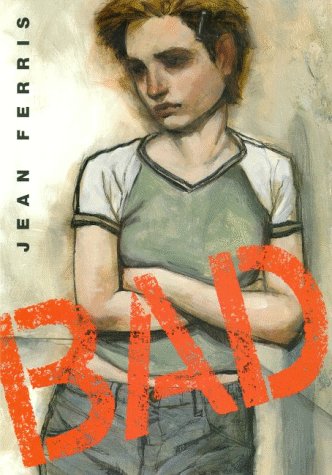
Inspired by the author's work in a girls' rehabilitation center.
Ray called it skating when we did the crazy things . . . Hot-wiring a fancy car for a joyride after midnight. Boosting stuff from stores . . .
Sixteen-year-old Dallas loves the rush, the excitement of "skating." But then she and her friends decide to rob a convenience store and it's Dallas who gets caught while the others get away. Since it is her first offense, she thinks her father will help her out - but when the judge says she can go home on probation her father says no, he can't control her. So the judge gives Dallas six months in the Girls' Rehabilitation Center. Once there, Dallas meets an assortment of "bad" girls, many of whom don't expect to change, and those who do often don't make it. How Dallas comes to terms with herself - both the bad and the good - makes for a heartfelt and insightful novel about troubled teenagers and the odds they face in trying to turn their lives around.
Ray called it skating when we did the crazy things . . . Hot-wiring a fancy car for a joyride after midnight. Boosting stuff from stores . . .
Sixteen-year-old Dallas loves the rush, the excitement of "skating." But then she and her friends decide to rob a convenience store and it's Dallas who gets caught while the others get away. Since it is her first offense, she thinks her father will help her out - but when the judge says she can go home on probation her father says no, he can't control her. So the judge gives Dallas six months in the Girls' Rehabilitation Center. Once there, Dallas meets an assortment of "bad" girls, many of whom don't expect to change, and those who do often don't make it. How Dallas comes to terms with herself - both the bad and the good - makes for a heartfelt and insightful novel about troubled teenagers and the odds they face in trying to turn their lives around.
Die Inhaltsangabe kann sich auf eine andere Ausgabe dieses Titels beziehen.
Über die Autorin bzw. den Autor
Jean Ferris is the author of many books, including Invincible Summer and All That Glitters, which were both ALA Best Books for Young Adults. She lives in San Diego, California.
Rezensionen
Grade 9 Up-Dallas is sentenced to six months in the Girls' Rehabilitation Center when her father refuses the judge's offer to take her home on parole. The 16 year old has held up a convenience store at gunpoint, the ultimate episode in a petty-crime spree she's undertaken with her manipulative boyfriend, her disloyal best friend, and her best friend's boyfriend. Dallas's delinquency seems to be a direct result of both her father's much-voiced opinion that she's as bad as her mother was and her longing for the woman who died when Dallas was four. At GRC, Dallas meets delinquents who range from a neo-Nazi to Latina gang members to a sexually abused girl to a teen mom intent on reforming for the sake of her baby. The adults at GRC are as individualized in character as the teens, some acting out of spite, some from pity, others from identification with the young women in their charge. Dallas, from whose credible and engaging viewpoint the story is told, may have been prematurely labeled as bad by her father but she is clear about her own responsibility for her sentence and insightful about the low self-esteem she and so many of her fellow delinquents share but express through radically different behaviors. While not romanticizing the life of a lawbreaker, Dallas's story gives readers an excellent opportunity to see the many angles involved in such issues as peer pressure, family failings, rehabilitation, personal growth, and societal expectations. Ferris researched her topic well and the authenticity she invests in the novel will draw in both avid and reluctant readers.
Francisca Goldsmith, Berkeley Public Library, CA
Copyright 1998 Reed Business Information, Inc.
Ferris (Invincible Summer) follows six months in the life of a 16-year-old confined to a criminal rehabilitation center for teenage girls in this novel based on interviews with young women in real-life rehab. Dallas craves the excitement of "skating"?hot-wiring cars, shoplifting, snatching purses?to fill the emptiness left by the death of her irresponsible mother and the coldness of her rule-bound father. But when she's caught in the midst of a convenience store holdup, gun in hand, and her father tells the judge that he can no longer control her, Dallas ends up in Girls' Rehabilitation Center, a stop between "Juvie" and a more punitive work camp. Through Dallas's eyes, readers meet the other wards at GRC, as well as the people who work to help (and sometimes hinder) them?wan, wispy Toozdae, turning tricks to support her siblings; Dahlia, wedded to the white supremacist credo; tough-talking Shatasia, determined to change for the sake of her baby; plus Mary Alice ("Malice"), a probation officer who revels in insulting and ridiculing the girls, and counselor Nolan, who runs their Anger Management sessions. Ferris often opts for insight over authenticity in Dallas's first-person narration ("At home, at school?when I managed to get there?everything seemed to be in slow motion and muted colors. I felt hollow and barely visible"). As a result, the narrator comes off as more of an observer than a fully realized character. But the author's willingness to explore the issues these girls face, as well as her refusal to settle for easy answers and sugarcoated endings, makes for a thoughtful novel. Ages 12-up.
Copyright 1998 Reed Business Information, Inc.
Gr. 7^-10. Inspired by interviews with teenage residents of a correctional facility, Ferris explores some causes of juvenile crime, as well as techniques and psychology of rehabilitation, in what amounts to a catalog of modeled behavior and statements linked by a fictional first-timer's experiences "inside." Nabbed in the act of armed robbery, Dallas is sentenced to six months at the Girls Rehabilitation Center after her coldhearted father refuses custody; there, in the company of gang members, drug dealers, a white supremacist, a 14-year-old who turned to prostitution to support her siblings, and an arrogant child of wealth who runs a fake ID business, she hears lectures on sex, rape, and anger management; sees the effect a structured, predictable environment can have on those who have never known one; and begins to understand the mix of nature, nurture (in her case, lack of nurture), and naivete that pushed her into trouble. Realistically, Ferris offers no easy resolutions, leaving Dallas at the end wiser but not particularly repentant and with the memory of how exciting wrongdoing can be. Pair this unsubtle but perceptive novel with Adam Rapp's gritty view of detention from the other side of the gender gap, The Buffalo Tree (1997). John Peters
Ferris (Love Among the Walnuts, p. 1115, etc.) chooses an unusual locale - the Girls' Rehabilitation Center, or GRC - for this story about a teenager's attempt to bring herself into focus. Dallas is a bad girl, who thrills to the dangers of ``skating'' - shoplifting, purse-snatching, joyriding, having sex in public places - that almost fill the vacuum she feels inside. In the opening chapter, she is the reluctant gunwoman in a failed hold-up of a convenience store, which lands her six months in the GRC. Her comrades forget her; her father, who could have prevented her incarceration with a good word to the authorities, decides that serving her sentence will do Dallas some good. Life in the GRC is structured, isolating, rigorous, and sometimes violent. The author puts together an abrasive, volatile, and abused set of characters; at the center is Dallas, whose vacillating emotions and internal blueprint for failure come across as lived experience. Ferris subtly and skillfully divines slim hope and a glimmer of choice from the necessarily weighted stories of the girls on the inside, making for a compelling read. (Fiction. 13-15) -- Copyright ©1998, Kirkus Associates, LP. All rights reserved.
„Über diesen Titel“ kann sich auf eine andere Ausgabe dieses Titels beziehen.
Suchergebnisse für Bad

Beispielbild für diese ISBN
Bad
Anbieter: World of Books (was SecondSale), Montgomery, IL, USA
Verkäuferbewertung 5 von 5 Sternen

Hardback. Zustand: Good. Inspired by the author's work in a girls' rehabilitation center. Ray called it skating when we did the crazy things . . . Hot-wiring a fancy car for a joyride after midnight. Boosting stuff from stores . . . Sixteen-year-old Dallas loves the rush, the excitement of skating. But then she and her friends decide to rob a convenience store and it's Dallas who gets caught while the others get away. Since it is her first offense, she thinks her father will help her out - but when the judge says she can go home on probation her father says no, he can't control her. So the judge gives Dallas six months in the Girls' Rehabilitation Center. Once there, Dallas meets an assortment of bad girls, many of whom don't expect to change, and those who do often don't make it. How Dallas comes to terms with herself - both the bad and the good - makes for a heartfelt and insightful novel about troubled teenagers and the odds they face in trying to turn their lives around. Artikel-Nr. 00068958390
Gebraucht kaufen
EUR 3,22
Versand gratis
Versand innerhalb von USA
Versand innerhalb von USA
Anzahl: 1 verfügbar
Beispielbild für diese ISBN
Bad
Verlag:
Farrar, Straus and Giroux (BYR) (edition First Edition), 1999
ISBN 10: 0374304793
ISBN 13: 9780374304799
Gebraucht
Hardcover
Erstausgabe
Anbieter: BooksRun, Philadelphia, PA, USA
Verkäuferbewertung 5 von 5 Sternen
Hardcover. Zustand: Fair. First Edition. With dust jacket. The item might be beaten up but readable. May contain markings or highlighting, as well as stains, bent corners, or any other major defect, but the text is not obscured in any way. Ex-Library. Artikel-Nr. 0374304793-7-1-12_29
Gebraucht kaufen
EUR 4,68
Versand gratis
Versand innerhalb von USA
Versand innerhalb von USA
Anzahl: 1 verfügbar
Beispielbild für diese ISBN
Bad
Verlag:
Farrar, Straus and Giroux (BYR), 1999
ISBN 10: 0374304793
ISBN 13: 9780374304799
Gebraucht
Hardcover
Anbieter: ThriftBooks-Atlanta, AUSTELL, GA, USA
Verkäuferbewertung 5 von 5 Sternen
Hardcover. Zustand: Fair. No Jacket. Former library book; Readable copy. Pages may have considerable notes/highlighting. ~ ThriftBooks: Read More, Spend Less. Artikel-Nr. G0374304793I5N10
Gebraucht kaufen
EUR 6,21
Versand gratis
Versand innerhalb von USA
Versand innerhalb von USA
Anzahl: 1 verfügbar
Beispielbild für diese ISBN
Bad
Verlag:
Farrar, Straus and Giroux (BYR), 1999
ISBN 10: 0374304793
ISBN 13: 9780374304799
Gebraucht
Hardcover
Anbieter: ThriftBooks-Dallas, Dallas, TX, USA
Verkäuferbewertung 5 von 5 Sternen
Hardcover. Zustand: Good. No Jacket. Former library book; Pages can have notes/highlighting. Spine may show signs of wear. ~ ThriftBooks: Read More, Spend Less. Artikel-Nr. G0374304793I3N10
Gebraucht kaufen
EUR 6,21
Versand gratis
Versand innerhalb von USA
Versand innerhalb von USA
Anzahl: 1 verfügbar
Beispielbild für diese ISBN
Bad
Verlag:
Farrar, Straus and Giroux (BYR), 1999
ISBN 10: 0374304793
ISBN 13: 9780374304799
Gebraucht
Hardcover
Anbieter: ThriftBooks-Dallas, Dallas, TX, USA
Verkäuferbewertung 5 von 5 Sternen
Hardcover. Zustand: Fair. No Jacket. Former library book; Readable copy. Pages may have considerable notes/highlighting. ~ ThriftBooks: Read More, Spend Less. Artikel-Nr. G0374304793I5N10
Gebraucht kaufen
EUR 6,21
Versand gratis
Versand innerhalb von USA
Versand innerhalb von USA
Anzahl: 1 verfügbar
Beispielbild für diese ISBN
Bad
Verlag:
Farrar, Straus & Giroux, 1999
ISBN 10: 0374304793
ISBN 13: 9780374304799
Gebraucht
Hardcover
Erstausgabe
Anbieter: Better World Books: West, Reno, NV, USA
Verkäuferbewertung 5 von 5 Sternen
Zustand: Good. 1st. Pages intact with minimal writing/highlighting. The binding may be loose and creased. Dust jackets/supplements are not included. Stock photo provided. Product includes identifying sticker. Better World Books: Buy Books. Do Good. Artikel-Nr. 8013446-6
Gebraucht kaufen
EUR 6,56
Versand gratis
Versand innerhalb von USA
Versand innerhalb von USA
Anzahl: 1 verfügbar
Beispielbild für diese ISBN
Bad
Verlag:
Farrar, Straus & Giroux, 1999
ISBN 10: 0374304793
ISBN 13: 9780374304799
Gebraucht
Hardcover
Erstausgabe
Anbieter: Better World Books, Mishawaka, IN, USA
Verkäuferbewertung 5 von 5 Sternen
Zustand: Good. 1st. Pages intact with minimal writing/highlighting. The binding may be loose and creased. Dust jackets/supplements are not included. Stock photo provided. Product includes identifying sticker. Better World Books: Buy Books. Do Good. Artikel-Nr. 8013446-6
Gebraucht kaufen
EUR 6,56
Versand gratis
Versand innerhalb von USA
Versand innerhalb von USA
Anzahl: 1 verfügbar
Beispielbild für diese ISBN
Bad
Verlag:
Farrar, Straus & Giroux, 1999
ISBN 10: 0374304793
ISBN 13: 9780374304799
Gebraucht
Hardcover
Erstausgabe
Anbieter: Better World Books Ltd, Dunfermline, Vereinigtes Königreich
Verkäuferbewertung 5 von 5 Sternen
Zustand: Very Good. 1st. Pages intact with possible writing/highlighting. Binding strong with minor wear. Dust jackets/supplements may not be included. Stock photo provided. Product includes identifying sticker. Better World Books: Buy Books. Do Good. Artikel-Nr. 18887766-6
Gebraucht kaufen
EUR 8,67
EUR 5,96 Versand
Versand von Vereinigtes Königreich nach USA
Versand von Vereinigtes Königreich nach USA
Anzahl: 1 verfügbar