
Verwandte Artikel zu Transit: A Novel (Outline Trilogy)
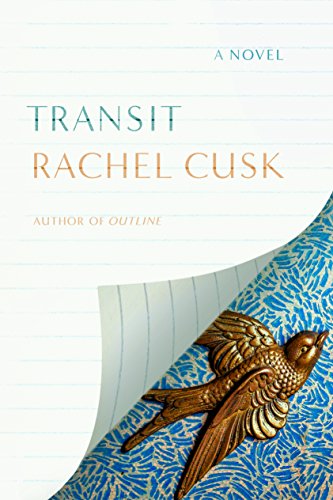
Inhaltsangabe
National Bestseller • A Finalist for the Scotiabank Giller Prize • A Finalist for the Goldsmiths Prize • Longlisted for the International DUBLIN Literary Award • One of Time Magazine's Top 10 Fiction Books of the Year
A New York Times Book Review Notable Book • Named a Best Book of the Year by Time, The Guardian, BOMB Magazine, San Francisco Chronicle, Commonweal, Southern Living, NOW Magazine, The Washington Independent Review of Books, Book Depository, The Globe and Mail, and The National Post (Canada)
The stunning second novel of a trilogy that began with Outline, one of The New York Times Book Review’s ten best books of 2015
In the wake of her family’s collapse, a writer and her two young sons move to London. The process of this upheaval is the catalyst for a number of transitions—personal, moral, artistic, and practical—as she endeavors to construct a new reality for herself and her children. In the city, she is made to confront aspects of living that she has, until now, avoided, and to consider questions of vulnerability and power, death and renewal, in what becomes her struggle to reattach herself to, and believe in, life.
Filtered through the impersonal gaze of its keenly intelligent protagonist, Transit sees Rachel Cusk delve deeper into the themes first raised in her critically acclaimed novel Outline and offers up a penetrating and moving reflection on childhood and fate, the value of suffering, the moral problems of personal responsibility, and the mystery of change.
In this second book of a precise, short, yet epic cycle, Cusk describes the most elemental experiences, the liminal qualities of life. She captures with unsettling restraint and honesty the longing to both inhabit and flee one’s life, and the wrenching ambivalence animating our desire to feel real.
Die Inhaltsangabe kann sich auf eine andere Ausgabe dieses Titels beziehen.
Über die Autorin bzw. den Autor
Rachel Cusk is the author of three memoirs—A Life’s Work, The Last Supper, and Aftermath—and several novels: Saving Agnes, winner of the Whitbread First Novel Award; The Temporary; The Country Life, which won a SomersetMaugham Award; The Lucky Ones; In the Fold; Arlington Park; The Bradshaw Variations; and Outline. She was chosen as one of Granta’s 2003 Best of Young British Novelists. She lives in London.
Auszug. © Genehmigter Nachdruck. Alle Rechte vorbehalten.
Transit
By Rachel CuskFarrar, Straus and Giroux
Copyright © 2016 Rachel Cusk
All rights reserved.
ISBN: 978-0-374-27862-5All rights reserved.
CHAPTER 1
An astrologer emailed me to say she had important news for me concerning events in my immediate future. She could see things that I could not: my personal details had come into her possession and had allowed her to study the planets for their information. She wished me to know that a major transit was due to occur shortly in my sky. This information was causing her great excitement when she considered the changes it might represent. For a small fee she would share it with me and enable me to turn it to my advantage.
She could sense – the email continued – that I had lost my way in life, that I sometimes struggled to find meaning in my present circumstances and to feel hope for what was to come; she felt a strong personal connection between us, and while she couldn't explain the feeling, she knew too that some things ought to defy explanation. She understood that many people closed their minds to the meaning of the sky above their heads, but she firmly believed I was not one of those people. I did not have the blind belief in reality that made others ask for concrete explanations. She knew that I had suffered sufficiently to begin asking certain questions, to which as yet I had received no reply. But the movements of the planets represented a zone of infinite reverberation to human destiny: perhaps it was simply that some people could not believe they were important enough to figure there. The sad fact, she said, is that in this era of science and unbelief we have lost the sense of our own significance. We have become cruel, to ourselves and others, because we believe that ultimately we have no value. What the planets offer, she said, is nothing less than the chance to regain faith in the grandeur of the human: how much more dignity and honour, how much kindness and responsibility and respect, would we bring to our dealings with one another if we believed that each and every one of us had a cosmic importance? She felt that I of all people could see the implications here for improvements in world peace and prosperity, not to mention the revolution an enhanced concept of fate could bring about in the personal side of things. She hoped I would forgive her for contacting me in this way and for speaking so openly. As she had already said, she felt a strong personal connection between us that had encouraged her to say what was in her heart.
It seemed possible that the same computer algorithms that had generated this email had also generated the astrologer herself: her phrases were too characterful, and the note of character was repeated too often; she was too obviously based on a human type to be, herself, human. As a result her sympathy and concern were slightly sinister; yet for those same reasons they also seemed impartial. A friend of mine, depressed in the wake of his divorce, had recently admitted that he often felt moved to tears by the concern for his health and well-being expressed in the phraseology of adverts and food packaging, and by the automated voices on trains and buses, apparently anxious that he might miss his stop; he actually felt something akin to love, he said, for the female voice that guided him while he was driving his car, so much more devotedly than his wife ever had. There has been a great harvest, he said, of language and information from life, and it may have become the case that the faux-human was growing more substantial and more relational than the original, that there was more tenderness to be had from a machine than from one's fellow man. After all, the mechanised interface was the distillation not of one human but of many. Many astrologers had had to live, in other words, for this one example to have been created. What was soothing, he believed, was the very fact that this oceanic chorus was affixed in no one person, that it seemed to come from everywhere and nowhere: he recognised that a lot of people found this idea maddening, but for him the erosion of individuality was also the erosion of the power to hurt.
It was this same friend – a writer – who had advised me, back in the spring, that if I was moving to London with limited funds, it was better to buy a bad house in a good street than a good house somewhere bad. Only the very lucky and the very unlucky, he said, get an unmixed fate: the rest of us have to choose. The estate agent had been surprised that I adhered to this piece of wisdom, if wisdom it was. In his experience, he said, creative people valued the advantages of light and space over those of location. They tended to look for the potential in things, where most people sought the safety of conformity, of what had already been realised to the maximum, properties whose allure was merely the sum of exhausted possibilities, to which nothing further could be added. The irony, he said, was that such people, while afraid of being original, were also obsessed with originality. His clients went into ecstasies over the merest hint of a period feature: well, move out of the centre a little and you could have those in abundance for a fraction of the cost. It was a mystery to him, he said, why people continued to buy in over-inflated parts of the city when there were bargains to be had in up-and-coming areas. He supposed at the heart of it was their lack of imagination. Currently we were at the top of the market, he said: this situation, far from discouraging buyers, seemed actually to inflame them. He was witnessing scenes of outright pandemonium on a daily basis, his office stampeded with people elbowing one another aside to pay too much for too little as though their lives depended on it. He had conducted viewings where fights had broken out, presided over bidding wars of unprecedented aggression, had even been offered bribes for preferential treatment; all, he said, for properties that, looked at in the cold light of day, were unexceptional. What was striking was the genuine desperation of these people, once they were in the throes of desire: they would phone him hourly for updates, or call in at the office for no reason; they begged, and sometimes even wept; they were angry one minute and penitent the next, often regaling him with long confessions concerning their personal circumstances. He would have pitied them, were it not for the fact that they invariably erased the drama from their minds the instant it was over and the purchase completed, shedding not only the memory of their own conduct but also of the people who had had to put up with it. He had had clients who had shared the most gruesome intimacies with him one week and then walked past him in the street the next without the slightest sign of recognition; he had seen couples who had sunk to the depths before his eyes, now going obliviously about their business in the neighbourhood. Only in the very completeness of their oblivion did he sometimes detect a hint of shame. In the early days of his career he had found such incidents upsetting, but luckily experience had taught him not to take it to heart. He understood that for them he was a figure conjured out of the red mist of their desire, an object, so to speak, of transference. Yet the desire itself continued to bewilder him. Sometimes he concluded that people only want what it is not certain they can have; at other times it seemed to him more complex. Frequently, his clients would admit to feeling relief that their desire had been thwarted: the same people who had stormed and wept like frustrated children because a property was being denied them, would be found days later sitting calmly in his office,...
„Über diesen Titel“ kann sich auf eine andere Ausgabe dieses Titels beziehen.
Suchergebnisse für Transit: A Novel (Outline Trilogy)

Foto des Verkäufers
Transit: A Novel (Outline Trilogy, 2)
Verlag:
Farrar, Straus and Giroux, 2017
ISBN 10: 0374278628
ISBN 13: 9780374278625
Gebraucht
Hardcover
Anbieter: Dream Books Co., Denver, CO, USA
Verkäuferbewertung 5 von 5 Sternen

Zustand: acceptable. This copy has clearly been enjoyedâ"expect noticeable shelf wear and some minor creases to the cover. Binding is strong, and all pages are legible. May contain previous library markings or stamps. Artikel-Nr. DBV.0374278628.A
Gebraucht kaufen
EUR 5,14
Versand gratis
Versand innerhalb von USA
Versand innerhalb von USA
Anzahl: 1 verfügbar
Beispielbild für diese ISBN
Transit : A Novel
Verlag:
Farrar, Straus & Giroux, 2017
ISBN 10: 0374278628
ISBN 13: 9780374278625
Gebraucht
Hardcover
Anbieter: Better World Books, Mishawaka, IN, USA
Verkäuferbewertung 5 von 5 Sternen
Zustand: Good. Former library copy. Pages intact with minimal writing/highlighting. The binding may be loose and creased. Dust jackets/supplements are not included. Includes library markings. Stock photo provided. Product includes identifying sticker. Better World Books: Buy Books. Do Good. Artikel-Nr. 13255291-6
Gebraucht kaufen
EUR 7,18
Versand gratis
Versand innerhalb von USA
Versand innerhalb von USA
Anzahl: 4 verfügbar
Beispielbild für diese ISBN
Transit: A Novel
Verlag:
Farrar, Straus and Giroux, 2017
ISBN 10: 0374278628
ISBN 13: 9780374278625
Gebraucht
Hardcover
Anbieter: Magers and Quinn Booksellers, Minneapolis, MN, USA
Verkäuferbewertung 5 von 5 Sternen
hardcover. Zustand: Acceptable. American First. May have underlining, highlighting, margin notes, remainder marks, inscriptions, book plates, tears, significant wear, and/or a missing dust jacket, box, or discs. Damaged item. Artikel-Nr. 1514538
Gebraucht kaufen
EUR 7,55
EUR 3,55 Versand
Versand innerhalb von USA
Versand innerhalb von USA
Anzahl: 1 verfügbar
Beispielbild für diese ISBN
Transit
Verlag:
Farrar, Straus and Giroux, 2017
ISBN 10: 0374278628
ISBN 13: 9780374278625
Gebraucht
Hardcover
Anbieter: Robinson Street Books, IOBA, Binghamton, NY, USA
Verkäuferbewertung 4 von 5 Sternen

Hardcover. Zustand: Used: Very Good. Prompt Shipment, shipped in Boxes, Tracking PROVIDEDFictionGood condition, some wear to edges, bumped tips, minor wear to dustjacket, prompt shipping with tracking. Artikel-Nr. CCIB001
Gebraucht kaufen
EUR 40,28
EUR 8,44 Versand
Versand innerhalb von USA
Versand innerhalb von USA
Anzahl: 1 verfügbar
Beispielbild für diese ISBN
Transit
Anbieter: Revaluation Books, Exeter, Vereinigtes Königreich
Verkäuferbewertung 5 von 5 Sternen
Hardcover. Zustand: Brand New. 224 pages. 9.00x6.00x1.00 inches. In Stock. Artikel-Nr. 0374278628
Neu kaufen
EUR 49,70
EUR 11,77 Versand
Versand von Vereinigtes Königreich nach USA
Versand von Vereinigtes Königreich nach USA
Anzahl: 1 verfügbar