
Verwandte Artikel zu A Man in Full: A Novel
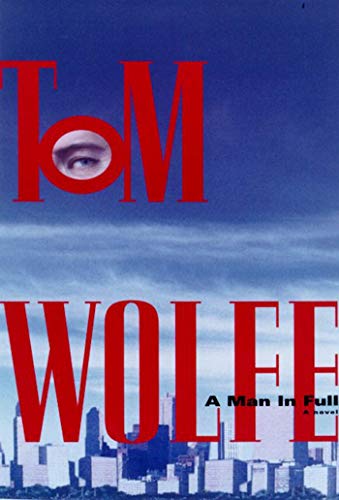
Inhaltsangabe
Tom Wolfe's THE BONFIRE OF THE VANITIES defined an era and established Wolfe as our prime fictional chronicler of America at its most outrageous and alive. In his #1 New York Times bestseller and National Book Award finalist, A MAN IN FULL, the setting shifts to Atlanta, Georgia-a racially mixed late-century boomtown teeming with fresh wealth, avid speculators, and worldly-wise politicians."
Don't miss the star-studded mini series adaptation of A Man in Full-coming soon to Netflix.
Big men. Big money. Big games. Big libidos. Big trouble.
The protagonist is Charles Croker, once a college football star, now a late-middle-aged Atlanta real-estate entrepreneur turned conglomerate king, whose expansionist ambitions and outsize ego have at last hit up against reality. Charlie has a 28,000-acre quail-shooting plantation, a young and demanding second wife--and a half-empty office tower with a staggering load of debt. When star running back Fareek Fanon--the pride of one of Atlanta's grimmest slums--is accused of raping an Atlanta blueblood's daughter, the city's delicate racial balance is shattered overnight.
Networks of illegal Asian immigrants crisscrossing the continent, daily life behind bars, shady real-estate syndicates, cast-off first wives of the corporate elite, the racially charged politics of college sports--Wolfe shows us the disparate worlds of contemporary America with all the verve, wit, and insight that have made him our most phenomenal, most admired contemporary novelist.
Praise for A Man in Full:
"A masterpiece." -The Wall Street Journal
"The novel contains passages as powerful and as beautiful as anything written-not merely by contemporary American novelists but by any American novelist. . . . The book is as funny as anything Wolfe has ever written; at the same time it is also deeply, strangely affecting." -The New York Times Book Review
Die Inhaltsangabe kann sich auf eine andere Ausgabe dieses Titels beziehen.
Über die Autorin bzw. den Autor
Tom Wolfe (1930-2018) was one of the founders of the New Journalism movement and the author of contemporary classics like The Right Stuff and Radical Chic & Mau-Mauing the Flak Catchers, as well as the novels The Bonfire of the Vanities, A Man in Full, and I Am Charlotte Simmons. As a reporter, he wrote articles for The Washington Post, the New York Herald Tribune, Esquire, and New York Magazine, and is credited with coining the term, "The Me Decade." Among his many honors, Tom was awarded the National Book Award, the John Dos Passos Award, the Washington Irving Medal for Literary Excellence, the National Humanities Medal, and National Book Foundation Medal for Distinguished Contribution to American Letters. He lived in New York City.
Auszug. © Genehmigter Nachdruck. Alle Rechte vorbehalten.
chapter I
Chocolate Mecca
FOR A WHILE THE FREAKNIC TRAFFIC INCHED UP PIEDMONT … inched up Piedmont … inched up Piedmont … inched up as far as Tenth Street … and then inched up the slope beyond Tenth Street … inched up as far as Fifteenth Street … whereupon it came to a complete, utter, hopeless, bogged-down glue-trap halt, both ways, northbound, southbound, going and coming, across all four lanes. That was it. Nobody was moving on Piedmont Avenue; not anywhere, not any which way; not from here; not for now. Suddenly, as if they were pilots ejecting from fighter planes, black boys and girls began popping out into the dusk of an Atlanta Saturday night. They popped out of convertibles, muscle cars, Jeeps, Explorers, out of vans, out of evil-looking little econo-sports coupes, out of pickup trucks, campers, hatchbacks, Nissan Maximas, Honda Accords, BMWs, and even ordinary American sedans.
Roger Too White—and in that moment this old nickname of his, Roger Too White, which he had been stuck with ever since Morehouse, came bubbling up, uninvited, into his own brain—Roger Too White stared through the windshield of his Lexus, astonished. Out the passenger-side window of a screaming-red Chevrolet Camaro just ahead of him, in the lane to his left, shot one leg of a pair of fiercely pre-faded blue jeans. A girl. He could tell it was a girl because of the little caramel-colored foot that protruded from the jeans, shod only in the merest of sandals. Then, much faster than it would take to tell it, out the window came her hip, her little bottom, her bare midriff, her tube top, her wide shoulders, her long wavy black hair with its heavenly auburn sheen. Youth! She hadn’t even bothered to open the door. She had come rolling out of the Camaro like a high jumper rolling over the bar at a track meet.
As soon as both feet touched the pavement of Piedmont Avenue, she started dancing, thrusting her elbows out in front of her and thrashing them about, shaking those lovely little hips, those tube-topped breasts, those shoulders, that heavenly hair.
RAM YO’ BOOTY! RAM YO’ BOOTY!
A rap song was pounding out of the Camaro with such astounding volume, Roger Too White could hear every single vulgar intonation of it even with the Lexus’s windows rolled up.
HOW’M I SPOSE A LOVE HER,
CATCH HER MACKIN’ WITH THE BROTHERS?
—sang, or chanted, or recited, or whatever you were supposed to call it, the guttural voice of a rap artist named Doctor Rammer Doc Doc, if it wasn’t utterly ridiculous to call him an artist.
RAM YO’ BOOTY! RAM YO’ BOOTY!
—sang the chorus, which sounded like a group of sex-crazed crack fiends. It took a Roger Too White to imagine that sex-crazed crack fiends could get together and cooperate long enough to sing a chorus, although he did correctly identify Doctor Rammer Doc Doc, who was so popular that even a forty-two-year-old lawyer like himself couldn’t completely shut him out of his waking life. His own tastes ran to Mahler and Stravinsky, and he would have gladly majored in music history at Morehouse, except that music history hadn’t been considered too great a major for a black undergraduate who wanted to get into the University of Georgia law school. All of that, compressed into a millisecond, blipped through his mind in this moment, too.
The girl swung her hips in an exaggerated arc each time the fiends hit the BOO of BOOTY. She was gorgeous. Her jeans were down so low on her hips, and her tube top was up so high on her chest, he could see lots of her lovely light-caramel-colored flesh, punctuated by her belly button, which looked like an eager little eye. Her skin was the same light color as his, and he knew her type at a glance. Despite her funky clothes, she was a blueblood. She had Black Deb written all over her. Her parents were no doubt the classic Black Professional Couple of the 1990s, in Charlotte or Raleigh or Washington or Baltimore. Look at the gold bangles on her wrists; must have cost hundreds of dollars. Look at the soft waves in her relaxed hair, a ’do known as a Bout en Train; French, baby, for “life of the party”; cost a fortune; his own wife had the same thing done to her hair. Little cutie, shaking her booty, probably went to Howard or maybe Chapel Hill or the University of Virginia; belonged to Theta Psi. Oh, these black boys and girls came to Atlanta from colleges all over the place for Freaknic every April, at spring break, thousands of them, and here they were on Piedmont Avenue, in the heart of the northern third of Atlanta, the white third, flooding the streets, the parks, the malls, taking over Midtown and Downtown and the commercial strips of Buckhead, tying up traffic, even on Highways 75 and 85, baying at the moon, which turns chocolate during Freaknic, freaking out White Atlanta, scaring them indoors, where they cower for three days, giving them a snootful of the future. To these black college students shaking it in front of his Lexus, this was nothing more than what white college students had been doing for years at Fort Lauderdale and Daytona and Cancún, or wherever they were going now, except that these boys and girls here in front of him weren’t interested in any beach. They were coming to the … streets of Atlanta. Atlanta was their city, the Black Beacon, as the Mayor called it, 70 percent black. The Mayor was black—in fact, Roger and the Mayor, Wesley Dobbs Jordan, had been fraternity brothers (Omega Zeta Zeta) at Morehouse—and twelve of the nineteen city council members were black, and the chief of police was black, and the fire chief was black, and practically the whole civil service was black, and the Power was black, and White Atlanta was screaming its head off about “Freaknik,” with a k instead of a c, as the white newspapers called it, ignorant of the fact that Freaknic was a variation not of the (white) word beatnik but of the (neutral) word picnic. They were screaming that these black Freaknik revelers were rude, loud, rowdy, and insolent, that they got filthy drunk and littered the streets and urinated on (white) people’s lawns, that they tied up the streets and the malls and cost the (white) merchants millions of dollars, even that they made so much noise they were disrupting the fragile mating habits of the rhinoceroses at the Grant Park zoo. The mating habits of the rhinos!
In other words, these black boys and girls had the audacity to do exactly what white boys and girls did every year during their spring breaks. Oh yes, and White Atlanta was screaming everything they could think of, except for what they really thought, which was: They’re everywhere, they’re in our part of town, and they’re doing what they damn well please—and we can’t stop them!
Out of the other side of the Camaro popped the driver, a great lubberly lad. A snub-tailed Eclipse was practically touching his rear bumper. He put one hand on the airfoil lip on the trunk of the Camaro and—youth!—vaulted between the two cars and landed right in front of the girl. And no sooner had his feet touched the pavement of Piedmont Avenue than he was dancing.
RAM YO‘BOOTY! RAM YO’ BOOTY!
He was a tall fellow, slightly darker than she was, but not much. He could still pass the Brown Paper Bag Test, as they used to call it here in the Black Beacon, which meant that so long as your skin was...
„Über diesen Titel“ kann sich auf eine andere Ausgabe dieses Titels beziehen.
Suchergebnisse für A Man in Full: A Novel

Beispielbild für diese ISBN
Man in Full
Verlag:
Farrar, Straus and Giroux, 1998
ISBN 10: 0374270325
ISBN 13: 9780374270322
Gebraucht
Hardcover
Anbieter: World of Books (was SecondSale), Montgomery, IL, USA
Verkäuferbewertung 5 von 5 Sternen

Hardback. Zustand: Good. Tom Wolfe's THE BONFIRE OF THE VANITIES defined an era and established Wolfe as our prime fictional chronicler of America at its most outrageous and alive. In his #1 New York Times bestseller and National Book Award finalist, A MAN IN FULL, the setting shifts to Atlanta, Georgia--a racially mixed late-century boomtown teeming with fresh wealth, avid speculators, and worldly-wise politicians." Don't miss the star-studded mini series adaptation of A Man in Full-coming soon to Netflix. Big men. Big money. Big games. Big libidos. Big trouble. The protagonist is Charles Croker, once a college football star, now a late-middle-aged Atlanta real-estate entrepreneur turned conglomerate king, whose expansionist ambitions and outsize ego have at last hit up against reality. Charlie has a 28,000-acre quail-shooting plantation, a young and demanding second wife--and a half-empty office tower with a staggering load of debt. When star running back Fareek Fanon--the pride of one of Atlanta's grimmest slums--is accused of raping an Atlanta blueblood's daughter, the city's delicate racial balance is shattered overnight. Networks of illegal Asian immigrants crisscrossing the continent, daily life behind bars, shady real-estate syndicates, cast-off first wives of the corporate elite, the racially charged politics of college sports--Wolfe shows us the disparate worlds of contemporary America with all the verve, wit, and insight that have made him our most phenomenal, most admired contemporary novelist. Praise for A Man in Full: "A masterpiece." --The Wall Street Journal "The novel contains passages as powerful and as beautiful as anything written--not merely by contemporary American novelists but by any American novelist. . . . The book is as funny as anything Wolfe has ever written; at the same time it is also deeply, strangely affecting." --The New York Times Book Review. Artikel-Nr. 00083466876
Gebraucht kaufen
EUR 4,12
Versand gratis
Versand innerhalb von USA
Versand innerhalb von USA
Anzahl: Mehr als 20 verfügbar
Beispielbild für diese ISBN
Man in Full
Verlag:
Farrar, Straus and Giroux, 1998
ISBN 10: 0374270325
ISBN 13: 9780374270322
Gebraucht
Hardcover
Anbieter: World of Books (was SecondSale), Montgomery, IL, USA
Verkäuferbewertung 5 von 5 Sternen
Hardback. Zustand: Very Good. Tom Wolfe's THE BONFIRE OF THE VANITIES defined an era and established Wolfe as our prime fictional chronicler of America at its most outrageous and alive. In his #1 New York Times bestseller and National Book Award finalist, A MAN IN FULL, the setting shifts to Atlanta, Georgia--a racially mixed late-century boomtown teeming with fresh wealth, avid speculators, and worldly-wise politicians." Don't miss the star-studded mini series adaptation of A Man in Full-coming soon to Netflix. Big men. Big money. Big games. Big libidos. Big trouble. The protagonist is Charles Croker, once a college football star, now a late-middle-aged Atlanta real-estate entrepreneur turned conglomerate king, whose expansionist ambitions and outsize ego have at last hit up against reality. Charlie has a 28,000-acre quail-shooting plantation, a young and demanding second wife--and a half-empty office tower with a staggering load of debt. When star running back Fareek Fanon--the pride of one of Atlanta's grimmest slums--is accused of raping an Atlanta blueblood's daughter, the city's delicate racial balance is shattered overnight. Networks of illegal Asian immigrants crisscrossing the continent, daily life behind bars, shady real-estate syndicates, cast-off first wives of the corporate elite, the racially charged politics of college sports--Wolfe shows us the disparate worlds of contemporary America with all the verve, wit, and insight that have made him our most phenomenal, most admired contemporary novelist. Praise for A Man in Full: "A masterpiece." --The Wall Street Journal "The novel contains passages as powerful and as beautiful as anything written--not merely by contemporary American novelists but by any American novelist. . . . The book is as funny as anything Wolfe has ever written; at the same time it is also deeply, strangely affecting." --The New York Times Book Review. Artikel-Nr. 00110165807
Gebraucht kaufen
EUR 4,12
Versand gratis
Versand innerhalb von USA
Versand innerhalb von USA
Anzahl: 7 verfügbar
Beispielbild für diese ISBN
Man in Full
Verlag:
Farrar, Straus and Giroux, 1998
ISBN 10: 0374270325
ISBN 13: 9780374270322
Gebraucht
Hardcover
Anbieter: World of Books (was SecondSale), Montgomery, IL, USA
Verkäuferbewertung 5 von 5 Sternen
Hardback. Zustand: Fair. Tom Wolfe's THE BONFIRE OF THE VANITIES defined an era and established Wolfe as our prime fictional chronicler of America at its most outrageous and alive. In his #1 New York Times bestseller and National Book Award finalist, A MAN IN FULL, the setting shifts to Atlanta, Georgia--a racially mixed late-century boomtown teeming with fresh wealth, avid speculators, and worldly-wise politicians." Don't miss the star-studded mini series adaptation of A Man in Full-coming soon to Netflix. Big men. Big money. Big games. Big libidos. Big trouble. The protagonist is Charles Croker, once a college football star, now a late-middle-aged Atlanta real-estate entrepreneur turned conglomerate king, whose expansionist ambitions and outsize ego have at last hit up against reality. Charlie has a 28,000-acre quail-shooting plantation, a young and demanding second wife--and a half-empty office tower with a staggering load of debt. When star running back Fareek Fanon--the pride of one of Atlanta's grimmest slums--is accused of raping an Atlanta blueblood's daughter, the city's delicate racial balance is shattered overnight. Networks of illegal Asian immigrants crisscrossing the continent, daily life behind bars, shady real-estate syndicates, cast-off first wives of the corporate elite, the racially charged politics of college sports--Wolfe shows us the disparate worlds of contemporary America with all the verve, wit, and insight that have made him our most phenomenal, most admired contemporary novelist. Praise for A Man in Full: "A masterpiece." --The Wall Street Journal "The novel contains passages as powerful and as beautiful as anything written--not merely by contemporary American novelists but by any American novelist. . . . The book is as funny as anything Wolfe has ever written; at the same time it is also deeply, strangely affecting." --The New York Times Book Review. Artikel-Nr. 00071181422
Gebraucht kaufen
EUR 4,12
Versand gratis
Versand innerhalb von USA
Versand innerhalb von USA
Anzahl: Mehr als 20 verfügbar
Beispielbild für diese ISBN
A Man in Full
Verlag:
Farrar, Straus and Giroux, 1998
ISBN 10: 0374270325
ISBN 13: 9780374270322
Gebraucht
Hardcover
Anbieter: ThriftBooks-Reno, Reno, NV, USA
Verkäuferbewertung 5 von 5 Sternen
Hardcover. Zustand: As New. No Jacket. Pages are clean and are not marred by notes or folds of any kind. ~ ThriftBooks: Read More, Spend Less. Artikel-Nr. G0374270325I2N00
Gebraucht kaufen
EUR 6,08
Versand gratis
Versand innerhalb von USA
Versand innerhalb von USA
Anzahl: 1 verfügbar
Beispielbild für diese ISBN
A Man in Full
Verlag:
Farrar, Straus and Giroux, 1998
ISBN 10: 0374270325
ISBN 13: 9780374270322
Gebraucht
Hardcover
Anbieter: ThriftBooks-Atlanta, AUSTELL, GA, USA
Verkäuferbewertung 5 von 5 Sternen
Hardcover. Zustand: As New. No Jacket. Pages are clean and are not marred by notes or folds of any kind. ~ ThriftBooks: Read More, Spend Less. Artikel-Nr. G0374270325I2N00
Gebraucht kaufen
EUR 6,08
Versand gratis
Versand innerhalb von USA
Versand innerhalb von USA
Anzahl: 2 verfügbar
Beispielbild für diese ISBN
A Man in Full
Verlag:
Farrar, Straus and Giroux, 1998
ISBN 10: 0374270325
ISBN 13: 9780374270322
Gebraucht
Hardcover
Anbieter: ThriftBooks-Phoenix, Phoenix, AZ, USA
Verkäuferbewertung 5 von 5 Sternen
Hardcover. Zustand: As New. No Jacket. Pages are clean and are not marred by notes or folds of any kind. ~ ThriftBooks: Read More, Spend Less. Artikel-Nr. G0374270325I2N00
Gebraucht kaufen
EUR 6,08
Versand gratis
Versand innerhalb von USA
Versand innerhalb von USA
Anzahl: 1 verfügbar
Beispielbild für diese ISBN
A Man in Full
Verlag:
Farrar, Straus and Giroux, 1998
ISBN 10: 0374270325
ISBN 13: 9780374270322
Gebraucht
Hardcover
Anbieter: ThriftBooks-Dallas, Dallas, TX, USA
Verkäuferbewertung 5 von 5 Sternen
Hardcover. Zustand: As New. No Jacket. Pages are clean and are not marred by notes or folds of any kind. ~ ThriftBooks: Read More, Spend Less. Artikel-Nr. G0374270325I2N00
Gebraucht kaufen
EUR 6,08
Versand gratis
Versand innerhalb von USA
Versand innerhalb von USA
Anzahl: 1 verfügbar
Beispielbild für diese ISBN
A Man in Full: A Novel
Verlag:
Farrar, Straus and Giroux, 1998
ISBN 10: 0374270325
ISBN 13: 9780374270322
Gebraucht
Hardcover
Anbieter: Wonder Book, Frederick, MD, USA
Verkäuferbewertung 5 von 5 Sternen
Zustand: Very Good. Very Good condition. Good dust jacket. A copy that may have a few cosmetic defects. May also contain light spine creasing or a few markings such as an owner's name, short gifter's inscription or light stamp. Artikel-Nr. K16J-00039
Gebraucht kaufen
EUR 6,43
Versand gratis
Versand innerhalb von USA
Versand innerhalb von USA
Anzahl: 11 verfügbar
Beispielbild für diese ISBN
A Man in Full : A Novel
Verlag:
Farrar, Straus & Giroux, 1998
ISBN 10: 0374270325
ISBN 13: 9780374270322
Gebraucht
Hardcover
Anbieter: Better World Books, Mishawaka, IN, USA
Verkäuferbewertung 5 von 5 Sternen
Zustand: Very Good. 1st Editon. Pages intact with possible writing/highlighting. Binding strong with minor wear. Dust jackets/supplements may not be included. Stock photo provided. Product includes identifying sticker. Better World Books: Buy Books. Do Good. Artikel-Nr. 6372647-6
Gebraucht kaufen
EUR 6,84
Versand gratis
Versand innerhalb von USA
Versand innerhalb von USA
Anzahl: 1 verfügbar
Beispielbild für diese ISBN
A Man in Full : A Novel
Verlag:
Farrar, Straus & Giroux, 1998
ISBN 10: 0374270325
ISBN 13: 9780374270322
Gebraucht
Hardcover
Anbieter: Better World Books, Mishawaka, IN, USA
Verkäuferbewertung 5 von 5 Sternen
Zustand: Good. 1st Editon. Former library copy. Pages intact with minimal writing/highlighting. The binding may be loose and creased. Dust jackets/supplements are not included. Includes library markings. Stock photo provided. Product includes identifying sticker. Better World Books: Buy Books. Do Good. Artikel-Nr. GRP17033520
Gebraucht kaufen
EUR 6,84
Versand gratis
Versand innerhalb von USA
Versand innerhalb von USA
Anzahl: 2 verfügbar