
Verwandte Artikel zu The Snow Queen
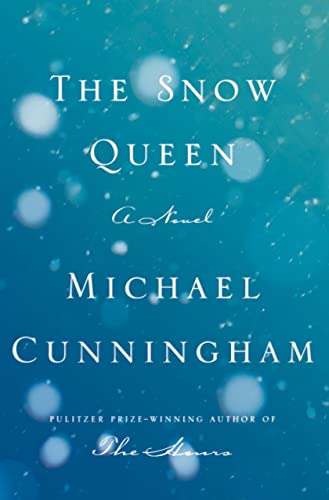
Inhaltsangabe
The New York Times bestselling novel from the Pulitzer Prize–winning author of The Hours
Michael Cunningham's luminous novel begins with a vision. It's November 2004. Barrett Meeks, having lost love yet again, is walking through Central Park when he is inspired to look up at the sky; there he sees a pale, translucent light that seems to regard him in a distinctly godlike way. Barrett doesn't believe in visions―or in God―but he can't deny what he's seen.
At the same time, in the not-quite-gentrified Bushwick neighborhood of Brooklyn, Tyler, Barrett's older brother, a struggling musician, is trying―and failing―to write a wedding song for Beth, his wife-to-be, who is seriously ill. Tyler is determined to write a song that will be not merely a sentimental ballad but an enduring expression of love.
Barrett, haunted by the light, turns unexpectedly to religion. Tyler grows increasingly convinced that only drugs can release his creative powers. Beth tries to face mortality with as much courage as she can summon.
Cunningham follows the Meeks brothers as each travels down a different path in his search for transcendence. In subtle, lucid prose, he demonstrates a profound empathy for his conflicted characters and a singular understanding of what lies at the core of the human soul.
The Snow Queen, beautiful and heartbreaking, comic and tragic, proves again that Cunningham is one of the great novelists of his generation.
Die Inhaltsangabe kann sich auf eine andere Ausgabe dieses Titels beziehen.
Über die Autorin bzw. den Autor
Michael Cunningham is the author of six novels, including A Home at the End of the World, Flesh and Blood, The Hours (winner of the PEN/Faulkner Award and the Pulitzer Prize), Specimen Days, and By Nightfall, as well as Land's End: A Walk in Provincetown. He lives in New York.
Auszug. © Genehmigter Nachdruck. Alle Rechte vorbehalten.
Snow Queen
A Novel
By Michael CunninghamFarrar, Straus and Giroux
Copyright © 2014 Michael Cunningham
All rights reserved.
ISBN: 978-0-374-26632-5All rights reserved.
A NIGHT
A celestial light appeared to Barrett Meeks in the sky over Central Park, four days after Barrett had been mauled, once again, by love. It was by no means his first romantic dropkick, but it was the first to have been conveyed by way of a five-line text, the fifth line of which was a crushingly corporate wish for good luck in the future, followed by three lowercase xxx’s.
During the past four days, Barrett had been doing his best to remain undiscouraged by what seemed, lately, to be a series of progressively terse and tepid breakups. In his twenties, love had usually ended in fits of weeping, in shouts loud enough to set off the neighbors’ dogs. On one occasion, he and his soon-to-be-ex had fought with their fists (Barrett can still hear the table tipping over, the sound the pepper mill made as it rolled lopsidedly across the floorboards). On another: a shouting match on Barrow Street, a bottle shattered (the words “falling in love” still suggest, to Barrett, green glass shards on a sidewalk under a streetlamp), and the voice of an old woman, neither shrill nor scolding, emanating from some low dark window, saying, simply, “Don’t you boys understand that people live here, people are trying to sleep,” like the voice of an exhausted mother.
As Barrett moved into his mid-, and then late, thirties, though, the partings increasingly tended to resemble business negotiations. They were not devoid of sorrow and accusation, but they had without question become less hysterical. They’d come to resemble deals and investments that had, unfortunately, gone wrong, despite early promises of solid returns.
This last parting, however, was his first to be conveyed by text, the farewell appearing, uninvited, unanticipated, on a screen no bigger than a bar of hotel soap. Hi Barrett I guess u know what this is about. Hey we gave it our best shot right?
Barrett did not, in fact, know what this was about. He got the message, of course—love, and whatever future love implied, had been canceled. But, I guess u know what this is about? That had been something like a dermatologist saying, offhandedly, after your annual checkup, I guess you know that that beauty mark on your cheek, that little chocolate-colored speck that has been referred to, more than once, as an aspect of your general loveliness (who was it who said Marie Antoinette’s penciled-on version had been in precisely that spot?), is actually skin cancer.
Barrett responded initially in kind, by text. An e-mail seemed elderly, a phone call desperate. So he tapped out, on tiny keys, Wow this is sudden how bout we talk a little, I’m where I always am. xxx.
By the end of the second day, Barrett had left two more texts, followed by two voice mails, and had spent most of the second night not leaving a third. By the end of day number three, he had not only received no reply of any kind, but also had begun to realize there would be no reply at all; that the sturdily built, earnest Canadian Ph.D. candidate (psychology, Columbia) with whom he’d shared five months of sex and food and private jokes, the man who’d said “I might actually love you” after Barrett recited Frank O’Hara’s “Ave Maria” while they were taking a bath together, the one who’d known the names of the trees when they spent that weekend in the Adirondacks, was simply moving on; that Barrett had been left standing on the platform, wondering how exactly he seemed to have missed his train.
I wish you happiness and luck in the future. xxx.
On the fourth night, Barrett was walking across Central Park, headed home after a dental exam, which struck him on one hand as depressingly commonplace but, on the other, as a demonstration of his fortitude. Go ahead, rid yourself of me in five uninformative and woundingly anonymous lines. (I’m sorry it just hasn’t worked out the way we’d hoped it would, but I know we both tried our best.) I’m not going to neglect my teeth for you. I’m going to be pleased, pleased and thankful, to know that I don’t need a root canal, after all.
Still, the idea that, without having been offered any time to prepare for it, he’d never witness the pure careless loveliness of this young man, who was so much like those lithe, innocent young athletes adoringly painted by Thomas Eakins; the idea that Barrett would never again watch the boy peel his briefs off before bed, never witness his lavish, innocent delight in small satisfactions (a Leonard Cohen mix tape Barrett made for him, called Why Don’t You Just Kill Yourself; a victory for the Rangers), seemed literally impossible, a violation of love-physics. As did the fact that Barrett would, apparently, never know what it was that had gone so wrong. There had been, during the last month or so, the occasional fight, the awkward lapse in conversation. But Barrett had assumed that the two of them were merely entering the next phase; that their disagreements (Do you think you could try not to be late some of the time? Why would you put me down like that in front of my friends?) were signposts of their growing intimacy. He hadn’t remotely imagined that one morning he’d check his text messages and find love to have been lost, with approximately the degree of remorse one would feel over the loss of a pair of sunglasses.
On the night of the apparition, Barrett, having been relieved of the threatened root canal, having promised to floss more faithfully, had crossed the Great Lawn and was nearing the floodlit, glacial mass of the Metropolitan Museum. He was crunching over ice-coated silver-gray snow, taking a shortcut to the number 6 train, dripped on by tree branches, glad at least to be going home to Tyler and Beth, glad to have someone waiting for him. He felt numb, as if his whole being had been injected with novocaine. He wondered if he was becoming, at the age of thirty-eight, less a figure of tragic ardency, love’s holy fool, and more a middle manager who wrote off one deal (yes, there’ve been some losses to the company portfolio, but nothing catastrophic) and went on to the next, with renewed if slightly more reasonable aspirations. He no longer felt inclined to stage a counterattack, to leave hourly voice mails or stand sentry outside his ex’s building, although, ten years ago, that’s exactly what he’d have done: Barrett Meeks, a soldier of love. Now he could only picture himself as aging and destitute. If he summoned up a show of anger and ardency it would merely be meant to disguise the fact that he was broke, he was broken, please, brother, have you got anything you can spare?
Barrett hung his head as he walked through the park, not from shame but weariness, as if his head had become too heavy to hold upright. He looked down at the modest blue-gray puddle of his own shadow, cast by the lampposts onto the snow. He watched his shadow glide over a pinecone, a vaguely runic scattering of pine needles, and the wrapper of an Oh Henry! bar (they still made Oh Henry! bars?) that rattled by, raggedly silver, windblown.
The miniature groundscape at his feet struck him, rather suddenly, as too wintery and prosaic to bear. He lifted his heavy head and looked up.
There it was. A pale aqua light, translucent, a swatch of veil, star-high, no, lower than the stars, but high, higher...
A celestial light appeared to Barrett Meeks in the sky over Central Park, four days after Barrett had been mauled, once again, by love. It was by no means his first romantic dropkick, but it was the first to have been conveyed by way of a five-line text, the fifth line of which was a crushingly corporate wish for good luck in the future, followed by three lowercase xxx’s.
During the past four days, Barrett had been doing his best to remain undiscouraged by what seemed, lately, to be a series of progressively terse and tepid breakups. In his twenties, love had usually ended in fits of weeping, in shouts loud enough to set off the neighbors’ dogs. On one occasion, he and his soon-to-be-ex had fought with their fists (Barrett can still hear the table tipping over, the sound the pepper mill made as it rolled lopsidedly across the floorboards). On another: a shouting match on Barrow Street, a bottle shattered (the words “falling in love” still suggest, to Barrett, green glass shards on a sidewalk under a streetlamp), and the voice of an old woman, neither shrill nor scolding, emanating from some low dark window, saying, simply, “Don’t you boys understand that people live here, people are trying to sleep,” like the voice of an exhausted mother.
As Barrett moved into his mid-, and then late, thirties, though, the partings increasingly tended to resemble business negotiations. They were not devoid of sorrow and accusation, but they had without question become less hysterical. They’d come to resemble deals and investments that had, unfortunately, gone wrong, despite early promises of solid returns.
This last parting, however, was his first to be conveyed by text, the farewell appearing, uninvited, unanticipated, on a screen no bigger than a bar of hotel soap. Hi Barrett I guess u know what this is about. Hey we gave it our best shot right?
Barrett did not, in fact, know what this was about. He got the message, of course—love, and whatever future love implied, had been canceled. But, I guess u know what this is about? That had been something like a dermatologist saying, offhandedly, after your annual checkup, I guess you know that that beauty mark on your cheek, that little chocolate-colored speck that has been referred to, more than once, as an aspect of your general loveliness (who was it who said Marie Antoinette’s penciled-on version had been in precisely that spot?), is actually skin cancer.
Barrett responded initially in kind, by text. An e-mail seemed elderly, a phone call desperate. So he tapped out, on tiny keys, Wow this is sudden how bout we talk a little, I’m where I always am. xxx.
By the end of the second day, Barrett had left two more texts, followed by two voice mails, and had spent most of the second night not leaving a third. By the end of day number three, he had not only received no reply of any kind, but also had begun to realize there would be no reply at all; that the sturdily built, earnest Canadian Ph.D. candidate (psychology, Columbia) with whom he’d shared five months of sex and food and private jokes, the man who’d said “I might actually love you” after Barrett recited Frank O’Hara’s “Ave Maria” while they were taking a bath together, the one who’d known the names of the trees when they spent that weekend in the Adirondacks, was simply moving on; that Barrett had been left standing on the platform, wondering how exactly he seemed to have missed his train.
I wish you happiness and luck in the future. xxx.
On the fourth night, Barrett was walking across Central Park, headed home after a dental exam, which struck him on one hand as depressingly commonplace but, on the other, as a demonstration of his fortitude. Go ahead, rid yourself of me in five uninformative and woundingly anonymous lines. (I’m sorry it just hasn’t worked out the way we’d hoped it would, but I know we both tried our best.) I’m not going to neglect my teeth for you. I’m going to be pleased, pleased and thankful, to know that I don’t need a root canal, after all.
Still, the idea that, without having been offered any time to prepare for it, he’d never witness the pure careless loveliness of this young man, who was so much like those lithe, innocent young athletes adoringly painted by Thomas Eakins; the idea that Barrett would never again watch the boy peel his briefs off before bed, never witness his lavish, innocent delight in small satisfactions (a Leonard Cohen mix tape Barrett made for him, called Why Don’t You Just Kill Yourself; a victory for the Rangers), seemed literally impossible, a violation of love-physics. As did the fact that Barrett would, apparently, never know what it was that had gone so wrong. There had been, during the last month or so, the occasional fight, the awkward lapse in conversation. But Barrett had assumed that the two of them were merely entering the next phase; that their disagreements (Do you think you could try not to be late some of the time? Why would you put me down like that in front of my friends?) were signposts of their growing intimacy. He hadn’t remotely imagined that one morning he’d check his text messages and find love to have been lost, with approximately the degree of remorse one would feel over the loss of a pair of sunglasses.
On the night of the apparition, Barrett, having been relieved of the threatened root canal, having promised to floss more faithfully, had crossed the Great Lawn and was nearing the floodlit, glacial mass of the Metropolitan Museum. He was crunching over ice-coated silver-gray snow, taking a shortcut to the number 6 train, dripped on by tree branches, glad at least to be going home to Tyler and Beth, glad to have someone waiting for him. He felt numb, as if his whole being had been injected with novocaine. He wondered if he was becoming, at the age of thirty-eight, less a figure of tragic ardency, love’s holy fool, and more a middle manager who wrote off one deal (yes, there’ve been some losses to the company portfolio, but nothing catastrophic) and went on to the next, with renewed if slightly more reasonable aspirations. He no longer felt inclined to stage a counterattack, to leave hourly voice mails or stand sentry outside his ex’s building, although, ten years ago, that’s exactly what he’d have done: Barrett Meeks, a soldier of love. Now he could only picture himself as aging and destitute. If he summoned up a show of anger and ardency it would merely be meant to disguise the fact that he was broke, he was broken, please, brother, have you got anything you can spare?
Barrett hung his head as he walked through the park, not from shame but weariness, as if his head had become too heavy to hold upright. He looked down at the modest blue-gray puddle of his own shadow, cast by the lampposts onto the snow. He watched his shadow glide over a pinecone, a vaguely runic scattering of pine needles, and the wrapper of an Oh Henry! bar (they still made Oh Henry! bars?) that rattled by, raggedly silver, windblown.
The miniature groundscape at his feet struck him, rather suddenly, as too wintery and prosaic to bear. He lifted his heavy head and looked up.
There it was. A pale aqua light, translucent, a swatch of veil, star-high, no, lower than the stars, but high, higher...
„Über diesen Titel“ kann sich auf eine andere Ausgabe dieses Titels beziehen.
Suchergebnisse für The Snow Queen

Beispielbild für diese ISBN
The Snow Queen
Anbieter: World of Books (was SecondSale), Montgomery, IL, USA
Verkäuferbewertung 5 von 5 Sternen

Hardback. Zustand: Good. The New York Times bestselling novel from the Pulitzer Prize-winning author of The HoursMichael Cunningham's luminous novel begins with a vision. It's November 2004. Barrett Meeks, having lost love yet again, is walking through Central Park when he is inspired to look up at the sky; there he sees a pale, translucent light that seems to regard him in a distinctly godlike way. Barrett doesn't believe in visions--or in God--but he can't deny what he's seen. At the same time, in the not-quite-gentrified Bushwick neighborhood of Brooklyn, Tyler, Barrett's older brother, a struggling musician, is trying--and failing--to write a wedding song for Beth, his wife-to-be, who is seriously ill. Tyler is determined to write a song that will be not merely a sentimental ballad but an enduring expression of love. Barrett, haunted by the light, turns unexpectedly to religion. Tyler grows increasingly convinced that only drugs can release his creative powers. Beth tries to face mortality with as much courage as she can summon. Cunningham follows the Meeks brothers as each travels down a different path in his search for transcendence. In subtle, lucid prose, he demonstrates a profound empathy for his conflicted characters and a singular understanding of what lies at the core of the human soul. The Snow Queen, beautiful and heartbreaking, comic and tragic, proves again that Cunningham is one of the great novelists of his generation. Artikel-Nr. 00069058638
Gebraucht kaufen
EUR 3,80
Versand gratis
Versand innerhalb von USA
Versand innerhalb von USA
Anzahl: 9 verfügbar
Beispielbild für diese ISBN
The Snow Queen
Anbieter: World of Books (was SecondSale), Montgomery, IL, USA
Verkäuferbewertung 5 von 5 Sternen
Hardback. Zustand: Very Good. The New York Times bestselling novel from the Pulitzer Prize-winning author of The HoursMichael Cunningham's luminous novel begins with a vision. It's November 2004. Barrett Meeks, having lost love yet again, is walking through Central Park when he is inspired to look up at the sky; there he sees a pale, translucent light that seems to regard him in a distinctly godlike way. Barrett doesn't believe in visions--or in God--but he can't deny what he's seen. At the same time, in the not-quite-gentrified Bushwick neighborhood of Brooklyn, Tyler, Barrett's older brother, a struggling musician, is trying--and failing--to write a wedding song for Beth, his wife-to-be, who is seriously ill. Tyler is determined to write a song that will be not merely a sentimental ballad but an enduring expression of love. Barrett, haunted by the light, turns unexpectedly to religion. Tyler grows increasingly convinced that only drugs can release his creative powers. Beth tries to face mortality with as much courage as she can summon. Cunningham follows the Meeks brothers as each travels down a different path in his search for transcendence. In subtle, lucid prose, he demonstrates a profound empathy for his conflicted characters and a singular understanding of what lies at the core of the human soul. The Snow Queen, beautiful and heartbreaking, comic and tragic, proves again that Cunningham is one of the great novelists of his generation. Artikel-Nr. 00107892617
Gebraucht kaufen
EUR 3,80
Versand gratis
Versand innerhalb von USA
Versand innerhalb von USA
Anzahl: 1 verfügbar
Beispielbild für diese ISBN
The Snow Queen: A Novel
Verlag:
Farrar, Straus and Giroux (edition First Edition), 2014
ISBN 10: 0374266328
ISBN 13: 9780374266325
Gebraucht
Hardcover
Erstausgabe
Anbieter: BooksRun, Philadelphia, PA, USA
Verkäuferbewertung 5 von 5 Sternen
Hardcover. Zustand: Very Good. First Edition. With dust jacket. It's a well-cared-for item that has seen limited use. The item may show minor signs of wear. All the text is legible, with all pages included. It may have slight markings and/or highlighting. Artikel-Nr. 0374266328-11-6-29
Gebraucht kaufen
EUR 5,17
Versand gratis
Versand innerhalb von USA
Versand innerhalb von USA
Anzahl: 1 verfügbar
Beispielbild für diese ISBN
The Snow Queen: A Novel
Verlag:
Farrar, Straus and Giroux, 2014
ISBN 10: 0374266328
ISBN 13: 9780374266325
Gebraucht
Hardcover
Anbieter: Wonder Book, Frederick, MD, USA
Verkäuferbewertung 5 von 5 Sternen
Zustand: Very Good. Very Good condition. Very Good dust jacket. A copy that may have a few cosmetic defects. May also contain light spine creasing or a few markings such as an owner's name, short gifter's inscription or light stamp. Artikel-Nr. D09A-02466
Gebraucht kaufen
EUR 6,42
Versand gratis
Versand innerhalb von USA
Versand innerhalb von USA
Anzahl: 1 verfügbar
Beispielbild für diese ISBN
The Snow Queen: A Novel
Verlag:
Farrar, Straus and Giroux, 2014
ISBN 10: 0374266328
ISBN 13: 9780374266325
Gebraucht
Hardcover
Signiert
Anbieter: Wonder Book, Frederick, MD, USA
Verkäuferbewertung 5 von 5 Sternen
Zustand: Very Good. Signed Copy . Very Good dust jacket. Inscribed by author on title page. Artikel-Nr. V05L-00908
Gebraucht kaufen
EUR 6,42
Versand gratis
Versand innerhalb von USA
Versand innerhalb von USA
Anzahl: 1 verfügbar
Beispielbild für diese ISBN
The Snow Queen
Verlag:
Farrar, Straus & Giroux, 2014
ISBN 10: 0374266328
ISBN 13: 9780374266325
Gebraucht
Hardcover
Erstausgabe
Anbieter: Better World Books, Mishawaka, IN, USA
Verkäuferbewertung 5 von 5 Sternen
Zustand: Good. First Edition. Former library copy. Pages intact with minimal writing/highlighting. The binding may be loose and creased. Dust jackets/supplements are not included. Includes library markings. Stock photo provided. Product includes identifying sticker. Better World Books: Buy Books. Do Good. Artikel-Nr. 468832-75
Gebraucht kaufen
EUR 6,56
Versand gratis
Versand innerhalb von USA
Versand innerhalb von USA
Anzahl: 2 verfügbar
Beispielbild für diese ISBN
The Snow Queen
Verlag:
Farrar, Straus & Giroux, 2014
ISBN 10: 0374266328
ISBN 13: 9780374266325
Gebraucht
Hardcover
Erstausgabe
Anbieter: Better World Books, Mishawaka, IN, USA
Verkäuferbewertung 5 von 5 Sternen
Zustand: Very Good. First Edition. Former library copy. Pages intact with possible writing/highlighting. Binding strong with minor wear. Dust jackets/supplements may not be included. Includes library markings. Stock photo provided. Product includes identifying sticker. Better World Books: Buy Books. Do Good. Artikel-Nr. GRP98375024
Gebraucht kaufen
EUR 6,56
Versand gratis
Versand innerhalb von USA
Versand innerhalb von USA
Anzahl: 1 verfügbar
Beispielbild für diese ISBN
The Snow Queen
Anbieter: ThriftBooks-Dallas, Dallas, TX, USA
Verkäuferbewertung 5 von 5 Sternen
Hardcover. Zustand: As New. No Jacket. Pages are clean and are not marred by notes or folds of any kind. ~ ThriftBooks: Read More, Spend Less. Artikel-Nr. G0374266328I2N00
Gebraucht kaufen
EUR 6,93
Versand gratis
Versand innerhalb von USA
Versand innerhalb von USA
Anzahl: 1 verfügbar
Beispielbild für diese ISBN
The Snow Queen
Anbieter: ThriftBooks-Atlanta, AUSTELL, GA, USA
Verkäuferbewertung 5 von 5 Sternen
Hardcover. Zustand: As New. No Jacket. Pages are clean and are not marred by notes or folds of any kind. ~ ThriftBooks: Read More, Spend Less. Artikel-Nr. G0374266328I2N00
Gebraucht kaufen
EUR 6,93
Versand gratis
Versand innerhalb von USA
Versand innerhalb von USA
Anzahl: 1 verfügbar
Beispielbild für diese ISBN
The Snow Queen: A Novel
Verlag:
Farrar, Straus and Giroux, 2014
ISBN 10: 0374266328
ISBN 13: 9780374266325
Gebraucht
Hardcover
Anbieter: Singing Saw Books, Portland, OR, USA
Verkäuferbewertung 5 von 5 Sternen
Hardcover. Zustand: Like New. FIRST EDITION. (1st printing with full number line.) Near Fine in Near Fine dust jacket. A nice copy. Artikel-Nr. 131128209
Gebraucht kaufen
EUR 5,51
EUR 4,46 Versand
Versand innerhalb von USA
Versand innerhalb von USA
Anzahl: 1 verfügbar