
Verwandte Artikel zu On Balance
Inhaltsangabe
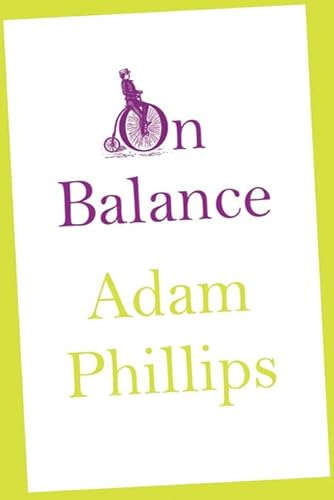
“Balancing acts,” writes Adam Phillips, “are entertaining because they are risky, but there are situations in which it is more dangerous to keep your balance than to lose it.” In these exhilarating and casually brilliant essays, the philosopher and psychoanalyst examines literature, fairy tales, works of art, and case studies to reveal the paradoxes inherent in our appetites and fears. How do we know when enough is enough? Are there times when too much is just right? Why is Cinderella’s biggest problem not the prince but other women? What can Richard III’s furious sense of his own helplessness tell us of our own desires? On Balance shows Phillips’s bravura gift for linking disparate ideas and the dreamers that dreamed them into something beautiful, revelatory, and essential.
Die Inhaltsangabe kann sich auf eine andere Ausgabe dieses Titels beziehen.
Über die Autorinnen und Autoren
Adam Phillips is a psychoanalyst and and a visiting professor in the English department at the University of York. He is the author of many acclaimed books, including On Kissing, Tickling, and Being Bored; Going Sane; and On Kindness (with Barbara Taylor).
Adam Phillips is a psycho-analyst and a visiting professor in the English department at the University of York. He is the author of many acclaimed books, including On Kissing, Tickling, and Being Bored; Going Sane; and On Kindness (with Barbara Taylor). He lives in London.
Auszug. © Genehmigter Nachdruck. Alle Rechte vorbehalten.
Five Short Talks on Excess*
It is very stretchy.
Kay Ryan, ‘The Fabric of Life’
I In Excess
I In Excess
Nothing makes people more excessive than talking about excess. We tend to become either extremely disapproving or unusually enthusiastic and excited about the most recently reported celebrity orgy, or managing director’s pay rise. No one can be indifferent to binge drinking, or the amount of pornography on the internet; everyone knows someone now who has a so-called eating disorder, and everyone knows about the huge numbers of people in the world who are starving. Excess is everywhere now – excesses of wealth and of poverty, of sex and greed, of violence and of religious belief. If the twentieth century was, in the title of historian Eric Hobsbawm’s book, The Age of Extremes, then the twenty-first century looks like being the Age of Excess. When people are being extreme they push things to their limits; when they are being excessive they push things beyond their limits.
I want here to explore our fear and loathing, our fascination and craving for excess in all its forms. And I want to bear in mind something very strange about excess, something best pictured perhaps by the extraordinary consumerism of Western societies, or by the religious and anti-religious fanaticism in contemporary culture; and that is that excess is contagious. Nothing makes people more excessive than talking about excess.
Like a lot of the words we use very easily, ‘excess’ is older than we imagine. The Oxford English Dictionary dates its earliest, most literal meaning of ‘the action of going out or forth’ to the fifteenth century; ‘excess’, in its original use, being the opposite of ‘access’. And this, too, I think is something we should bear in mind: access, if you like, is the freedom to go in; excess is the freedom to go out. But when we are excessive what are we going out from?
Here, again, the dictionary can help us, and this time into more familiar territory: when we are excessive we ‘depart from custom [or] reason’, we ‘overstep’ limits, we go beyond our ‘rights’; we are involved in what the dictionary calls ‘extravagant violation of law, decency or morality’, we are guilty of ‘outrageous conduct’. When we are excessive, in whatever way, we depart from what is considered appropriate behaviour; we go out from, we abandon, the version of ourselves we are supposed to be. And where do we get our standards of appropriate behaviour, our pictures of ourselves as we are supposed to be? From the societies we grow up in. Excess, the dictionary reminds us, is not simply the violation of law, decency or morality, it is the ‘extravagant violation of law, decency or morality’. So excess covers a whole gamut of experiences from exaggeration to breaking the law, from boasting to genocide. The anorexic and the suicide bomber, the attention-seeking child and the compulsive gambler, the person who has more money than he needs and the person committed to celibacy are all involved, in their different ways, in extravagant violations of law, decency or morality; even though, of course, they may not see it this way. And this, too, is important when we are thinking about excess: what is excessive to one person may be to another person just an ordinary way of life. The devoutly religious are not, in their own view, over-doing it; terrorists are not, in their view, overreacting to the injustices they feel they have suffered. Indeed, one of the ways of describing many of our personal and political and religious conflicts is that someone is trying to persuade someone else that they are being excessive: excessively cruel, excessively disrespectful, excessively unjust. So we need to remember just how much can hang on our definitions of excess. I want to consider here what might make us feel, in any given situation, that someone is being excessive; and what, when we feel people are being excessive, we want to do about it. Our knee-jerk reaction is often to want to punish them, and often excessively. And yet people usually punish each other when they don’t know what else to do; which is why punishment is so often beside the point, an excited failure of imagination. Punishment is despair about the rules, not their enforcement. So it isn’t just that excess is contagious, but that other people’s excess permits us, or even frees us, to be excessive ourselves. Our reactions to other people’s excesses – of violence, of appetite, of belief – are, as we shall see, extremely revealing. ‘All truths,’ the philosopher Alain Badiou writes, ‘are woven from extreme consequences.’ There are also truths woven from excessive consequences.
But perhaps one thing we shouldn’t lose sight of is just how reassuring the whole idea of excess can be; when we are not permitted to take excess baggage on the plane it is because somebody is keeping an eye on our safety, somebody knows how much the plane can take. In other words, what is reassuring about the idea of excess – about our being able to think that someone is being excessive – is that it implies that we know our limits, that we have a sure sense of the proper way to behave, that we know what is appropriate and right. Every time we have the moralistic version of the excess experience – the righteous indignation, or rage, or grief about the transgressions of other people – we relocate ourselves, firmly and safely, within the rules, the protective walls, of our societies. In these moments we are reminded of how the world should be, and that someone who knows the rules and can enforce them is looking after us. The child who has a tantrum is trying to find out if his parents are robust, whether they can withstand his hatred and rage and frustration. In this instance excessive behaviour is an opportunity for the parents to remind themselves, or for society to remind itself, of established rules and regulations. It reassures us to see that we clearly know what the rules are because we are outraged when they are broken.
If we are so good at spotting excessive behaviour when we see it – excessive eating, excessive sex, excessive shopping, the excessive beliefs of religious fanatics – then we must know, or think we know, what just the right amount of these things is. If we can recognize greed when we see it, we must know how people should eat; if we can be appalled by the sexual excesses reported in the tabloids, we must know what kind of sex people should be having, and how often they should be having it; if we are full of righteous indignation about people we think of as ‘religious fanatics’, we must surely have very strong ideas about how much people should believe things, about what people should believe in and what their beliefs should drive them to do. But what is the right amount of belief? How do we know when someone’s grief is excessive? Perhaps when it makes us feel something more excessive than we would like to feel?
There is an obvious irony here: many of the things that matter most to us – like love, or grief, or appetite, or violence, or political and religious belief – cannot be measured; and yet one of the things we are most alert to, one of the things we speak about with the most passionate conviction, is when we feel these things have become excessive. It is as if we have our own internal measure of these things that can’t be quantified; and this internal measure is one of the most important things about us. How could we live without a sense of what is excessive? Indeed, as I have said, is it not striking how excessive we can be in our reactions to other people’s...
„Über diesen Titel“ kann sich auf eine andere Ausgabe dieses Titels beziehen.
Suchergebnisse für On Balance

Beispielbild für diese ISBN
On Balance
Verlag:
Farrar, Straus and Giroux (edition First Edition), 2010
ISBN 10: 0374212570
ISBN 13: 9780374212575
Gebraucht
Hardcover
Erstausgabe
Anbieter: BooksRun, Philadelphia, PA, USA
Verkäuferbewertung 5 von 5 Sternen

Hardcover. Zustand: Very Good. First Edition. With dust jacket. It's a well-cared-for item that has seen limited use. The item may show minor signs of wear. All the text is legible, with all pages included. It may have slight markings and/or highlighting. Artikel-Nr. 0374212570-8-1-29
Gebraucht kaufen
EUR 5,23
Versand gratis
Versand innerhalb von USA
Versand innerhalb von USA
Anzahl: 1 verfügbar
Beispielbild für diese ISBN
On Balance
Verlag:
Farrar, Straus and Giroux, 2010
ISBN 10: 0374212570
ISBN 13: 9780374212575
Gebraucht
Hardcover
Anbieter: ThriftBooks-Dallas, Dallas, TX, USA
Verkäuferbewertung 5 von 5 Sternen
Hardcover. Zustand: Good. No Jacket. Pages can have notes/highlighting. Spine may show signs of wear. ~ ThriftBooks: Read More, Spend Less. Artikel-Nr. G0374212570I3N00
Gebraucht kaufen
EUR 6,70
Versand gratis
Versand innerhalb von USA
Versand innerhalb von USA
Anzahl: 1 verfügbar
Beispielbild für diese ISBN
On Balance
Verlag:
Farrar, Straus and Giroux, 2010
ISBN 10: 0374212570
ISBN 13: 9780374212575
Gebraucht
Hardcover
Anbieter: ThriftBooks-Dallas, Dallas, TX, USA
Verkäuferbewertung 5 von 5 Sternen
Hardcover. Zustand: Good. No Jacket. Missing dust jacket; Pages can have notes/highlighting. Spine may show signs of wear. ~ ThriftBooks: Read More, Spend Less. Artikel-Nr. G0374212570I3N01
Gebraucht kaufen
EUR 6,70
Versand gratis
Versand innerhalb von USA
Versand innerhalb von USA
Anzahl: 1 verfügbar
Beispielbild für diese ISBN
On Balance
Verlag:
Farrar, Straus and Giroux, 2010
ISBN 10: 0374212570
ISBN 13: 9780374212575
Gebraucht
Hardcover
Anbieter: ThriftBooks-Atlanta, AUSTELL, GA, USA
Verkäuferbewertung 5 von 5 Sternen
Hardcover. Zustand: Very Good. No Jacket. Missing dust jacket; May have limited writing in cover pages. Pages are unmarked. ~ ThriftBooks: Read More, Spend Less. Artikel-Nr. G0374212570I4N01
Gebraucht kaufen
EUR 6,70
Versand gratis
Versand innerhalb von USA
Versand innerhalb von USA
Anzahl: 1 verfügbar
Beispielbild für diese ISBN
On Balance
Verlag:
Farrar, Straus and Giroux, 2010
ISBN 10: 0374212570
ISBN 13: 9780374212575
Gebraucht
Hardcover
Anbieter: ThriftBooks-Dallas, Dallas, TX, USA
Verkäuferbewertung 5 von 5 Sternen
Hardcover. Zustand: Good. No Jacket. Former library book; Pages can have notes/highlighting. Spine may show signs of wear. ~ ThriftBooks: Read More, Spend Less. Artikel-Nr. G0374212570I3N10
Gebraucht kaufen
EUR 6,70
Versand gratis
Versand innerhalb von USA
Versand innerhalb von USA
Anzahl: 1 verfügbar
Beispielbild für diese ISBN
On Balance
Verlag:
Farrar, Straus and Giroux, 2010
ISBN 10: 0374212570
ISBN 13: 9780374212575
Gebraucht
Hardcover
Anbieter: ThriftBooks-Atlanta, AUSTELL, GA, USA
Verkäuferbewertung 5 von 5 Sternen
Hardcover. Zustand: Good. No Jacket. Pages can have notes/highlighting. Spine may show signs of wear. ~ ThriftBooks: Read More, Spend Less. Artikel-Nr. G0374212570I3N00
Gebraucht kaufen
EUR 6,70
Versand gratis
Versand innerhalb von USA
Versand innerhalb von USA
Anzahl: 1 verfügbar
Beispielbild für diese ISBN
On Balance
Verlag:
Farrar, Straus and Giroux, 2010
ISBN 10: 0374212570
ISBN 13: 9780374212575
Gebraucht
Hardcover
Anbieter: ThriftBooks-Atlanta, AUSTELL, GA, USA
Verkäuferbewertung 5 von 5 Sternen
Hardcover. Zustand: Good. No Jacket. Missing dust jacket; Pages can have notes/highlighting. Spine may show signs of wear. ~ ThriftBooks: Read More, Spend Less. Artikel-Nr. G0374212570I3N01
Gebraucht kaufen
EUR 6,70
Versand gratis
Versand innerhalb von USA
Versand innerhalb von USA
Anzahl: 1 verfügbar
Beispielbild für diese ISBN
On Balance
Verlag:
Penguin Books, Limited, 2010
ISBN 10: 0374212570
ISBN 13: 9780374212575
Gebraucht
Hardcover
Erstausgabe
Anbieter: Better World Books, Mishawaka, IN, USA
Verkäuferbewertung 5 von 5 Sternen
Zustand: Very Good. First Edition. Former library copy. Pages intact with possible writing/highlighting. Binding strong with minor wear. Dust jackets/supplements may not be included. Includes library markings. Stock photo provided. Product includes identifying sticker. Better World Books: Buy Books. Do Good. Artikel-Nr. 2014341-6
Gebraucht kaufen
EUR 8,56
Versand gratis
Versand innerhalb von USA
Versand innerhalb von USA
Anzahl: 1 verfügbar
Beispielbild für diese ISBN
On Balance
Verlag:
Penguin Books, Limited, 2010
ISBN 10: 0374212570
ISBN 13: 9780374212575
Gebraucht
Hardcover
Erstausgabe
Anbieter: Better World Books: West, Reno, NV, USA
Verkäuferbewertung 5 von 5 Sternen
Zustand: Very Good. First Edition. Former library copy. Pages intact with possible writing/highlighting. Binding strong with minor wear. Dust jackets/supplements may not be included. Includes library markings. Stock photo provided. Product includes identifying sticker. Better World Books: Buy Books. Do Good. Artikel-Nr. 2014341-6
Gebraucht kaufen
EUR 8,56
Versand gratis
Versand innerhalb von USA
Versand innerhalb von USA
Anzahl: 1 verfügbar
Beispielbild für diese ISBN
On Balance
Verlag:
Farrar, Straus and Giroux, 2010
ISBN 10: 0374212570
ISBN 13: 9780374212575
Gebraucht
Paperback
Anbieter: WorldofBooks, Goring-By-Sea, WS, Vereinigtes Königreich
Verkäuferbewertung 5 von 5 Sternen
Paperback. Zustand: Very Good. The book has been read, but is in excellent condition. Pages are intact and not marred by notes or highlighting. The spine remains undamaged. Artikel-Nr. GOR005041170
Gebraucht kaufen
EUR 29,34
EUR 6,65 Versand
Versand von Vereinigtes Königreich nach USA
Versand von Vereinigtes Königreich nach USA
Anzahl: 1 verfügbar