
Verwandte Artikel zu The Dark Flood Rises
Inhaltsangabe
One of the Washington Post's 50 Notable Works of Fiction in 2017 and a New York Times Notable Book of 2017
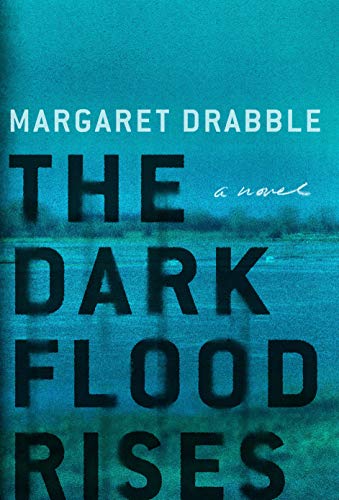
From the great British novelist Dame Margaret Drabble comes a vital and audacious tale about the many ways in which we confront aging and living in a time of geopolitical rupture.
Francesca Stubbs has an extremely full life. A highly regarded expert on housing for the elderly who is herself getting on in age, she drives “restlessly round England,” which is “her last love . . . She wants to see it all before she dies.” Amid the professional conferences that dominate her schedule, she fits in visits to old friends, brings home cooked dinners to her ailing ex-husband, texts her son, who is grieving over the shocking death of his girlfriend, and drops in on her daughter, a quirky young woman who lives in a flood plain in the West Country. Fran cannot help but think of her mortality, but she is “not ready to settle yet, with a cat upon her knee.” She still prizes her “frisson of autonomy,” her belief in herself as a dynamic individual doing meaningful work in the world.
The Dark Flood Rises moves between Fran’s interconnected group of family and friends in England and a seemingly idyllic expat community in the Canary Islands. In both places, disaster looms. In Britain, the flood tides are rising, and in the Canaries, there is always the potential for a seismic event. As well, migrants are fleeing an increasingly war-torn Middle East.
Though The Dark Flood Rises delivers the pleasures of a traditional novel, it is clearly situated in the precarious present. Margaret Drabble’s latest enthralls, entertains, and asks existential questions in equal measure. Alas, there is undeniable truth in Fran’s insight: “Old age, it’s a fucking disaster!”
Die Inhaltsangabe kann sich auf eine andere Ausgabe dieses Titels beziehen.
Über die Autorin bzw. den Autor
Margaret Drabble is the author of The Sea Lady, The Seven Sisters, The Peppered Moth, and The Needle’s Eye, among other novels. She has written biographies of Arnold Bennett and Angus Wilson, and is the editor of the fifth and sixth editions of The Oxford Companion to English Literature. For her contributions to contemporary English literature, she was made a Dame of the British Empire in 2008.
Auszug. © Genehmigter Nachdruck. Alle Rechte vorbehalten.
The Dark Flood Rises
By Margaret DrabbleFarrar, Straus and Giroux
Copyright © 2016 Margaret Drabble
All rights reserved.
ISBN: 978-0-374-13495-2All rights reserved.
Contents
Title Page,
Copyright Notice,
Dedication,
Epigraph,
The Dark Flood Rises,
Envoi,
Acknowledgements,
Also by Margaret Drabble,
A Note About the Author,
Copyright,
CHAPTER 1
She has often suspected that her last words to herself and in this world will prove to be 'You bloody old fool' or, perhaps, depending on the mood of the day or the time of the night, 'you fucking idiot'. As the speeding car hits the tree, or the unserviced boiler explodes, or the smoke and flames fill the hallway, or the grip on the high guttering gives way, those will be her last words. She isn't to know for sure that it will be so, but she suspects it. In her latter years, she's become deeply interested in the phrase 'Call no man happy until he is dead.' Or no woman, come to that. 'Call no woman happy until she is dead.' Fair enough, and the ancient world had known women as well as men who had met unfortunate ends: Clytemnestra, Dido, Hecuba, Antigone. Though of course Antigone, one must remember, had rejoiced to die young, and in a good (if to us pointless) cause, thereby avoiding all the inconveniences of old age.
Fran herself is already too old to die young, and too old to avoid bunions and arthritis, moles and blebs, weakening wrists, incipient but not yet treatable cataracts, and encroaching weariness. She can see that in time (and perhaps in not a very long time) all these annoyances will become so annoying that she will be willing to embark on one of those acts of reckless folly that will bring the whole thing to a rapid, perhaps a sensational ending. But would the rapid ending cancel out and negate the intermittent happiness of the earlier years, the long struggle towards some kind of maturity, the modest successes, the hard work? What would the balance sheet look like, at the last reckoning?
It was the obituaries of Stella Hartleap that set her thoughts in this actuarial direction, as she drove along the M1 towards Birmingham, at only three or four miles above the speed limit.
The print obituaries had been annoying, piously annoying, in a sexist, ageist, hypocritical, mealy-mouthed manner, reeking of Schadenfreude. And just now, yet another mention of Stella on the car radio, in that regular Radio 4 obituary slot, has revived her irritations. She hadn't known Stella very well, having met her late in the day in Highgate through Hamish, but she'd known her long enough to recognise the claptrap and the bullshit. So, Stella had died of smoke inhalation, having set her bedclothes on fire while smoking in bed in her remote farmstead in the Black Mountains, and having just polished off a tumbler of Famous Grouse. So what? A better exit than dying in a hospital corridor in a wheelchair while waiting for another dose of poisonous chemotherapy, which had recently been her good friend Birgit's dismal fate. At least Stella had nobody to blame but herself, and although the last minutes couldn't have been pleasant, neither had Birgit's. Not at all pleasant, by all accounts, and without any complementary frisson of autonomy.
Birgit wouldn't have approved of Stella Hartleap's end. She might even have been censorious about it. She had been a judgmental woman. But that was neither here nor there. We don't have to agree with anyone, ever.
Her new-old friend Teresa, who is grievously ill, wouldn't be censorious, as she is never censorious about anyone.
I am the captain of my fate, I am the master of my soul. A Roman, by a Roman, valiantly vanquished.
There is a truck, too close behind her, she can see its great dead smeared glass underwater eyes looming at her in her driving mirror. In the old days, Hamish used to slam on his brakes in situations like this, as a warning. She'd always thought that was dangerous, but he'd never come to any harm. He hadn't died at the wheel. He'd died of something more insidious, less violent, more cruelly protracted.
She chooses the accelerator. It's safer than the brake. Her first husband Claude had believed in the use of the accelerator, and she was with him on that.
Francesca Stubbs is on her way to a conference on sheltered housing for the elderly, a subject pertinent to her train of thought, but not in itself heroic. Fran is something of an expert in the field, and is employed by a charitable trust which devotes generous research funds to examining and improving the living arrangements of the ageing. She's always been interested in all forms of social housing, and this new job suits her well. She's intrigued by the way more and more people in England opt to live alone, in the early twenty-first century. Students don't seem to mind cohabitation, even like it, and cohabitation is forced upon the ill and the elderly, but more and more of the able-bodied in their mid-life choose to live alone. This is making demands on the housing stock which successive governments are unable and possibly unwilling even to try to satisfy.
Fran is in favour of a land tax. That would shake things up a bit. But the English are extraordinarily tenacious of land. They hate to relinquish even a yard of it. The word 'freehold' has a powerful resonance.
No, there is nothing heroic about the housing stock and planning policy, subjects which currently occupy her working life, but old age itself is a theme for heroism. It calls upon courage.
Fran had from an unsuitably early age been attracted by the heroic death, the famous last words, the tragic farewell. Her parents had on their shelves a copy of Brewer's Dictionary of Phrase and Fable, a book which, as a teenager, she would morbidly browse for hours. One of her favourite sections was 'Dying Sayings', with its fine mix of the pious, the complacent, the apocryphal, the bathetic and the defiant. Artists had fared well: Beethoven was alleged to have said 'I shall hear in heaven'; the erotic painter Etty had declared 'Wonderful! Wonderful this death!'; and Keats had died bravely, generously comforting his poor friend Severn.
Those about to be executed had clearly had time to prepare a fine last thought, and of these she favoured the romantic Walter Raleigh's 'It matters little how the head lies, so the heart be right'. Harriet Martineau, who had suffered much as a child from religion, as Fran had later discovered, had stoically remarked, 'I see no reason why the existence of Harriet Martineau should be perpetuated', an admirably composed sentiment which had caught the child Fran's attention long before she knew who Harriet Martineau was. But most of all she had liked the parting words of Siward the Dane who had commanded his men: 'Lift me up that I may die standing, not lying down like a cow'. She didn't know why this appealed to her so strongly, as she was herself very unlikely to die on a battlefield. Maybe it meant she had Danish blood? Well, she probably had, of course, as many, perhaps most of us in England have. Or maybe she had liked the mention of the cow, which she heard as strangely affectionate, not as contemptuous.
She was much more likely to die on a motorway than on a battlefield.
The Vikings hadn't approved of dying quietly and comfortably in bed. Unlike her first husband Claude, who was currently making himself as comfortable as he could.
She has pulled away from the truck, and is now overtaking a dirty maroon family saloon with an annoying sticker about its 'Baby on Board'. There is an anonymous dirty white van just behind...
„Über diesen Titel“ kann sich auf eine andere Ausgabe dieses Titels beziehen.
Suchergebnisse für The Dark Flood Rises

Beispielbild für diese ISBN
The Dark Flood Rises
Verlag:
Farrar, Straus and Giroux, 2017
ISBN 10: 0374134952
ISBN 13: 9780374134952
Gebraucht
Hardcover
Anbieter: World of Books (was SecondSale), Montgomery, IL, USA
Verkäuferbewertung 5 von 5 Sternen

Zustand: Good. Good condition ex-library book with usual library markings and stickers. Artikel-Nr. 00104237626
Gebraucht kaufen
EUR 4,13
Versand gratis
Versand innerhalb von USA
Versand innerhalb von USA
Anzahl: 2 verfügbar
Beispielbild für diese ISBN
The Dark Flood Rises
Verlag:
Farrar, Straus and Giroux, 2017
ISBN 10: 0374134952
ISBN 13: 9780374134952
Gebraucht
Hardcover
Anbieter: World of Books (was SecondSale), Montgomery, IL, USA
Verkäuferbewertung 5 von 5 Sternen
Zustand: Acceptable. Item in good condition. Textbooks may not include supplemental items i.e. CDs, access codes etc. Artikel-Nr. 00045004951
Gebraucht kaufen
EUR 4,13
Versand gratis
Versand innerhalb von USA
Versand innerhalb von USA
Anzahl: 1 verfügbar
Beispielbild für diese ISBN
The Dark Flood Rises
Verlag:
Farrar, Straus and Giroux, 2017
ISBN 10: 0374134952
ISBN 13: 9780374134952
Gebraucht
Hardcover
Anbieter: World of Books (was SecondSale), Montgomery, IL, USA
Verkäuferbewertung 5 von 5 Sternen
Zustand: Good. Item in good condition. Textbooks may not include supplemental items i.e. CDs, access codes etc. Artikel-Nr. 00104260725
Gebraucht kaufen
EUR 4,22
Versand gratis
Versand innerhalb von USA
Versand innerhalb von USA
Anzahl: 1 verfügbar
Beispielbild für diese ISBN
The Dark Flood Rises: A Novel
Verlag:
Farrar, Straus and Giroux, 2017
ISBN 10: 0374134952
ISBN 13: 9780374134952
Gebraucht
Hardcover
Anbieter: Wonder Book, Frederick, MD, USA
Verkäuferbewertung 5 von 5 Sternen
Zustand: Very Good. Very Good condition. Very Good dust jacket. A copy that may have a few cosmetic defects. May also contain light spine creasing or a few markings such as an owner's name, short gifter's inscription or light stamp. Artikel-Nr. P14A-02866
Gebraucht kaufen
EUR 5,13
Versand gratis
Versand innerhalb von USA
Versand innerhalb von USA
Anzahl: 1 verfügbar
Beispielbild für diese ISBN
The Dark Flood Rises: A Novel
Verlag:
Farrar, Straus and Giroux (edition First Edition), 2017
ISBN 10: 0374134952
ISBN 13: 9780374134952
Gebraucht
Hardcover
Erstausgabe
Anbieter: BooksRun, Philadelphia, PA, USA
Verkäuferbewertung 5 von 5 Sternen
Hardcover. Zustand: Very Good. First Edition. It's a well-cared-for item that has seen limited use. The item may show minor signs of wear. All the text is legible, with all pages included. It may have slight markings and/or highlighting. Artikel-Nr. 0374134952-8-1
Gebraucht kaufen
EUR 5,47
Versand gratis
Versand innerhalb von USA
Versand innerhalb von USA
Anzahl: 1 verfügbar
Beispielbild für diese ISBN
The Dark Flood Rises
Verlag:
Farrar, Straus and Giroux, 2017
ISBN 10: 0374134952
ISBN 13: 9780374134952
Gebraucht
Hardcover
Anbieter: ThriftBooks-Reno, Reno, NV, USA
Verkäuferbewertung 5 von 5 Sternen
Hardcover. Zustand: Very Good. No Jacket. Former library book; May have limited writing in cover pages. Pages are unmarked. ~ ThriftBooks: Read More, Spend Less. Artikel-Nr. G0374134952I4N10
Gebraucht kaufen
EUR 5,75
Versand gratis
Versand innerhalb von USA
Versand innerhalb von USA
Anzahl: 1 verfügbar
Beispielbild für diese ISBN
The Dark Flood Rises
Verlag:
Farrar, Straus and Giroux, 2017
ISBN 10: 0374134952
ISBN 13: 9780374134952
Gebraucht
Hardcover
Anbieter: ThriftBooks-Phoenix, Phoenix, AZ, USA
Verkäuferbewertung 5 von 5 Sternen
Hardcover. Zustand: Very Good. No Jacket. Former library book; May have limited writing in cover pages. Pages are unmarked. ~ ThriftBooks: Read More, Spend Less. Artikel-Nr. G0374134952I4N10
Gebraucht kaufen
EUR 5,75
Versand gratis
Versand innerhalb von USA
Versand innerhalb von USA
Anzahl: 1 verfügbar
Beispielbild für diese ISBN
The Dark Flood Rises
Verlag:
Farrar, Straus and Giroux, 2017
ISBN 10: 0374134952
ISBN 13: 9780374134952
Gebraucht
Hardcover
Anbieter: ThriftBooks-Atlanta, AUSTELL, GA, USA
Verkäuferbewertung 5 von 5 Sternen
Hardcover. Zustand: Very Good. No Jacket. Former library book; May have limited writing in cover pages. Pages are unmarked. ~ ThriftBooks: Read More, Spend Less. Artikel-Nr. G0374134952I4N10
Gebraucht kaufen
EUR 5,78
Versand gratis
Versand innerhalb von USA
Versand innerhalb von USA
Anzahl: 1 verfügbar
Beispielbild für diese ISBN
The Dark Flood Rises
Verlag:
Farrar, Straus and Giroux, 2017
ISBN 10: 0374134952
ISBN 13: 9780374134952
Gebraucht
Hardcover
Anbieter: ThriftBooks-Dallas, Dallas, TX, USA
Verkäuferbewertung 5 von 5 Sternen
Hardcover. Zustand: Very Good. No Jacket. Former library book; May have limited writing in cover pages. Pages are unmarked. ~ ThriftBooks: Read More, Spend Less. Artikel-Nr. G0374134952I4N10
Gebraucht kaufen
EUR 5,78
Versand gratis
Versand innerhalb von USA
Versand innerhalb von USA
Anzahl: 1 verfügbar
Beispielbild für diese ISBN
The Dark Flood Rises
Verlag:
Farrar, Straus and Giroux, 2017
ISBN 10: 0374134952
ISBN 13: 9780374134952
Gebraucht
Hardcover
Anbieter: ThriftBooks-Dallas, Dallas, TX, USA
Verkäuferbewertung 5 von 5 Sternen
Hardcover. Zustand: Very Good. No Jacket. May have limited writing in cover pages. Pages are unmarked. ~ ThriftBooks: Read More, Spend Less. Artikel-Nr. G0374134952I4N00
Gebraucht kaufen
EUR 5,78
Versand gratis
Versand innerhalb von USA
Versand innerhalb von USA
Anzahl: 1 verfügbar