
Verwandte Artikel zu How Winning Works: 8 Essential Leadership Lessons from...
Inhaltsangabe
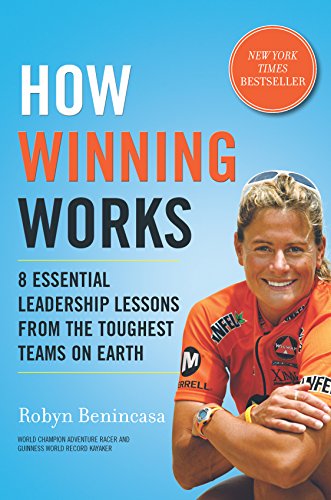
Robyn Benincasa has made an art form of extreme performance by competing and winning at the highest levels of sport and business. In her fifteen-year career as a professional adventure racer, she has biked through jungles in Borneo, climbed Himalayan giants in Nepal, trekked across lava fields in Fiji, rafted rapids in Chile—and racked up multiple world championship titles along the way. In her spare time, she is a firefighter and a sought-after keynote speaker on the subject of teamwork and leadership.
In How Winning Works, Benincasa shows you how to climb to new levels of professional and personal success. She shares the eight essential elements of teamwork, learned through her extreme adventure racing, that create synergy with all the teammates in your life, from colleagues and customers to family members and friends:
Total Commitment
Empathy and Awareness
Adversity Management
Mutual Respect
"We" Thinking
Ownership of the Project
Relinquishment of Ego
Kinetic Leadership
This field guide to success shares the same training tools and exercises that have become wildly popular in the leadership seminars Benincasa gives to corporations, including Starbucks, Deloitte Consulting, 3M, Verizon, Nestlé, Boeing and many others. Stories from her adventure racing also illustrate how winning teams interact under the world's most extreme conditions, from jungles to mountain peaks.
Whether you're trying to beat the competition to market with a new product, scale a looming mountain of deadlines or simply get your kids to clean up their rooms, the advice in this book will take you on an adventure you'll never forget, and coach you over the finish line to success.
Die Inhaltsangabe kann sich auf eine andere Ausgabe dieses Titels beziehen.
Über die Autorin bzw. den Autor
Athlete, firefighter, competitor, mentor, winner. These impressive attributes all accurately describe Robyn Benincasa. In 2002, Benincasa launched World Class Teams, an adventure-based teambuilding company that brings the lessons of teamwork from adventure racing to both the corporate and personal worlds of her audience. She lives in Cardiff, California. Visit her at RobynBenincasa.com.
Auszug. © Genehmigter Nachdruck. Alle Rechte vorbehalten.
How Winning Works
By Robyn BenincasaHarlequin Enterprises Limited
Copyright © 2000-2011 Harlequin Enterprises LimitedAll right reserved.
ISBN: 978-0-373-89255-6
Chapter One
PreparationWe seldom succeed in the long run by winging it. Of course, we sometimes end up being forced to wing it because circumstances change, but coming to a race unprepared rarely leads to a strong finish. World-class extreme teammates know this, and they demonstrate their dedication to the end goals and to one another by being fully committed to pre-event preparation. Can you imagine what might happen if, in an adventure race or a desperate fire-and-rescue situation, one of your teammates decided to just hop up off the couch and show up without putting in the training time it takes to become his or her best? In business, we can sometimes fake our way through and get away with being underprepared. We've all done it. But being a member of an extreme team means that you come to the starting line in the best shape of your life and one hundred percent committed to the goal, even if achieving it means you have to crawl there with someone on your back. People are counting on you, and the bigger and more audacious the goal, the more important your preparation and ultimate contribution will be.
In the races we've won, each of the team members started in peak mental and physical condition and had nothing left at the finish line. We used up every spiritual and physical resource we had in the course of the race. If even one person had shown up in less than their absolute best shape, we wouldn't have been lying there on the finish line, gasping for air and sobbing, but victorious nonetheless.
Many people thought my teams were just lucky when we first started winning races, but we had a different definition of luck. To us, luck is the intersection where opportunity meets preparation.
Luck = Opportunity + Preparation
Without preparation, there is no luck. Opportunities come and go, but why wait passively for opportunity to knock when you can take control of the situation and create some for yourself? When you are fully prepared to capitalize on whatever comes along and able to generate a few opportunities for yourself, you become the luckiest person who ever lived.
One of the luckiest people I know is Steve Gurney, a New Zealand adventure racing champ. In the weeks leading up to the 2003 Lake Tahoe Primal Quest event, a 450-mile-long, five-day adventure race through the Sierras, Steve contacted the race director and asked for details about the kayaks that were going to be provided for the paddling segment. He wanted to know what type of boat it was and what all the measurements were. Unbeknownst to the race officials and his competitors, Steve had been doing some research and tinkering around with his kayaks at home, trying to figure out how to make them go faster. He discovered that the longer and thinner the boats were, the faster they would go. Based on the specs of the kayaks that we were going to be given to use in the Tahoe race, Steve designed and built this crazy nose cone contraption that he could fasten to the front of the Primal Quest kayak to stabilize and lengthen it by about five feet. I'm not sure if he built it on site in Nevada or had it shipped from New Zealand, but his crew had it waiting for him at the start of the paddling section. As "luck" would have it, Steve's invention worked like a charm. By the end of the first leg, his team was at least an hour ahead of the next closest boat and well on its way to winning.
Everybody in that race had blindly accepted that we had to use the boats as is, that we would have to do the best we could with what we had. Everybody, that is, except that lucky devil, Steve Gurney. He turned the whole race on its ear and said, "Why do I have to use only the tools they give me? Why can't I make what we've got better? There's no rule that says I can't."
That's the kind of lateral thinking that wins sporting events—and contracts and clients and sales. If the rules don't prohibit it, then it's fair game. Why resign yourself to the parameters and just run the race as it's laid out for you? When you're totally prepared to create your own game and do it better than anyone else out there, that's the kind of thinking and behavior that makes you a world-class leader and an extreme teammate like Steve Gurney.
That's also the kind of thinking that made my racing buddy, New Zealand's John Howard, the most decorated adventure racer throughout the 1990s. John was a consistent winner because he was a pro at making sure his team always had viable options from which to choose. He was the King of Options. One of us would show up with a certain kind of ice axe or a particular type of snowshoe or a standard piece of climbing gear and be satisfied with that, but John would never settle for it. He knew that what was required to succeed in the moment was not always what the team originally thought it would need, so he always brought a wide variety of tools. That way we could choose the best one for the changing conditions each and every time. Other teams didn't give themselves the luxury of options. Expecting snow, they'd be content to pack their snowshoes, and then out in the middle of nowhere, they'd discover that the snow was actually more like ice and what they really needed was crampons. And they'd be moving like pond scum. But because of John and his options, his teams were always ready for anything. John understood that change is the only thing you can count on in racing, in business and in life. Standing at the base of a soaring mountain with the right tool for that particular job in that particular moment makes all the difference in the world.
Which brings me back to Mike Kloser. Along with John Howard, Mike is one of the most victorious guys in the sport. In addition to his "never say die" attitude, Mike was "lucky" for a couple of additional reasons, both having to do with preparation. First, he trained scientifically. If he was going to be running an altitude race, he went to that altitude two weeks ahead of time. If he was going to be in a heat race, he jumped around in the sauna for two months before the event. Few others demonstrated that kind of total commitment.
The second reason Mike excelled was the condition of his gear. Each competitor has a gear box containing his or her personal equipment—things like batteries, climbing gear, headlamps, ice axes, bike shoes, helmets and medicine. You pack your own box, and then your crew brings it out whenever you get to a transition area. You sit down, have a little something to eat, warm up or cool off, stow your stuff from the last leg in your gear box and get out your stuff for the next leg. If everyone on your team does this correctly, then you should be in and out of transition in around twenty minutes. But if your gear box is disorganized to begin with, or if you throw your old wet clothes from this leg on top of your old wet clothes from the last leg, then by the end of the race, it's an absolute train wreck in there. Your brain is fried from exhaustion, and you can't find anything you need because you didn't take the time to prepare and organize your gear box properly. Don't ask me how I know this. In the transition area, my nickname was Yard Sale for a reason.
But then there was Mike Kloser. He was so much cleaner than everyone else with his transitions, figuratively and literally. Before the race, he took the time to create little drawers and containers that were...
„Über diesen Titel“ kann sich auf eine andere Ausgabe dieses Titels beziehen.
Suchergebnisse für How Winning Works: 8 Essential Leadership Lessons from...

Beispielbild für diese ISBN
How Winning Works: 8 Essential
Anbieter: World of Books (was SecondSale), Montgomery, IL, USA
Verkäuferbewertung 5 von 5 Sternen

Zustand: Acceptable. Item in acceptable condition! Textbooks may not include supplemental items i.e. CDs, access codes etc. Artikel-Nr. 00098413491
Gebraucht kaufen
EUR 3,66
Versand gratis
Versand innerhalb von USA
Versand innerhalb von USA
Anzahl: 2 verfügbar
Beispielbild für diese ISBN
How Winning Works: 8 Essential
Anbieter: World of Books (was SecondSale), Montgomery, IL, USA
Verkäuferbewertung 5 von 5 Sternen
Zustand: Very Good. Item in very good condition! Textbooks may not include supplemental items i.e. CDs, access codes etc. Artikel-Nr. 00096547193
Gebraucht kaufen
EUR 3,66
Versand gratis
Versand innerhalb von USA
Versand innerhalb von USA
Anzahl: 11 verfügbar
Beispielbild für diese ISBN
How Winning Works: 8 Essential
Anbieter: World of Books (was SecondSale), Montgomery, IL, USA
Verkäuferbewertung 5 von 5 Sternen
Zustand: Good. Item in good condition. Textbooks may not include supplemental items i.e. CDs, access codes etc. Artikel-Nr. 00090154434
Gebraucht kaufen
EUR 3,66
Versand gratis
Versand innerhalb von USA
Versand innerhalb von USA
Anzahl: 11 verfügbar
Beispielbild für diese ISBN
How Winning Works: 8 Essential Leadership Lessons from the Toughest Teams on Earth
Verlag:
Harlequin (edition Original), 2012
ISBN 10: 0373892551
ISBN 13: 9780373892556
Gebraucht
Hardcover
Anbieter: BooksRun, Philadelphia, PA, USA
Verkäuferbewertung 5 von 5 Sternen
Hardcover. Zustand: Very Good. Original. With dust jacket. It's a well-cared-for item that has seen limited use. The item may show minor signs of wear. All the text is legible, with all pages included. It may have slight markings and/or highlighting. Artikel-Nr. 0373892551-11-6-29
Gebraucht kaufen
EUR 5,38
Versand gratis
Versand innerhalb von USA
Versand innerhalb von USA
Anzahl: 1 verfügbar
Beispielbild für diese ISBN
How Winning Works : 8 Essential Leadership Lessons from the Toughest Teams on Earth
Verlag:
Harlequin Enterprises ULC, 2012
ISBN 10: 0373892551
ISBN 13: 9780373892556
Gebraucht
Hardcover
Erstausgabe
Anbieter: Better World Books, Mishawaka, IN, USA
Verkäuferbewertung 5 von 5 Sternen
Zustand: Very Good. 1st Edition. Former library copy. Pages intact with possible writing/highlighting. Binding strong with minor wear. Dust jackets/supplements may not be included. Includes library markings. Stock photo provided. Product includes identifying sticker. Better World Books: Buy Books. Do Good. Artikel-Nr. GRP95491769
Gebraucht kaufen
EUR 6,08
Versand gratis
Versand innerhalb von USA
Versand innerhalb von USA
Anzahl: 1 verfügbar
Beispielbild für diese ISBN
How Winning Works : 8 Essential Leadership Lessons from the Toughest Teams on Earth
Verlag:
Harlequin Enterprises ULC, 2012
ISBN 10: 0373892551
ISBN 13: 9780373892556
Gebraucht
Hardcover
Erstausgabe
Anbieter: Better World Books, Mishawaka, IN, USA
Verkäuferbewertung 5 von 5 Sternen
Zustand: Very Good. 1st Edition. Pages intact with possible writing/highlighting. Binding strong with minor wear. Dust jackets/supplements may not be included. Stock photo provided. Product includes identifying sticker. Better World Books: Buy Books. Do Good. Artikel-Nr. 3969405-75
Gebraucht kaufen
EUR 6,08
Versand gratis
Versand innerhalb von USA
Versand innerhalb von USA
Anzahl: 1 verfügbar
Beispielbild für diese ISBN
How Winning Works: 8 Essential Leadership Lessons from the Toughest Teams on Earth
Anbieter: Wonder Book, Frederick, MD, USA
Verkäuferbewertung 5 von 5 Sternen
Zustand: As New. Like New condition. Like New dust jacket. A near perfect copy that may have very minor cosmetic defects. Artikel-Nr. B18A-03506
Gebraucht kaufen
EUR 6,32
Versand gratis
Versand innerhalb von USA
Versand innerhalb von USA
Anzahl: 2 verfügbar
Beispielbild für diese ISBN
How Winning Works: 8 Essential Leadership Lessons from the Toughest Teams on Earth
Anbieter: Wonder Book, Frederick, MD, USA
Verkäuferbewertung 5 von 5 Sternen
Zustand: Very Good. Signed Copy . Very Good dust jacket. Signed/Inscribed by author on front endpage. Artikel-Nr. D14OS-00314
Gebraucht kaufen
EUR 6,32
Versand gratis
Versand innerhalb von USA
Versand innerhalb von USA
Anzahl: 1 verfügbar
Beispielbild für diese ISBN
How Winning Works: 8 Essential Leadership Lessons from the Toughest Teams on Earth
Anbieter: Wonder Book, Frederick, MD, USA
Verkäuferbewertung 5 von 5 Sternen
Zustand: Very Good. Very Good condition. Very Good dust jacket. A copy that may have a few cosmetic defects. May also contain light spine creasing or a few markings such as an owner's name, short gifter's inscription or light stamp. Artikel-Nr. P12A-03387
Gebraucht kaufen
EUR 6,32
Versand gratis
Versand innerhalb von USA
Versand innerhalb von USA
Anzahl: 1 verfügbar
Beispielbild für diese ISBN
How Winning Works: 8 Essential Leadership Lessons from the Toughest Teams on Earth
Anbieter: Wonder Book, Frederick, MD, USA
Verkäuferbewertung 5 von 5 Sternen
Zustand: As New. Signed Copy . Like New dust jacket. Signed/Inscribed by author on front endpage. Artikel-Nr. D14OS-00069
Gebraucht kaufen
EUR 6,32
Versand gratis
Versand innerhalb von USA
Versand innerhalb von USA
Anzahl: 4 verfügbar