
Verwandte Artikel zu Torch (Vintage Contemporaries)
Inhaltsangabe
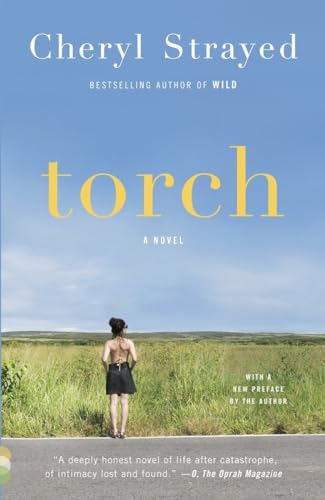
The debut novel from the internationally acclaimed author of Wild weaves a searing and luminous tale of a family's grief after unexpected loss. • "A deeply honest novel of life after catastrophe, of intimacy lost and found." —O, The Oprah Magazine
"Work hard. Do good. Be incredible!" is the advice Teresa Rae Wood shares with the listeners of her local radio show, Modern Pioneers, and the advice she strives to live by every day. She has fled a bad marriage and rebuilta life with her children, Claire and Joshua, and their caring stepfather, Bruce. Their love for each other binds them as a family through the daily struggles of making ends meet. But when they received unexpected news that Teresa, only 38, is dying of cancer, their lives all begin to unravel and drift apart. Strayed's intimate portraits of these fully human characters in a time of crisis show the varying truths of grief, forgiveness, and the beautiful terrors of learning how to keep living.
Die Inhaltsangabe kann sich auf eine andere Ausgabe dieses Titels beziehen.
Über die Autorin bzw. den Autor
CHERYL STRAYED is the author of the #1 New York Times bestseller Wild: From Lost to Found on the Pacific Crest Trail, which was the first selection for Oprah's Book Club 2.0 and became an Oscar-nominated film starring Reese Witherspoon;Tiny Beautiful Things: Advice on Love and Life from Dear Sugar, a national best seller now the basis of the WBUR podcast Dear Sugar Radio, co-hosted with Steve Almond; and Torch, her debut novel. Her books have been translated into forty languages, and her essays and other writings have appeared in numerous publications.
Auszug. © Genehmigter Nachdruck. Alle Rechte vorbehalten.
Preface
When I was nine someone gave me a blank diary. I don’t remember who. It was pure white and had a small golden lock that opened with a small golden key that was also meant to re-secure the lock, but never did. I loved that diary. I remember very distinctly knowing it was the best gift I’d ever received. I filled it with stories about princesses and kings, about horses ridden by girls whose fathers drove around in fancy cars. I wrote about things that were nothing about me.
When I was eleven a poet came to my school to teach a class for several days. She was called a poet-in-the-school, a special guest, a rare occurrence. Every minute she spoke it was like someone was holding a lit match to the most flammable, secret parts of me. One day the poet-in-the-school explained what metaphors were and then asked us to write a whole poem composed of them. I was a lion. I was an icicle. I was a kaleidoscope. I was a torn-up page. I was glass that other people took to be stone. Another day she told us we could write poems about our memories. She asked us to close our eyes and think for a while about when we were younger and then open our eyes and write. I wrote about running down the sidewalk in what I called “beautiful, filthy Pittsburgh” in my paint-speckled sneakers when I was five.
A week later the principal summoned me to his office. When I arrived he explained from behind his big desk that the poet-in-the-school had showed him my poem. “You’re a good writer!” he exclaimed. His name was Mr. Menzel. He was the first person to ever say this to me. He handed me a copy of my poem and asked if I would read it out loud to him and I did, mortified but also happy. After I was done reading he said it was surprising that I’d described Pittsburgh as being beautiful and filthy because most people would think it could not be both things at once. “Keep writing, Cheryl,” he said.
I kept writing.
I didn’t know that by doing so I was becoming a writer. I knew people wrote books, but it didn’t occur to me that I could be one of them until I was twenty and a junior at the University of Minnesota in Minneapolis, enrolled in an introductory poetry class taught by Michael Dennis Browne. I learned a lot in that class. I came to understand language in a way I’d never understood it. I wrote my first serious (though lousy) poems. But most important, I got to be in a room a few times a week with a writer who’d written not just one book, but many, and it was only then that it dawned on me that even though the gap between who he was and who I was seemed enormous, maybe—just maybe—I could bridge that gap and someday be a person who wrote a book too.
I’ve often been asked how long it took me to write Torch. There are three answers to this question and they are all true: four years, seven years, and thirty-four years. But the last answer is the truest. Torch is born of the little white diary with the lock that wouldn’t work, the poet-in-the-school who taught me what a metaphor was, the principal who said keep writing, the writer whose existence showed me the way. They are not in the acknowledgments of this book, but they are in its blood. Torch is the story I had broiling in my bones for the first thirty-four years of my life. It’s the story I felt I could not live without telling. The one that made me think I could die when I finished writing it (though I can’t and don’t want to). Perhaps every writer has this relationship to his or her first book. I worked my tail off when I wrote my other books, Wild and Tiny Beautiful Things, but Torch is the book that taught me how to write a book and because of that it was the one that demanded the deepest faith, the greatest leap, the furthest reach.
Torch is a novel about a family in rural northern Minnesota during a time of great loss. Because I grew up in a place not unlike the place depicted in the novel and because my family experienced a great loss not unlike that of the Wood/Gunther family in the book, many people read Torch as if it’s nonfiction, but it is not. Like a lot of novelists, I drew on my life experiences while writing Torch—those who’ve read my other books will undoubtedly recognize some details about my mother and her death and the general landscape and culture of rural Aitkin County, Minnesota, where I came of age—but the autobiographical elements were only the seeds from which I created a fictional world.
Though it’s true my family and I listened to radio shows of the sort Teresa Wood hosts in Torch on the very real community station KAXE, my mother wasn’t a radio show host and I can’t imagine she’d have wanted to be, given the opportunity. My brother didn’t go to jail for dealing methamphetamines like Joshua Wood does. My stepfather wasn’t an only child who obsessively listened to the music of Kenny G in his grief like Bruce Gunther does. I didn’t have an affair while my mother lay dying in a hospital in Duluth like Claire Wood does.
In writing Torch, I wanted to tell a story that had no obligation to what actually happened and yet what happened had everything to do with my need to write Torch. One of the great paradoxes of writing fiction is that it’s often only through imagination that a writer can reveal the greatest truth. I certainly felt that way as I wrote Torch. I don’t know precisely what it meant for my stepfather to lose his wife or for my siblings to lose their mother, but in Torch I tried very hard to know. Fic- tion gave me license to seek. It allowed me to tell the only story I could at the time, one that exceeded the bounds of my own particular grief—a grief that was so enormous I couldn’t hold it alone. I needed to cast it into other bodies, other minds, and also to pay those other people their due. They had lost my mother too. I put the story of my family’s sorrow on a larger, mostly make-believe stage so I could make sense of how any of us had managed to come out the other side. In doing so, my allegiance wasn’t accuracy. It was emotional truth.
That’s what I mean when I tell you that Torch was broiling in my bones. It was the story of my life and yet I made everything up. I created characters, even as I felt the people I knew and loved in every word I wrote. I set the story in a place that both was and was not home. I named the town in Torch Midden—the medieval word for a communal garbage heap—not because I wanted to imply my beloved hometown of McGregor was a dump, but because a midden is the most valuable find when archeologists do their excavations. It’s the place where we recover the hidden treasures, both grand and mundane. In middens, the story of a people and a place can be found, but only if we dig.
Torch is the result of my first sustained effort at digging. When I scratched beneath the surface as I wrote it, I came to understand I didn’t know what I was going to find as each layer revealed itself. It was only after I’d finished that I could see what I’d done: written a novel not only about grief and loss, but also about love in its many forms, about how we find light in the midst of the most profound darkness, about how we survive what we think we will not. And it’s only from this vantage point—years after Torch was first published—that I can see all of my books are about that. How things can be both beautiful and filthy at once.
Chapter 1
She ached. As if her...
„Über diesen Titel“ kann sich auf eine andere Ausgabe dieses Titels beziehen.
Suchergebnisse für Torch (Vintage Contemporaries)

Beispielbild für diese ISBN
Torch
Anbieter: World of Books (was SecondSale), Montgomery, IL, USA
Verkäuferbewertung 5 von 5 Sternen

Paperback. Zustand: Good. The debut novel from the internationally acclaimed author of Wild weaves a searing and luminous tale of a family's grief after unexpected loss. * "A deeply honest novel of life after catastrophe, of intimacy lost and found." --O, The Oprah Magazine "Work hard. Do good. Be incredible!" is the advice Teresa Rae Wood shares with the listeners of her local radio show, Modern Pioneers, and the advice she strives to live by every day. She has fled a bad marriage and rebuilta life with her children, Claire and Joshua, and their caring stepfather, Bruce. Their love for each other binds them as a family through the daily struggles of making ends meet. But when they received unexpected news that Teresa, only 38, is dying of cancer, their lives all begin to unravel and drift apart. Strayed's intimate portraits of these fully human characters in a time of crisis show the varying truths of grief, forgiveness, and the beautiful terrors of learning how to keep living. Artikel-Nr. 00094395680
Gebraucht kaufen
EUR 3,96
Versand gratis
Versand innerhalb von USA
Versand innerhalb von USA
Anzahl: 10 verfügbar
Beispielbild für diese ISBN
Torch
Anbieter: World of Books (was SecondSale), Montgomery, IL, USA
Verkäuferbewertung 5 von 5 Sternen
Paperback. Zustand: Fair. The debut novel from the internationally acclaimed author of Wild weaves a searing and luminous tale of a family's grief after unexpected loss. * "A deeply honest novel of life after catastrophe, of intimacy lost and found." --O, The Oprah Magazine "Work hard. Do good. Be incredible!" is the advice Teresa Rae Wood shares with the listeners of her local radio show, Modern Pioneers, and the advice she strives to live by every day. She has fled a bad marriage and rebuilta life with her children, Claire and Joshua, and their caring stepfather, Bruce. Their love for each other binds them as a family through the daily struggles of making ends meet. But when they received unexpected news that Teresa, only 38, is dying of cancer, their lives all begin to unravel and drift apart. Strayed's intimate portraits of these fully human characters in a time of crisis show the varying truths of grief, forgiveness, and the beautiful terrors of learning how to keep living. Artikel-Nr. CIN0345805615A
Gebraucht kaufen
EUR 3,96
Versand gratis
Versand innerhalb von USA
Versand innerhalb von USA
Anzahl: 1 verfügbar
Beispielbild für diese ISBN
Torch (Vintage Contemporaries)
Verlag:
Vintage (edition Reprint), 2012
ISBN 10: 0345805615
ISBN 13: 9780345805614
Gebraucht
Paperback
Anbieter: BooksRun, Philadelphia, PA, USA
Verkäuferbewertung 5 von 5 Sternen
Paperback. Zustand: Fair. Reprint. The item might be beaten up but readable. May contain markings or highlighting, as well as stains, bent corners, or any other major defect, but the text is not obscured in any way. Artikel-Nr. 0345805615-7-1-13
Gebraucht kaufen
EUR 4,96
Versand gratis
Versand innerhalb von USA
Versand innerhalb von USA
Anzahl: 1 verfügbar
Foto des Verkäufers
Torch (Vintage Contemporaries)
Anbieter: Dream Books Co., Denver, CO, USA
Verkäuferbewertung 5 von 5 Sternen
Zustand: acceptable. This copy has clearly been enjoyedâ"expect noticeable shelf wear and some minor creases to the cover. Binding is strong, and all pages are legible. May contain previous library markings or stamps. Artikel-Nr. DBV.0345805615.A
Gebraucht kaufen
EUR 5,10
Versand gratis
Versand innerhalb von USA
Versand innerhalb von USA
Anzahl: 1 verfügbar
Beispielbild für diese ISBN
Torch (Vintage Contemporaries)
Verlag:
Vintage (edition Reprint), 2012
ISBN 10: 0345805615
ISBN 13: 9780345805614
Gebraucht
Paperback
Anbieter: BooksRun, Philadelphia, PA, USA
Verkäuferbewertung 5 von 5 Sternen
Paperback. Zustand: Very Good. Reprint. It's a well-cared-for item that has seen limited use. The item may show minor signs of wear. All the text is legible, with all pages included. It may have slight markings and/or highlighting. Artikel-Nr. 0345805615-11-6
Gebraucht kaufen
EUR 5,12
Versand gratis
Versand innerhalb von USA
Versand innerhalb von USA
Anzahl: 1 verfügbar
Beispielbild für diese ISBN
Torch (Vintage Contemporaries)
Verlag:
Vintage (edition Reprint), 2012
ISBN 10: 0345805615
ISBN 13: 9780345805614
Gebraucht
Paperback
Anbieter: BooksRun, Philadelphia, PA, USA
Verkäuferbewertung 5 von 5 Sternen
Paperback. Zustand: Very Good. Reprint. It's a well-cared-for item that has seen limited use. The item may show minor signs of wear. All the text is legible, with all pages included. It may have slight markings and/or highlighting. Artikel-Nr. 0345805615-8-18
Gebraucht kaufen
EUR 5,33
Versand gratis
Versand innerhalb von USA
Versand innerhalb von USA
Anzahl: 1 verfügbar
Beispielbild für diese ISBN
Torch
Anbieter: ThriftBooks-Atlanta, AUSTELL, GA, USA
Verkäuferbewertung 5 von 5 Sternen
Paperback. Zustand: Fair. No Jacket. Readable copy. Pages may have considerable notes/highlighting. ~ ThriftBooks: Read More, Spend Less. Artikel-Nr. G0345805615I5N00
Gebraucht kaufen
EUR 5,96
Versand gratis
Versand innerhalb von USA
Versand innerhalb von USA
Anzahl: 1 verfügbar
Beispielbild für diese ISBN
Torch
Anbieter: ThriftBooks-Dallas, Dallas, TX, USA
Verkäuferbewertung 5 von 5 Sternen
Paperback. Zustand: Good. No Jacket. Pages can have notes/highlighting. Spine may show signs of wear. ~ ThriftBooks: Read More, Spend Less. Artikel-Nr. G0345805615I3N00
Gebraucht kaufen
EUR 5,96
Versand gratis
Versand innerhalb von USA
Versand innerhalb von USA
Anzahl: 1 verfügbar
Beispielbild für diese ISBN
Torch
Anbieter: ThriftBooks-Atlanta, AUSTELL, GA, USA
Verkäuferbewertung 5 von 5 Sternen
Paperback. Zustand: Good. No Jacket. Missing dust jacket; Pages can have notes/highlighting. Spine may show signs of wear. ~ ThriftBooks: Read More, Spend Less. Artikel-Nr. G0345805615I3N01
Gebraucht kaufen
EUR 5,96
Versand gratis
Versand innerhalb von USA
Versand innerhalb von USA
Anzahl: 1 verfügbar
Beispielbild für diese ISBN
Torch
Anbieter: ThriftBooks-Atlanta, AUSTELL, GA, USA
Verkäuferbewertung 5 von 5 Sternen
Paperback. Zustand: Good. No Jacket. Pages can have notes/highlighting. Spine may show signs of wear. ~ ThriftBooks: Read More, Spend Less. Artikel-Nr. G0345805615I3N00
Gebraucht kaufen
EUR 5,96
Versand gratis
Versand innerhalb von USA
Versand innerhalb von USA
Anzahl: 1 verfügbar