
Verwandte Artikel zu Limits of Power (Paladin's Legacy, Band 4)
Inhaltsangabe
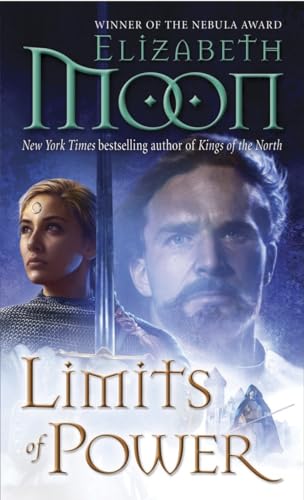
Elizabeth Moon is back with the fourth adventure in her bestselling fantasy epic. Moon brilliantly weaves a colorful tapestry of action, betrayal, love, and magic set in a richly imagined world that stands alongside those of such fantasy masters as George R. R. Martin and Robin Hobb.
The unthinkable has occurred in the kingdom of Lyonya. The queen of the Elves—known as the Lady—is dead, murdered by former elves twisted by dark powers. Now the Lady’s half-elven grandson must heal the mistrust between elf and human before their enemies strike again. Yet as he struggles to make ready for an attack, an even greater threat looms across the Eight Kingdoms.
Throughout the north, magic is reappearing after centuries of absence, emerging without warning in family after family—rich and poor alike. In some areas, the religious strictures against magery remain in place, and fanatical followers are stamping out magery by killing whoever displays the merest sign of it—even children. And as unrest spreads, one very determined traitor works to undo any effort at peace—no matter how many lives it costs. With the future hanging in the balance, it is only the dedication of a few resolute heroes who can turn the tides . . . if they can survive.
Praise for Limits of Power
“It’s easy to become fully immersed in, and absorbed by, the narrative: [Moon’s] great strength lies in the patient accumulation of telling detail, yielding an extraordinarily rich picture of the world’s politics, philosophy, military structure, history, magic and alien cultures, where men and women stand as equals even in force of arms.”—Kirkus Reviews
“Thoughtful and deeply character driven, full of personal crises as heartbreaking and hopeful as any dramatic invasion . . . Moon deftly avoids big literary explosions, preferring instead a slow boil that builds pressure without relief. There are plots within plots, but the complex story is never confusing. Fantasy fans will be delighted by this impressive foray.”—Publishers Weekly (starred review)
Praise for Elizabeth Moon
“This is an excellent series, and Echoes of Betrayal is particularly well done. [Elizabeth Moon is a] consistently entertaining writer, and this book lives up to her standards.”—San Jose Mercury News
“Moon’s characters navigate an intricate maze of alliances and rivalries. . . . Close attention to military detail gives the action convincing intensity.”—The Star-Ledger, on Kings of the North
“A triumphant return to the fantasy world she created . . . No one writes fantasy quite like Moon.”—The Miami Herald, on Oath of Fealty
Die Inhaltsangabe kann sich auf eine andere Ausgabe dieses Titels beziehen.
Über die Autorin bzw. den Autor
Elizabeth Moon grew up on the Texas border, served three years of active duty in the USMC (1968–71), and now lives with her husband, also a veteran, near Austin, Texas. She has published more than twenty-five novels, including Nebula Award winner The Speed of Dark, Hugo finalist Remnant Population, and the enduring epic fantasy series The Chronicles of Paksenarrion. She has published more than fifty short-fiction pieces in anthologies and magazines and in four of her own short-fiction collections, most recently Moon Flights and Deeds of Honor. When not writing, Moon enjoys photographing native plants and wildlife, knitting socks, and cooking.
Auszug. © Genehmigter Nachdruck. Alle Rechte vorbehalten.
Chapter One
Chaya, in Lyonya
You killed her!” That first voice, instantly joined by others, rose in a furious screech of accusation. “You killed her! You killed her!”
The angry voices penetrated Kieri’s grief and exhaustion, and he looked back over his shoulder to see at least a dozen elves, some with swords drawn, his uncle Amrothlin among them. Behind them, more Squires pushed into the room.
“I did not,” he said. “I tried—”
“She’s dead! You’re alive; you must have—!”
“I tried to save her,” Kieri said. “I could not.” He stood up then, automatically collecting his weapons as he rose.
“Let me see that!” Amrothlin strode forward, pointing at Kieri’s sword. “If it has her blood on it—”
“Of course it does,” Kieri said. “You saw: my sword lay in her blood, there on the floor.” He had knelt in her blood, he realized, and his hands were stained. No wonder Amrothlin suspected him, though the blood that spattered his clothes had come from others.
Amrothlin reached out his hand. “Let me smell it. I know her scent; I will know another’s scent, if indeed another’s blood is there. Give it to me.”
“No,” Arian said before Kieri could answer, blocking Amrothlin with her arm. “You will not disarm the king,” she said. “Not after what has happened.”
“You!” Amrothlin glared at her. “You half-bred troublemaker, child of one who should never have sired children on mortals—”
“Daughter of one who gave his life to save the Lady,” Arian said. Kieri saw the glitter of both tears and anger in her eyes. “There he lies, and you would insult him?”
“And you know you cannot hold this sword,” Kieri said, forcing a calm tone through the anger he felt. How dare Amrothlin insult Arian—and where had he been all this time? Was he the traitor? “You remember: it’s sealed to me. Smell if you wish, but do not touch it.”
Amrothlin glared at them all, then fixed his gaze on Arian. “What should I think when I find three mortals around my Lady’s body with swords drawn and her blood run out like water from a cracked jug? I see no other foe here. It is you, I say, and this—this so-called king.”
Kieri glanced past Amrothlin. The ring of elves stood tense; behind them were Squires who hesitated to push them aside, and behind those the hooded figures of two Kuakkgani. He met Amrothlin’s angry gaze once more.
“I am the king,” he said, keeping his voice as steady as he could. “I am the king, and my mother was your sister, and this Lady was my grandmother. So we are kin, whether you like it or not. If you can indeed detect identity by the smell of the blood, then you will smell another immortal’s blood on this—and on the queen’s sword and Duke Verrakai’s as well.”
“Do you dare accuse an elf?” Amrothlin asked. He still trembled like a candle flame, but his voice had calmed.
“The one who did this could appear without walking through a door. Its mien seemed elven at first and also its magery, a glamour of the same sort as the Lady was wont to cast. Yet it was like no elf I have known in its malice and determination to kill the Lady. I believe you name such iynisin; in Tsaia we called them kuaknomi.”
Amrothlin glared. “We do not speak of them.” He looked over his shoulder, then back to Kieri. “Who was here at the time?”
“Later,” Kieri said. Voices rose in the corridor: angry, frightened, demanding. Time to take command. “Uncle, this is not the time for questions. I am the king, and I am not your enemy, nor the Lady’s. People are frightened; I must speak to them.”
Before Amrothlin could answer, he raised his voice and called to those beyond the room. “The danger is over for now: I, the king, am alive, and the queen is safe here with me. Those of you in the corridor: fetch the palace physicians for the wounded. The rest disperse, but for the Queen’s Squires assigned to the queen today and one Kuakgan. Put by your swords.” The elves by the door looked at Amrothlin, who said nothing, and then at Kieri again and finally put up their swords. Two Queen’s Squires made their way into the room and edged through the elves to Arian’s side.
Dorrin had already moved to one of the wounded Squires. “This one first, sir king. Both are sore wounded, and though I tried, I cannot heal them.”
Kieri knelt beside her. When he laid his hand on the man’s shoulder, he felt nothing but a heaviness. “Nor I,” he said, standing again. “I must be more worn than I thought.”
The noise outside diminished. “I will tell the whole of it to Amrothlin,” Kieri said to the elves. “Two may remain; the rest of you go and make what preparations you need make for the Lady’s rest.” He knelt beside the other Squire yet felt no healing power in himself. Sighing, he stood again.
Amrothlin’s stony expression did not change, but he did not contradict Kieri; with a wave of his hand he sent most of the elves away. Now the carnage showed more clearly—the pools of blood, the stench of blood and death, bloody footprints on the fine carpet, what looked like scorch marks, the dead: the Lady, Dameroth, another dead elf whose name Kieri did not know, Tolmaric’s twisted and shrunken body, and the two iynisin Kieri and Arian and Dorrin had killed. Arian’s clothes were as bloodstained as his own, and Dorrin, though she had not knelt in any blood, still had splashes on her shirt and sword hand.
“More dead elves,” one of the other elves said, bending to examine them. Then he stiffened, turning back to Amrothlin. “My lord! These are not elves! They are . . . what the king said.”
Amrothlin, still looking at Kieri, said, “Is this what you fought? Did you kill it?”
“That is another it split from its body after it killed Sier Tolmaric,” Kieri said. “Look at Tolmaric, look at its body, and if you can explain how that was done, I will be glad.”
Amrothlin turned and walked over to Tolmaric’s remains. “This was human?” He sounded more worried than angry now.
“Yes. The iynisin did that with a touch of its blade to his throat. He was already bespelled by the Lady, as I said, and helpless.”
“Where were you?”
“There.” Kieri pointed. He told of questioning Sier Tolmaric, the Lady’s interruption, and then the appearance of the iynisin—he insisted on using the name, though Amrothlin flinched every time—and its taunting of the Lady and attack. “I had just taken such a blow on my shoulder as almost threw me down. It was almost invisible; I could not see to parry the blow—and then it made for poor Tolmaric and did that to him, whatever that is. Then from the iynisin came two more, and each of those split into two.”
“A formidable foe indeed,” Amrothlin said. “Few of . . . such . . . can do that, and only with fresh blood and life taken.” He moved over beside the elf looking at the other body. Kieri saw his shoulders stiffen. Amrothlin crouched beside the body and touched the blood staining its dark clothes, then sniffed at his fingers. He stood and faced Kieri again. “You brought this on us.”
“What?” That accusation made no sense to him.
“You could not...
„Über diesen Titel“ kann sich auf eine andere Ausgabe dieses Titels beziehen.
Suchergebnisse für Limits of Power (Paladin's Legacy, Band 4)

Beispielbild für diese ISBN
Limits of Power
Anbieter: World of Books (was SecondSale), Montgomery, IL, USA
Verkäuferbewertung 5 von 5 Sternen

Zustand: Fair. Elizabeth Moon is back with the fourth adventure in her bestselling fantasy epic. Moon brilliantly weaves a colorful tapestry of action, betrayal, love, and magic set in a richly imagined world that stands alongside those of such fantasy masters as George R. R. Martin and Robin Hobb. The unthinkable has occurred in the kingdom of Lyonya. The queen of the Elves--known as the Lady--is dead, murdered by former elves twisted by dark powers. Now the Lady's half-elven grandson must heal the mistrust between elf and human before their enemies strike again. Yet as he struggles to make ready for an attack, an even greater threat looms across the Eight Kingdoms. Throughout the north, magic is reappearing after centuries of absence, emerging without warning in family after family--rich and poor alike. In some areas, the religious strictures against magery remain in place, and fanatical followers are stamping out magery by killing whoever displays the merest sign of it--even children. And as unrest spreads, one very determined traitor works to undo any effort at peace--no matter how many lives it costs. With the future hanging in the balance, it is only the dedication of a few resolute heroes who can turn the tides . . . if they can survive. Praise for Limits of Power "It's easy to become fully immersed in, and absorbed by, the narrative: [Moon's] great strength lies in the patient accumulation of telling detail, yielding an extraordinarily rich picture of the world's politics, philosophy, military structure, history, magic and alien cultures, where men and women stand as equals even in force of arms."--Kirkus Reviews "Thoughtful and deeply character driven, full of personal crises as heartbreaking and hopeful as any dramatic invasion . . . Moon deftly avoids big literary explosions, preferring instead a slow boil that builds pressure without relief. There are plots within plots, but the complex story is never confusing. Fantasy fans will be delighted by this impressive foray."--Publishers Weekly (starred review) Praise for Elizabeth Moon "This is an excellent series, and Echoes of Betrayal is particularly well done. [Elizabeth Moon is a] consistently entertaining writer, and this book lives up to her standards."--San Jose Mercury News "Moon's characters navigate an intricate maze of alliances and rivalries. . . . Close attention to military detail gives the action convincing intensity."--The Star-Ledger, on Kings of the North "A triumphant return to the fantasy world she created . . . No one writes fantasy quite like Moon."--The Miami Herald, on Oath of Fealty. Artikel-Nr. CIN0345533089A
Gebraucht kaufen
EUR 4,14
Versand gratis
Versand innerhalb von USA
Versand innerhalb von USA
Anzahl: 1 verfügbar
Beispielbild für diese ISBN
Limits of Power
Verlag:
Del Rey Books, 2014
ISBN 10: 0345533089
ISBN 13: 9780345533081
Gebraucht
Mass Market Paperback
Anbieter: ThriftBooks-Dallas, Dallas, TX, USA
Verkäuferbewertung 5 von 5 Sternen
Mass Market Paperback. Zustand: Good. No Jacket. Former library book; Pages can have notes/highlighting. Spine may show signs of wear. ~ ThriftBooks: Read More, Spend Less. Artikel-Nr. G0345533089I3N10
Gebraucht kaufen
EUR 6,43
Versand gratis
Versand innerhalb von USA
Versand innerhalb von USA
Anzahl: 1 verfügbar
Beispielbild für diese ISBN
Limits of Power
Anbieter: Kennys Bookstore, Olney, MD, USA
Verkäuferbewertung 5 von 5 Sternen
Zustand: New. Artikel-Nr. V9780345533081
Neu kaufen
EUR 14,90
EUR 9,41 Versand
Versand innerhalb von USA
Versand innerhalb von USA
Anzahl: 15 verfügbar
Foto des Verkäufers
Limits of Power
Anbieter: GreatBookPricesUK, Woodford Green, Vereinigtes Königreich
Verkäuferbewertung 5 von 5 Sternen
Zustand: As New. Unread book in perfect condition. Artikel-Nr. 20802513
Gebraucht kaufen
EUR 12,70
EUR 17,92 Versand
Versand von Vereinigtes Königreich nach USA
Versand von Vereinigtes Königreich nach USA
Anzahl: Mehr als 20 verfügbar
Beispielbild für diese ISBN
Limits of Power: 4 (Paladin's Legacy)
Anbieter: WorldofBooks, Goring-By-Sea, WS, Vereinigtes Königreich
Verkäuferbewertung 5 von 5 Sternen
Paperback. Zustand: Very Good. The book has been read, but is in excellent condition. Pages are intact and not marred by notes or highlighting. The spine remains undamaged. Artikel-Nr. GOR007540784
Gebraucht kaufen
EUR 24,61
EUR 6,69 Versand
Versand von Vereinigtes Königreich nach USA
Versand von Vereinigtes Königreich nach USA
Anzahl: 1 verfügbar
Beispielbild für diese ISBN
Limits of Power
Anbieter: Whodunit Bookshop, Winnipeg, MB, Kanada
Verkäuferbewertung 5 von 5 Sternen
Paperback. Zustand: Very Good. Artikel-Nr. 978034553308U
Gebraucht kaufen
EUR 6,54
EUR 47,51 Versand
Versand von Kanada nach USA
Versand von Kanada nach USA
Anzahl: 1 verfügbar
Foto des Verkäufers
Limits of Power
Verlag:
Random House Worlds Apr 2014, 2014
ISBN 10: 0345533089
ISBN 13: 9780345533081
Neu
Taschenbuch
Anbieter: AHA-BUCH GmbH, Einbeck, Deutschland
Verkäuferbewertung 5 von 5 Sternen
Taschenbuch. Zustand: Neu. Neuware - Elizabeth Moon is back with the fourth adventure in her bestselling fantasy epic. Moon brilliantly weaves a colorful tapestry of action, betrayal, love, and magic set in a richly imagined world that stands alongside those of such fantasy masters as George R. R. Martin and Robin Hobb. The unthinkable has occurred in the kingdom of Lyonya. The queen of the Elvesknown as the Ladyis dead, murdered by former elves twisted by dark powers. Now the Lady's half-elven grandson must heal the mistrust between elf and human before their enemies strike again. Yet as he struggles to make ready for an attack, an even greater threat looms across the Eight Kingdoms. Throughout the north, magic is reappearing after centuries of absence, emerging without warning in family after familyrich and poor alike. In some areas, the religious strictures against magery remain in place, and fanatical followers are stamping out magery by killing whoever displays the merest sign of iteven children. And as unrest spreads, one very determined traitor works to undo any effort at peaceno matter how many lives it costs. With the future hanging in the balance, it is only the dedication of a few resolute heroes who can turn the tides . . . if they can survive.Praise for Limits of Power "It's easy to become fully immersed in, and absorbed by, the narrative: [Moon's] great strength lies in the patient accumulation of telling detail, yielding an extraordinarily rich picture of the world's politics, philosophy, military structure, history, magic and alien cultures, where men and women stand as equals even in force of arms."Kirkus Reviews "Thoughtful and deeply character driven, full of personal crises as heartbreaking and hopeful as any dramatic invasion . . . Moon deftly avoids big literary explosions, preferring instead a slow boil that builds pressure without relief. There are plots within plots, but the complex story is never confusing. Fantasy fans will be delighted by this impressive foray."Publishers Weekly (starred review) Praise for Elizabeth Moon "This is an excellent series, and Echoes of Betrayal is particularly well done. [Elizabeth Moon is a] consistently entertaining writer, and this book lives up to her standards."San Jose Mercury News "Moon's characters navigate an intricate maze of alliances and rivalries. . . . Close attention to military detail gives the action convincing intensity."The Star-Ledger, on Kings of the North "A triumphant return to the fantasy world she created . . . No one writes fantasy quite like Moon."The Miami Herald, on Oath of Fealty. Artikel-Nr. 9780345533081
Neu kaufen
EUR 19,59
EUR 35,00 Versand
Versand von Deutschland nach USA
Versand von Deutschland nach USA
Anzahl: 2 verfügbar
Foto des Verkäufers
Limits of Power
Anbieter: moluna, Greven, Deutschland
Verkäuferbewertung 5 von 5 Sternen
Zustand: New. Elizabeth Moon grew up on the Texas border, served three years of active duty in the USMC (1968&ndash71), and now lives with her husband, also a veteran, near Austin, Texas. She has published more than twenty-five novels, including Nebula Award. Artikel-Nr. 897814263
Neu kaufen
EUR 14,48
EUR 48,99 Versand
Versand von Deutschland nach USA
Versand von Deutschland nach USA
Anzahl: Mehr als 20 verfügbar