
Verwandte Artikel zu Whispers Under Ground (Rivers of London, Band 3)
Inhaltsangabe
A WHOLE NEW REASON TO MIND THE GAP
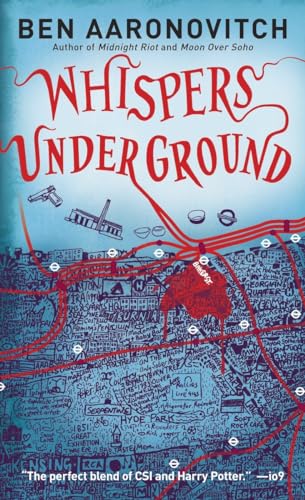
It begins with a dead body at the far end of Baker Street tube station, all that remains of American exchange student James Gallagher—and the victim’s wealthy, politically powerful family is understandably eager to get to the bottom of the gruesome murder. The trouble is, the bottom—if it exists at all—is deeper and more unnatural than anyone suspects . . . except, that is, for London constable and sorcerer’s apprentice Peter Grant. With Inspector Nightingale, the last registered wizard in England, tied up in the hunt for the rogue magician known as “the Faceless Man,” it’s up to Peter to plumb the haunted depths of the oldest, largest, and—as of now—deadliest subway system in the world.
At least he won’t be alone. No, the FBI has sent over a crack agent to help. She’s young, ambitious, beautiful . . . and a born-again Christian apt to view any magic as the work of the devil. Oh yeah—that’s going to go well.
Die Inhaltsangabe kann sich auf eine andere Ausgabe dieses Titels beziehen.
Über die Autorin bzw. den Autor
Ben Aaronovitch was born in London in 1964 and had the kind of dull routine childhood that drives a man to drink or to science fiction. He is a screenwriter, with early notable success on BBC television’s legendary Doctor Who, for which he wrote some episodes now widely regarded as classics, and which even he is quite fond of. He has also penned several groundbreaking TV tie-in novels. After a decade of such work, he decided it was time to show the world what he could really do and embarked on his first serious original novel. The result is Midnight Riot, the debut adventure of Peter Grant, followed by Moon Over Soho.
Auszug. © Genehmigter Nachdruck. Alle Rechte vorbehalten.
9780345524614|excerpt
Aaronovitch / WHISPERS UNDER GROUND
Sunday
chapter 1
Tufnell Park
Back in the summer I’d made the mistake of telling my mum what I did for a living. Not the police bit, which of course she already knew about, having been at my graduation from Hendon, but the stuff about me working for the branch of the Met that dealt with the supernatural. My mum translated this in her head to “witchfinder,” which was good because like most West Africans, she considered witchfinding a more respectable profession than policeman. Struck by an unanticipated burst of maternal pride she proceeded to outline my new career path to her friends and relatives, a body I estimate to comprise at least twenty percent of the expatriate Sierra Leonean community currently in the UK. This included Alfred Kamara, who lived on the same estate as my mum, and through him his thirteen‑year‑old daughter, Abigail, who decided, on the last Sunday before Christmas, that she wanted me to go look at this ghost she’d found. She got my attention by pestering my mum to the point where my mum gave in and rang me on my mobile.
I wasn’t pleased, because Sunday is one of the few days I don’t have morning practice on the firing range and I was planning a nice lie‑in followed by football in the pub.
“So where’s this ghost?” I asked when Abigail opened her front door.
“How come there’s two of you?” asked Abigail. She was a short, skinny mixed‑race girl with light skin that had gone winter sallow.
“This is my colleague, Lesley May,” I said.
Abigail stared suspiciously at Lesley. “Why are you wearing a mask?” she asked.
“Because my face fell off,” said Lesley.
Abigail considered this for a moment and then nodded. “Okay,” she said.
“So where is it?” I asked.
“It’s a he,” said Abigail. “He’s up at the school.”
“Come on then,” I said.
“What, now?” she asked. “But it’s freezing.”
“We know,” I said. It was one of those dull gray winter days with the sort of sinister cold wind that keeps on finding ways through the gaps in your clothes. “You coming or not?”
She gave me the patented stare of the belligerent thirteen‑ year‑old. But I wasn’t her mother or a teacher. I didn’t want her to do something, I wanted to go home and watch the football.
“Suit yourself,” I said and turned away.
“Wait up,” she said. “I’m coming.”
I turned back in time for the door to be slammed in my face.
“She didn’t invite us in,” said Lesley. Not being invited in is one of the boxes on the “suspicious behavior” bingo form that every copper carries around in their head along with “stupidly overpowerful dog” and being too quick to supply an alibi. Fill all the boxes and you too could win an all-expenses-paid visit to your local police station.
“It’s Sunday morning,” I said. “Her dad’s probably still in bed.”
We decided to wait for Abigail downstairs in the car, where we passed the time by rooting through the various stakeout supply bags that had accumulated over the year. We found a whole tube of fruit pastels, and Lesley had just made me look away so she could lift her mask to eat one when Abigail tapped on the window.
Like me, Abigail had inherited her hair from the “wrong” parent, but being a boy, mine just got shaved down to fuzz while Abigail’s dad used to troop her over to a succession of hair salons, relatives, and enthusiastic neighbors in an attempt to get it under control. Right from the start Abigail used to moan and fidget as her hair was relaxed or braided or thermally reconditioned, but her dad was determined that his child wasn’t going to embarrass him in public. That all stopped when Abigail turned eleven and calmly announced that she had ChildLine on speed‑dial and the next person who came near her with a hair extension, chemical straightener, or, God forbid, a hot comb, was going to end up explaining their actions to Social Services. Since then she wore her growing Afro pulled into a puffball at the back of her head. It was too big to fit into the hood of her pink winter jacket so she wore an outsized Rasta cap that made her look like a racist stereotype from the 1970s. My mum says that Abigail’s hair is a shameful scandal, but I couldn’t help noticing that her hat was keeping the drizzle off her face.
“What happened to the Jag?” she asked when I let her in the back.
My governor had a proper Mark 2 Jaguar with a 3.8 liter engine that had passed into local folklore because I’d parked it in the estate on occasion. A vintage Jag like that was considered cool even by modern kids, while the bright orange Focus ST I was currently driving was just another Ford Asbo among many.
“He’s been banned,” said Lesley. “Until he passes the advanced driver’s course.”
“Is that because you crashed that ambulance into the river?” asked Abigail.
“I didn’t crash it into the river,” I said. I pulled the Asbo out onto Leighton Road and turned the subject back to the ghost. “Whereabouts in the school is it?”
“It’s not in the school,” she said. “It’s under it—where the train tracks are. And it’s a he.”
The school she was talking about was the local comprehensive, Acland Burghley, where countless generations of the Peckwater Estate had been educated, including me and Abigail. Or, as Nightingale insists it should be, Abigail and I. I say “countless,” but actually it was built in the late sixties so it couldn’t have been more than four generations, tops.
Sited a third of the way up Dartmouth Park Hill, it had obviously been designed by a keen admirer of Albert Speer, particularly his later work on the monumental fortifications of the Atlantic Wall. The school, with its three towers and thick concrete walls, could have easily dominated the strategic five‑way junction of Tufnell Park and prevented any flying column of Islington light infantry from advancing up the main road. I found a parking space on Ingestre Road at the back of the school grounds and we crunched our way to the footbridge that crossed the railway tracks behind the school.
There were two sets of double tracks, the ones on the south side sunk into a cutting at least two meters lower than those to the north. This meant the old footbridge had two separate flights of slippery steps to navigate before we could look through the chain‑link fence.
The school playground and gym had been built on a concrete platform that bridged the two sets of tracks. From the footbridge, and in keeping with the overall design scheme, they looked almost exactly like the entrance to a pair of U‑boat pens.
“Down there,” said Abigail, and pointed to the left-hand tunnel.
“You went down on the tracks?” asked Lesley.
“I was careful,” said Abigail.
Lesley wasn’t happy and neither was I. Railways are lethal. Sixty people a year step out onto the tracks and get themselves killed—the only upside being that when this happens they become the concern of the British Transport Police, and not my problem.
Before doing something really stupid, such as walking out onto a railway track, your well‑trained police officer is required to make a risk...
„Über diesen Titel“ kann sich auf eine andere Ausgabe dieses Titels beziehen.
Suchergebnisse für Whispers Under Ground (Rivers of London, Band 3)

Beispielbild für diese ISBN
Whispers Under Ground
Anbieter: World of Books (was SecondSale), Montgomery, IL, USA
Verkäuferbewertung 5 von 5 Sternen

Zustand: Good. A WHOLE NEW REASON TO MIND THE GAP It begins with a dead body at the far end of Baker Street tube station, all that remains of American exchange student James Gallagher--and the victim's wealthy, politically powerful family is understandably eager to get to the bottom of the gruesome murder. The trouble is, the bottom--if it exists at all--is deeper and more unnatural than anyone suspects . . . except, that is, for London constable and sorcerer's apprentice Peter Grant. With Inspector Nightingale, the last registered wizard in England, tied up in the hunt for the rogue magician known as the Faceless Man, it's up to Peter to plumb the haunted depths of the oldest, largest, and--as of now--deadliest subway system in the world. At least he won't be alone. No, the FBI has sent over a crack agent to help. She's young, ambitious, beautiful . . . and a born-again Christian apt to view any magic as the work of the devil. Oh yeah--that's going to go well. Artikel-Nr. 00106641923
Gebraucht kaufen
EUR 6,04
Versand gratis
Versand innerhalb von USA
Versand innerhalb von USA
Anzahl: 2 verfügbar
Beispielbild für diese ISBN
Whispers Under Ground
Anbieter: World of Books (was SecondSale), Montgomery, IL, USA
Verkäuferbewertung 5 von 5 Sternen
Zustand: Fair. A WHOLE NEW REASON TO MIND THE GAP It begins with a dead body at the far end of Baker Street tube station, all that remains of American exchange student James Gallagher--and the victim's wealthy, politically powerful family is understandably eager to get to the bottom of the gruesome murder. The trouble is, the bottom--if it exists at all--is deeper and more unnatural than anyone suspects . . . except, that is, for London constable and sorcerer's apprentice Peter Grant. With Inspector Nightingale, the last registered wizard in England, tied up in the hunt for the rogue magician known as the Faceless Man, it's up to Peter to plumb the haunted depths of the oldest, largest, and--as of now--deadliest subway system in the world. At least he won't be alone. No, the FBI has sent over a crack agent to help. She's young, ambitious, beautiful . . . and a born-again Christian apt to view any magic as the work of the devil. Oh yeah--that's going to go well. Artikel-Nr. 00105024031
Gebraucht kaufen
EUR 6,04
Versand gratis
Versand innerhalb von USA
Versand innerhalb von USA
Anzahl: 3 verfügbar
Beispielbild für diese ISBN
Whispers Under Ground (Rivers of London)
Verlag:
Del Rey (edition ), 2012
ISBN 10: 0345524616
ISBN 13: 9780345524614
Gebraucht
Mass Market Paperback
Anbieter: BooksRun, Philadelphia, PA, USA
Verkäuferbewertung 5 von 5 Sternen
Mass Market Paperback. Zustand: Very Good. It's a well-cared-for item that has seen limited use. The item may show minor signs of wear. All the text is legible, with all pages included. It may have slight markings and/or highlighting. Artikel-Nr. 0345524616-11-1
Gebraucht kaufen
EUR 6,06
Versand gratis
Versand innerhalb von USA
Versand innerhalb von USA
Anzahl: 1 verfügbar
Beispielbild für diese ISBN
Whispers Under Ground
Verlag:
Del Rey Books, 2012
ISBN 10: 0345524616
ISBN 13: 9780345524614
Gebraucht
Mass Market Paperback
Anbieter: ThriftBooks-Phoenix, Phoenix, AZ, USA
Verkäuferbewertung 5 von 5 Sternen
Mass Market Paperback. Zustand: Good. No Jacket. Pages can have notes/highlighting. Spine may show signs of wear. ~ ThriftBooks: Read More, Spend Less. Artikel-Nr. G0345524616I3N00
Gebraucht kaufen
EUR 6,63
Versand gratis
Versand innerhalb von USA
Versand innerhalb von USA
Anzahl: 1 verfügbar
Beispielbild für diese ISBN
Whispers Under Ground
Verlag:
Del Rey Books, 2012
ISBN 10: 0345524616
ISBN 13: 9780345524614
Gebraucht
Mass Market Paperback
Anbieter: ThriftBooks-Reno, Reno, NV, USA
Verkäuferbewertung 5 von 5 Sternen
Mass Market Paperback. Zustand: Very Good. No Jacket. May have limited writing in cover pages. Pages are unmarked. ~ ThriftBooks: Read More, Spend Less. Artikel-Nr. G0345524616I4N00
Gebraucht kaufen
EUR 6,63
Versand gratis
Versand innerhalb von USA
Versand innerhalb von USA
Anzahl: 1 verfügbar
Beispielbild für diese ISBN
Whispers Under Ground
Verlag:
Del Rey Books, 2012
ISBN 10: 0345524616
ISBN 13: 9780345524614
Gebraucht
Mass Market Paperback
Anbieter: ThriftBooks-Reno, Reno, NV, USA
Verkäuferbewertung 5 von 5 Sternen
Mass Market Paperback. Zustand: Good. No Jacket. Pages can have notes/highlighting. Spine may show signs of wear. ~ ThriftBooks: Read More, Spend Less. Artikel-Nr. G0345524616I3N00
Gebraucht kaufen
EUR 6,63
Versand gratis
Versand innerhalb von USA
Versand innerhalb von USA
Anzahl: 1 verfügbar
Beispielbild für diese ISBN
Whispers Under Ground
Verlag:
Del Rey Books, 2012
ISBN 10: 0345524616
ISBN 13: 9780345524614
Gebraucht
Mass Market Paperback
Anbieter: ThriftBooks-Dallas, Dallas, TX, USA
Verkäuferbewertung 5 von 5 Sternen
Mass Market Paperback. Zustand: Good. No Jacket. Pages can have notes/highlighting. Spine may show signs of wear. ~ ThriftBooks: Read More, Spend Less. Artikel-Nr. G0345524616I3N00
Gebraucht kaufen
EUR 6,65
Versand gratis
Versand innerhalb von USA
Versand innerhalb von USA
Anzahl: 1 verfügbar
Beispielbild für diese ISBN
Whispers Under Ground
Verlag:
Del Rey Books, 2012
ISBN 10: 0345524616
ISBN 13: 9780345524614
Gebraucht
Mass Market Paperback
Anbieter: ThriftBooks-Dallas, Dallas, TX, USA
Verkäuferbewertung 5 von 5 Sternen
Mass Market Paperback. Zustand: Fair. No Jacket. Readable copy. Pages may have considerable notes/highlighting. ~ ThriftBooks: Read More, Spend Less. Artikel-Nr. G0345524616I5N00
Gebraucht kaufen
EUR 6,65
Versand gratis
Versand innerhalb von USA
Versand innerhalb von USA
Anzahl: 1 verfügbar
Beispielbild für diese ISBN
Whispers Under Ground
Verlag:
Del Rey Books, 2012
ISBN 10: 0345524616
ISBN 13: 9780345524614
Gebraucht
Mass Market Paperback
Anbieter: ThriftBooks-Dallas, Dallas, TX, USA
Verkäuferbewertung 5 von 5 Sternen
Mass Market Paperback. Zustand: Fair. No Jacket. Former library book; Readable copy. Pages may have considerable notes/highlighting. ~ ThriftBooks: Read More, Spend Less. Artikel-Nr. G0345524616I5N10
Gebraucht kaufen
EUR 6,65
Versand gratis
Versand innerhalb von USA
Versand innerhalb von USA
Anzahl: 1 verfügbar
Beispielbild für diese ISBN
Whispers Under Ground
Verlag:
Del Rey Books, 2012
ISBN 10: 0345524616
ISBN 13: 9780345524614
Gebraucht
Mass Market Paperback
Anbieter: ThriftBooks-Atlanta, AUSTELL, GA, USA
Verkäuferbewertung 5 von 5 Sternen
Mass Market Paperback. Zustand: Good. No Jacket. Pages can have notes/highlighting. Spine may show signs of wear. ~ ThriftBooks: Read More, Spend Less. Artikel-Nr. G0345524616I3N00
Gebraucht kaufen
EUR 6,67
Versand gratis
Versand innerhalb von USA
Versand innerhalb von USA
Anzahl: 1 verfügbar