
Verwandte Artikel zu Back to Our Future: How the 1980s Explains the World...
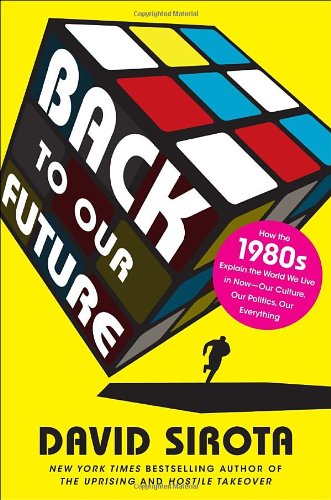
Back to Our Future: How the 1980s Explains the World We Live in Now--Our Culture, Our Politics, Our Everything - Hardcover
Inhaltsangabe
The nationally syndicated newspaper columnist and radio host author of The Uprising presents an outspoken assessment of how the progressive views of the 1980s mirrored, set the stage for and offered examples compatible with today's cultural and political struggles.
Die Inhaltsangabe kann sich auf eine andere Ausgabe dieses Titels beziehen.
Über die Autorin bzw. den Autor
David Sirota is a journalist, nationally syndicated weekly newspaper columnist, and radio host. His weekly column is based at The Denver Post, San Francisco Chronicle, PortlandOregonian, and The Seattle Times and now appears in newspapers with a combined daily circulation of more than 1.6 million readers. He has contributed toThe New York Times Magazine and The Nation and hosts an award-winning daily talk show on Denver’s Clear Channel affiliate, KKZN-AM760. He is a senior editor atIn These Times magazine and a Huffington Post contributor and appears periodically on CNN,The Colbert Report, PBS, and NPR. He received a degree in journalism and political science from Northwestern University’s Medill School of Journalism. He lives in Denver with his wife, Emily, and their dog, Monty.
Auszug. © Genehmigter Nachdruck. Alle Rechte vorbehalten.
Die, Hippie, Die!
Every time one of these ex-hippies comes prancing in from yesteryear, we gotta get out the love beads and pretend we care about people. - Alex P. Keaton, 1986
For the past several days I've been noticing a steep rise in the number of hippies coming to town. . . . I know hippies. I've hated them all my life. I've kept this town free of hippies on my own since I was five and a half. But I can't contain them on my own anymore. We have to do something, fast! -Eric Cartman, 2005
In 1975, a Democratic Party emboldened by civil rights, environmental, antiwar, and post-Watergate electoral successes was on the verge of seizing the presidency and a filibuster-proof congressional majority. That year, The Rocky Horror Picture Show and One Flew Over the Cuckoo's Nest were two of the three top-grossing films-the former a parody using the late-sixties sexual revolution to laugh at the puritanical fifties, the latter based on the novel by beat writer Ken Kesey. Meanwhile, three of the top-rated seven television shows were liberal-themed programs produced by progressive icon Norman Lear, including All in the Family-a show built around a hippie, Mike Stivic, poking fun at the ignorance of his traditionalist father-in-law, Archie Bunker.
A mere ten years later, Republican Ronald Reagan had just been reelected by one of the largest electoral landslides in American history, and his party had also gained control of the U.S. Senate. Two of the top three grossing films were Back to the Future, which eulogized the fifties, and Rambo: First Blood Part II, which blamed sixties antiwar activism for losing the Vietnam conflict. Most telling, All in the Family's formula of using sixties-motivated youth and progressivism to ridicule fifties-rooted parents and their traditionalism had been replaced atop the television charts by its antithesis: a Family Ties whose fifties-inspired youth ridicules his parents' sixties spirit.
The political and cultural trends these changes typified were neither coincidental nor unrelated, and their intertwined backstories explain why we're still scarred by the metamorphosis.
The late 1970s and early 1980s marked the birth of an entire industry organized around idealized nostalgia, and particularly midcentury, pre-1965 schmaltz. You likely know this industry well-it survives in everything from roadside Cracker Barrel restaurants to the Jersey shore's Old Time photo stands to Michael Chabon's novels to Band of Brothers-style miniseries glorifying the valor of World War II vets- and it first found traction in the 1980s creation of The Fifties(tm).
Turning a time period into a distinct brand seems common today, what with the all-pervasive references to generational subgroups (Gen X, Gen Y, etc.). But it was a new marketing innovation back in the 1980s. As Temple University professor Carolyn Kitch found in her 2003 study of mass-circulation magazines, generational labeling is "primarily a phenomena of the last quarter of the 20th century," and it began (as so many things have) as an early-1980s ad strategy aimed at selling products to Baby Boomers and their parents.
Like all sales pitches, fifties hawking employed subjectivity, oversimplification, and stereotypes. For eighties journalists, advertisers, screenwriters, and political operatives seeking a compelling shorthand to break through the modern media miasma, that meant making The Fifties into much more than the ten-year period between 1950 and 1959. It meant using pop culture and politics to convert the style, language, and memories of that decade into a larger reference to the entire first half of the twentieth century, all the way through the early 1960s of the New Frontier-those optimistic years "before President Kennedy was shot, before the Beatles came, when I couldn't wait to join the Peace Corps, and I thought I'd never find a guy as great as my dad," as Baby from the classic eighties film Dirty Dancing reminisced.
Why The Fifties, and not the 1930s or '40s, as the face of the entire pre-sixties epoch? Because that decade was fraught with far less (obvious) baggage (say, the Depression or global war) and hence was most easily marketed in the saccharine entertainment culture of the devil-may-care 1980s.
Indeed, as the Carter presidency started to crumble in 1978 and Reagan began delivering fiery speeches in preparation for his upcoming presidential run, the crew-cut-and-greaser escapades of Happy Days and the poodle skirts of Laverne & Shirley overtook the sixties- referencing urbanity, ethnicity, and strife of Norman Lear's grittier sitcoms. In movie theaters, Animal House and Grease hit classic status almost instantly. These successes encouraged the culture industry to make the eighties the launching point for a self-sustaining genre of wildly popular back-to-the-fifties productions.
There were retrospectives such as Diner, Stand By Me, and Peggy Sue Got Married and biopics of fifties icons such as The Right Stuff, La Bamba, and Great Balls of Fire! There was Hoosiers, with its bucolic small towns, its short shorts, and its nonbreakaway rims. There were Broadway plays such as Brighton Beach Memoirs and Biloxi Blues, commemorating the honor, frugality, and innocence of the World War II years. And there was a glut of new Eisenhower biographies.
Even 1980s productions not overtly focused on decade nostalgia were decidedly recollective of fifties atmospherics.
There was Witness, which used the story of a Philadelphia cop's voyage into lily-white Amish country to juxtapose the simplicity of America's pastoral heritage against the crime-ridden anarchy of the black inner city.
There was Superman and Superman II-films that reanimated a TV hero of the actual 1950s, idealized Clark Kent's midcentury youth, and depicted his adulthood as the trials of a fedora-wearing anachronism trying to save modern Metropolis from postfifties peril. And there were the endless rip-offs-the Jets-versus-Sharks rivalry of West Side Story ripened into the socs-versus-greasers carnage of The Outsiders, while the hand-holding of Grease became the ass-grabbing of Dirty Dancing.
Through it all, pop culture was manufacturing a Total Recall of the 1950s for a 1980s audience-an artificial memory of The Fifties that even came with its own canned soundtrack.
Though we tend to think of the late 1970s and early 1980s as the glory days of punk rock and the primordial soup of what would become rap, Wurlitzer-ready rockabilly and doo-wop were the rage. This was the heyday of the Stray Cats and their standing base, the moment when Adam Ant released the jukebox jam "Goody Two Shoes," and Queen's rockabilly hit "Crazy Little Thing Called Love" hit number one on the charts. As the Hard Rock Cafe and Johnny Rockets franchises created a mini-fad of fifties-flavored restaurants, the B-52s' surf rock was catching a new wave; Meat Loaf was channeling his Elvis-impersonation act into the absurdist 1950s tribute "Paradise by the Dashboard Light"; and ZZ Top was starring in music videos featuring a muscle car that Danny Zuko might have driven at Thunder Road. Even Billy Joel, until then a folksinger, was going all in with a blatant teenybopper tribute, "Uptown Girl."
This sonic trend wasn't happening in a vacuum-it was thrumming in the shadow of the chief missionary of 1950s triumphalism, Ronald Reagan.
The Gipper's connection to The Fifties wasn't just rooted in his success as a midcentury B-movie actor nor in his American Graffiti pompadour. The Fifties had long defined his persona, career, and message. Here was "the candidate of nostalgia, a political performer whose be-bop instrument dates from an antediluvian choir," as The Washington Post wrote in 1980. Here was a man campaigning for president in the late 1970s and early 1980s calling for the country to go back in time. And not just a few...
„Über diesen Titel“ kann sich auf eine andere Ausgabe dieses Titels beziehen.
Suchergebnisse für Back to Our Future: How the 1980s Explains the World...

Beispielbild für diese ISBN
Back to Our Future: How the 1980s Explain the World We Live in Now--Our Culture, Our Politics, Our Everything
Anbieter: World of Books (was SecondSale), Montgomery, IL, USA
Verkäuferbewertung 5 von 5 Sternen

Hardback. Zustand: Fair. Artikel-Nr. 00100001832
Gebraucht kaufen
EUR 6,09
Versand gratis
Versand innerhalb von USA
Versand innerhalb von USA
Anzahl: 1 verfügbar
Beispielbild für diese ISBN
Back to Our Future: How the 1980s Explain the World We Live in Now--Our Culture, Our Politics, Our Everything
Anbieter: ThriftBooks-Dallas, Dallas, TX, USA
Verkäuferbewertung 5 von 5 Sternen
Hardcover. Zustand: Very Good. No Jacket. May have limited writing in cover pages. Pages are unmarked. ~ ThriftBooks: Read More, Spend Less. Artikel-Nr. G0345518780I4N00
Gebraucht kaufen
EUR 6,10
Versand gratis
Versand innerhalb von USA
Versand innerhalb von USA
Anzahl: 1 verfügbar
Beispielbild für diese ISBN
Back to Our Future: How the 1980s Explain the World We Live in Now--Our Culture, Our Politics, Our Everything
Anbieter: ThriftBooks-Atlanta, AUSTELL, GA, USA
Verkäuferbewertung 5 von 5 Sternen
Hardcover. Zustand: Very Good. No Jacket. Missing dust jacket; May have limited writing in cover pages. Pages are unmarked. ~ ThriftBooks: Read More, Spend Less. Artikel-Nr. G0345518780I4N01
Gebraucht kaufen
EUR 6,10
Versand gratis
Versand innerhalb von USA
Versand innerhalb von USA
Anzahl: 1 verfügbar
Beispielbild für diese ISBN
Back to Our Future: How the 1980s Explain the World We Live in Now--Our Culture, Our Politics, Our Everything
Anbieter: ThriftBooks-Dallas, Dallas, TX, USA
Verkäuferbewertung 5 von 5 Sternen
Hardcover. Zustand: Good. No Jacket. Former library book; Pages can have notes/highlighting. Spine may show signs of wear. ~ ThriftBooks: Read More, Spend Less. Artikel-Nr. G0345518780I3N10
Gebraucht kaufen
EUR 6,10
Versand gratis
Versand innerhalb von USA
Versand innerhalb von USA
Anzahl: 1 verfügbar
Beispielbild für diese ISBN
Back to Our Future: How the 1980s Explain the World We Live in Now--Our Culture, Our Politics, Our Everything
Anbieter: ThriftBooks-Atlanta, AUSTELL, GA, USA
Verkäuferbewertung 5 von 5 Sternen
Hardcover. Zustand: Very Good. No Jacket. May have limited writing in cover pages. Pages are unmarked. ~ ThriftBooks: Read More, Spend Less. Artikel-Nr. G0345518780I4N00
Gebraucht kaufen
EUR 6,10
Versand gratis
Versand innerhalb von USA
Versand innerhalb von USA
Anzahl: 1 verfügbar
Beispielbild für diese ISBN
Back to Our Future: How the 1980s Explain the World We Live in Now--Our Culture, Our Politics, Our Everything
Anbieter: ThriftBooks-Atlanta, AUSTELL, GA, USA
Verkäuferbewertung 5 von 5 Sternen
Hardcover. Zustand: Good. No Jacket. Former library book; Pages can have notes/highlighting. Spine may show signs of wear. ~ ThriftBooks: Read More, Spend Less. Artikel-Nr. G0345518780I3N10
Gebraucht kaufen
EUR 6,10
Versand gratis
Versand innerhalb von USA
Versand innerhalb von USA
Anzahl: 1 verfügbar
Beispielbild für diese ISBN
Back to Our Future : How the 1980s Explains the World We Live in Now--Our Culture, Our Politics, Our Everything
Verlag:
Random House Publishing Group, 2011
ISBN 10: 0345518780
ISBN 13: 9780345518781
Gebraucht
Hardcover
Anbieter: Better World Books: West, Reno, NV, USA
Verkäuferbewertung 5 von 5 Sternen
Zustand: Very Good. 58780th. Former library copy. Pages intact with possible writing/highlighting. Binding strong with minor wear. Dust jackets/supplements may not be included. Includes library markings. Stock photo provided. Product includes identifying sticker. Better World Books: Buy Books. Do Good. Artikel-Nr. 3953587-6
Gebraucht kaufen
EUR 7,09
Versand gratis
Versand innerhalb von USA
Versand innerhalb von USA
Anzahl: 1 verfügbar
Beispielbild für diese ISBN
Back to Our Future : How the 1980s Explains the World We Live in Now--Our Culture, Our Politics, Our Everything
Verlag:
Random House Publishing Group, 2011
ISBN 10: 0345518780
ISBN 13: 9780345518781
Gebraucht
Hardcover
Anbieter: Better World Books: West, Reno, NV, USA
Verkäuferbewertung 5 von 5 Sternen
Zustand: Good. 58780th. Pages intact with minimal writing/highlighting. The binding may be loose and creased. Dust jackets/supplements are not included. Stock photo provided. Product includes identifying sticker. Better World Books: Buy Books. Do Good. Artikel-Nr. 4046533-6
Gebraucht kaufen
EUR 7,09
Versand gratis
Versand innerhalb von USA
Versand innerhalb von USA
Anzahl: 1 verfügbar
Beispielbild für diese ISBN
Back to Our Future : How the 1980s Explains the World We Live in Now--Our Culture, Our Politics, Our Everything
Verlag:
Random House Publishing Group, 2011
ISBN 10: 0345518780
ISBN 13: 9780345518781
Gebraucht
Hardcover
Anbieter: Better World Books, Mishawaka, IN, USA
Verkäuferbewertung 5 von 5 Sternen
Zustand: Good. 58780th. Pages intact with minimal writing/highlighting. The binding may be loose and creased. Dust jackets/supplements are not included. Stock photo provided. Product includes identifying sticker. Better World Books: Buy Books. Do Good. Artikel-Nr. 4046533-6
Gebraucht kaufen
EUR 7,09
Versand gratis
Versand innerhalb von USA
Versand innerhalb von USA
Anzahl: 2 verfügbar
Beispielbild für diese ISBN
Back to Our Future : How the 1980s Explains the World We Live in Now--Our Culture, Our Politics, Our Everything
Verlag:
Random House Publishing Group, 2011
ISBN 10: 0345518780
ISBN 13: 9780345518781
Gebraucht
Hardcover
Anbieter: Better World Books, Mishawaka, IN, USA
Verkäuferbewertung 5 von 5 Sternen
Zustand: Very Good. 58780th. Pages intact with possible writing/highlighting. Binding strong with minor wear. Dust jackets/supplements may not be included. Stock photo provided. Product includes identifying sticker. Better World Books: Buy Books. Do Good. Artikel-Nr. 3962275-6
Gebraucht kaufen
EUR 7,09
Versand gratis
Versand innerhalb von USA
Versand innerhalb von USA
Anzahl: 1 verfügbar