
Verwandte Artikel zu Promises I Made My Mother
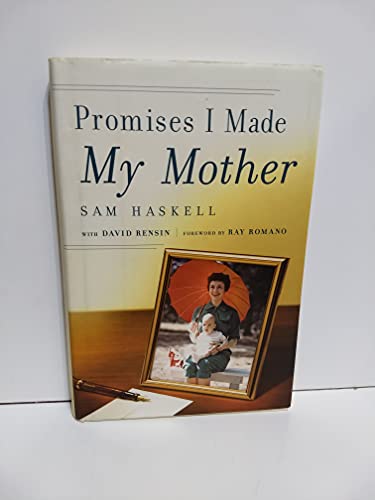
Inhaltsangabe
What would my mother say? How would she want me to handle this situation? How can I make this tough decision and stay true to myself?
What would my mother say?
Sam Haskell still asks himself these questions every day.
When Haskell was young, his devoted mother, Mary, instilled in her son the values of character, faith, and honor by setting an example and asking him to promise to live his life according to her lessons. He did, and those promises have served Haskell consistently from his Mississippi boyhood to his long career at the venerable William Morris Agency in Beverly Hills.
In this inspiring memoir full of touching stories and amusing anecdotes, Haskell reveals how he kept his pledge to his mother to live a decent life–even in the shark-infested waters of Hollywood, where he handled the hottest stars and packaged the highest-rated shows–by refusing to become the cliché of an amoral agent. Here is Haskell as a child in Amory, Mississippi (pop. 7,000), discovering the power of hope as he waits for an unlikely visit from the “Cheer Man” (a representative of the detergent company who gave ten dollars to anyone using the brand), learning humility after pursuing an eighth-grade “Good Citizenship” award he cockily assumed he’d win, confronting the complications of human character when a near-fatal car crash exposed his judgmental father’s true nature.
Years later, in Hollywood, Haskell would rely on his mother’s teachings–honesty, self-reliance, and belief in God–as he swiftly rose from the William Morris mailroom to eventually become the company’s Worldwide Head of Television. His capacity for friendship and his insistence on living his version of the Golden Rule (being “thoughtfully political”) allowed him to handle various client crises and the tense negotiations that nearly scuttled the last years ofEverybody Loves Raymond and the entire existence of The Fresh Prince of Bel-Air.
Haskell has achieved success through self-respect, and from his story we learn how we, too, can maintain our dignity when faced with life’s challenges. This stirring memoir is a testament to mothers everywhere who instill in their sons the lasting values they need to become good men and devoted fathers.
Die Inhaltsangabe kann sich auf eine andere Ausgabe dieses Titels beziehen.
Über die Autorin bzw. den Autor
Sam Haskell moved from Mississippi to Los Angeles in 1978 to work at the William Morris Agency. He became an agent in 1980, senior vice president by 1990, executive vice president by 1995, and Worldwide Head of Television by 1999. After a twenty-six-year career, he retired in 2004 to pursue philanthropic endeavors. In 2007 he was named one of the 25 Most Innovative and Influential People in Television over the last quarter century by TV Week. He lives in Los Angeles with his wife, Mary Donnelly Haskell (his college sweetheart and a former Miss Mississippi), and their two children, Sam IV and Mary Lane.
David Rensin has written or co-written thirteen books, five of them New York Times bestsellers. His most recent titles areAll for a Few Perfect Waves: The Audacious Life and Legend of Rebel Surfer Miki Doraand The Mailroom: Hollywood History from the Bottom Up.
Auszug. © Genehmigter Nachdruck. Alle Rechte vorbehalten.
Character Is All You Have in the Dark
Character cannot be developed in ease and quiet. Only through the experience of trial and suffering can the soul be strengthened, ambition inspired, and success achieved. –HELEN KELLER
Always let character be your guide. –MARY KIRKPATRICK HASKELL
My mother grew up during a time when people had few material possessions, so her character and reputation were her most valuable assets. She nurtured and guarded them with her every breath. Character is the rock on which my mother built her life, and she passed that value on to me. It is the foundation that supports everything else.
To some, character means integrity. Selflessness. The ability to inspire. Kindness. I think character is simply a unique combination of mental and moral qualities that distinguish us from one another. The Boy Scout Law best describes the complete recipe for good character: “Trustworthy, loyal, helpful, friendly, courteous, kind, obedient, cheerful, thrifty, brave, clean, and reverent.”
Character tells us most of what we want to know about someone, but more important, what’s essential to know.
Here’s how to tell: In the absolute dark, you can’t tell if a person you meet is good- looking, plain, tall, short, fat, or thin. You don’t know eye or hair color, or if they have any hair at all. You can’t judge them by their clothes or body language. In fact, the only way to really assess who they are is by what they say and, more important, by how they act.
When you take away everything, when you strip a person of the superficial add- ons, all they have left is their true self. Character is what gives a person meaning. Character is the core of our being. I first learned about character where we all do: at home. Since my father traveled often for work, my mother embraced the chance to show me the way.
HONESTY
Momma expected nothing less than honesty from all her sons, and she never missed an opportunity to teach us the importance of always telling the truth.
My mother loved to read, and she worked hard to instill that same passion in her children. When Jamie, Billy, and I were little boys, my mother took us to the nearby Amory Municipal Library every Saturday. In the ’50s and early ’60s, the library was housed in the City Hall, a large old building from the ’30s. The outside walls were smooth concrete, and the inside smelled of history. I loved walking between the stacks looking at the newest selections, and I also loved the more timeworn volumes. Often, I would open those old books and read the names on the card that revealed who had read the book before me.
When I was eight years old, my mother thought I was mature enough to walk to the library by myself and be responsible for checking out and returning my own books. That meant I got to have my own library card, which made me feel so grown- up. I have always loved English history, and one Saturday I rushed to the library to check out a new book on the kings and queens of England. When I got home to show my mother the book, she asked if I had returned the books I’d checked out the week before. I hadn’t, but I lied and told her that I had. I knew those books were still in my bedroom, but I figured that I could put them in my book satchel and drop them off at the library on my way home from school on Monday.
Unfortunately, I forgot the books on Monday, and the next day, and the next day as well. Soon they were buried in my room under boxes of model cars and airplanes, baseball cards, parts of a Monopoly board, a kite with a tail made from old pillowcases, and my GI Joe paraphernalia–and there they remained for several months. Imagine my surprise when my mother received a notice in the mail from the library inquiring about my books– and there was a late fee charge of eight dollars . . . a lot of money in those days!
My mother marched me into my room and we started digging for the books. After we finally unearthed all four she walked me to the library, made me return the books, and made me pay the late fee with my own money. I had managed to save over ten dollars from my fifty- cent- a- week allowance, and in a flash it was almost all gone.
“Honesty means owning your mistakes,” my mother said.
“And apologizing for them.” Before we left the library, I had to apologize to the librarian for keeping the books out for so long and promise my mother to never be dishonest again.
That lesson stuck–I was always good about library books from then on! But there were other kinds of dishonesty that I hadn’t yet learned to avoid. When I was a high school sophomore, my cousin Nan Elliott, my friend Debbie Morris, and I would get together every night and study for our world history class. Well, sort of study. Actually, we’d laugh and tell stories until midnight, while my mother came in every half hour with snacks, asking, “Now, are you kids studying?” We’d all nod our heads and assure her we were.
When the girls went home, I’d stay up the rest of the night poring through my books so I could still make the A. I don’t think Nan and Debbie did. One day in class, I squished down low in my chair so Nan and Debbie could look over my shoulder and compare their answers with the answers on my test paper. When I looked up, there was our teacher, Jane Lancaster, standing right over me. “You seem to be slouching today, Mr. Haskell,” she said. For some reason, I burst out laughing. Then Nan and Debbie started to laugh. Though it was so unlike any of us to pull that kind of stunt, we couldn’t stop.
Mrs. Lancaster didn’t laugh. Instead, she gave me a look that froze me. She didn’t have to let the incident slide, but she did. At that moment I realized that while your mother might always forgive you, the world doesn’t have to. All anyone has is their reputation, which is easy to shatter and difficult to repair. I was put on notice that I’d been lucky to keep mine. Nan, Debbie, and I still remember the moment as one of the funniest things that happened to us in high school, but the lesson stuck.
Eight years later, after moving to Los Angeles, I worked in the William Morris Agency mailroom. My salary was $125 a week, before taxes, so I also had a part- time job at Professor Bloodgood’s Olde Time Photography Shoppe, on the Universal Studios tour, taking pictures of tourists dressed up as movie stars or gangsters or Western saloon people.
When I tell you that I had no money in those early days, it is a fact. Each Sunday night, I would purchase only what I needed to make my lunch for five days. For ten dollars, I could buy enough bread, ham, and cheese to make five ham and cheese sandwiches. I could also get one large bag of potato chips, which I’d divide evenly into five Ziploc bags. And I’d get a six- pack of Coca- Cola.
Yet every day at work I was surrounded by food–and temptation. I’d have to drive to the market to pick up Danish, fruit, lox, bagels, and sumptuous lunches for the agents....
„Über diesen Titel“ kann sich auf eine andere Ausgabe dieses Titels beziehen.
Suchergebnisse für Promises I Made My Mother

Beispielbild für diese ISBN
Promises I Made My Mother
Anbieter: World of Books (was SecondSale), Montgomery, IL, USA
Verkäuferbewertung 5 von 5 Sternen

Zustand: Good. Item in good condition. Textbooks may not include supplemental items i.e. CDs, access codes etc. Artikel-Nr. 00099059281
Gebraucht kaufen
EUR 4,42
Versand gratis
Versand innerhalb von USA
Versand innerhalb von USA
Anzahl: 2 verfügbar
Beispielbild für diese ISBN
Promises I Made My Mother
Anbieter: World of Books (was SecondSale), Montgomery, IL, USA
Verkäuferbewertung 5 von 5 Sternen
Zustand: Very Good. Item in very good condition! Textbooks may not include supplemental items i.e. CDs, access codes etc. Artikel-Nr. 00097592430
Gebraucht kaufen
EUR 4,42
Versand gratis
Versand innerhalb von USA
Versand innerhalb von USA
Anzahl: 1 verfügbar
Beispielbild für diese ISBN
Promises I Made My Mother
Verlag:
Ballantine Books (edition English Language), 2009
ISBN 10: 0345506553
ISBN 13: 9780345506559
Gebraucht
Hardcover
Anbieter: BooksRun, Philadelphia, PA, USA
Verkäuferbewertung 5 von 5 Sternen
Hardcover. Zustand: Very Good. English Language. With dust jacket. It's a well-cared-for item that has seen limited use. The item may show minor signs of wear. All the text is legible, with all pages included. It may have slight markings and/or highlighting. Artikel-Nr. 0345506553-11-1-29
Gebraucht kaufen
EUR 5,31
Versand gratis
Versand innerhalb von USA
Versand innerhalb von USA
Anzahl: 2 verfügbar
Beispielbild für diese ISBN
Promises I Made My Mother
Verlag:
Random House Publishing Group, 2009
ISBN 10: 0345506553
ISBN 13: 9780345506559
Gebraucht
Hardcover
Anbieter: Better World Books, Mishawaka, IN, USA
Verkäuferbewertung 5 von 5 Sternen
Zustand: Good. Pages intact with minimal writing/highlighting. The binding may be loose and creased. Dust jackets/supplements are not included. Stock photo provided. Product includes identifying sticker. Better World Books: Buy Books. Do Good. Artikel-Nr. 2881496-6
Gebraucht kaufen
EUR 6,05
Versand gratis
Versand innerhalb von USA
Versand innerhalb von USA
Anzahl: 1 verfügbar
Beispielbild für diese ISBN
Promises I Made My Mother
Verlag:
Random House Publishing Group, 2009
ISBN 10: 0345506553
ISBN 13: 9780345506559
Gebraucht
Hardcover
Anbieter: Better World Books, Mishawaka, IN, USA
Verkäuferbewertung 5 von 5 Sternen
Zustand: Very Good. Former library copy. Pages intact with possible writing/highlighting. Binding strong with minor wear. Dust jackets/supplements may not be included. Includes library markings. Stock photo provided. Product includes identifying sticker. Better World Books: Buy Books. Do Good. Artikel-Nr. 2881498-6
Gebraucht kaufen
EUR 6,05
Versand gratis
Versand innerhalb von USA
Versand innerhalb von USA
Anzahl: 1 verfügbar
Beispielbild für diese ISBN
Promises I Made My Mother
Anbieter: ThriftBooks-Dallas, Dallas, TX, USA
Verkäuferbewertung 5 von 5 Sternen
Hardcover. Zustand: As New. No Jacket. Pages are clean and are not marred by notes or folds of any kind. ~ ThriftBooks: Read More, Spend Less. Artikel-Nr. G0345506553I2N00
Gebraucht kaufen
EUR 7,09
Versand gratis
Versand innerhalb von USA
Versand innerhalb von USA
Anzahl: 1 verfügbar
Beispielbild für diese ISBN
Promises I Made My Mother
Anbieter: ThriftBooks-Dallas, Dallas, TX, USA
Verkäuferbewertung 5 von 5 Sternen
Hardcover. Zustand: Very Good. No Jacket. May have limited writing in cover pages. Pages are unmarked. ~ ThriftBooks: Read More, Spend Less. Artikel-Nr. G0345506553I4N00
Gebraucht kaufen
EUR 7,09
Versand gratis
Versand innerhalb von USA
Versand innerhalb von USA
Anzahl: 1 verfügbar
Beispielbild für diese ISBN
Promises I Made My Mother
Verlag:
Ballantine Books, New York, 2009
ISBN 10: 0345506553
ISBN 13: 9780345506559
Gebraucht
Hardcover
Erstausgabe
Signiert
Anbieter: Ground Zero Books, Ltd., Silver Spring, MD, USA
Verkäuferbewertung 5 von 5 Sternen
Hardcover. Zustand: Very good. Zustand des Schutzumschlags: Very good. Mary Ann Halpin (Author photograph) (illustrator). The format is approximately 5.625 inches by 8.5 inches. xxiv, 236, [10] pages. Illustrations. DJ has slight wear and soiling. Inscribed by the author on the half-title page. Inscription reads For Linda--Another great mother of two! Enjoy my stories of hope, faith, & Hollywood! Love, Sam Haskell. Foreword by Ray Romano. Selected Poetry. Photo Appendix. Sam Haskell was born on June 24, 1955 in Mobile, Alabama, USA. Haskell spent 26 years of his career at the William Morris Agency, a prominent talent agency where he rose to the rank of Executive Vice President and Worldwide Head of Television. He left in 2004, but not before managing prominent clients such as Bill Cosby. He is a producer, known for Dolly Parton's Heartstrings (2019), Dolly Parton's Christmas of Many Colors: Circle of Love (2016) and Dolly Parton's Coat of Many Colors (2015). He and his wife, Mary Donnelly Haskell, were the only American couple invited by Queen Elizabeth II to attend the royal wedding of His Royal Highness Prince Edward (aka Prince Edward) to Sophie Duchess of Edinburgh. Magnolia Hill Productions is a film and television production company founded by Sam Haskell, former executive vice president and worldwide head of television at the William Morris Agency. Established in 2013, Magnolia Hill was created to bring forth family friendly and inspirational content. The company has produced multiple shows with the country music icon Dolly Parton. Most recently, Magnolia Hill produced Dolly Parton's Heartstrings for Netflix, an eight-episode anthology series based on Parton's songs and stories. What would my mother say? How would she want me to handle this situation? How can I make this tough decision and stay true to myself? Sam Haskell still asks himself these questions every day. When Haskell was young, his devoted mother, Mary, instilled in her son the values of character, faith, and honor by setting an example and asking him to promise to live his life according to her lessons. He did, and those promises have served Haskell consistently from his Mississippi boyhood to his long career at the venerable William Morris Agency in Beverly Hills. In this inspiring memoir full of touching stories and amusing anecdotes, Haskell reveals how he kept his pledge to his mother to live a decent life-even in the shark-infested waters of Hollywood, where he handled the hottest stars and packaged the highest-rated shows-by refusing to become the cliché of an amoral agent. Here is Haskell as a child in Amory, Mississippi (pop. 7,000), discovering the power of hope as he waits for an unlikely visit from the "Cheer Man" (a representative of the detergent company who gave ten dollars to anyone using the brand), learning humility after pursuing an eighth-grade "Good Citizenship" award he cockily assumed he'd win, confronting the complications of human character when a near-fatal car crash exposed his judgmental father's true nature. Years later, in Hollywood, Haskell would rely on his mother's teachings-honesty, self-reliance, and belief in God-as he swiftly rose from the William Morris mailroom to eventually become the company's Worldwide Head of Television. His capacity for friendship and his insistence on living his version of the Golden Rule (being "thoughtfully political") allowed him to handle various client crises and the tense negotiations that nearly scuttled the last years of Everybody Loves Raymond and the entire existence of The Fresh Prince of Bel-Air. Haskell has achieved success through self-respect, and from his story we learn how we, too, can maintain our dignity when faced with life's challenges. This stirring memoir is a testament to mothers everywhere who instill in their sons the lasting values they need to become good men and devoted fathers. First Edition [Stated], First Printing [Stated]. Artikel-Nr. 88634
Gebraucht kaufen
EUR 112,47
EUR 4,37 Versand
Versand innerhalb von USA
Versand innerhalb von USA
Anzahl: 1 verfügbar