
Verwandte Artikel zu Easy Labor: Every Woman's Guide to Choosing Less...
Inhaltsangabe
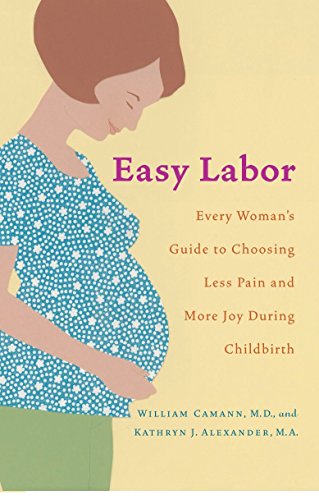
THE FIRST COMPLETE, COMPREHENSIVE GUIDE TO PAIN RELIEF DURING LABOR AND DELIVERY
Far too many expectant mothers find themselves unprepared when labor begins and natural techniques don’t effectively manage the pain. This indispensable guide provides reassuring, proven approaches to combining medical and natural techniques to ensure the most comfortable pain-free labor possible. In Easy Labor, you’ll discover
• what to expect during labor, and key factors that affect your comfort
• the facts on epidurals, safety concerns, and how effectively they reduce pain
• the pros and cons of pain-relief medications
• complementary and alternative methods, including water immersion, acupuncture, hypnosis, massage, and birth balls
• how your choice of hospital or birth center affects your pain-management options
• techniques to calm and eliminate the specific fears and stresses associated with childbirth
So relax and enjoy your pregnancy, with this important book by your side!
Die Inhaltsangabe kann sich auf eine andere Ausgabe dieses Titels beziehen.
Über die Autorin bzw. den Autor
William Camann, MD, the co-author of Easy Labor: Every Woman's Guide to Choosing Less Pain and More Joy During Childbirth, is the director of Obstetric Anesthesia at the Brigham and Women's Hospital in Boston, one of the most respected healthcare institutions in the world. Dr. Camann is also an associate professor of anesthesia at Harvard Medical School and president of the Society for Obstetric Anesthesia and Perinatology. Dr. Camann is an internationally recognized authority on obstetric anesthesia and pain control during childbirth and has appeared on various local and national news programs including Today, ABC World News Tonight, and Good Morning America. He lives in Boston, Massachusetts.
Kathryn Alexander, MA, the co-author of Easy Labor: Every Woman's Guide to Choosing Less Pain and More Joy During Childbirth, is a former child and family therapist who has worked in the healthcare field for more than 15 years. As a freelance writer, she has been published in many national parenting publications and on women's health websites. She lives in Charlotte, North Carolina.
Auszug. © Genehmigter Nachdruck. Alle Rechte vorbehalten.
One Choosing the Best Birth Environment for You
Your choice of birth environment is the first decision you make that determines your pain-relief options. If you know you want to use modern medical pain-relief methods, you will need to select a birth environment that can accommodate these preferences. If you are leaning more toward a natural childbirth, but would like to keep your options open, you may want to be in a birth environment that offers not only nonmedical forms of pain relief but also allows accessibility to medical pain relief, should you change your mind during labor. If you are committed to using no medical pain-relief options and do not want to be in an environment where they are frequently used, you will need to choose a birth environment that has both the physical amenities and supportive caregivers you will need to successfully give birth free of any medications, using complementary and alternative pain-management techniques.
The staff of caregivers available to you during labor and birth can also directly impact your pain-relief options. For instance, if you think you prefer to use an epidural but are in a hospital where the only anesthesiologist is on another unit at the time when you are in need of pain relief, this can significantly impact your birth experience. Conversely, if you prefer to delay or avoid the use of medications, a busy hospital with a high percentage of epidural usage may not be the ideal environment for you to achieve this goal.
Pharmacologic methods (medications) should never replace personal attention and tender loving care of the woman in labor.1
Your birth environment and the people caring for you during your labor and delivery can dramatically impact how you will perceive your childbirth experience. By choosing the type of birth environment best for you, you are more likely to feel relaxed and comfortable when you arrive and throughout the rest of your labor and birth. If you are giving birth in the setting you desire, surrounded by people who are able to meet your needs, including your pain-management needs, you are more likely to have a satisfying “birth day.”
In this chapter we:
•List the most common birth environments.
•Describe what each has to offer with regard to pain-relief options.
•Provide a description of the various professionals who may (or may not) be with you during labor and birth.
•Provide an at-a-glance comparison between hospitals and birth centers.
Hospitals
Most women in the United States (approximately 98 percent) give birth in a hospital. But all hospitals are not alike, and maternity units vary greatly from hospital to hospital. In addition, the size of the hospital and its maternity unit can impact the type of birth experience you have.
Reasons You May Want to Have Your Baby in a Hospital
•You want to be in a place where all or most medical pain-relief options will be available to you.
•You want to give birth in a setting that has equipment and staff ready to deal with an unlikely emergency.
•You feel more confident in a birth environment surrounded by a variety of medical professionals.
•You want a two- to four-day recovery period before returning home with your new baby.
Larger hospitals typically offer more medical pain-management options than are found in smaller (community) hospitals. Larger hospitals are more likely to have an in-house, around-the-clock anesthesiology staff readily available if you are in need of an epidural. Often, these larger hospitals have anesthesiologists who are assigned specifically to the maternity unit. This reduces the likelihood of delays for women in need of pain relief that must be given by the anesthesiologist.
Smaller hospitals may not have as many medical pain-relief options and may not offer epidurals twenty-four hours a day, seven days a week. If they have a limited anesthesia staff, some smaller hospitals may not offer epidurals at all. On the other hand, many of these small hospitals, as a result of not having as much “high-tech” pain relief to offer, often have staff and equipment that can successfully support the mom who prefers to use fewer or no medications throughout labor and birth. So, depending upon your own preferences, either of these settings may be right for you. But, clearly, if you desire the full-throttle pain relief of an epidural, you are more likely to find this type of pain management taking place in larger hospitals with busier maternity units.
Size of Hospital Maternity Unit and Their Epidural and Combined Spinal-Epidural Rates:
•In hospitals that deliver fifteen hundred or more babies per year, 69% of women use an epidural or a combined spinal-epidural.
•In hospitals that deliver five hundred to fifteen hundred babies per year, 50% of women use an epidural or a combined spinal-epidural.
•In hospitals that deliver less than five hundred babies per year, 40% of women use an epidural or combined spinal-epidral.2
Hospitals of all sizes are increasingly responding to women’s requests for more pain-management options, including baths, showers, the use of birth balls, and the promotion of movement and positioning during labor and birth. More hospitals are encouraging, or at the very least accepting, women’s choice to use doulas (described in this chapter) as their primary support people during their labor and birth.
Many hospitals throughout the country have made their birthing rooms more appealing and homelike, with the goal of helping women feel relaxed and comfortable in the unfamiliar and sometimes intimidating surroundings of a clinical setting. Even with these changes, the hospital stay (which, for most women, is their very first hospital stay) can make you feel like, well, like you’re in a hospital! Many caregivers recommend you bring your own homelike objects of comfort that will promote a sense of familiarity and relaxation in an otherwise unfamiliar setting. You may want to bring your favorite pillow, fragrance, photos, and a radio or CD player to listen to your favorite music. If you feel more comfy in your own clothing, let the hospital staff know you would like to wear your own threads instead of their hospital gown.
Two more factors may also determine where you ultimately give birth: your insurance coverage, which may or may not cover your care at your preferred hospital, and your obstetrician’s hospital affiliation. The hospital in which your obste- trician or midwife works will be the hospital where you will have your baby. If you like your obstetrician or midwife, but do not like the hospital with which he or she is affiliated, you may find you will need to switch to a doctor or midwife who works in the hospital where you want to have your baby.
Are Women Who Have Their Babies in Hospitals Satisfied with Their Experience?
According to a survey of sixteen hundred women across the country:
Ninety-six percent said they were satisfied with the health care they received.
Ninety-four percent felt they were treated with kindness and understanding.
Eighty-seven percent said they were free to make their own decisions.3
The Birth Center
Birth centers grew popular in the 1970s as an alternative to the hospital birth experience. Birth centers may also be called alternative birth centers (ABCs) or childbearing centers. According to the National Association of Childbearing Centers, “birth centers are guided by principles of prevention, sensitivity,...
„Über diesen Titel“ kann sich auf eine andere Ausgabe dieses Titels beziehen.
Suchergebnisse für Easy Labor: Every Woman's Guide to Choosing Less...

Beispielbild für diese ISBN
Easy Labor: Every Woman's Guide to Choosing Less Pain and More Joy During Childbirth
Anbieter: World of Books (was SecondSale), Montgomery, IL, USA
Verkäuferbewertung 5 von 5 Sternen

Zustand: Good. Item in good condition. Textbooks may not include supplemental items i.e. CDs, access codes etc. Artikel-Nr. 00106281036
Gebraucht kaufen
EUR 4,57
Versand gratis
Versand innerhalb von USA
Versand innerhalb von USA
Anzahl: 1 verfügbar
Beispielbild für diese ISBN
Easy Labor: Every Woman's Guide to Choosing Less Pain and More Joy During Childbirth
Anbieter: ThriftBooks-Dallas, Dallas, TX, USA
Verkäuferbewertung 5 von 5 Sternen
Paperback. Zustand: Very Good. No Jacket. May have limited writing in cover pages. Pages are unmarked. ~ ThriftBooks: Read More, Spend Less. Artikel-Nr. G0345476638I4N00
Gebraucht kaufen
EUR 7,31
Versand gratis
Versand innerhalb von USA
Versand innerhalb von USA
Anzahl: 1 verfügbar
Beispielbild für diese ISBN
Easy Labor : Every Woman's Guide to Choosing Less Pain and More Joy During Childbirth
Verlag:
Random House Publishing Group, 2006
ISBN 10: 0345476638
ISBN 13: 9780345476630
Gebraucht
Softcover
Erstausgabe
Anbieter: Better World Books, Mishawaka, IN, USA
Verkäuferbewertung 5 von 5 Sternen
Zustand: Good. 1st Edition. Former library copy. Pages intact with minimal writing/highlighting. The binding may be loose and creased. Dust jackets/supplements are not included. Includes library markings. Stock photo provided. Product includes identifying sticker. Better World Books: Buy Books. Do Good. Artikel-Nr. 2284823-75
Gebraucht kaufen
EUR 8,32
Versand gratis
Versand innerhalb von USA
Versand innerhalb von USA
Anzahl: 2 verfügbar
Beispielbild für diese ISBN
Easy Labor: Every Woman's Guide to Choosing Less Pain and More Joy During Childbirth
Anbieter: Roundabout Books, Greenfield, MA, USA
Verkäuferbewertung 4 von 5 Sternen

paperback. Zustand: Very Good. Clean, unmarked copy with some edge wear. Good binding. Dust jacket included if issued with one. We ship in recyclable American-made mailers. 100% money-back guarantee on all orders. Artikel-Nr. 1688313
Gebraucht kaufen
EUR 14,44
Versand gratis
Versand innerhalb von USA
Versand innerhalb von USA
Anzahl: 1 verfügbar
Foto des Verkäufers
Easy Labor: Every Woman's Guide to Choosing Less Pain and More Joy During Childbirth
Anbieter: Bookbot, Prague, Tschechien
Verkäuferbewertung 5 von 5 Sternen
Softcover. Zustand: Fine. Leichte Verformung / umgeknickte Seiten. THE FIRST COMPLETE, COMPREHENSIVE GUIDE TO PAIN RELIEF DURING LABOR AND DELIVERYFar too many expectant mothers find themselves unprepared when labor begins and natural techniques don't effectively manage the pain. This indispensable guide provides reassuring, proven approaches to combining medical and natural techniques to ensure the most comfortable pain-free labor possible. In Easy Labor, you'll discover- what to expect during labor, and key factors that affect your comfort- the facts on epidurals, safety concerns, and how effectively they reduce pain- the pros and cons of pain-relief medications- complementary and alternative methods, including water immersion, acupuncture, hypnosis, massage, and birth balls- how your choice of hospital or birth center affects your pain-management options- techniques to calm and eliminate the specific fears and stresses associated with childbirthSo relax and enjoy your pregnancy, with this important book by your side! Artikel-Nr. c2e6af07-6bf6-4d66-a2ee-2cfbc916857a
Gebraucht kaufen
EUR 7,61
EUR 18,99 Versand
Versand von Tschechien nach USA
Versand von Tschechien nach USA
Anzahl: 1 verfügbar
Beispielbild für diese ISBN
Easy Labor: Every Woman's Guide to Choosing a Less Painful and More Joy During Childbirth
Anbieter: Revaluation Books, Exeter, Vereinigtes Königreich
Verkäuferbewertung 5 von 5 Sternen
Paperback. Zustand: Brand New. 1st edition. 311 pages. 8.00x5.25x0.75 inches. In Stock. Artikel-Nr. x-0345476638
Neu kaufen
EUR 22,91
EUR 11,86 Versand
Versand von Vereinigtes Königreich nach USA
Versand von Vereinigtes Königreich nach USA
Anzahl: 2 verfügbar