
Verwandte Artikel zu The Steel Wave: A Novel of World War II
Inhaltsangabe
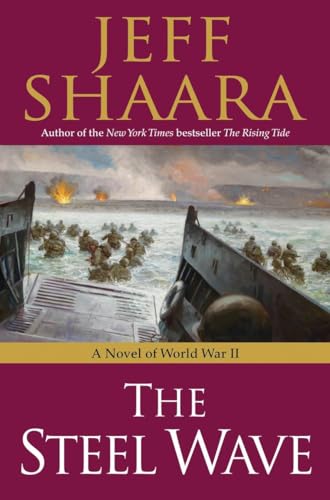
Jeff Shaara, America’s premier author of military historical fiction, brings us the centerpiece of his epic trilogy of the Second World War.
General Dwight Eisenhower once again commands a diverse army that must find its single purpose in the destruction of Hitler’s European fortress. His primary subordinates, Omar Bradley and Bernard Montgomery, must prove that this unique blend of Allied armies can successfully confront the might of Adolf Hitler’s forces, who have already conquered Western Europe. On the coast of France, German commander Erwin Rommel fortifies and prepares for the coming invasion, acutely aware that he must bring all his skills to bear on a fight his side must win. But Rommel’s greatest challenge is to strike the Allies on his front, while struggling behind the lines with the growing insanity of Adolf Hitler, who thwarts the strategies Rommel knows will succeed.
Meanwhile, Sergeant Jesse Adams, a no-nonsense veteran of the 82nd Airborne, parachutes with his men behind German lines into a chaotic and desperate struggle. And as the invasion force surges toward the beaches of Normandy, Private Tom Thorne of the 29th Infantry Division faces the horrifying prospects of fighting his way ashore on a stretch of coast more heavily defended than the Allied commanders anticipate–Omaha Beach.
From G.I. to general, this story carries the reader through the war’s most crucial juncture, the invasion that altered the flow of the war, and, ultimately, changed history.
Die Inhaltsangabe kann sich auf eine andere Ausgabe dieses Titels beziehen.
Über die Autorin bzw. den Autor
Jeff Shaara is the New York Times bestselling author of A Chain of Thunder, A Blaze of Glory, The Final Storm, No Less Than Victory, The Steel Wave, The Rising Tide, To the Last Man, The Glorious Cause, Rise to Rebellion, and Gone for Soldiers, as well as Gods and Generals and The Last Full Measure—two novels that complete the Civil War trilogy that began with his father’s Pulitzer Prize–winning classic, The Killer Angels. Shaara was born into a family of Italian immigrants in New Brunswick, New Jersey. He grew up in Tallahassee, Florida, and graduated from Florida State University. He lives in Gettysburg.
Auszug. © Genehmigter Nachdruck. Alle Rechte vorbehalten.
1. THE COMMANDO
At Sea, Bay of the Seine January 25, 1944
The air underwater was foul and wet, five men pulling against the thinning oxygen. He sat erect, his back painfully pressed against a coil of wire, part of the electrical system of the craft. She was an X-5 class midget submarine, designed to deliver a magnetic mine or similar explosive device, something to be attached to the bottom of an enemy ship. They were stealthy, of course, no blip on anyone’s radar screen, so the British navy had used them on raids all along the coastline, from Norway to the Mediterranean, usually with enormous risk to both the subs and their small crews. But tonight the sub was not armed, and where explosives had once been stored she now carried three passengers and their equipment.
He tried to stretch his back—no room—and twisted his shoulders instead, working out the kinks. The air was growing worse, thin and acrid, bitter smells of oil and wet cloth. There were no dry places in the small sub, every surface had a slick coating of oily grease or water, mostly condensation. The engine made a low hum, deadened by the steel of the bulkhead, the sub lurching slowly from side to side, held now by long low waves that rolled silently toward the beaches.
“Suit up, lads.”
The voice was low, a croak from the lieutenant. He knew the order was coming, yanked hard at his small duffel bag, and retrieved it from the tight gap beneath his feet. Inside were all the tools he would need for the mission. The first priority was unrolling the tight spool of the rubber suit, a single piece, zipped open down the front. There was little room to stand, and he fought to slide the thin rubber over his legs, working his feet downward, pushing. He slid the suit beneath his bottom, pushed his arms into the narrow sleeves, freed his fingers, gave one loud grunt, and pulled the suit up over his shoulders. The others were grunting as he was, straining in the tight space, backs and arms bent low, each man forcing himself into his taut suit. He tried to relax, leaning back against the bulkhead, and took a breath, sour air filling his mouth, took another, felt his chest heave in a futile gasp. He was sweating, worse inside the suit, and the air was growing fouler still. No matter how the air cleaners strained, they were not designed to handle the nervous breathing of five men.
He leaned forward again, pulled the zipper tight against his neck, then tugged at the headpiece, sliding it over his ears, snug, only his face revealed. He reached again into the bag, found a small tube of grease, black and oily, squeezed a thick stream onto his fingers, and rubbed it on his face, coating any part that would reflect moonlight. The duffel was nearly empty now, but he found his knife, his only weapon, and strapped it to his leg, tight and secure, then went into the bag again for a small bundle, a cloth pouch attached to a thin belt, and slid it around his waist. The man beside him gave him a nudge with his elbow.
“All set here. You all right, Dundee?”
“Yep. You tight in? Ready?”
The man slapped his hands on Dundee’s leg. “Ready as I’ll ever be.”
Dundee leaned forward, looked past, and said to the third man, “Lieutenant? You set, then?”
The lieutenant scanned both men. Dundee could see his face sweating, a dull wet mask, lit by the yellow glow from the sub’s instrument panel. Then the officer began to smear his face with the black grease.
“Don’t concern yourselves with me. My job is to worry about you. And right now I’m ready to get this little show moving.”
From the main control seat, the sub’s commander turned around toward them.
“We’ll be on the surface in half a minute. On my command, Mr. Higgins will open the hatch, and out you go. Make it quick. I’ll not chance there’s some Jerry lookout who’s good at his job. This tub won’t take pleasantly to incoming fire, and the sooner I can drop us out of sight, the better I like it.” He looked at his watch. “Orders say two hours. I’ll wait for three if I have to, but that’s it. I’m not about to sit out here and wait for the damned sun to come up. Sitting ducks, all of us. You got that?”
The lieutenant pointed at his own watch. “I know my orders, Cap- tain. We’ll be back in two hours. Don’t go off sightseeing. You’ve got a periscope—keep an eye in it. I don’t plan to tread water any more than I have to.”
“I know my tub, Lieutenant. And we’re lucky tonight. The surface is pretty smooth right now. A dicky bird swims within a hundred yards of me, I’ll spot her. You just do the swimming; I’ll see you.”
Swimming. Dundee swallowed the word silently. Most of the commando operations were launched from surface crafts, LCNs, small and rugged navigation boats. The LCNs slipped in close to shore, depositing their commandos in folbots, folding canvas boats, flimsy canoes the men would paddle hard to the beach. But there was too much tide and too much current along this stretch of the French coastline, and a folbot might swamp and drown the men before they could even reach the shore. It was a painful lesson; several men had been lost already in earlier operations. Besides being a danger to her crew, a folbot had to be hidden from German patrols, patrols that were growing vigilant. And so, tonight, they would swim.
The captain turned toward his instruments and pulled a lever, the sub tilting upward, the bow rising. Dundee pushed his hands into the narrow metal seat, his back leaning hard against the tight coils, and tried to distract himself, thought suddenly of the captain’s boast. What the hell is a dicky bird? The sub swayed, rolling to one side, then upright again, and Dundee’s stomach rolled, the stink in the air filling his head with a dull pain, now growing worse. He heard the splashing of water against the bulkheads; the sub was level again, and the captain’s lone crewman stood, his hands pressed upward against the narrow hatch, and stared forward toward his captain.
“On your order, sir.”
“Steady, Higgins. Not quite on the deck. Wait for it.”
They sat quietly, feeling the low hum of the engine and, now, silence, the captain shutting down the engine. Dundee took a long breath, tried to ignore the sickening smell, his head pounding, a quiver in his hands. He shook his head, thought, All right, Henry, hold on to yourself. They taught you this. It’s all about lack of oxygen. We’ll be out of this damned can in a few—
“Now, Higgins.”
The crewman pulled hard on a round crank: The hatch was suddenly open, cold air filling the cabin, a splash of water. The lieutenant stood, hunched over by the overhead close above him, moved toward the hatch, slapped the captain on the shoulder, said nothing. Dundee waited for the man beside him, Henley, up and moving, the well-rehearsed routine, Dundee close behind him. The air was cold and delicious; a blast against Dundee’s face and the headache had vanished. He pressed forward, following the other two toward the blessed opening, watched the lieutenant pull himself up through the hatch, now just his legs and then gone. Henley followed quickly, up and out of the way, and Dundee grabbed the edges of the hatch and pulled himself up, his head clear of the dismal space. He was outside now, in cold darkness, and he pulled his knees up between his arms, thrust out his feet, sat on the edge of the hatchway, the deck of the sub narrow and flat. The water was black and silent, long low swells. Now came the splashes, the other two already swimming, the...
„Über diesen Titel“ kann sich auf eine andere Ausgabe dieses Titels beziehen.
Suchergebnisse für The Steel Wave: A Novel of World War II

Beispielbild für diese ISBN
The Steel Wave: A Novel of World War II
Anbieter: World of Books (was SecondSale), Montgomery, IL, USA
Verkäuferbewertung 5 von 5 Sternen

Hardback. Zustand: Very Good. Jeff Shaara, America's premier author of military historical fiction, brings us the centerpiece of his epic trilogy of the Second World War. General Dwight Eisenhower once again commands a diverse army that must find its single purpose in the destruction of Hitler's European fortress. His primary subordinates, Omar Bradley and Bernard Montgomery, must prove that this unique blend of Allied armies can successfully confront the might of Adolf Hitler's forces, who have already conquered Western Europe. On the coast of France, German commander Erwin Rommel fortifies and prepares for the coming invasion, acutely aware that he must bring all his skills to bear on a fight his side must win. But Rommel's greatest challenge is to strike the Allies on his front, while struggling behind the lines with the growing insanity of Adolf Hitler, who thwarts the strategies Rommel knows will succeed. Meanwhile, Sergeant Jesse Adams, a no-nonsense veteran of the 82nd Airborne, parachutes with his men behind German lines into a chaotic and desperate struggle. And as the invasion force surges toward the beaches of Normandy, Private Tom Thorne of the 29th Infantry Division faces the horrifying prospects of fighting his way ashore on a stretch of coast more heavily defended than the Allied commanders anticipate-Omaha Beach. From G.I. to general, this story carries the reader through the war's most crucial juncture, the invasion that altered the flow of the war, and, ultimately, changed history. Artikel-Nr. 00110068587
Gebraucht kaufen
EUR 4,05
Versand gratis
Versand innerhalb von USA
Versand innerhalb von USA
Anzahl: 2 verfügbar
Beispielbild für diese ISBN
The Steel Wave: A Novel of World War II
Anbieter: World of Books (was SecondSale), Montgomery, IL, USA
Verkäuferbewertung 5 von 5 Sternen
Hardback. Zustand: Fair. Jeff Shaara, America's premier author of military historical fiction, brings us the centerpiece of his epic trilogy of the Second World War. General Dwight Eisenhower once again commands a diverse army that must find its single purpose in the destruction of Hitler's European fortress. His primary subordinates, Omar Bradley and Bernard Montgomery, must prove that this unique blend of Allied armies can successfully confront the might of Adolf Hitler's forces, who have already conquered Western Europe. On the coast of France, German commander Erwin Rommel fortifies and prepares for the coming invasion, acutely aware that he must bring all his skills to bear on a fight his side must win. But Rommel's greatest challenge is to strike the Allies on his front, while struggling behind the lines with the growing insanity of Adolf Hitler, who thwarts the strategies Rommel knows will succeed. Meanwhile, Sergeant Jesse Adams, a no-nonsense veteran of the 82nd Airborne, parachutes with his men behind German lines into a chaotic and desperate struggle. And as the invasion force surges toward the beaches of Normandy, Private Tom Thorne of the 29th Infantry Division faces the horrifying prospects of fighting his way ashore on a stretch of coast more heavily defended than the Allied commanders anticipate-Omaha Beach. From G.I. to general, this story carries the reader through the war's most crucial juncture, the invasion that altered the flow of the war, and, ultimately, changed history. Artikel-Nr. 00089886155
Gebraucht kaufen
EUR 4,05
Versand gratis
Versand innerhalb von USA
Versand innerhalb von USA
Anzahl: 5 verfügbar
Beispielbild für diese ISBN
The Steel Wave: A Novel of World War II
Anbieter: World of Books (was SecondSale), Montgomery, IL, USA
Verkäuferbewertung 5 von 5 Sternen
Hardback. Zustand: Good. Jeff Shaara, America's premier author of military historical fiction, brings us the centerpiece of his epic trilogy of the Second World War. General Dwight Eisenhower once again commands a diverse army that must find its single purpose in the destruction of Hitler's European fortress. His primary subordinates, Omar Bradley and Bernard Montgomery, must prove that this unique blend of Allied armies can successfully confront the might of Adolf Hitler's forces, who have already conquered Western Europe. On the coast of France, German commander Erwin Rommel fortifies and prepares for the coming invasion, acutely aware that he must bring all his skills to bear on a fight his side must win. But Rommel's greatest challenge is to strike the Allies on his front, while struggling behind the lines with the growing insanity of Adolf Hitler, who thwarts the strategies Rommel knows will succeed. Meanwhile, Sergeant Jesse Adams, a no-nonsense veteran of the 82nd Airborne, parachutes with his men behind German lines into a chaotic and desperate struggle. And as the invasion force surges toward the beaches of Normandy, Private Tom Thorne of the 29th Infantry Division faces the horrifying prospects of fighting his way ashore on a stretch of coast more heavily defended than the Allied commanders anticipate-Omaha Beach. From G.I. to general, this story carries the reader through the war's most crucial juncture, the invasion that altered the flow of the war, and, ultimately, changed history. Artikel-Nr. 00104740444
Gebraucht kaufen
EUR 4,05
Versand gratis
Versand innerhalb von USA
Versand innerhalb von USA
Anzahl: 18 verfügbar
Beispielbild für diese ISBN
The Steel Wave: A Novel of World War II
Anbieter: ThriftBooks-Phoenix, Phoenix, AZ, USA
Verkäuferbewertung 5 von 5 Sternen
Hardcover. Zustand: As New. No Jacket. Pages are clean and are not marred by notes or folds of any kind. ~ ThriftBooks: Read More, Spend Less. Artikel-Nr. G0345461428I2N00
Gebraucht kaufen
EUR 5,96
Versand gratis
Versand innerhalb von USA
Versand innerhalb von USA
Anzahl: 1 verfügbar
Beispielbild für diese ISBN
The Steel Wave: A Novel of World War II
Anbieter: ThriftBooks-Dallas, Dallas, TX, USA
Verkäuferbewertung 5 von 5 Sternen
Hardcover. Zustand: Very Good. No Jacket. Former library book; May have limited writing in cover pages. Pages are unmarked. ~ ThriftBooks: Read More, Spend Less. Artikel-Nr. G0345461428I4N10
Gebraucht kaufen
EUR 5,96
Versand gratis
Versand innerhalb von USA
Versand innerhalb von USA
Anzahl: 2 verfügbar
Beispielbild für diese ISBN
The Steel Wave: A Novel of World War II
Anbieter: ThriftBooks-Atlanta, AUSTELL, GA, USA
Verkäuferbewertung 5 von 5 Sternen
Hardcover. Zustand: Very Good. No Jacket. Former library book; May have limited writing in cover pages. Pages are unmarked. ~ ThriftBooks: Read More, Spend Less. Artikel-Nr. G0345461428I4N10
Gebraucht kaufen
EUR 5,96
Versand gratis
Versand innerhalb von USA
Versand innerhalb von USA
Anzahl: 1 verfügbar
Beispielbild für diese ISBN
The Steel Wave: A Novel of World War II
Anbieter: ThriftBooks-Reno, Reno, NV, USA
Verkäuferbewertung 5 von 5 Sternen
Hardcover. Zustand: Very Good. No Jacket. Former library book; May have limited writing in cover pages. Pages are unmarked. ~ ThriftBooks: Read More, Spend Less. Artikel-Nr. G0345461428I4N10
Gebraucht kaufen
EUR 5,96
Versand gratis
Versand innerhalb von USA
Versand innerhalb von USA
Anzahl: 1 verfügbar
Beispielbild für diese ISBN
The Steel Wave: A Novel of World War II
Anbieter: ThriftBooks-Atlanta, AUSTELL, GA, USA
Verkäuferbewertung 5 von 5 Sternen
Hardcover. Zustand: Very Good. No Jacket. May have limited writing in cover pages. Pages are unmarked. ~ ThriftBooks: Read More, Spend Less. Artikel-Nr. G0345461428I4N00
Gebraucht kaufen
EUR 5,96
Versand gratis
Versand innerhalb von USA
Versand innerhalb von USA
Anzahl: 1 verfügbar
Beispielbild für diese ISBN
The Steel Wave: A Novel of World War II
Anbieter: ThriftBooks-Phoenix, Phoenix, AZ, USA
Verkäuferbewertung 5 von 5 Sternen
Hardcover. Zustand: Very Good. No Jacket. Missing dust jacket; May have limited writing in cover pages. Pages are unmarked. ~ ThriftBooks: Read More, Spend Less. Artikel-Nr. G0345461428I4N01
Gebraucht kaufen
EUR 5,96
Versand gratis
Versand innerhalb von USA
Versand innerhalb von USA
Anzahl: 1 verfügbar
Beispielbild für diese ISBN
The Steel Wave: A Novel of World War II
Anbieter: ThriftBooks-Dallas, Dallas, TX, USA
Verkäuferbewertung 5 von 5 Sternen
Hardcover. Zustand: Very Good. No Jacket. May have limited writing in cover pages. Pages are unmarked. ~ ThriftBooks: Read More, Spend Less. Artikel-Nr. G0345461428I4N00
Gebraucht kaufen
EUR 5,96
Versand gratis
Versand innerhalb von USA
Versand innerhalb von USA
Anzahl: 1 verfügbar