
Verwandte Artikel zu Teens Under the Influence: The Truth About Kids, Alcohol,...
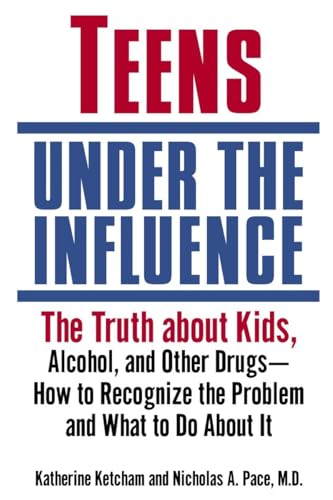
Teens Under the Influence: The Truth About Kids, Alcohol, and Other Drugs- How to Recognize the Problem and What to Do About It - Softcover
Inhaltsangabe
Across the United States, in small towns and major cities, in suburbs and slums, in public and private schools, thousands of kids are experimenting with drugs. Many of them will become addicts; some will die. The first and only book to focus entirely on adolescent alcohol and other drug use, Teens Under the Influence addresses the immediate dangers that threaten these kids—exploring the short- and long-term effects of their addiction and giving parents solid, sensitive, practical advice to combat this growing epidemic.
Knowledge is the key to defeating drug addictions, and that is what this comprehensive, timely new book provides. Full of candid true stories from adolescent drug users, with facts based on the most recent scientific research, Teens Under the Influence tells you exactly what you need to know to deal with your child’s problem, covering such important topics as
• The common myths and misconceptions about drug addiction
• The crucial differences between adult and adolescent dependency
• The reasons kids get hooked
• The stages of adolescent addiction
• The different kinds of drugs kids use and combine
• Various treatment options and how to choose the best treatment for your child
• Strategies for handling relapses
Teens Under the Influence offers practical help that may save your child’s life. It may save the life of a friend. And it may save your own.
Die Inhaltsangabe kann sich auf eine andere Ausgabe dieses Titels beziehen.
Über die Autorin bzw. den Autor
Katherine Ketcham has been writing nonfiction books for forty years. Her work has been published in sixteen foreign languages and has sold nearly one million copies. She founded and serves on the board of a grassroots nonprofit organization called Trilogy Recovery Community, which helps youth and their family members dealing with alcohol and other drug problems. Ketcham lives in Walla Walla, Washington.
Nicholas A. Pace, MD, is the author of Guidelines to Safe Drinking and the co-author of Teens Under the Influence. An associate professor of medicine at New York University’s School of Medicine, a life member of the board of directors of the National Council on Alcoholism and Drug Dependence, and a fellow of the American Society of Addiction Medicine, he was an advisor to President Ford’s White House physician and assisted First Lady Nancy Reagan with the Chemical People Project. He lives in Westchester County, New York, and maintains a private practice in New York City.
Von der hinteren Coverseite
Across the United States, in small towns and major cities, in suburbs and slums, in public and private schools, thousands of kids are experimenting with drugs. Many of them will become addicts; some will die. The first and only book to focus entirely on adolescent alcohol and other drug use," Teens Under the Influence addresses the immediate dangers that threaten these kids--exploring the short- and long-term effects of their addiction and giving parents solid, sensitive, practical advice to combat this growing epidemic.
Knowledge is the key to defeating drug addictions, and that is what this comprehensive, timely new book provides. Full of candid true stories from adolescent drug users, with facts based on the most recent scientific research, "Teens "Under the Influence tells you exactly what you need to know to deal with your child's problem, covering such important topics as
- The common myths and misconceptions about drug addiction
- The crucial differences between adult and adolescent dependency
- The reasons kids get hooked
- The stages of adolescent addiction
- The different kinds of drugs kids use and combine
- Various treatment options and how to choose the best treatment for your child
- Strategies for handling relapses
"Teens Under the Influence offers practical help that may save your child's life. It may save the life of a friend. And it may save your own.
Aus dem Klappentext
Across the United States, in small towns and major cities, in suburbs and slums, in public and private schools, thousands of kids are experimenting with drugs. Many of them will become addicts; some will die. The first and only book to focus entirely on adolescent alcohol and other drug use, Teens Under the Influence addresses the immediate dangers that threaten these kids exploring the short- and long-term effects of their addiction and giving parents solid, sensitive, practical advice to combat this growing epidemic.
Knowledge is the key to defeating drug addictions, and that is what this comprehensive, timely new book provides. Full of candid true stories from adolescent drug users, with facts based on the most recent scientific research, Teens Under the Influence tells you exactly what you need to know to deal with your child s problem, covering such important topics as
The common myths and misconceptions about drug addiction
The crucial differences between adult and adolescent dependency
The reasons kids get hooked
The stages of adolescent addiction
The different kinds of drugs kids use and combine
Various treatment options and how to choose the best treatment for your child
Strategies for handling relapses
Teens Under the Influence offers practical help that may save your child s life. It may save the life of a friend. And it may save your own.
Auszug. © Genehmigter Nachdruck. Alle Rechte vorbehalten.
PART ONE
Why Kids Get Hooked
Fighting the stigma of alcohol and drug problems in youth presents us with a real challenge because there are really two pervasive stigmas—abusing alcohol and other drugs and being an adolescent.
Coupled with the stigma is our imperfect understanding of the reasons and mechanisms that lead to these problems. Substance-use disorders are truly complex and involve an interaction of biological and environmental forces. When we add in the influence of the family, peers, boredom, the natural risk-taking of adolescents, serious co-occurring emotional and behavioral disorders, and the sheer availability of alcohol and other drugs, we’ve clearly got a complicated situation on our hands.
On the other hand, this very complexity gives us more choices for early intervention and treatment tailored specifically to the individual adolescent’s needs, and these innovative methods are showing more and more promise.
A seven-year-old friend of mine named Chandler put it best: “Kids need Health.”
—David Lewis, M.D., Professor of Medicine and Community Health, Donald G. Millar Distinguished Professor of Alcohol and Addiction Studies at Brown University, and project director of the Physician Leadership on National Drug Policy
1.
The Road Less Traveled
The only good is knowledge, and the only evil is ignorance
—Socrates
The beginning of knowledge is the discovery of something we do not understand.
—Frank Herbert
Thomas is a tall, good-looking kid with a winning smile and a cocky attitude. Intelligent and articulate, he seems much older than his sixteen years.
In the last four years, Thomas has been arrested eleven times for assault, malicious mischief, reckless endangerment, minor-in-possession and minor-in-consumption charges, and various probation violations. This time he’s locked up in the Juvenile Justice Detention Center for thirty days; it’s the fourth time he’s been in detention in the last seven months.
Thomas knows he has a problem with alcohol, but he isn’t worried. He thinks he can quit whenever he wants.
“I just don’t want to,” he says with a confident smile. “Alcohol makes me feel good, you know, happy, crazy, full of myself. It gives me liquid courage—I feel like I can be and do anything.”
He drinks, he says, for all sorts of reasons—to get high, to get numb, to get crazy with his friends, to forget about his troubles, to feel good, to feel better. “I don’t always like myself when I’m sober,” he admits, the cocky attitude disappearing for a moment. “But after a few six-packs, I feel much better about myself.”
On what Thomas calls a “normal” night, he’ll drink three forties (120 ounces of beer). On a party night, he’ll drink a case of beer or more.
When he drinks, he does stupid things. He drives drunk, or he gets into cars with other drunk drivers. He has sex with girls he doesn’t know and doesn’t care about.
He doesn’t use condoms when he’s drunk because they’re “too much trouble.” He steals money and possessions from his friends and neighbors or he sells his own CDs, clothes, or PlayStation games to get money to buy more beer.
He gets belligerent when he drinks and often gets into fights with his friends or with strangers. “I get angry and aggressive,” he admits. “People tell me I get ‘that stupid look.’ That’s when I start arguing and fighting with everyone, even with my best friends.
“I think I’m so tough, you know,” he adds with a sideways grin.
Thomas has blackouts (“lots of them”) when he doesn’t remember a single detail of the night before. He’s frightened by the fact that he feels like he’s in control when he’s drinking but says and does things that show he’s out of control. He’s afraid he’ll kill himself or someone else in a car wreck, get sent away to an institution, get a girl pregnant, or get AIDS from having unprotected sex.
But worse than the fear is the guilt and the shame.
“I feel ashamed because of the people I’ve hurt and the stupid things I’ve done and the way I’ve let my family down. I’m the outcast of the family. They don’t trust me anymore,” he admits.
Thomas is quiet for a few moments. “I thought loving someone meant that you forgive them and trust them, but maybe I’ve broken my parents’ trust so often that they just can’t believe me anymore. It’s hard to live with yourself when you feel like you’re letting everyone down, like you’re a failure in everything you do. You know what I mean?”
* * *
Thomas is a troubled adolescent who uses drugs to have fun, to loosen his inhibitions, and to ease his emotional pain.
He is also an alcoholic. The signs and symptoms point to an early-stage addiction. First, there’s the genetic evidence. Thomas’s father is an alcoholic who has been in and out of treatment several times. Both his brother and his sister have a history of alcohol problems.
While Thomas’s family history of alcoholism puts him at risk—scientific research conclusively shows that alcoholism is a genetically influenced disease—his drinking patterns also point to an early-stage addiction. He loves to drink (“I feel like I’m on top of the world after a few beers”), and he drinks whenever he has the opportunity. As hard as he tries, he can’t stop after four or five beers—he keeps drinking until he gets drunk. He has a high tolerance for alcohol, putting away a case of beer or more in one evening. Always the life of the party, he’s the person others turn to when everyone else is too drunk to drive.
Preoccupation with alcohol, continued drinking despite the desire to quit or cut down, and high tolerance are all early-stage symptoms of alcoholism. The symptoms are so subtle and seem so harmless, however, that they escape almost everyone’s notice. “What’s the big deal?” Thomas asks. “All my friends love to drink, none of them want to quit, and almost all of them have a high tolerance.”
His parents admit that Thomas has problems, but they do not believe he is “addicted.” His father refuses to acknowledge his own alcoholism, insisting that he isn’t anything like “those bums who have no morals and no self-control.” Both his mother and father think that Thomas drinks because he’s a risk-taking adolescent with numerous behavioral, psychological, and social problems. They don’t realize that Thomas’s drinking is the primary cause of most of his problems.
After all, they reason, he could quit if he really wanted to, he doesn’t drink all the time, he goes to school, and he gets decent grades. He’s a good kid, down deep, they say, and he’s trying hard to get his act together. He just has to work through his problems, get through the challenges of adolescence, and eventually he’ll grow up, learn how to drink responsibly, and turn his life around.
Professionals (mental health counselors, educators, probation officers, doctors, clergy members) also focus exclusively on Thomas’s emotional and behavioral problems, insisting that he needs to learn how to control his impulses and take responsibility for his actions. They believe his excessive drinking is merely a response to his multiple life problems, and that once these problems are addressed, he will be able to moderate his...
„Über diesen Titel“ kann sich auf eine andere Ausgabe dieses Titels beziehen.
Suchergebnisse für Teens Under the Influence: The Truth About Kids, Alcohol,...

Beispielbild für diese ISBN
Teens Under the Influence The
Verlag:
Random House Publishing Group, 2003
ISBN 10: 034545734X
ISBN 13: 9780345457349
Gebraucht
Softcover
Anbieter: World of Books (was SecondSale), Montgomery, IL, USA
Verkäuferbewertung 5 von 5 Sternen

Zustand: Very Good. Item in very good condition! Textbooks may not include supplemental items i.e. CDs, access codes etc. Artikel-Nr. 00100949926
Gebraucht kaufen
EUR 4,05
Versand gratis
Versand innerhalb von USA
Versand innerhalb von USA
Anzahl: 2 verfügbar
Beispielbild für diese ISBN
Teens Under the Influence: The Truth About Kids, Alcohol, and Other Drugs- How to Recognize the Problem and What to Do About It
Verlag:
Random House Publishing Group (edition 1), 2003
ISBN 10: 034545734X
ISBN 13: 9780345457349
Gebraucht
Paperback
Anbieter: BooksRun, Philadelphia, PA, USA
Verkäuferbewertung 5 von 5 Sternen
Paperback. Zustand: Very Good. 1. It's a well-cared-for item that has seen limited use. The item may show minor signs of wear. All the text is legible, with all pages included. It may have slight markings and/or highlighting. Artikel-Nr. 034545734X-11-1
Gebraucht kaufen
EUR 4,36
Versand gratis
Versand innerhalb von USA
Versand innerhalb von USA
Anzahl: 1 verfügbar
Beispielbild für diese ISBN
Teens Under the Influence: The Truth About Kids, Alcohol, and Other Drugs- How to Recognize the Problem and What to Do About It
Verlag:
Random House Publishing Group, 2003
ISBN 10: 034545734X
ISBN 13: 9780345457349
Gebraucht
Paperback
Anbieter: ThriftBooks-Atlanta, AUSTELL, GA, USA
Verkäuferbewertung 5 von 5 Sternen
Paperback. Zustand: Good. No Jacket. Pages can have notes/highlighting. Spine may show signs of wear. ~ ThriftBooks: Read More, Spend Less. Artikel-Nr. G034545734XI3N00
Gebraucht kaufen
EUR 5,96
Versand gratis
Versand innerhalb von USA
Versand innerhalb von USA
Anzahl: 1 verfügbar
Beispielbild für diese ISBN
Teens under the Influence : The Truth about Kids, Alcohol, and Other Drugs- How to Recognize the Problem and What to Do about It
Verlag:
Random House Publishing Group, 2003
ISBN 10: 034545734X
ISBN 13: 9780345457349
Gebraucht
Softcover
Anbieter: Better World Books, Mishawaka, IN, USA
Verkäuferbewertung 5 von 5 Sternen
Zustand: Good. Former library copy. Pages intact with minimal writing/highlighting. The binding may be loose and creased. Dust jackets/supplements are not included. Includes library markings. Stock photo provided. Product includes identifying sticker. Better World Books: Buy Books. Do Good. Artikel-Nr. GRP69260026
Gebraucht kaufen
EUR 6,19
Versand gratis
Versand innerhalb von USA
Versand innerhalb von USA
Anzahl: 2 verfügbar
Beispielbild für diese ISBN
Teens Under the Influence: The Truth About Kids, Alcohol, and Other Drugs- How to Recognize the Problem and What to Do About It
Verlag:
Random House Publishing Group, 2003
ISBN 10: 034545734X
ISBN 13: 9780345457349
Gebraucht
Softcover
Anbieter: Wonder Book, Frederick, MD, USA
Verkäuferbewertung 5 von 5 Sternen
Zustand: Good. Good condition. A copy that has been read but remains intact. May contain markings such as bookplates, stamps, limited notes and highlighting, or a few light stains. Artikel-Nr. X01H-00553
Gebraucht kaufen
EUR 6,43
Versand gratis
Versand innerhalb von USA
Versand innerhalb von USA
Anzahl: 1 verfügbar
Beispielbild für diese ISBN
Teens Under the Influence: The Truth About Kids, Alcohol, and Other Drugs- How to Recognize the Problem and What to Do About It
Verlag:
Random House Publishing Group, 2003
ISBN 10: 034545734X
ISBN 13: 9780345457349
Gebraucht
Paperback
Anbieter: WorldofBooks, Goring-By-Sea, WS, Vereinigtes Königreich
Verkäuferbewertung 5 von 5 Sternen
Paperback. Zustand: Very Good. The book has been read, but is in excellent condition. Pages are intact and not marred by notes or highlighting. The spine remains undamaged. Artikel-Nr. GOR002136637
Gebraucht kaufen
EUR 7,85
EUR 6,61 Versand
Versand von Vereinigtes Königreich nach USA
Versand von Vereinigtes Königreich nach USA
Anzahl: 1 verfügbar
Beispielbild für diese ISBN
Teens Under the Influence: The Truth About Kids, Alcohol, and Other Drugs - How to Recognize the Problem and What to Do About It
Anbieter: Revaluation Books, Exeter, Vereinigtes Königreich
Verkäuferbewertung 5 von 5 Sternen
Paperback. Zustand: Brand New. 1st edition. 414 pages. 8.50x5.50x1.00 inches. In Stock. Artikel-Nr. x-034545734X
Neu kaufen
EUR 25,61
EUR 11,80 Versand
Versand von Vereinigtes Königreich nach USA
Versand von Vereinigtes Königreich nach USA
Anzahl: 2 verfügbar
Beispielbild für diese ISBN
Teens Under the Influence
Anbieter: Majestic Books, Hounslow, Vereinigtes Königreich
Verkäuferbewertung 4 von 5 Sternen

Zustand: New. pp. xvi + 414. Artikel-Nr. 8166257
Neu kaufen
EUR 35,83
EUR 7,67 Versand
Versand von Vereinigtes Königreich nach USA
Versand von Vereinigtes Königreich nach USA
Anzahl: 1 verfügbar