
Verwandte Artikel zu The Forensic Casebook: The Science of Crime Scene Investigat...
Inhaltsangabe
THE ULTIMATE READERS’ GUIDE TO THE ART OF FORENSICS!
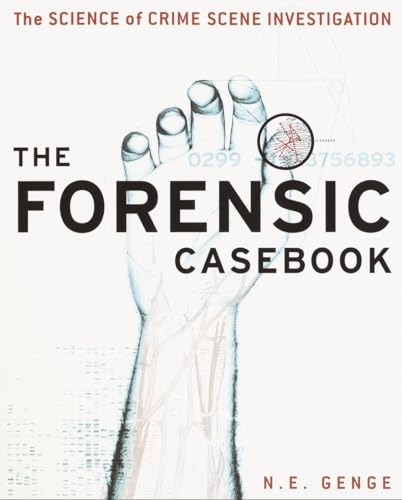
An intrepid investigator crawls through miles of air conditioning ducts to capture the implicating fibers of a suspect’s wool jacket . . . A forensic entomologist discovers insects in the grill of a car and nails down a drug dealer’s precise geographical path . . . A gluttonous criminal’s fingerprints are lifted from a chocolate truffle. . . .
Filled with these and many other intriguing true stories, and packed with black and white illustrations and photographs, The Forensic Casebook draws on interviews with police personnel and forensic scientists—including animal examiners, botanists, zoologists, firearms specialists, and autoposists—to uncover the vast and detailed underworkings of criminal investigation. Encyclopedic in scope, this riveting, authoritative book leaves no aspect of forensic science untouched, covering such fascinating topics as:
• Securing a crime scene
• Identifying blood splatter patterns
• Collecting fingerprints—and feet, lip, and ear prints
• Interpreting the stages of a body’s decay
• Examining hair and fiber evidence
• Trace evidence from firearms and explosives
• “Lifting” DNA prints
• Computer crime and forensic photography
• Career paths in criminal science
Lucidly written and spiked with real crime stories, The Forensic Casebook exposes the nitty gritty that other books only touch upon. Here is a reference book as addictive as a page-turning novel of suspense.
Die Inhaltsangabe kann sich auf eine andere Ausgabe dieses Titels beziehen.
Über die Autorin bzw. den Autor
Ngaire E. Genge is the author of numerous books, including Beyond Blair Witch, Urban Legends, The Buffy Chronicles, and The Unofficial X-Files Companion. She lives in Labrador City, Newfoundland.
Von der hinteren Coverseite
THE ULTIMATE READERS' GUIDE TO THE ART OF FORENSICS!
"An intrepid investigator crawls through miles of air conditioning ducts to capture the implicating fibers of a suspect's wool jacket . . . A forensic entomologist discovers insects in the grill of a car and nails down a drug dealer's precise geographical path . . . A gluttonous criminal's fingerprints are lifted from a chocolate truffle. . . .
Filled with these and many other intriguing true stories, and packed with black and white illustrations and photographs, "The Forensic Casebook draws on interviews with police personnel and forensic scientists--including animal examiners, botanists, zoologists, firearms specialists, and autoposists--to uncover the vast and detailed underworkings of criminal investigation. Encyclopedic in scope, this riveting, authoritative book leaves no aspect of forensic science untouched, covering such fascinating topics as:
- Securing a crime scene
- Identifying blood splatter patterns
- Collecting fingerprints--"and feet, lip, and ear prints
- Interpreting the stages of a body's decay
- Examining hair and fiber evidence
- Trace evidence from firearms and explosives
- "Lifting" DNA prints
- Computer crime and forensic photography
- Career paths in criminal science
Lucidly written and spiked with real crime stories, "The Forensic Casebook exposes the nitty gritty that other books only touch upon. Here is a reference book as addictive as a page-turning novel of suspense.
Auszug. © Genehmigter Nachdruck. Alle Rechte vorbehalten.
THE SCENE OF THE CRIME
The Scene of the Crime Versus the Crime Scene
For novelists like Agatha Christie, the scene of the crime was obvious—a blood-splattered drawing room or the gaping wall safe in a society grand dame’s bedroom. Modern law enforcement officers, criminalists, forensic scientists, and even the often maligned private investigators, however, have quite different definitions.
The “scene of the crime� might be a room, an entire building, a wharf and surrounding harbor, the three-mile path of a disintegrating airplane, or just the keypad and receiver of a public phone booth. However, the actual “crime scene,� to use the language of forensic investigation, often bears little resemblance to the physical layout visible at the scene. And, surprisingly to most, the size of the scene often has little relation to the time required to work it. For example, a phone booth regularly used by a stalker in Kingston, Australia, required eight technicians working for three full days. The first crash scene David Kellerman of the Aeronautics Investigative Unit ever worked required dozens during the rescue phase, but the actual forensic investigation—due in large part to the first responder’s swift creation of a single access path for rescuers, as well as to the presence of snow (which helped in locating loose debris some distance from the crash)—took a mere nine investigators less than two days to complete.
Of course, the physical size of the crime scene bears no relation whatsoever to the number of individuals, either suspects or witnesses involved, and, as collecting statements is as much a part of “working� the crime scene as swabbing blood stains, scene size can be quite deceptive.
A nylon bag, measuring less than a foot square and four inches thick and containing nothing more than a laptop and modem, was the only physical evidence of a conspiracy involving hundreds of people and millions of dollars in a penny-stock scam. At the other extreme, the bombing of the Alfred P. Murrah Building in Oklahoma City was ultimately attributable to only a handful of people. The number of witness statements required during these investigations, however, was virtually identical.
The tiny computer bag, every bit as much a crime scene as the rubble of the Murrah Building, presented investigators with specialized problems not found at scenes requiring miles of yellow tape. The bag was mobile, its contents were subject to destruction by the simple wave of a magnet or flip of a switch, and the computer inside was the actual property of any number of suspects. The scene in Oklahoma, while horrific in its loss of life, couldn’t be slipped into a pocket and hidden away from analysts.
A “crime scene� isn’t only the actual location of the crime—it is also the staging and planning areas, the paths of flight to and from the primary scene, and the paths between the primary and secondary scenes. Consequently, the total crime scene for a twenty-first-century offense might prove international and include dozens of physical locations and individuals, thousands of exhibits, and nearly as many witness statements.
As I prepare this manuscript, the investigation into the September 11 attacks on the Pentagon and World Trade Center and the crash in Pennsylvania, is just swinging into high gear. Already the FBI is reporting nearly 7,000 investigators and support personnel following up “35,0001 leads� and looking into “numerous international possibilities.� Cars at several airports, apartments and hotels in places as far apart as Boston, Massachusetts, and Vero Beach, Florida, are just a few of the secondary scenes being secured. Electronic scenes also could contain vital information, but such evidence could be as difficult to collect as an impression of a shoe in the snow of a sunny field.
Scenes like the Pentagon and the World Trade Center are obviously, and thankfully, the exception. But the far-reaching scope and the need to coordinate rescue efforts with forensic investigation—all while maintaining a secure scene in which the lives of investigators and emergency staff aren’t further endangered—makes these cases well-documented examples of the difficulties that law enforcement personnel face, even if it is usually on a smaller scale.
Crime happens everywhere, and determining what territory, items, and persons make up the “crime scene� isn’t always easy. Constantly confronted with the dangerous or unexpected, investigators juggle a number of imperatives in their efforts to turn the “scene of the crime� into a secured “crime scene.� But, in the vast majority of cases, this is the first decision to be made in a criminal investigation, and it is often made by the first responder to the scene—not a criminalist. A mistake made at this stage can end any chance of solving the crime, let alone prosecuting the offenders.
Both the film version and the book version of Anna Porter’s The Bookfair Murders begin with the crime scene investigator’s worst nightmare: a murder accomplished in the middle of 300 witnesses—300 potential suspects—all of whom are due to scatter to numerous countries outside the local detective’s jurisdiction in three days if the investigation doesn’t generate enough evidence to book someone. On top of that, the Frankfurt Bookfair is a four-day event, with conference rooms and booths set up in temporary quarters through which thousands of people tramp each and every day of the show.
As the collection of evidence at the crime scene includes the names and contact information—and, hopefully, statements—of everyone present, the detective on this case could have spent the entirety of those four days doing little more than arranging interviews!
Protecting the Scene: The First Responder
The first person on the scene is immediately confronted with a number of considerations: victims who may be in need of immediate attention, witnesses ready to melt away at the first opportunity, the possibility of further criminal activity, the responsibility of preserving whatever evidence might be remaining and securing a crime scene while maintaining safe corridors for emergency personnel. This person must weigh all these needs and make immediate decisions based on the situation. And every situation is, in some way, unique.
Imagine arriving at a subway platform at 8:30 a.m. to find the victim still on the tracks, an injured passerby sitting on his briefcase, hundreds of people spilling through the scene, and a dozen points of possible egress for the perpetrator. Where, in that milling mess, does the yellow tape belong? Who else should be called in, and in what order should they be called? Is it even possible to secure this scene?
Fortunately, while each scene includes elements that could trip up an investigator, the experience of hundreds of others has provided a rough outline for what must be accomplished, as well as the order in which these tasks should be done. Faced with an overwhelming situation, the first responder can operate on autopilot while impressions sink in and decisions are made.
The Responsibilities of the First Responder
Observe and Establish the Likely Parameters of the Crime...
„Über diesen Titel“ kann sich auf eine andere Ausgabe dieses Titels beziehen.
Suchergebnisse für The Forensic Casebook: The Science of Crime Scene Investigat...

Beispielbild für diese ISBN
The Forensic Casebook: The Sci
Anbieter: World of Books (was SecondSale), Montgomery, IL, USA
Verkäuferbewertung 5 von 5 Sternen

Zustand: Good. Item in good condition. Textbooks may not include supplemental items i.e. CDs, access codes etc. Artikel-Nr. 00107841442
Gebraucht kaufen
EUR 3,90
Versand gratis
Versand innerhalb von USA
Versand innerhalb von USA
Anzahl: 8 verfügbar
Beispielbild für diese ISBN
The Forensic Casebook: The Sci
Anbieter: World of Books (was SecondSale), Montgomery, IL, USA
Verkäuferbewertung 5 von 5 Sternen
Zustand: Acceptable. Item in acceptable condition! Textbooks may not include supplemental items i.e. CDs, access codes etc. Artikel-Nr. 00095302958
Gebraucht kaufen
EUR 3,90
Versand gratis
Versand innerhalb von USA
Versand innerhalb von USA
Anzahl: 3 verfügbar
Beispielbild für diese ISBN
The Forensic Casebook: The Sci
Anbieter: World of Books (was SecondSale), Montgomery, IL, USA
Verkäuferbewertung 5 von 5 Sternen
Zustand: Very Good. Item in very good condition! Textbooks may not include supplemental items i.e. CDs, access codes etc. Artikel-Nr. 00106384676
Gebraucht kaufen
EUR 3,90
Versand gratis
Versand innerhalb von USA
Versand innerhalb von USA
Anzahl: 6 verfügbar
Beispielbild für diese ISBN
The Forensic Casebook: The Science of Crime Scene Investigation
Anbieter: ThriftBooks-Atlanta, AUSTELL, GA, USA
Verkäuferbewertung 5 von 5 Sternen
Paperback. Zustand: Fair. No Jacket. Readable copy. Pages may have considerable notes/highlighting. ~ ThriftBooks: Read More, Spend Less. Artikel-Nr. G0345452038I5N00
Gebraucht kaufen
EUR 5,76
Versand gratis
Versand innerhalb von USA
Versand innerhalb von USA
Anzahl: 2 verfügbar
Beispielbild für diese ISBN
The Forensic Casebook: The Science of Crime Scene Investigation
Anbieter: ThriftBooks-Reno, Reno, NV, USA
Verkäuferbewertung 5 von 5 Sternen
Paperback. Zustand: Fair. No Jacket. Readable copy. Pages may have considerable notes/highlighting. ~ ThriftBooks: Read More, Spend Less. Artikel-Nr. G0345452038I5N00
Gebraucht kaufen
EUR 5,81
Versand gratis
Versand innerhalb von USA
Versand innerhalb von USA
Anzahl: 2 verfügbar
Beispielbild für diese ISBN
The Forensic Casebook: The Science of Crime Scene Investigation
Anbieter: ThriftBooks-Phoenix, Phoenix, AZ, USA
Verkäuferbewertung 5 von 5 Sternen
Paperback. Zustand: Fair. No Jacket. Readable copy. Pages may have considerable notes/highlighting. ~ ThriftBooks: Read More, Spend Less. Artikel-Nr. G0345452038I5N00
Gebraucht kaufen
EUR 5,81
Versand gratis
Versand innerhalb von USA
Versand innerhalb von USA
Anzahl: 1 verfügbar
Beispielbild für diese ISBN
The Forensic Casebook: The Science of Crime Scene Investigation
Anbieter: ThriftBooks-Reno, Reno, NV, USA
Verkäuferbewertung 5 von 5 Sternen
Paperback. Zustand: Good. No Jacket. Pages can have notes/highlighting. Spine may show signs of wear. ~ ThriftBooks: Read More, Spend Less. Artikel-Nr. G0345452038I3N00
Gebraucht kaufen
EUR 5,81
Versand gratis
Versand innerhalb von USA
Versand innerhalb von USA
Anzahl: 1 verfügbar
Beispielbild für diese ISBN
The Forensic Casebook: The Science of Crime Scene Investigation
Anbieter: ThriftBooks-Dallas, Dallas, TX, USA
Verkäuferbewertung 5 von 5 Sternen
Paperback. Zustand: Fair. No Jacket. Readable copy. Pages may have considerable notes/highlighting. ~ ThriftBooks: Read More, Spend Less. Artikel-Nr. G0345452038I5N00
Gebraucht kaufen
EUR 5,84
Versand gratis
Versand innerhalb von USA
Versand innerhalb von USA
Anzahl: 2 verfügbar
Beispielbild für diese ISBN
The Forensic Casebook: The Science of Crime Scene Investigation
Anbieter: ThriftBooks-Dallas, Dallas, TX, USA
Verkäuferbewertung 5 von 5 Sternen
Paperback. Zustand: Good. No Jacket. Former library book; Pages can have notes/highlighting. Spine may show signs of wear. ~ ThriftBooks: Read More, Spend Less. Artikel-Nr. G0345452038I3N10
Gebraucht kaufen
EUR 5,84
Versand gratis
Versand innerhalb von USA
Versand innerhalb von USA
Anzahl: 1 verfügbar
Beispielbild für diese ISBN
The Forensic Casebook: The Science of Crime Scene Investigation
Anbieter: ThriftBooks-Dallas, Dallas, TX, USA
Verkäuferbewertung 5 von 5 Sternen
Paperback. Zustand: Very Good. No Jacket. May have limited writing in cover pages. Pages are unmarked. ~ ThriftBooks: Read More, Spend Less. Artikel-Nr. G0345452038I4N00
Gebraucht kaufen
EUR 5,84
Versand gratis
Versand innerhalb von USA
Versand innerhalb von USA
Anzahl: 1 verfügbar