
Verwandte Artikel zu Discretion
Inhaltsangabe
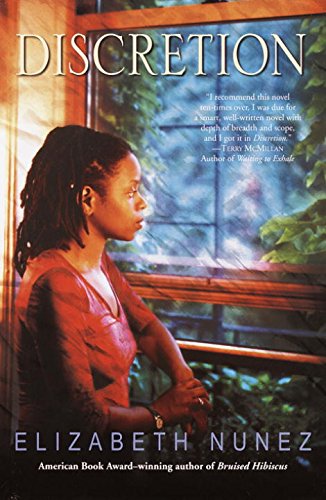
For twenty years, Oufoula shares a secret love for a woman named Marguerite, despite a two decade separation and Oufoula's marriage to another woman, until the two lovers are reunitied by the breakup of Marguerite's marriage and the murders of Oufoula's son and daughter. 20,000 first printing.
Die Inhaltsangabe kann sich auf eine andere Ausgabe dieses Titels beziehen.
Über die Autorin bzw. den Autor
Elizabeth Nunez is the author of four novels, including Bruised Hibiscus, winner of an American Book Award. She lives in Amityville, New York.
Aus dem Klappentext
n Book Award-winning author Elizabeth Nunez, a powerful novel that explores an intricate lovers triangle, the human thirst for passion, and the myriad ways desire can betray those who have fallen under its spell.
Descended from warriors and raised by missionaries, Oufoula is a diplomat whose wealth and charm make him both publicly admired and envied. From a tragic childhood he emerged a man who leads a disciplined life of respect, married to Nerida, a woman he did not want to deceive. But the beautiful Marguerite, a Jamaican-born artist living in New York, makes him question what ideals he can live by, and which values he can betray.
For twenty years, Oufoula has carried a secret in his heart, a secret of his love for Marguerite. Though they have been separated for two decades by Marguerite s call for propriety, Oufoula refuses to let his desire wane. When the lovers are at last reunited, the rekindling of their passion forces Oufoula to come to terms with the c
Auszug. © Genehmigter Nachdruck. Alle Rechte vorbehalten.
When I was a child no one envied me. I was born the son of a mannish woman and a womanish man. Who in Africa would envy me such a fate?
My mother, I was told, was so beautiful that men traveled far distances for a glimpse of her face. I do not know if this is true, but I have heard that when she obeyed the wishes of her father and consented to marry the man who would become my father, her suitors began a fast that lasted days. And there was one, who, unable to conceive of life without her, put a razor to his throat.
My mother never loved my father. But love was not a prerequisite for marriage in my mother’s time. That she may have been in love with the man who killed himself because he could not bear to live one more day with the knowledge that she shared another man’s bed was of no consequence to her family, and, thus, it was required to be of no consequence to her. I was just five years old when she left my father for good. No one said she left him because she did not love him, but the women whispered among themselves that my mother wept in secret uncontrollably on the days when it was her turn to sleep in my father’s hut.
My mother had left my father once before. It was on the eve of her wedding. Her brothers found her, hours later, a mile away from the village where the man, ten years her senior, whom it was rumored she knew (and that word was used maliciously in its biblical sense), was discovered that morning sprawled across the floor of his hut, his clothes stinking of stale palm wine, the cut on his throat so fine, so miniscule, that one would have missed it entirely if not for the stream of blood that had since thickened near his neck and formed a dark red pool, almost black, around his head like a halo.
He was a surgeon, perhaps not called so by doctors in the West, for he was not trained in the ways of Western medicine, but a scientist nonetheless. A specialist in the art of slicing and stitching: repairing the human body. There was no doubt that he knew when he put his razor to the vein in his neck carrying his lifeblood freshly pumped from his heart that one movement of his hand, expertly applied, would stop the breath in his body.
It was a deliberate act, a suicide. The wonder of it was its cause: that love could have such power, that it could lead a man to his finality!
To the villagers’ way of thinking, any man, supposing he was not sick or lame or disinterested in women, could easily replace one woman with another. A surgeon of the reputation of the dead man would simply have had to make his desires known and he could have had any woman of his choice, perhaps not one more beautiful than my mother, but certainly one with a dowry far richer than any her parents could have afforded.
In the first five years of my life I heard this story a hundred times, so it seemed to my budding imagination, which, when it blossomed later, would be the cause of much of my anguish. The women would tell each other the story about this man and my mother as if the mere retelling could shed light on a mystery that baffled them, the most puzzling part of which was that my mother, who was to be married the next day, would jeopardize her future and that of her family for a dead man. For my father was a wealthy and powerful man, far wealthier and more powerful than the surgeon who lived in one of the six villages that had been won in wars by my father’s ancestors, fierce warriors known for their brutality, and, paradoxically, their compassion. When they conquered a village, they took for themselves everything of worth: the beautiful women whether married or not, wood carvings that pleased them and the artists as well, whom they would commission to sculpt likenesses of themselves.
I remember seeing these carvings when I was a child. My mother took me one day to a discarded hut at the back of my father’s compound. Before we entered it, she made me take off my shoes and bow my head, and she put her fingers to her lips, signaling me to be silent. I knew immediately that we were in a sacred place. Rows upon rows of wood carvings entwined with cobwebs lay one on top the other, dead men, though strangely animated, their faces expressing every emotion I had already witnessed in my young life: joy, sadness, anger, disappointment, fear, hope, pain. My mother told me afterwards they were copies of my father’s people. Holy objects.
My father had not put them there. His father had, for he had no appreciation for art and had long ago released the artists in bondage to his family. My father saw no reason to reverse his decision, and by the time I was old enough and knowledgeable enough to convince my father of the value of the treasures he possessed, he had already sold them to some French traders for twenty grotesquely ornate brass pots that within weeks lost the shiny golden luster that had attracted him.
But, of course, what my warrior ancestors principally took from their enemies was land, and it was in the seizure of this most valuable of assets to the people of my country that they showed their compassion. So long as the villagers gave them a percentage of their crops, they were free to return to their former way of life. Yet there was no uncertainty about the penalty to be exacted for a single infraction, one iota less of the amount of dates, sorghum, or millet than had been agreed upon, whether the cause was due to laziness on the part of the villager or to the unpredictability of nature, drought, or incessant rains. The punishment was swift and irreversible: immediate exile and the appropriation of that person’s land, which would then be given to whomever my ancestors favored.
My father was not at all like his warrior ancestors, neither in brutality nor in compassion. He was a mild man who conducted his life by the code of live and let live. If the villagers did not trouble him, he did not trouble them. If they gave him enough so he could continue to live in the biggest house, have the largest retinue of servants, all the food and comforts he needed, he did not keep account of who owed him what or who should be punished for what.
He had acquired the lands he owned without struggle and so had not had inbred in him what he believed to be a false notion: that there is virtue in work, value inherent in the act itself. To him work was a means to an end, not an end itself. He saw no purpose in labor unless it was necessary, and when it became necessary for him, as it did after long stretches of droughts devastated his land for miles around and he was forced to join the farmers to make the soil yield the crops he depended upon for the maintenance of his lifestyle, he married again, taking three more wives whose extended families could relieve him of his labor.
It was not a difficult achievement. My father was still a valuable prize for the most desirable of women. Fathers brought their daughters to him; he did not go seeking wives. They knew he could provide for their daughters and employ their families on his farm. And the women were not burdened with my mother’s tragic sensibilities. They did not need the pretext of love to consent to his offer of marriage. They were practical, cognizant of their dependence on him, and so were grateful. When my mother left my father for the second and last time, they, like the women in our village, pondered no more on the reason for her flight that first time, on the night before her marriage: Someone had put a curse on her years ago and it had not worn off.
My father did not seem to care when my mother left, so I was told. He shrugged his shoulders, opened up the palms of his hands and, with an insouciance bred from a laziness that comes from having little to desire, he said, “Let her go. She’ll return.”
I knew, although I was a boy, that it would not have...
„Über diesen Titel“ kann sich auf eine andere Ausgabe dieses Titels beziehen.
Suchergebnisse für Discretion

Beispielbild für diese ISBN
Discretion
Anbieter: ThriftBooks-Atlanta, AUSTELL, GA, USA
Verkäuferbewertung 5 von 5 Sternen

Hardcover. Zustand: Very Good. No Jacket. May have limited writing in cover pages. Pages are unmarked. ~ ThriftBooks: Read More, Spend Less. Artikel-Nr. G034544731XI4N00
Gebraucht kaufen
EUR 5,99
Versand gratis
Versand innerhalb von USA
Versand innerhalb von USA
Anzahl: 1 verfügbar
Beispielbild für diese ISBN
Discretion
Verlag:
Random House Publishing Group, 2002
ISBN 10: 034544731X
ISBN 13: 9780345447319
Gebraucht
Hardcover
Anbieter: Better World Books, Mishawaka, IN, USA
Verkäuferbewertung 5 von 5 Sternen
Zustand: Very Good. Former library copy. Pages intact with possible writing/highlighting. Binding strong with minor wear. Dust jackets/supplements may not be included. Includes library markings. Stock photo provided. Product includes identifying sticker. Better World Books: Buy Books. Do Good. Artikel-Nr. GRP67626472
Gebraucht kaufen
EUR 7,12
Versand gratis
Versand innerhalb von USA
Versand innerhalb von USA
Anzahl: 1 verfügbar
Beispielbild für diese ISBN
Discretion
Verlag:
Random House Publishing Group, 2002
ISBN 10: 034544731X
ISBN 13: 9780345447319
Gebraucht
Hardcover
Anbieter: Better World Books Ltd, Dunfermline, Vereinigtes Königreich
Verkäuferbewertung 5 von 5 Sternen
Zustand: Very Good. Former library copy. Pages intact with possible writing/highlighting. Binding strong with minor wear. Dust jackets/supplements may not be included. Includes library markings. Stock photo provided. Product includes identifying sticker. Better World Books: Buy Books. Do Good. Artikel-Nr. GRP67626472
Gebraucht kaufen
EUR 5,90
EUR 5,83 Versand
Versand von Vereinigtes Königreich nach USA
Versand von Vereinigtes Königreich nach USA
Anzahl: 1 verfügbar
Beispielbild für diese ISBN
Discretion
Verlag:
One World, 2002
ISBN 10: 034544731X
ISBN 13: 9780345447319
Gebraucht
Hardcover
Erstausgabe
Signiert
Anbieter: Wonder Book, Frederick, MD, USA
Verkäuferbewertung 5 von 5 Sternen
Zustand: Very Good. Signed Copy First edition copy. . Very Good dust jacket. Signed by author on title page. Artikel-Nr. SB20OS-02394
Gebraucht kaufen
EUR 30,94
Versand gratis
Versand innerhalb von USA
Versand innerhalb von USA
Anzahl: 1 verfügbar