
Verwandte Artikel zu The Last Full Measure: A Novel of the Civil War (Civil...
The Last Full Measure: A Novel of the Civil War (Civil War Trilogy, Band 3) - Softcover
Buch 3 von 3: Civil War Trilogy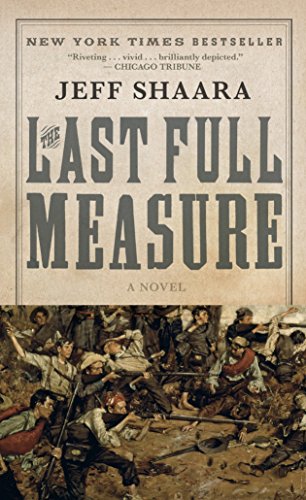
Inhaltsangabe
In the Pulitzer prize–winning classic The Killer Angels, Michael Shaara created the finest Civil War novel of our time. In the bestselling Gods and Generals, Shaara’s son, Jeff, brilliantly sustained his father’s vision, telling the epic story of the events culminating in the Battle of Gettysburg. Now, Jeff Shaara brings this legendary father-son trilogy to its stunning conclusion in a novel that brings to life the final two years of the Civil War.
As The Last Full Measure opens, Gettysburg is past and the war advances to its third brutal year. On the Union side, the gulf between the politicians in Washington and the generals in the field yawns ever wider. Never has the cumbersome Union Army so desperately needed a decisive, hard-nosed leader. It is at this critical moment that Lincoln places Ulysses S. Grant in command—and turns the tide of war.
For Robert E. Lee, Gettysburg was an unspeakable disaster—compounded by the shattering loss of the fiery Stonewall Jackson two months before. Lee knows better than anyone that the South cannot survive a war of attrition. But with the total devotion of his generals—Longstreet, Hill, Stuart—and his unswerving faith in God, Lee is determined to fight to the bitter end.
Here too is Joshua Chamberlain, the college professor who emerged as the Union hero of Gettysburg—and who will rise to become one of the greatest figures of the Civil War.
Battle by staggering battle, Shaara dramatizes the escalating confrontation between Lee and Grant—complicated, heroic, deeply troubled men. From the costly Battle of the Wilderness to the agonizing siege of Petersburg to Lee’s epoch-making surrender at Appomattox, Shaara portrays the riveting conclusion of the Civil War through the minds and hearts of the individuals who gave their last full measure.
Full of human passion and the spellbinding truth of history, The Last Full Measure is the fitting capstone to a magnificent literary trilogy.
Die Inhaltsangabe kann sich auf eine andere Ausgabe dieses Titels beziehen.
Über die Autorin bzw. den Autor
Jeff Shaara is the New York Times bestselling author of A Chain of Thunder, A Blaze of Glory, The Final Storm, No Less Than Victory, The Steel Wave, The Rising Tide, To the Last Man, The Glorious Cause, Rise to Rebellion, and Gone for Soldiers, as well as Gods and Generals and The Last Full Measure—two novels that complete the Civil War trilogy that began with his father’s Pulitzer Prize–winning classic, The Killer Angels. Shaara was born into a family of Italian immigrants in New Brunswick, New Jersey. He grew up in Tallahassee, Florida, and graduated from Florida State University. He lives in Gettysburg.
Von der hinteren Coverseite
In the Pulitzer prize-winning classic The Killer Angels, Michael Shaara created the finest Civil War novel of our time, an enduring bestseller that has sold more than two million copies. In the bestselling Gods and Generals, Shaara's son, Jeff, brilliantly sustained his father's vision, telling the epic story of the events culminating in the Battle of Gettysburg. Now, Jeff Shaara brings this legendary father-son trilogy to its stunning conclusion in a novel that brings to life the final two years of the Civil War.
As The Last Full Measure opens, Gettysburg is past and the war advances to its third brutal year. On the Union side, the gulf between the politicians in Washington and the generals in the field yawns ever wider. Never has the cumbersome Union Army so desperately needed a decisive, hard-nosed leader. It is at this critical moment that Lincoln places Ulysses S. Grant in command--and turns the tide of war.
For Robert E. Lee, Gettysburg was an unspeakable disaster--compounded by the shattering loss of the fiery Stonewall Jackson two months before. Lee knows better than anyone that the South cannot survive a war of attrition. But with the total devotion of his generals--Longstreet, Hill, Stuart--and his unswerving faith in God, Lee is determined to fight to the bitter end.
Here too is Joshua Chamberlain, the college professor who emerged as the Union hero of Gettysburg--and who will rise to become one of the greatest figures of the Civil War.
Battle by staggering battle, Shaara dramatizes the escalating confrontation between Lee and Grant--complicated, heroic, deeply troubled men. From the costly Battle of the Wilderness to the agonizing siege of Petersburg to Lee'sepoch-making surrender at Appomattox, Shaara portrays the riveting conclusion of the Civil War through the minds and hearts of the individuals who gave their last full measure.
Full of human passion and the spellbinding truth of history, The Last Full Measure is the fitting capstone to a magnificent literary trilogy.
"From the Hardcover edition.
Auszug. © Genehmigter Nachdruck. Alle Rechte vorbehalten.
By July 1863 the Civil War has been fought over the farmlands and seacoasts of the South for better than two years, and is already one of the bloodiest wars in human history. It is a war that most believed would be decided by one quick fight, one great show of strength by the power of the North. The first major battle, called Bull Run in the North, Manassas in the South, is witnessed by a carefree audience of Washington's elite. Their brightly decorated carriages carry men in fine suits and society matrons in colorful dresses. They perch on a hillside, enjoying their picnics, anticipating a great show with bands playing merrily while the young men in blue march in glorious parade and sweep aside the ragged band of rebels. What they see is the first great horror, the stunning reality that this is in fact a war, and that men will die. What they still cannot understand is how far this will go, and how many men will die.
In the North, President Lincoln maintains a fragile grip on forces pulling the government in all directions. On one extreme is the pacifist movement, those who believe that the South has made its point, and so, to avoid bloodshed, Washington must simply let them go, that nothing so inconsequential as the Constitution is as important as the loss of life. On the other extreme are the radical abolitionists, who demand the South be brought down entirely, punished for its way of life, its culture, and that anyone who supports the southern cause should be purged from the land. There is also a great middle ground, men of reason and intellect, who now understand that there is more to this war than the inflammatory issue of slavery, or the argument over the sovereign rights of the individual states. As men continue to volunteer, larger and larger numbers of troops take to the fields, and other causes emerge, each man fighting for his own reason. Some fight for honor and duty, some for money and glory, but nearly all are driven by an amazing courage, and will carry their muskets across the deadly space because they feel it is the right thing to do.
From the North come farmers and fishermen, lumberjacks and shopkeepers, old veterans and young idealists. Some are barely Americans at all, expatriates and immigrants from Europe, led by officers who do not speak English. Some are freedmen, Negroes who volunteer to fight for the preservation of the limited freedoms they have been given, and to spread that freedom into the South.
In the South they are also farmers and fishermen, as well as ranchers, laborers, aristocrats, and young men seeking adventure. They are inspired first by the political rhetoric, the fire-breathing oratory of the radical secessionists. They are told that Lincoln is in league with the devil, and that his election ensures that the South will be held down, oppressed by the powerful interests in the North, that their very way of life is under siege. When the sound of the big guns echo across Charleston harbor, when the first flashes of smoke and fire swallow Fort Sumter, Lincoln orders an army to go south, to put down the rebellion by force. With the invasion comes a new inspiration, and in the South, even men of reason are drawn into the fight, men who were not seduced by mindless rhetoric, who have shunned the self-serving motives of the politicians. There is outrage, and no matter the issues or the politics, many take up arms in response to what they see as the threat to their homes. Even the men who understand and promote the inevitable failure of slavery cannot stand by while their land is invaded. The issue is not to be decided after all by talk or rhetoric, but by the gun.
On both sides are the career soldiers, West Pointers, men with experience from the Mexican War, or the Indian wars of the 1850s. In the North the officers are infected and abused by the disease of politics, and promotion is not always granted by performance or ability. The Federal armies endure a parade of inept or unlucky commanders who cannot fight the rebels until they first master the fight with Washington. Few succeed.
In the South, Jefferson Davis maintains an iron hand, controlling even the smallest details of governing the Confederacy. It is not an effective system, and as in the North, men of political influence are awarded positions of great authority, men who have no business leading soldiers into combat. In mid-1862, through an act of fate, or as he would interpret it, an act of God, Robert Edward Lee is given command of the Army of Northern Virginia. What follows in the East is a clear pattern, a series of great and bloody fights in which the South prevails and the North is beaten back. If the pattern continues, the war will end and the Confederacy will triumph. Many of the fights are won by Lee, or by his generals--the Shenandoah Valley, Second Manassas. Many of the fights are simply lost by the blunders of Federal commanders, the most horrifying example at Fredericksburg. Most, like the catastrophic Federal defeat at Chancellorsville or the tactical stalemate at Antietam, are a combination of both.
By 1863 two monumental events provide an insight into what lies ahead. The first is the success of the Federal blockade of southern seaports, which prevents the South from receiving critical supplies from allies abroad, and also prevents the export of raw materials, notably cotton and tobacco, which provide the currency necessary to pay for the war effort. The result is understood on both sides. Without outside help, the Confederacy will slowly starve.
The second is the great bloody fight at Gettysburg. While a tragic defeat for Lee's army, there is a greater significance to the way that defeat occurs. Until now, the war has been fought mostly from the old traditions, the Napoleonic method, the massed frontal assault against fortified positions. It has been apparent from the beginning of the war that the new weaponry has made such attacks dangerous and costly, but old ways die slowly, and commanders on both sides have been reluctant to change. After Gettysburg, the changes become a matter of survival. If the commanders do not yet understand, the men in the field do, and the use of the shovels becomes as important as the use of muskets. The new methods--strong fortifications, trench warfare--are clear signs to all that the war has changed, that there will be no quick and decisive fight to end all fights.
As the Civil War enters its third year, the bloody reports continue to fill the newspapers, and the bodies of young men continue to fill the cemeteries. To the eager patriots, the idealists and adventurers who joined the fight at the beginning, there is a new reality, in which honor and glory are becoming hollow words. The great causes are slowly pushed aside, and men now fight with the grim determination to take this fight to its end; after so much destruction and horrible loss, the senses are dulled, the unspeakable sights no longer shock. All the energy is forward, toward those men across that deadly space who have simply become the enemy.
--------------------------------------------------------------------------------
Robert Edward Lee
Born in 1807, he graduates West Point in 1829, second in his class. Though he is the son of "Light-Horse" Harry Lee, a great hero of the American Revolution, late in his father's life Lee must endure the burden of his father's business and personal failures more than the aura of heroism. Lee is devoutly religious, believing with absolute clarity that the events of his life are determined by the will of God. On his return from West Point, his mother dies in his arms. The haunting sadness of her death stays hard inside him for the rest of his life, and places him more firmly than ever into the hands of his God.
He marries the aristocratic Mary Anne Randolph Custis, whose father is the grandson of Martha...
„Über diesen Titel“ kann sich auf eine andere Ausgabe dieses Titels beziehen.
Weitere beliebte Ausgaben desselben Titels

Suchergebnisse für The Last Full Measure: A Novel of the Civil War (Civil...

Beispielbild für diese ISBN
The Last Full Measure 3 Civil
Anbieter: World of Books (was SecondSale), Montgomery, IL, USA
Verkäuferbewertung 5 von 5 Sternen

Zustand: Good. Item in good condition. Textbooks may not include supplemental items i.e. CDs, access codes etc. Artikel-Nr. 00106285902
Gebraucht kaufen
EUR 3,95
Versand gratis
Versand innerhalb von USA
Versand innerhalb von USA
Anzahl: 9 verfügbar
Beispielbild für diese ISBN
The Last Full Measure 3 Civil
Anbieter: World of Books (was SecondSale), Montgomery, IL, USA
Verkäuferbewertung 5 von 5 Sternen
Zustand: Acceptable. Item in acceptable condition! Textbooks may not include supplemental items i.e. CDs, access codes etc. Artikel-Nr. 00091416190
Gebraucht kaufen
EUR 3,95
Versand gratis
Versand innerhalb von USA
Versand innerhalb von USA
Anzahl: 16 verfügbar
Foto des Verkäufers
The Last Full Measure: A Novel of the Civil War (Civil War Trilogy)
Anbieter: Dream Books Co., Denver, CO, USA
Verkäuferbewertung 5 von 5 Sternen
Zustand: acceptable. This copy has clearly been enjoyedâ"expect noticeable shelf wear and some minor creases to the cover. Binding is strong, and all pages are legible. May contain previous library markings or stamps. Artikel-Nr. DBV.0345434811.A
Gebraucht kaufen
EUR 4,63
Versand gratis
Versand innerhalb von USA
Versand innerhalb von USA
Anzahl: 2 verfügbar
Beispielbild für diese ISBN
The Last Full Measure : A Novel of the Civil War
Verlag:
Random House Publishing Group, 2000
ISBN 10: 0345434811
ISBN 13: 9780345434814
Gebraucht
Softcover
Anbieter: Better World Books, Mishawaka, IN, USA
Verkäuferbewertung 5 von 5 Sternen
Zustand: Good. 1st Mass Market Ed. Former library copy. Pages intact with minimal writing/highlighting. The binding may be loose and creased. Dust jackets/supplements are not included. Includes library markings. Stock photo provided. Product includes identifying sticker. Better World Books: Buy Books. Do Good. Artikel-Nr. GRP86333374
Gebraucht kaufen
EUR 5,94
Versand gratis
Versand innerhalb von USA
Versand innerhalb von USA
Anzahl: 1 verfügbar
Beispielbild für diese ISBN
The Last Full Measure : A Novel of the Civil War
Verlag:
Random House Publishing Group, 2000
ISBN 10: 0345434811
ISBN 13: 9780345434814
Gebraucht
Softcover
Anbieter: Better World Books: West, Reno, NV, USA
Verkäuferbewertung 5 von 5 Sternen
Zustand: Good. 1st Mass Market Ed. Pages intact with minimal writing/highlighting. The binding may be loose and creased. Dust jackets/supplements are not included. Stock photo provided. Product includes identifying sticker. Better World Books: Buy Books. Do Good. Artikel-Nr. GRP102067065
Gebraucht kaufen
EUR 5,94
Versand gratis
Versand innerhalb von USA
Versand innerhalb von USA
Anzahl: 1 verfügbar
Beispielbild für diese ISBN
The Last Full Measure : A Novel of the Civil War
Verlag:
Random House Publishing Group, 2000
ISBN 10: 0345434811
ISBN 13: 9780345434814
Gebraucht
Softcover
Anbieter: Better World Books, Mishawaka, IN, USA
Verkäuferbewertung 5 von 5 Sternen
Zustand: Good. 1st Mass Market Ed. Pages intact with minimal writing/highlighting. The binding may be loose and creased. Dust jackets/supplements are not included. Stock photo provided. Product includes identifying sticker. Better World Books: Buy Books. Do Good. Artikel-Nr. GRP102067065
Gebraucht kaufen
EUR 5,94
Versand gratis
Versand innerhalb von USA
Versand innerhalb von USA
Anzahl: 9 verfügbar
Beispielbild für diese ISBN
The Last Full Measure: A Novel of the Civil War (Civil War Trilogy)
Anbieter: Wonder Book, Frederick, MD, USA
Verkäuferbewertung 5 von 5 Sternen
Zustand: As New. Like New condition. A near perfect copy that may have very minor cosmetic defects. Artikel-Nr. F08A-06880
Gebraucht kaufen
EUR 6,17
Versand gratis
Versand innerhalb von USA
Versand innerhalb von USA
Anzahl: 1 verfügbar
Beispielbild für diese ISBN
The Last Full Measure: A Novel of the Civil War (Civil War Trilogy)
Anbieter: Wonder Book, Frederick, MD, USA
Verkäuferbewertung 5 von 5 Sternen
Zustand: Very Good. Very Good condition. A copy that may have a few cosmetic defects. May also contain light spine creasing or a few markings such as an owner's name, short gifter's inscription or light stamp. Artikel-Nr. F02A-05735
Gebraucht kaufen
EUR 6,17
Versand gratis
Versand innerhalb von USA
Versand innerhalb von USA
Anzahl: 4 verfügbar
Beispielbild für diese ISBN
The Last Full Measure: A Novel of the Civil War (Civil War Trilogy)
Verlag:
Ballantine Books (edition 1st Mass Market Ed), 2000
ISBN 10: 0345434811
ISBN 13: 9780345434814
Gebraucht
Mass Market Paperback
Anbieter: BooksRun, Philadelphia, PA, USA
Verkäuferbewertung 5 von 5 Sternen
Mass Market Paperback. Zustand: Fair. 1st Mass Market Ed. The item might be beaten up but readable. May contain markings or highlighting, as well as stains, bent corners, or any other major defect, but the text is not obscured in any way. Artikel-Nr. 0345434811-7-1-13
Gebraucht kaufen
EUR 6,20
Versand gratis
Versand innerhalb von USA
Versand innerhalb von USA
Anzahl: 1 verfügbar
Beispielbild für diese ISBN
The Last Full Measure
Verlag:
Ballantine Books, 2000
ISBN 10: 0345434811
ISBN 13: 9780345434814
Gebraucht
Mass Market Paperback
Anbieter: ThriftBooks-Dallas, Dallas, TX, USA
Verkäuferbewertung 5 von 5 Sternen
Mass Market Paperback. Zustand: Good. No Jacket. Pages can have notes/highlighting. Spine may show signs of wear. ~ ThriftBooks: Read More, Spend Less. Artikel-Nr. G0345434811I3N00
Gebraucht kaufen
EUR 6,34
Versand gratis
Versand innerhalb von USA
Versand innerhalb von USA
Anzahl: 1 verfügbar