
Verwandte Artikel zu While I Was Gone
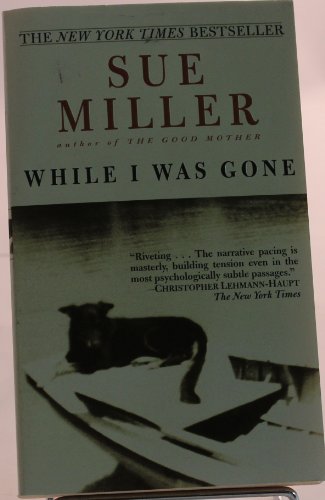
Inhaltsangabe
“MILLER WEAVES HER THEMES OF SECRECY, BETRAYAL AND FORGIVENESS INTO A NARRATIVE THAT SHINES.”
–Time
“FASCINATING . . . Despite having a loving husband, three vivacious daughters, a beautiful home in rural Massachusetts, and satisfaction in her work, Jo Becker’s mind is invaded by a persistent restlessness. Then, an old roommate reappears to bring back Jo’s memories of her early 20s. . . . Her obsession with that period of her life and with the crime that concluded it eventually estrange Jo from everything she holds dear, causing her to tell lie after lie as she is pulled closer to this man from her past–and to a horrible secret.”
–Milwaukee Journal-Sentinel
Die Inhaltsangabe kann sich auf eine andere Ausgabe dieses Titels beziehen.
Über die Autorin bzw. den Autor
Sue Miller is the bestselling author of The World Below, The Distinguished Guest, For Love, Family Pictures, Inventing the Abbotts, and The Good Mother. She lives in Cambridge, Massachusetts.
Aus dem Klappentext
;MILLER WEAVES HER THEMES OF SECRECY, BETRAYAL AND FORGIVENESS INTO A NARRATIVE THAT SHINES.
Time
FASCINATING . . . Despite having a loving husband, three vivacious daughters, a beautiful home in rural Massachusetts, and satisfaction in her work, Jo Becker s mind is invaded by a persistent restlessness. Then, an old roommate reappears to bring back Jo s memories of her early 20s. . . . Her obsession with that period of her life and with the crime that concluded it eventually estrange Jo from everything she holds dear, causing her to tell lie after lie as she is pulled closer to this man from her past and to a horrible secret.
Milwaukee Journal-Sentinel
Auszug. © Genehmigter Nachdruck. Alle Rechte vorbehalten.
IT'S ODD, I SUPPOSE, THAT WHEN I THINK BACK OVER that happened in that terrible time, one of my sharpest memories should be of some few moments the day before everything began. Seemingly unconnected to what followed, this memory is often one of the first things that comes to me when I call up those weeks, those months-the prelude, the long, beautiful, somber note I heard but chose to disregard.
This is it: silence between us. The only sounds the noises of the boat-the squeal of the oarlocks when my husband pulled on the oars, the almost inaudible creak of the wooden seat with his slight motion, and then the glip and liquid swirl of the oars through the water, and the sound of the boat rushing forward.
My husband's back was to me as I lay in the hard curve of the bow. He sat still a long time between each pull. The oars dripped and then slowly stopped dripping. Everything quieted. Sometimes he picked up his fishing rod and reeled it in a bit, pulling it one way or another. Sometimes he recast, standing high above me in the boat, the light line whipping wider and wider, whistling faintly in its looping arc across the sky before he let it go.
It was a day in mid-fall, well after the turning of the leaves. The weather was glorious. We always took one day a week off together, and if the weather was good, we often went fishing. Or my husband went fishing and I went along, usually with a book to read. Even when the girls were small and it was harder to arrange, we managed at least part of the day alone together. In those early years we sometimes made love in the boat when we were fishing, or in the woods-we had so little time and privacy at home.
It was a Monday. The day off was always Monday, because Sunday was Daniel's busiest day at work and Saturday was mine. Monday was our day of rest. And what I recollect of that Monday, that fine fall day, is that for some long moments in the boat, I was suddenly aware of my state, in a way we aren't often. That is, I was abruptly and most intensely, sharply aware of all the aspects of life surrounding me, and yet of feeling neither part of it nor truly separated from it. Somehow impartial, unattached-an observer. Yet sentient of it all. Deeply sentient, in fact. But to no apparent purpose.
If I were trying to account for this feeling, I might say that it had something to do with the way I was half lying, half sitting on several pillows in the bow, the way the curving walls of the old rowboat framed a foreground for my view as they rose away from me. I saw them, these peeling wooden inner walls, and then my husband's familiar shape. Above him there was the flat, milky-blue sky and sometimes, when we were close enough to shore, the furred, nearly black line of the spruces and pines against it. In the air above us swallows darted-dark, quick silhouettes-and once a cedar waxwing moved smoothly through them. Layers of life above me. Below, I could hear the lap of the deep water through the walls of the boat.
As a result, let's say, I felt suspended, waiting. Between all these worlds and part of none of them.
But this isn't what I really believe; I think the sensation came from somewhere within me.
We feel this way sometimes in adolescence, too, surely most of us can call it up. But then there's the burning impatience for the next thing to take shape, for whatever it is we are about to become and be to announce itself. This was different: there was, I supposed, no next thing.
I had felt something like this every now and then in the last year or so, sometimes at work as I tightened a stitch or gave an injection: the awareness of having done this a thousand times before, of surely having a thousand times left to do it again. Of doing it well and thoroughly and neatly, as I liked to do things, and simultaneously of being at a great distance from my own actions.
Or at home, setting the table, sitting down with my husband to another meal, beginning our friendly evening conversation about the day-the house quiet around us, the old dogs dozing under the table or occasionally nuzzling our feet. A sense suddenly of being utterly present and also, simultaneously, far, far away.
Now I stirred, shifted my weight. My husband turned, no aspect of his face not dear to me. "Hurting?" he asked.
And with that, as quickly as it had come over me, the moment ended. I was back, solidly in time, exactly where we were. It was getting chilly. I had been lying in the wooden boat for several hours now, and even though I had the pillows under me, I was stiff. I had a bad hip. Replacement had been discussed, though everyone said I was young for it. I liked only that part of the problem, being too young for something.
"A little," I said.
"We'll head back."
"Are you sure?"
"I've got two reasonable ones. I'm a happy man." He began to reel his line in.
I turned and stretched. "How nice, to be a happy man," I said.
He looked over his shoulder at me, to get my tone. "It is nice," he said.
"And I meant it," I answered.
As we rowed back, as we drove home, I found myself wanting to tell my husband about my feeling, but then not knowing what to call it. The shadow of it lingered with me, but I didn't say anything to Daniel. He would hear it as a want, a need. He would feel called upon to offer comfort. Daniel is a minister, a preacher, a pastor. His business is the care of his flock, his medium is words-thrilling words, admonishing or consoling words. I knew he could console me, but consolation wasn't what I felt I wanted. And so we drove along in silence, too, and I looked out the window at the back roads that sometimes seemed utterly rural, part of the nineteenth century, and sometimes seemed abruptly the worst of contemporary suburban life: the sere, beautiful old fields carved up to accommodate the too-wide circular asphalt driveways, the too-grand fake-garrison-colonial houses.
We lived in the center of town, an old, old town-Adams Mills, the Adamses long dead, the mills long burned down. Our house was a simple square farmhouse, added on to repeatedly at the back of the first floor over the years, as was the custom then with these old New England homes. We had an unpainted barn behind it, and behind that was a small meadow which turned to pinewoods at the far edge, woods that hid our neighbors to the rear, though in the summer we could hear them fighting, calling each other things that used to make the girls laugh with joy. "You fat-ass pig!" they'd imitate. "You stupid shithead!"-which for some years they had, uncorrected, as "shiphead."
We used the barn as a garage now, and Daniel had his study out there, in a small heated room at the back. When we'd moved in, it was still full of rusting old tools and implements, the kinds of things people clean up and hang on their walls as folk art. There were still mason jars of unidentifiable fruits and vegetables in the old root cellar, a dark earthen space you entered by lifting a sort of trapdoor in the kitchen yard. Because of all this, we felt connected to the house's life as part of a farm.
Yet at the front of the house we were townsfolk, connected to the village. Our view was across the old common to the big Congregational church. Not Daniel's church, it's true, and we looked at its back side-its rump, the girls had called it-but it was a splendid civic vista nonetheless. Beyond the church, we could see the row of grand Georgian houses lined up face-to-face with its front.
Along one side of the green was an inn, where we could get a fancy and tasteless meal in the main dining room, or a beer and a good hamburger in the bar, with its large-screen TV always tuned to the sports network. Along the other side of the green there were...
„Über diesen Titel“ kann sich auf eine andere Ausgabe dieses Titels beziehen.
Suchergebnisse für While I Was Gone

Beispielbild für diese ISBN
While I Was Gone
Anbieter: World of Books (was SecondSale), Montgomery, IL, USA
Verkäuferbewertung 5 von 5 Sternen

Zustand: Fair. Riveting . . . The narrative pacing is masterly, building tension even in the most psychologically subtle passages. . . . While I Was Gone celebrate[s] what is impulsive in human nature. --CHRISTOPHER LEHMAN-HAUPT The New York Times MILER WEAVES HER THEMES OF SECRECY, BETRAYAL AND FORGIVENES INTO A NARATIVE THAT SHINES. --Time FASCINATING . . . A NEW NOVEL OF GREAT INTEGRITY AND POWER . . . Despite having a loving husband, three vivacious daughters, a beautiful home in rural Massachusetts, and satisfaction in her work, Jo Becker's mind is invaded by a persistent restlessness. Then, an old roommate reappears to bring back Jo's memories of her early 20s. . . . Her obsession with that period of her life and with the crime that concluded it eventually estrange Jo from everything she holds dear, causing her to tell lie after lie as she is pulled closer to this man from her past--and to a horrible secret. --Milwaukee Journal-Sentinel MARVELOUS . . . POIGNANT . . . POWERFUL. --Seattle Times/Post Intelligencer A BEAUTIFUL AND FRIGHTENING BOK . . . MANY READERS WIL FIND IT DIFICULT TO FORGET. . . . It swoops gracefully between the past and the present, between a woman's complex feelings about her husband and her equally complex fantasies--and fears--about another man. . . . I can think of few contemporary novelists--John Updike and Frederick Buechner are two others--who write so well about the trials of faith. --The New York Times Book Review QUIETLY GRIPING . . . Jo shines steadily as the flawed and thoroughly modern heroine. As in her 1986 novel, The Good Mother, Miller shows how impulses can fracture the family. --USA Today. Artikel-Nr. 00067799084
Gebraucht kaufen
EUR 4,51
Versand gratis
Versand innerhalb von USA
Versand innerhalb von USA
Anzahl: 2 verfügbar
Beispielbild für diese ISBN
While I Was Gone
Anbieter: World of Books (was SecondSale), Montgomery, IL, USA
Verkäuferbewertung 5 von 5 Sternen
Zustand: Good. Riveting . . . The narrative pacing is masterly, building tension even in the most psychologically subtle passages. . . . While I Was Gone celebrate[s] what is impulsive in human nature. --CHRISTOPHER LEHMAN-HAUPT The New York Times MILER WEAVES HER THEMES OF SECRECY, BETRAYAL AND FORGIVENES INTO A NARATIVE THAT SHINES. --Time FASCINATING . . . A NEW NOVEL OF GREAT INTEGRITY AND POWER . . . Despite having a loving husband, three vivacious daughters, a beautiful home in rural Massachusetts, and satisfaction in her work, Jo Becker's mind is invaded by a persistent restlessness. Then, an old roommate reappears to bring back Jo's memories of her early 20s. . . . Her obsession with that period of her life and with the crime that concluded it eventually estrange Jo from everything she holds dear, causing her to tell lie after lie as she is pulled closer to this man from her past--and to a horrible secret. --Milwaukee Journal-Sentinel MARVELOUS . . . POIGNANT . . . POWERFUL. --Seattle Times/Post Intelligencer A BEAUTIFUL AND FRIGHTENING BOK . . . MANY READERS WIL FIND IT DIFICULT TO FORGET. . . . It swoops gracefully between the past and the present, between a woman's complex feelings about her husband and her equally complex fantasies--and fears--about another man. . . . I can think of few contemporary novelists--John Updike and Frederick Buechner are two others--who write so well about the trials of faith. --The New York Times Book Review QUIETLY GRIPING . . . Jo shines steadily as the flawed and thoroughly modern heroine. As in her 1986 novel, The Good Mother, Miller shows how impulses can fracture the family. --USA Today. Artikel-Nr. 00109443291
Gebraucht kaufen
EUR 4,51
Versand gratis
Versand innerhalb von USA
Versand innerhalb von USA
Anzahl: 4 verfügbar
Beispielbild für diese ISBN
While I Was Gone
Verlag:
Ballantine Books (edition Reprint), 2002
ISBN 10: 0345420748
ISBN 13: 9780345420749
Gebraucht
Mass Market Paperback
Anbieter: BooksRun, Philadelphia, PA, USA
Verkäuferbewertung 5 von 5 Sternen
Mass Market Paperback. Zustand: Very Good. Reprint. It's a well-cared-for item that has seen limited use. The item may show minor signs of wear. All the text is legible, with all pages included. It may have slight markings and/or highlighting. Artikel-Nr. 0345420748-11-1
Gebraucht kaufen
EUR 4,59
Versand gratis
Versand innerhalb von USA
Versand innerhalb von USA
Anzahl: 2 verfügbar
Beispielbild für diese ISBN
While I Was Gone
Anbieter: ThriftBooks-Atlanta, AUSTELL, GA, USA
Verkäuferbewertung 5 von 5 Sternen
Unknown. Zustand: Fair. No Jacket. Readable copy. Pages may have considerable notes/highlighting. ~ ThriftBooks: Read More, Spend Less. Artikel-Nr. G0345420748I5N00
Gebraucht kaufen
EUR 6,51
Versand gratis
Versand innerhalb von USA
Versand innerhalb von USA
Anzahl: 1 verfügbar
Beispielbild für diese ISBN
While I Was Gone
Anbieter: ThriftBooks-Reno, Reno, NV, USA
Verkäuferbewertung 5 von 5 Sternen
Unknown. Zustand: Very Good. No Jacket. May have limited writing in cover pages. Pages are unmarked. ~ ThriftBooks: Read More, Spend Less. Artikel-Nr. G0345420748I4N00
Gebraucht kaufen
EUR 6,51
Versand gratis
Versand innerhalb von USA
Versand innerhalb von USA
Anzahl: 1 verfügbar
Beispielbild für diese ISBN
While I Was Gone
Anbieter: ThriftBooks-Dallas, Dallas, TX, USA
Verkäuferbewertung 5 von 5 Sternen
Unknown. Zustand: Very Good. No Jacket. May have limited writing in cover pages. Pages are unmarked. ~ ThriftBooks: Read More, Spend Less. Artikel-Nr. G0345420748I4N00
Gebraucht kaufen
EUR 6,51
Versand gratis
Versand innerhalb von USA
Versand innerhalb von USA
Anzahl: 1 verfügbar
Beispielbild für diese ISBN
While I Was Gone
Anbieter: ThriftBooks-Atlanta, AUSTELL, GA, USA
Verkäuferbewertung 5 von 5 Sternen
Unknown. Zustand: Very Good. No Jacket. May have limited writing in cover pages. Pages are unmarked. ~ ThriftBooks: Read More, Spend Less. Artikel-Nr. G0345420748I4N00
Gebraucht kaufen
EUR 6,51
Versand gratis
Versand innerhalb von USA
Versand innerhalb von USA
Anzahl: 1 verfügbar
Beispielbild für diese ISBN
While I Was Gone
Verlag:
Random House Publishing Group, 2002
ISBN 10: 0345420748
ISBN 13: 9780345420749
Gebraucht
Softcover
Anbieter: Better World Books: West, Reno, NV, USA
Verkäuferbewertung 5 von 5 Sternen
Zustand: Good. Reprint. Pages intact with minimal writing/highlighting. The binding may be loose and creased. Dust jackets/supplements are not included. Stock photo provided. Product includes identifying sticker. Better World Books: Buy Books. Do Good. Artikel-Nr. GRP76863228
Gebraucht kaufen
EUR 6,57
Versand gratis
Versand innerhalb von USA
Versand innerhalb von USA
Anzahl: 1 verfügbar
Beispielbild für diese ISBN
While I Was Gone
Verlag:
Random House Publishing Group, 2002
ISBN 10: 0345420748
ISBN 13: 9780345420749
Gebraucht
Softcover
Anbieter: Better World Books, Mishawaka, IN, USA
Verkäuferbewertung 5 von 5 Sternen
Zustand: Good. Reprint. Pages intact with minimal writing/highlighting. The binding may be loose and creased. Dust jackets/supplements are not included. Stock photo provided. Product includes identifying sticker. Better World Books: Buy Books. Do Good. Artikel-Nr. GRP76863228
Gebraucht kaufen
EUR 6,57
Versand gratis
Versand innerhalb von USA
Versand innerhalb von USA
Anzahl: 3 verfügbar
Foto des Verkäufers
While I Was Gone
Anbieter: Hamelyn, Madrid, M, Spanien
Verkäuferbewertung 5 von 5 Sternen
Zustand: As New. : En 'While I Was Gone', Sue Miller nos presenta a Jo Becker, una mujer que, a pesar de tener una vida aparentemente perfecta con una familia amorosa y un hogar hermoso, se siente inquieta. La reaparición de una antigua compañera de cuarto la lleva de vuelta a los recuerdos de sus veinte años, desenterrando un oscuro secreto relacionado con un crimen del pasado. La obsesión de Jo con este período de su vida la arrastra de nuevo a ese horrible secreto, amenazando con desestabilizar su presente y su futuro. Una novela de suspense psicológico que explora temas de secreto, traición y perdón. EAN: 9780345420749 Tipo: Libros Categoría: Literatura y Ficción Título: While I Was Gone Autor: Sue Miller Editorial: Ballantine Books Idioma: en Páginas: 352 Formato: libro de bolsillo. Artikel-Nr. Happ-2024-02-22-adb6e941
Gebraucht kaufen
EUR 5,99
EUR 11,99 Versand
Versand von Spanien nach USA
Versand von Spanien nach USA
Anzahl: 1 verfügbar