
Verwandte Artikel zu Honoring the Medicine: The Essential Guide to Native...
Inhaltsangabe
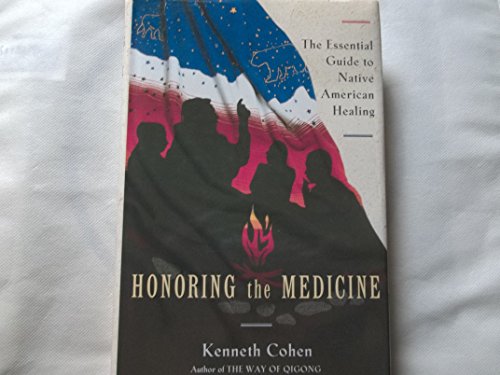
An introduction to Native American medicine explores their healing traditions, philosophy, and methods, explaining how such fundamental therapies as counseling, massage, and more can be integrated with western medicine, how Native Americans understand healing therapies, and how the Native American approach can be interpreted, all from the perspective of a traditional healer.
Die Inhaltsangabe kann sich auf eine andere Ausgabe dieses Titels beziehen.
Über die Autorin bzw. den Autor
Kenneth “Bear Hawk” Cohen, is an internationally renowned health educator dedicated to the community of All Relations. He has trained with elder healers from all over the world and followed the path of indigenous wisdom for more than thirty years. Author of The Way of Qigong: The Art and Science of Chinese Energy Healing and more than two hundred journal articles on spirituality and complementary medicine, he lives with his family in the Colorado Rockies.
Aus dem Klappentext
s of years, Native medicine was the only medicine on the North American continent. It is America s original holistic medicine, a powerful means of healing the body, balancing the emotions, and renewing the spirit. Medicine men and women prescribe prayers, dances, songs, herbal mixtures, counseling, and many other remedies that help not only the individual but the family and the community as well. The goal of healing is both wellness and wisdom.
Written by a master of alternative healing practices, Honoring the Medicine gathers together an unparalleled abundance of information about every aspect of Native American medicine and a healing philosophy that connects each of us with the whole web of life people, plants, animals, the earth. Inside you will discover
The power of the Four Winds the psychological and spiritual qualities that contribute to harmony and health
Native American Values including wisdom fr
Auszug. © Genehmigter Nachdruck. Alle Rechte vorbehalten.
NATIVE AMERICAN
OR AMERICAN INDIAN
Can You Be Politically Correct?
Although Shakespeare said, “A rose by any other name would smell as sweet,” you are less likely to want to see, smell, or buy a rose if a florist offers to show you “a blood-colored outgrowth of a thorny shrub.” Names do make a difference. Minorities and oppressed people are especially sensitive to the terminology used to describe them or their culture. The same words may mean different things to Native
Americans or to white people, or they may be insulting in one language and either meaningless or used inappropriately in another. For example, no Native American woman wants to be referred to as a squaw, an Algonquian-based insult. A Native American physician does not expect to be called “chief.” Some tribes are designated by strange foreign terms like Gros Ventre (“Big Bellies”), Nez Perce (“Pierced Noses”), or Apache (a Zuni Indian word meaning “enemy”). Native cultural and religious terms are sometimes appropriated by Western businesses for their commercial value. Would you feel comfortable riding in a Jeep Jew or drinking Communion Beer?
I have also seen people go to the other extreme: they try so hard to make every word polite and politically correct that they become tongue-tied, like a centipede that is asked, “How do you move all those legs?” I once met a young white man who had learned Indian sign language from a book and planned to use it when he visited an Indian reservation. He believed that this would demonstrate his respect for tradition. I was sorry to disappoint him: “When Indian people don’t speak one another’s languages, they communicate in English. People are likely to think that you are ‘signing’ because you’re deaf.” I don’t wish to scare you from talking with or about people who are unfamiliar. If you speak with a Native American and are unsure about appropriate terminology, simply ask. Your question communicates respect.
AMERICAN INDIAN OR NATIVE AMERICAN?
There are problems inherent in any of the terms commonly used by both indigenous and nonindigenous people to designate the original inhabitants of Turtle Island (an ancient indigenous name for North America). In precolonial times, a general term for aboriginal Americans was unnecessary and did not always exist.
Today, as in the past, Native Americans identify themselves by family, community (or band), clan, and nation. A Native American clan is a group of people who recognize kinship because of a special relationship to or descent from a common ancestor or ancestral group. Clans may be named after a deed, characteristic, or totem (Algonquian for “helping spirit”) of the ancestor—for example, the Bad War Deeds
Clan, Long Hair Clan, Bear Clan, Wolf Clan, Caribou Clan, Wind Clan, Salt Clan, or Yucca Fruit Clan. The words nation and tribe are often used interchangeably, though the term nation is generally more appropriate. The word tribe means a social group of numerous families and generations that share a common history, language, and culture. A nation is a tribe that is also a politically distinct entity and has the right to self-determination.
How would an ancient indigenous American identify himself or herself? ACherokee woman living five hundred years ago would not call herself an American Indian. She might say, “I am Saloli [a common personal name, meaning “Squirrel”], an Ani Wahya [Wolf Clan member] Ani Yunwiya [Cherokee], from Kituwah [an ancient town site, near present Bryson City, North Carolina].” Saloli’s people call
themselves Ani Yunwiya, the Principal People, in their own language. In other Indian languages, a tribal designation might refer to the tribe’s lodges (Haudenosaunee, “People of the Longhouse”), a sacred animal (the Absarokee, “Children of the Long-Beaked Bird,” the Raven or Crow), or their lands (Tsimshian, “Those inside the Skeena River” in British Columbia).
Christopher Columbus, a lost sailor discovered by the Taino tribe of the Antilles in 1492, called the indigenous people he encountered los Indios, “Indians,” because these gentle and generous people were una gente en Dios, “a people in God.” Some scholars believe that the term Indian may reflect Columbus’s belief that he had landed in India, an apt indication of his lack of orientation. The English, French,
and Italian colonial invaders who followed him lumped all of Turtle Island’s original inhabitants together as “savages” or other similar terms derived from the Latin silvaticus, meaning “a person of the woods” (silva). By the seventeenth century, Indians became the common designation, although the French continued to use sauvage through the nineteenth century. In 1643, Englishman Roger Williams sum-marized the common range of nomenclature in A Key into the Language of America; Or, An Help to the Language of the Natives in That Part of America Called New-England: “Natives, Savages, Indians, Wild-men (so the Dutch call them Wilden), Abergeny men, Pagans, Barbarians, Heathen”—terms that reflected and reinforced the Europeans’ belief in the moral, theological, cultural, and biological inferiority of America’s original inhabitants.
The tone soon shifted. The new Euro-Americans began to refer to the Native Americans as wild animals rather than wild men. In Indians of California: The Changing Image, James J. Rawls, Ph.D., history instructor from Diablo Valley College in Pleasant Hill, California, writes that “whites often compared California Indians to creatures that they regarded as especially repulsive”: snakes, toads, baboons,
and hogs. Supported by an anthropocentric theology that placed man at the center of creation, Christians could exterminate “pests and vermin” without com-punction. Similarly, modern soldiers find it easier to wage war against labels—“Nips,” “Gooks”—than against human beings with souls and families. Generalizations and stereotypes also serve political ends, as they allow legislators to promote laws that manipulate the fate of widely divergent people with unique needs and lifestyles while emphasizing American unity and nationalism.
Today, it is virtually impossible to find a universally satisfactory or politically correct term for the original people of this continent. When one of my Cherokee elders was referred to as an “American Indian,” he exclaimed, “I ain’t no damn Indian! I’m a Native American.” Yet most of America’s original inhabitants do call themselves “Indians” among themselves. A Cree friend calls himself “Indian” but re-minds
me that in Canada, the preferred generalization is “First Nations.” “Yet,” he tells me, “I prefer Native American in literature. The term feels more elegant.” So he becomes an “Indian” in everyday life and a Native American in books. A consistent designation is important for clarity. I do not wish to perpetuate confusion by referring to the “aboriginal, indigenous, Indian, Native Americans of the First Nations.” Frankly, I like to call the indigenous people “the People,” a term consistent with the words used for original Native nations in their own languages. In the Cree language, indigenous North Americans are collectively referred to as iyiniwak, “Peoples.” The names of many individual tribes, when translated, also simply mean “the People.” An Innu (“the People” of...
„Über diesen Titel“ kann sich auf eine andere Ausgabe dieses Titels beziehen.
Suchergebnisse für Honoring the Medicine: The Essential Guide to Native...

Beispielbild für diese ISBN
Honoring the Medicine
Anbieter: World of Books (was SecondSale), Montgomery, IL, USA
Verkäuferbewertung 5 von 5 Sternen

Hardback. Zustand: Good. Artikel-Nr. 00107774052
Gebraucht kaufen
EUR 6,76
Versand gratis
Versand innerhalb von USA
Versand innerhalb von USA
Anzahl: 4 verfügbar
Beispielbild für diese ISBN
Honoring the Medicine
Anbieter: World of Books (was SecondSale), Montgomery, IL, USA
Verkäuferbewertung 5 von 5 Sternen
Hardback. Zustand: Fair. Artikel-Nr. 00109989449
Gebraucht kaufen
EUR 6,76
Versand gratis
Versand innerhalb von USA
Versand innerhalb von USA
Anzahl: 1 verfügbar
Beispielbild für diese ISBN
Honoring the Medicine: The Essential Guide to Native American Healing
Anbieter: ThriftBooks-Dallas, Dallas, TX, USA
Verkäuferbewertung 5 von 5 Sternen
Hardcover. Zustand: Fair. No Jacket. Readable copy. Pages may have considerable notes/highlighting. ~ ThriftBooks: Read More, Spend Less. Artikel-Nr. G0345395301I5N00
Gebraucht kaufen
EUR 6,77
Versand gratis
Versand innerhalb von USA
Versand innerhalb von USA
Anzahl: 1 verfügbar
Beispielbild für diese ISBN
Honoring the Medicine: The Essential Guide to Native American Healing
Anbieter: ThriftBooks-Atlanta, AUSTELL, GA, USA
Verkäuferbewertung 5 von 5 Sternen
Hardcover. Zustand: Good. No Jacket. Pages can have notes/highlighting. Spine may show signs of wear. ~ ThriftBooks: Read More, Spend Less. Artikel-Nr. G0345395301I3N00
Gebraucht kaufen
EUR 6,77
Versand gratis
Versand innerhalb von USA
Versand innerhalb von USA
Anzahl: 1 verfügbar
Beispielbild für diese ISBN
Honoring the Medicine: The Essential Guide to Native American Healing
Anbieter: ThriftBooks-Reno, Reno, NV, USA
Verkäuferbewertung 5 von 5 Sternen
Hardcover. Zustand: Fair. No Jacket. Former library book; Readable copy. Pages may have considerable notes/highlighting. ~ ThriftBooks: Read More, Spend Less. Artikel-Nr. G0345395301I5N10
Gebraucht kaufen
EUR 6,77
Versand gratis
Versand innerhalb von USA
Versand innerhalb von USA
Anzahl: 1 verfügbar
Beispielbild für diese ISBN
Honoring the Medicine: The Essential Guide to Native American Healing
Anbieter: ThriftBooks-Dallas, Dallas, TX, USA
Verkäuferbewertung 5 von 5 Sternen
Hardcover. Zustand: Very Good. No Jacket. May have limited writing in cover pages. Pages are unmarked. ~ ThriftBooks: Read More, Spend Less. Artikel-Nr. G0345395301I4N00
Gebraucht kaufen
EUR 6,77
Versand gratis
Versand innerhalb von USA
Versand innerhalb von USA
Anzahl: 1 verfügbar
Beispielbild für diese ISBN
Honoring the Medicine: The Essential Guide to Native American Healing
Anbieter: ThriftBooks-Dallas, Dallas, TX, USA
Verkäuferbewertung 5 von 5 Sternen
Hardcover. Zustand: Very Good. No Jacket. Missing dust jacket; May have limited writing in cover pages. Pages are unmarked. ~ ThriftBooks: Read More, Spend Less. Artikel-Nr. G0345395301I4N01
Gebraucht kaufen
EUR 6,77
Versand gratis
Versand innerhalb von USA
Versand innerhalb von USA
Anzahl: 1 verfügbar
Beispielbild für diese ISBN
Honoring the Medicine : The Essential Guide to Native American Healing
Verlag:
Random House Publishing Group, 2003
ISBN 10: 0345395301
ISBN 13: 9780345395306
Gebraucht
Hardcover
Anbieter: Better World Books: West, Reno, NV, USA
Verkäuferbewertung 5 von 5 Sternen
Zustand: Good. Former library copy. Pages intact with minimal writing/highlighting. The binding may be loose and creased. Dust jackets/supplements are not included. Includes library markings. Stock photo provided. Product includes identifying sticker. Better World Books: Buy Books. Do Good. Artikel-Nr. 5750449-6
Gebraucht kaufen
EUR 6,92
Versand gratis
Versand innerhalb von USA
Versand innerhalb von USA
Anzahl: 1 verfügbar
Beispielbild für diese ISBN
Honoring the Medicine : The Essential Guide to Native American Healing
Verlag:
Random House Publishing Group, 2003
ISBN 10: 0345395301
ISBN 13: 9780345395306
Gebraucht
Hardcover
Anbieter: Better World Books: West, Reno, NV, USA
Verkäuferbewertung 5 von 5 Sternen
Zustand: Very Good. Former library copy. Pages intact with possible writing/highlighting. Binding strong with minor wear. Dust jackets/supplements may not be included. Includes library markings. Stock photo provided. Product includes identifying sticker. Better World Books: Buy Books. Do Good. Artikel-Nr. 6159484-6
Gebraucht kaufen
EUR 6,92
Versand gratis
Versand innerhalb von USA
Versand innerhalb von USA
Anzahl: 1 verfügbar
Beispielbild für diese ISBN
Honoring the Medicine : The Essential Guide to Native American Healing
Verlag:
Random House Publishing Group, 2003
ISBN 10: 0345395301
ISBN 13: 9780345395306
Gebraucht
Hardcover
Anbieter: Better World Books, Mishawaka, IN, USA
Verkäuferbewertung 5 von 5 Sternen
Zustand: Good. Pages intact with minimal writing/highlighting. The binding may be loose and creased. Dust jackets/supplements are not included. Stock photo provided. Product includes identifying sticker. Better World Books: Buy Books. Do Good. Artikel-Nr. 7713535-6
Gebraucht kaufen
EUR 6,92
Versand gratis
Versand innerhalb von USA
Versand innerhalb von USA
Anzahl: 1 verfügbar