
Verwandte Artikel zu Bleed for Me (Joseph O'Loughlin, 4)
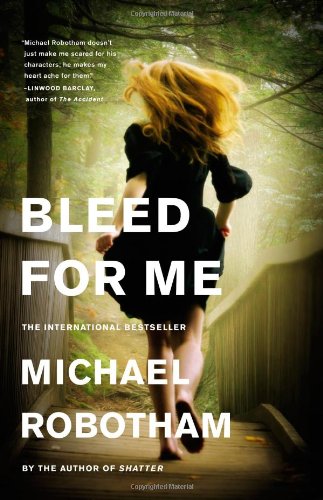
Inhaltsangabe
She's standing at the front door. Covered in blood. Is she the victim of a crime? Or the perpetrator?
A teenage girl -- Sienna, a troubled friend of his daughter -- comes to Joe O'Loughlin's door one night. She is terrorized, incoherent, and covered in blood.
The police find Sienna's father, a celebrated former cop, murdered in the home he shared with Sienna. Tests confirm that it's his blood on Sienna. She says she remembers nothing.
Joe O'Loughlin is a psychologist with troubles of his own. His marriage is coming to an end and his daughter will barely speak to him. He tries to help Sienna, hoping that if he succeeds it will win back his daughter's affection. But Sienna is unreachable, unable to mourn her father's death or to explain it.
Investigators take aim at Sienna. O'Loughlin senses something different is happening, something subterranean and terrifying to Sienna. It may be something in her mind. Or it may be something real. Someone real. Someone capable of the most grim and gruesome murder, and willing to kill again if anyone gets too close.
His newest thriller is further evidence that Michael Robotham is, as David Baldacci has said, "the real deal -- we only hope he will write faster."
A teenage girl -- Sienna, a troubled friend of his daughter -- comes to Joe O'Loughlin's door one night. She is terrorized, incoherent, and covered in blood.
The police find Sienna's father, a celebrated former cop, murdered in the home he shared with Sienna. Tests confirm that it's his blood on Sienna. She says she remembers nothing.
Joe O'Loughlin is a psychologist with troubles of his own. His marriage is coming to an end and his daughter will barely speak to him. He tries to help Sienna, hoping that if he succeeds it will win back his daughter's affection. But Sienna is unreachable, unable to mourn her father's death or to explain it.
Investigators take aim at Sienna. O'Loughlin senses something different is happening, something subterranean and terrifying to Sienna. It may be something in her mind. Or it may be something real. Someone real. Someone capable of the most grim and gruesome murder, and willing to kill again if anyone gets too close.
His newest thriller is further evidence that Michael Robotham is, as David Baldacci has said, "the real deal -- we only hope he will write faster."
Die Inhaltsangabe kann sich auf eine andere Ausgabe dieses Titels beziehen.
Über die Autorin bzw. den Autor
Michael Robotham has been an investigative journalist in Britain, Australia and the US. One of world's most acclaimed authors of thriller fiction, he lives in Sydney with his wife and three daughters.
Auszug. © Genehmigter Nachdruck. Alle Rechte vorbehalten.
Bleed for Me
By Robotham, MichaelMulholland Books
Copyright © 2012 Robotham, MichaelAll right reserved.
ISBN: 9780316126380
1
If I could tell you one thing about Liam Baker’s life it would be this: when he was eighteen years old he beat a girl half to death and left her paralyzed from the waist down because she tipped a bucket of popcorn over his head.
As defining events go, nothing else comes close for Liam, not the death of his mother or his faith in God or the three years he has spent in a secure psychiatric hospital—all of which can be attributed, in one way or another, to that moment of madness in a cinema queue.
“That moment of madness” is the term his psychiatrist just used. Her name is Dr. Victoria Naparstek and she’s giving evidence before a Mental Health Review Tribunal, listing Liam’s achievements as though he’s about to graduate from university.
Dr. Naparstek is a good-looking woman, younger than I expected; midthirties with honey-blond hair, brushed back and gathered in a tortoiseshell clasp. Strands have pulled loose and now frame her features, which otherwise would look quite elfin and sharp. Despite her surname, her accent is Glaswegian but not harsh or guttural, more a Scottish lilt, which makes her sound gay and carefree, even when a man’s freedom is being argued. I wonder if she’s aware that her eyes devour rather than register a person. Perhaps I’m being unfair.
Liam is sitting on a chair beside her. It has been four years since I saw him last, but the change is remarkable. No longer awkward and uncoordinated, Liam has put on weight and his glasses are gone, replaced by contact lenses that make his normally pale blue eyes appear darker.
Dressed in a long-sleeved cotton shirt and jeans, he wears shoes with pointed toes, which are fashionable and he has gelled his hair so that it pokes towards the ceiling. I can picture him getting ready for this hearing, taking extra care with his appearance because he knows how important it is to look his best.
Out the window I can see a walled courtyard, dotted with potted plants and small trees. A dozen patients are exercising, each inhabiting a different space, without acknowledging the others’ existence. Some take a few strides in one direction and then stop, as though lost, and start in a different direction. Others are swinging their arms and marching around the perimeter as though it is a parade ground. One young man seems to be addressing an audience while another has crawled beneath a bench as if sheltering from an imaginary storm.
Dr. Naparstek is still talking.
“In my months working with Liam, I have discovered a troubled young man, who has worked very hard to better himself. His anger issues are under control and his social skills are greatly improved. For the past four months he has been part of our shared-house program, living cooperatively with other patients, cooking, cleaning and washing, making their own rules. Liam has been a calming influence—a team leader. Recently, we had a critical incident when a male resident took a hostage at knifepoint and barricaded a door. It took five minutes for security to gain access to the shared house, by which time Liam had defused the situation. It was amazing to watch.”
I glance at the three members of the review tribunal—a judge, a medical specialist and a lay person with mental health experience. Do they look “amazed,” I wonder. Perhaps they’re just not showing it.
The tribunal must decide if Liam should be released. That’s how the system works. If an offender is thought to be cured, or approaching being cured, they are considered for rehabilitation and release. From a high-security hospital they’re transferred to a regional secure unit for further treatment. If that goes well, they are given increasing amounts of leave, first in the grounds of the unit and later in the local streets with an escort, and then alone.
I am not here in any official capacity. This should be one of my half-days at Bath University, where I’ve taught psychology for the past three years. That’s how long it’s been since I quit my clinical practice. Do I miss it? No. It lives with me still. I remember every patient—the cutters, the groomers, the addicts, the narcissists, the sociopaths and the sexual predators; those who were too frightened to step out into the world and the few who wanted to burn it down.
Liam was one of them. I guess you could say I put him here because I recommended he be sectioned and given treatment rather than sent to a regular prison.
Dr. Naparstek has finished. She smiles and leans down to whisper something in Liam’s ear, squeezing his shoulder. Liam’s eyes swim but aren’t focused on her face. He is looking down the front of her blouse. Resuming her seat, she crosses her legs beneath her charcoal-gray skirt.
The judge looks up. “Is there anyone else who would like to address the tribunal?”
It takes me a moment to get to my feet. Sometimes my legs don’t do as they’re told. My brain sends the messages but they fail to arrive or like London buses they come all at once causing my limbs to either lock up or take me backwards, sideways and occasionally forwards, so that I look like I’m being operated via remote control by a demented toddler.
The condition is known as Parkinson’s—a progressive, degenerative, chronic but not contagious disease that means I’m losing my brain without losing my mind. I will not say incurable. They will find a cure one day.
I have found my feet now. “My name is Professor Joseph O’Loughlin. I was hoping I could ask Liam a few questions.”
The judge tilts his chin to his chest. “What’s your interest in this case, Professor?”
“I’m a clinical psychologist. Liam and I are acquainted. I provided his pre-sentencing assessment.”
“Have you treated Liam since then?”
“No. I’m just hoping to understand the context.”
“The context?”
“Yes.”
Dr. Naparstek has turned to stare at me. She doesn’t seem very impressed. I make my way to the front of the room. The linoleum floor is shining as daylight slants through barred windows, leaving geometric patterns.
“Hello, Liam, do you remember me?”
“Yes.”
“Come and sit up here.”
I place two chairs facing each other. Liam looks at Dr. Naparstek, who nods. He moves forward, taller than I remember, less confident than a few minutes ago. We sit opposite, our knees almost touching.
“It’s good to see you again. How have you been?”
“Good.”
“Do you know why we’re here today?”
He nods.
“Dr. Naparstek and the people here think you’re better and it’s time you moved on. Is that what you want?”
Again he nods.
“If you are released, where would you go?”
“I’d find somewhere to live. G-g-get a job.”
Liam’s stutter is less pronounced than I remember. It gets worse when he’s anxious or angry.
“You have no family?”
“No.”
“Most of your friends are in here.”
“I’ll m-m-make new friends.”
“It’s been a while since I saw you last,...
„Über diesen Titel“ kann sich auf eine andere Ausgabe dieses Titels beziehen.
Suchergebnisse für Bleed for Me (Joseph O'Loughlin, 4)

Beispielbild für diese ISBN
Bleed for Me
Anbieter: World of Books (was SecondSale), Montgomery, IL, USA
Verkäuferbewertung 5 von 5 Sternen

Hardback. Zustand: Fair. She's standing at the front door. Covered in blood. Is she the victim of a crime? Or the perpetrator? A teenage girl -- Sienna, a troubled friend of his daughter -- comes to Joe O'Loughlin's door one night. She is terrorized, incoherent, and covered in blood. The police find Sienna's father, a celebrated former cop, murdered in the home he shared with Sienna. Tests confirm that it's his blood on Sienna. She says she remembers nothing. Joe O'Loughlin is a psychologist with troubles of his own. His marriage is coming to an end and his daughter will barely speak to him. He tries to help Sienna, hoping that if he succeeds it will win back his daughter's affection. But Sienna is unreachable, unable to mourn her father's death or to explain it. Investigators take aim at Sienna. O'Loughlin senses something different is happening, something subterranean and terrifying to Sienna. It may be something in her mind. Or it may be something real. Someone real. Someone capable of the most grim and gruesome murder, and willing to kill again if anyone gets too close. His newest thriller is further evidence that Michael Robotham is, as David Baldacci has said, "the real deal -- we only hope he will write faster.". Artikel-Nr. 00102005023
Gebraucht kaufen
EUR 5,79
Versand gratis
Versand innerhalb von USA
Versand innerhalb von USA
Anzahl: 1 verfügbar
Beispielbild für diese ISBN
Bleed for Me
Anbieter: World of Books (was SecondSale), Montgomery, IL, USA
Verkäuferbewertung 5 von 5 Sternen
Hardback. Zustand: Good. She's standing at the front door. Covered in blood. Is she the victim of a crime? Or the perpetrator? A teenage girl -- Sienna, a troubled friend of his daughter -- comes to Joe O'Loughlin's door one night. She is terrorized, incoherent, and covered in blood. The police find Sienna's father, a celebrated former cop, murdered in the home he shared with Sienna. Tests confirm that it's his blood on Sienna. She says she remembers nothing. Joe O'Loughlin is a psychologist with troubles of his own. His marriage is coming to an end and his daughter will barely speak to him. He tries to help Sienna, hoping that if he succeeds it will win back his daughter's affection. But Sienna is unreachable, unable to mourn her father's death or to explain it. Investigators take aim at Sienna. O'Loughlin senses something different is happening, something subterranean and terrifying to Sienna. It may be something in her mind. Or it may be something real. Someone real. Someone capable of the most grim and gruesome murder, and willing to kill again if anyone gets too close. His newest thriller is further evidence that Michael Robotham is, as David Baldacci has said, "the real deal -- we only hope he will write faster.". Artikel-Nr. 00110392180
Gebraucht kaufen
EUR 5,79
Versand gratis
Versand innerhalb von USA
Versand innerhalb von USA
Anzahl: 2 verfügbar
Beispielbild für diese ISBN
Bleed for Me
Verlag:
Little Brown & Company, 2012
ISBN 10: 0316126381
ISBN 13: 9780316126380
Gebraucht
Hardcover
Erstausgabe
Anbieter: Better World Books, Mishawaka, IN, USA
Verkäuferbewertung 5 von 5 Sternen
Zustand: Good. 1st Edition. Pages intact with minimal writing/highlighting. The binding may be loose and creased. Dust jackets/supplements are not included. Stock photo provided. Product includes identifying sticker. Better World Books: Buy Books. Do Good. Artikel-Nr. 5518622-6
Gebraucht kaufen
EUR 6,25
Versand gratis
Versand innerhalb von USA
Versand innerhalb von USA
Anzahl: 1 verfügbar
Beispielbild für diese ISBN
Bleed for Me
Verlag:
Little Brown & Company, 2012
ISBN 10: 0316126381
ISBN 13: 9780316126380
Gebraucht
Hardcover
Erstausgabe
Anbieter: Better World Books, Mishawaka, IN, USA
Verkäuferbewertung 5 von 5 Sternen
Zustand: Good. 1st Edition. Former library copy. Pages intact with minimal writing/highlighting. The binding may be loose and creased. Dust jackets/supplements are not included. Includes library markings. Stock photo provided. Product includes identifying sticker. Better World Books: Buy Books. Do Good. Artikel-Nr. GRP73182930
Gebraucht kaufen
EUR 6,25
Versand gratis
Versand innerhalb von USA
Versand innerhalb von USA
Anzahl: 3 verfügbar
Beispielbild für diese ISBN
Bleed for Me
Verlag:
Little Brown & Company, 2012
ISBN 10: 0316126381
ISBN 13: 9780316126380
Gebraucht
Hardcover
Erstausgabe
Anbieter: Better World Books: West, Reno, NV, USA
Verkäuferbewertung 5 von 5 Sternen
Zustand: Good. 1st Edition. Former library copy. Pages intact with minimal writing/highlighting. The binding may be loose and creased. Dust jackets/supplements are not included. Includes library markings. Stock photo provided. Product includes identifying sticker. Better World Books: Buy Books. Do Good. Artikel-Nr. GRP73182930
Gebraucht kaufen
EUR 6,25
Versand gratis
Versand innerhalb von USA
Versand innerhalb von USA
Anzahl: 1 verfügbar
Beispielbild für diese ISBN
Bleed for Me (Joseph O'Loughlin, 4)
Anbieter: Wonder Book, Frederick, MD, USA
Verkäuferbewertung 5 von 5 Sternen
Zustand: Good. Good condition. Acceptable dust jacket. A copy that has been read but remains intact. May contain markings such as bookplates, stamps, limited notes and highlighting, or a few light stains. Artikel-Nr. W06L-00471
Gebraucht kaufen
EUR 6,32
Versand gratis
Versand innerhalb von USA
Versand innerhalb von USA
Anzahl: 1 verfügbar
Beispielbild für diese ISBN
Bleed for Me
Anbieter: ThriftBooks-Reno, Reno, NV, USA
Verkäuferbewertung 5 von 5 Sternen
Hardcover. Zustand: Good. No Jacket. Pages can have notes/highlighting. Spine may show signs of wear. ~ ThriftBooks: Read More, Spend Less. Artikel-Nr. G0316126381I3N00
Gebraucht kaufen
EUR 7,17
Versand gratis
Versand innerhalb von USA
Versand innerhalb von USA
Anzahl: 1 verfügbar
Beispielbild für diese ISBN
Bleed for Me
Anbieter: ThriftBooks-Reno, Reno, NV, USA
Verkäuferbewertung 5 von 5 Sternen
Hardcover. Zustand: Good. No Jacket. Former library book; Pages can have notes/highlighting. Spine may show signs of wear. ~ ThriftBooks: Read More, Spend Less. Artikel-Nr. G0316126381I3N10
Gebraucht kaufen
EUR 7,17
Versand gratis
Versand innerhalb von USA
Versand innerhalb von USA
Anzahl: 1 verfügbar
Beispielbild für diese ISBN
Bleed for Me
Anbieter: ThriftBooks-Atlanta, AUSTELL, GA, USA
Verkäuferbewertung 5 von 5 Sternen
Hardcover. Zustand: Fair. No Jacket. Former library book; Readable copy. Pages may have considerable notes/highlighting. ~ ThriftBooks: Read More, Spend Less. Artikel-Nr. G0316126381I5N10
Gebraucht kaufen
EUR 7,17
Versand gratis
Versand innerhalb von USA
Versand innerhalb von USA
Anzahl: 1 verfügbar
Beispielbild für diese ISBN
Bleed for Me
Anbieter: ThriftBooks-Reno, Reno, NV, USA
Verkäuferbewertung 5 von 5 Sternen
Hardcover. Zustand: Good. No Jacket. Missing dust jacket; Pages can have notes/highlighting. Spine may show signs of wear. ~ ThriftBooks: Read More, Spend Less. Artikel-Nr. G0316126381I3N01
Gebraucht kaufen
EUR 7,17
Versand gratis
Versand innerhalb von USA
Versand innerhalb von USA
Anzahl: 1 verfügbar