
Verwandte Artikel zu The Undervalued Self: Restore Your Love/Power Balance,...
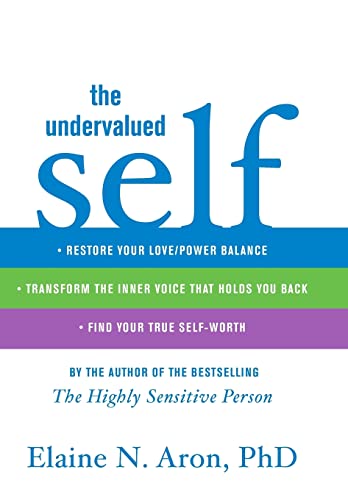
The Undervalued Self: Restore Your Love/Power Balance, Transform the Inner Voice That Holds You Back, and Find Your True Self-Worth - Hardcover
Inhaltsangabe
Elaine Aron follows up her bestsellers on the highly sensitive person with a groundbreaking new book on the undervalued self. She explains that self-esteem results from having a healthy balance of love and power in our lives.
Readers will learn to incorporate love into situations that seem to require power and deal with power struggles that mask themselves as issues of love. From the bedroom to the boardroom, her strategies will enable us to escape feelings of shame, defeat, and depression; dissolve relationship hostility; and become our best selves.
With Aron's clear, empathetic writing and extraordinary scientific and human insight, The Undervalued Self is a simple and effective guide to developing healthy, fulfilling relationships, and finding true self-worth.
Die Inhaltsangabe kann sich auf eine andere Ausgabe dieses Titels beziehen.
Über die Autorin bzw. den Autor
Elaine Aron, Ph.D., is recognized internationally as one of the leading scientists studying the psychology of love and close relationships. Her work has appeared in the New York Times, Time Magazine, and National Geographic, and she has appeared on national morning shows on many networks. She is the author of The Highly Sensitive Person, The Highly Sensitive Person in Love, and The Highly Sensitive Child. She divides her time between New York and San Francisco.
Auszug. © Genehmigter Nachdruck. Alle Rechte vorbehalten.
The Undervalued Self
Restore Your Love/Power Balance, Transform the Inner Voice That Holds You Back, and Find Your True Self-WorthBy Aron, Elaine N.Little, Brown and Company
Copyright © 2010 Aron, Elaine N.All right reserved.
ISBN: 9780316066990
CHAPTER ONE
Ranking, Linking, and the Undervalued Self
Much of what we do every day is to compare ourselves to others and to strive for respect, influence, and power. That is, we rank ourselves among others. Equally often we link with others by expressing affection, caring, and love, to feel connected and secure. At times we combine the two, for example, by using our rank in the service of a link when we want to improve another’s life, as when we teach or advise someone or parent our children. Ranking and linking are always with us.
Sometimes we are conscious of these activities and sometimes not. Either way, ranking and linking play a role in almost all of our personal relationships and problems, including the problem of undervaluing ourselves.
When we undervalue ourselves, we are ranking ourselves too low. Often we drop into an all-or-nothing feeling of worthlessness or shame as we identify with a part of our personality we would otherwise avoid — the undervalued self. This self is out of touch with reality; it is inaccurate in that it underestimates. Whether we are trapped in that self for a moment or for a lifetime, we lose opportunities and suffer greatly.
While ranking is the source of the undervalued self, the right balance of ranking and linking offers the best solution for it. As you become more aware of how you rank and link with others and see the deeper, mostly unconscious and instinctual reasons why you undervalue yourself, you can often avoid tapping into this self with surprising ease. And when you cannot, this awareness is even more essential for dealing with the undervalued self.
Ranking and linking have been observed in the behavior of all higher animals, but researchers have only very recently begun to recognize these activities as the two primary innate systems guiding all of our social behavior. The phrase “linking and ranking” captures the breadth of what we sometimes mean by “love and power.” Love is one part of the broader behavior called linking; ranking is what actually determines power. “Ranking and linking” was first used as a term in political psychology in 1983 by Riane Eisler and David Loye, and the importance of the ranking-linking interconnection was picked up again in the early 1990s in social psychology, but since then the term has rarely been used.
Separately, however, topics related to power and love have always been a major focus of research on human and animal behavior. I myself have researched them separately. But I woke up to their intimate connection as I addressed the problem I see in almost all of my therapy patients: low self-esteem, leading to a lack of healthy close relationships. I realized that although my patients wanted love or linking, they were always seeing power or their rank in relation to others.
While ranking is an integral and even valued part of our lives — for example, we enjoy sports and friendly competition, and we willingly compete for jobs, promotions, and even future life partners — it has the potential to make us feel bad about ourselves in a variety of ways if we let it color our entire social viewpoint. We must all deal with defeat eventually, and, as you will see, defeat naturally affects our overall sense of self-worth and triggers a temporary depression. So if we see life as a series of competitions and comparisons, we are going to suffer more downs than ups. If we mostly rank high, the inevitable defeats will only feel worse.
Of course, we do not want to eliminate doing well or being on top, but our drive to rank high can blind us to ranking’s other aspects. Besides depression, we feel other negative “self-conscious emotions” after a failure or defeat, such as shame, and these are highly unpleasant. Support from friends and family helps, but the more you rank inappropriately, the fewer strong links like this that you will have.
Many of us do rank too much, partly because of our social environment but largely because of serious defeats in our pasts that amounted to trauma. These bias us toward being vigilant to prevent future defeats and humiliations, so we often see ranking even when it is not present. We cannot heal the effects of these traumas without the tools that come with a full understanding of ranking and linking. Whatever the cause, most of us need more linking and less ranking in our lives, and we cannot create the right balance without being able to see ranking and linking clearly.
WHO MAKES YOU FEEL GOOD? WHO MAKES YOU FEEL BAD?
Throughout this book you will find exercises and self-tests to help you understand how ranking, linking, and the undervalued self operate in your life. Keep a journal just for this purpose, in which you record your answers for easy reference. The first exercise is to make two lists: one of the people who usually make you feel good when you are with them and another of people who make you feel bad. (A person can also be on both.) Leave space between the names, because you will return to these lists to make notes.
Notice that almost all the people who make you feel good are those with whom you have a link — anything from a warm, friendly hello or occasional talk on the phone to a link of love that is central for both of you. Almost all the people you feel bad around are those by whom you feel ranked — encompassing everything from a vague sense of being judged to an acknowledged all-out competition that feels as if it is about deciding who is the better person. Linking relationships leave us feeling good about ourselves and others. Relationships that are largely about ranking tend to make us more anxious about our worth and far less happy. Your lists illustrate in a personal way how much ranking can be associated with unhappiness.
THE DANCE OF LINKING AND RANKING
Ranking refers to our place in a social group or hierarchy. Power is closely related to ranking in that it results from high rank. A gentler way to think of power is as influence over others, which can take many forms, including being respected by others.
Linking is our innate balance to ranking. We are drawn to others, enjoy them, want to know and help them if we can. Love is simply linking amplified.
All day we try to strike the right balance between linking — giving and receiving friendliness or concern — and ranking, working to gain others’ respect through our influence, competence, business acumen, fame, fortune, or the quality of our friends and allies. Others seek a higher rank through their appearance, possessions, or membership in a respected group. We often feel that the balance is not right in ourselves or others, and usually there seems to be too much ranking. In some situations we are constantly thinking about our rank or are expected to know it. At other times we may not consciously think about it. In some settings we would prefer to believe there is no ranking. But in any group of two or more people, ranking is always present, even if only in the background. To strike the right balance rather than be pulled by circumstance requires conscious effort.
Even without conscious intent, most of us try to counteract the potential unpleasantness of ranking...
„Über diesen Titel“ kann sich auf eine andere Ausgabe dieses Titels beziehen.
Suchergebnisse für The Undervalued Self: Restore Your Love/Power Balance,...

Beispielbild für diese ISBN
The Undervalued Self
Verlag:
Little Brown and Company, 2010
ISBN 10: 0316066990
ISBN 13: 9780316066990
Gebraucht
Hardcover
Anbieter: ThriftBooks-Atlanta, AUSTELL, GA, USA
Verkäuferbewertung 5 von 5 Sternen

Hardcover. Zustand: Good. No Jacket. Former library book; Missing dust jacket; Pages can have notes/highlighting. Spine may show signs of wear. ~ ThriftBooks: Read More, Spend Less. Artikel-Nr. G0316066990I3N11
Gebraucht kaufen
EUR 5,96
Versand gratis
Versand innerhalb von USA
Versand innerhalb von USA
Anzahl: 1 verfügbar
Beispielbild für diese ISBN
The Undervalued Self: Restore Your Love/Power Balance, Transform the Inner Voice That Holds You Back, and Find Your True Self-Worth
Verlag:
Little Brown and Company, 2010
ISBN 10: 0316066990
ISBN 13: 9780316066990
Gebraucht
Hardcover
Anbieter: World of Books (was SecondSale), Montgomery, IL, USA
Verkäuferbewertung 5 von 5 Sternen
Hardback. Zustand: Fair. Elaine Aron follows up her bestsellers on the highly sensitive person with a groundbreaking new book on the undervalued self. She explains that self-esteem results from having a healthy balance of love and power in our lives. Readers will learn to incorporate love into situations that seem to require power and deal with power struggles that mask themselves as issues of love. From the bedroom to the boardroom, her strategies will enable us to escape feelings of shame, defeat, and depression; dissolve relationship hostility; and become our best selves. With Aron's clear, empathetic writing and extraordinary scientific and human insight, THE UNDERVALUED SELF is a simple and effective guide to developing healthy, fulfilling relationships, and finding true self-worth. Artikel-Nr. CIN0316066990A
Gebraucht kaufen
EUR 6,00
Versand gratis
Versand innerhalb von USA
Versand innerhalb von USA
Anzahl: 1 verfügbar
Beispielbild für diese ISBN
The Undervalued Self: Restore Your Love/Power Balance, Transform the Inner Voice That Holds You Back, and Find Your True Self-Worth
Verlag:
Little Brown and Company, 2010
ISBN 10: 0316066990
ISBN 13: 9780316066990
Gebraucht
Hardcover
Anbieter: World of Books (was SecondSale), Montgomery, IL, USA
Verkäuferbewertung 5 von 5 Sternen
Hardback. Zustand: Good. Elaine Aron follows up her bestsellers on the highly sensitive person with a groundbreaking new book on the undervalued self. She explains that self-esteem results from having a healthy balance of love and power in our lives. Readers will learn to incorporate love into situations that seem to require power and deal with power struggles that mask themselves as issues of love. From the bedroom to the boardroom, her strategies will enable us to escape feelings of shame, defeat, and depression; dissolve relationship hostility; and become our best selves. With Aron's clear, empathetic writing and extraordinary scientific and human insight, THE UNDERVALUED SELF is a simple and effective guide to developing healthy, fulfilling relationships, and finding true self-worth. Artikel-Nr. 00102974277
Gebraucht kaufen
EUR 6,00
Versand gratis
Versand innerhalb von USA
Versand innerhalb von USA
Anzahl: 3 verfügbar
Beispielbild für diese ISBN
The Undervalued Self : Restore Your Love/Power Balance, Transform the Inner Voice That Holds You Back, and Find Your True Self-Worth
Anbieter: Better World Books: West, Reno, NV, USA
Verkäuferbewertung 5 von 5 Sternen
Zustand: Very Good. Pages intact with possible writing/highlighting. Binding strong with minor wear. Dust jackets/supplements may not be included. Stock photo provided. Product includes identifying sticker. Better World Books: Buy Books. Do Good. Artikel-Nr. 4904779-6
Gebraucht kaufen
EUR 8,56
Versand gratis
Versand innerhalb von USA
Versand innerhalb von USA
Anzahl: 2 verfügbar
Beispielbild für diese ISBN
The Undervalued Self : Restore Your Love/Power Balance, Transform the Inner Voice That Holds You Back, and Find Your True Self-Worth
Anbieter: Better World Books, Mishawaka, IN, USA
Verkäuferbewertung 5 von 5 Sternen
Zustand: Good. Former library copy. Pages intact with minimal writing/highlighting. The binding may be loose and creased. Dust jackets/supplements are not included. Includes library markings. Stock photo provided. Product includes identifying sticker. Better World Books: Buy Books. Do Good. Artikel-Nr. 4819279-6
Gebraucht kaufen
EUR 8,56
Versand gratis
Versand innerhalb von USA
Versand innerhalb von USA
Anzahl: 1 verfügbar
Beispielbild für diese ISBN
The Undervalued Self : Restore Your Love/Power Balance, Transform the Inner Voice That Holds You Back, and Find Your True Self-Worth
Anbieter: Better World Books: West, Reno, NV, USA
Verkäuferbewertung 5 von 5 Sternen
Zustand: Good. Pages intact with minimal writing/highlighting. The binding may be loose and creased. Dust jackets/supplements are not included. Stock photo provided. Product includes identifying sticker. Better World Books: Buy Books. Do Good. Artikel-Nr. 5279589-6
Gebraucht kaufen
EUR 8,56
Versand gratis
Versand innerhalb von USA
Versand innerhalb von USA
Anzahl: 1 verfügbar
Beispielbild für diese ISBN
The Undervalued Self : Restore Your Love/Power Balance, Transform the Inner Voice That Holds You Back, and Find Your True Self-Worth
Anbieter: Better World Books, Mishawaka, IN, USA
Verkäuferbewertung 5 von 5 Sternen
Zustand: Good. Pages intact with minimal writing/highlighting. The binding may be loose and creased. Dust jackets/supplements are not included. Stock photo provided. Product includes identifying sticker. Better World Books: Buy Books. Do Good. Artikel-Nr. 5279589-6
Gebraucht kaufen
EUR 8,56
Versand gratis
Versand innerhalb von USA
Versand innerhalb von USA
Anzahl: 1 verfügbar
Beispielbild für diese ISBN
The Undervalued Self: Restore Your Love/Power Balance, Transform the Inner Voice That Holds You Back, and Find Your True Self-Worth
Verlag:
Little Brown and Company, United Kingdom, London, 2010
ISBN 10: 0316066990
ISBN 13: 9780316066990
Gebraucht
Paperback
Anbieter: WorldofBooks, Goring-By-Sea, WS, Vereinigtes Königreich
Verkäuferbewertung 5 von 5 Sternen
Paperback. Zustand: Very Good. The book has been read, but is in excellent condition. Pages are intact and not marred by notes or highlighting. The spine remains undamaged. Artikel-Nr. GOR005396523
Gebraucht kaufen
EUR 18,56
EUR 6,63 Versand
Versand von Vereinigtes Königreich nach USA
Versand von Vereinigtes Königreich nach USA
Anzahl: 6 verfügbar
Beispielbild für diese ISBN
The Undervalued Self: Correct Your Love/Power Imbalance, Transform the Inner Voice That Holds You Back, and Find Your True Self-worth
Anbieter: Revaluation Books, Exeter, Vereinigtes Königreich
Verkäuferbewertung 5 von 5 Sternen
Hardcover. Zustand: Brand New. 1st edition. 276 pages. 9.50x6.25x1.25 inches. In Stock. Artikel-Nr. x-0316066990
Neu kaufen
EUR 41,76
EUR 11,84 Versand
Versand von Vereinigtes Königreich nach USA
Versand von Vereinigtes Königreich nach USA
Anzahl: 2 verfügbar
Foto des Verkäufers
The Undervalued Self
Verlag:
Hachette Book Group USA Mär 2010, 2010
ISBN 10: 0316066990
ISBN 13: 9780316066990
Neu
Hardcover
Anbieter: AHA-BUCH GmbH, Einbeck, Deutschland
Verkäuferbewertung 5 von 5 Sternen
Buch. Zustand: Neu. Neuware - Elaine Aron follows up her bestsellers on the highly sensitive person with a groundbreaking new book on the undervalued self. She explains that self-esteem results from having a healthy balance of love and power in our lives. Readers will learn to incorporate love into situations that seem to require power and deal with power struggles that mask themselves as issues of love. From the bedroom to the boardroom, her strategies will enable us to escape feelings of shame, defeat, and depression; dissolve relationship hostility; and become our best selves. With Aron's clear, empathetic writing and extraordinary scientific and human insight, THE UNDERVALUED SELF is a simple and effective guide to developing healthy, fulfilling relationships, and finding true self-worth. Artikel-Nr. 9780316066990
Neu kaufen
EUR 45,23
EUR 35,00 Versand
Versand von Deutschland nach USA
Versand von Deutschland nach USA
Anzahl: 2 verfügbar