
Verwandte Artikel zu The Diviners
Inhaltsangabe
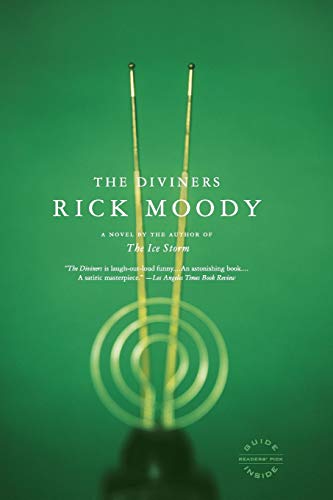
During one month in the autumn of election year 2000, scores of movie-business strivers are focused on one goal: getting a piece of an elusive, but surely huge, television saga, the one that opens with Huns sweeping through Mongolia and closes with a Mormon diviner in the Las Vegas desert; the sure-to-please-everyone multigenerational TV miniseries about diviners, those miracle workers who bring water to perpetually thirsty (and hungry and love-starved) humankind.
Among the wannabes: Vanessa Meandro, hot-tempered head of Means of Production, an indie film company; her harried and varied staff; a Sikh cab driver, promoted to the office of -theory and practice of TV; a bipolar bicycle messenger, who makes a fateful mis-delivery; two celebrity publicists, the Vanderbilt girls; a thriller writer who gives Botox parties; the daughter of an L.A. big-shot, who is hired to fetch Vanessa's Krispy Kremes and more; a word man who coined the phrase -- inspired by a true story; and a supreme court justice who wants to write the script.A few true artists surface in the course of Moody's rollicking but intricately woven novel, and real emotion eventually blossoms for most of Vanessa's staff at Means of Production, even herself.
The Diviners is a cautionary tale about pointless ambition; a richly detailed look at the interlocking worlds of money, politics, addiction, sex, work, and family in modern America; and a masterpiece of comedy that will bring Rick Moody to a still higher level of appreciation.
Die Inhaltsangabe kann sich auf eine andere Ausgabe dieses Titels beziehen.
Über die Autorin bzw. den Autor
Rick Moody was born in New York City. He attended Brown and Columbia Universities. He is the author of four previous novels: The Four Fingers of Death, Purple America, The Ice Storm, and Garden State, as well as an award-winning memoir and multiple collections of short fiction. Moody is the recipient of a Guggenheim fellowship, and his work has been anthologized in Best American Stories, Best American Essays, and the Pushcart Prize anthology. He lives in Brooklyn, New York.
Auszug. © Genehmigter Nachdruck. Alle Rechte vorbehalten.
The Diviners
A NovelBy Rick MoodyLITTLE, BROWN
Copyright © 2007 Rick MoodyAll right reserved.
ISBN: 978-0-316-01327-7
Chapter One
Rosa Elisabetta Meandro, in insubstantial light, entrails in flames. Rosa Elisabetta of the hammertoe, Rosa Elisabetta of the corns. Rosa Elisabetta of the afflictions. She has hinted about the nature of her sufferings to certain persons up the block, certain persons on Eleventh Street, Brooklyn. Emilia, whose son sells the raviolis, for example. She has whispered to Emilia about the colitis. She has indicated problems relating to her gallbladder. Stones. Also headaches. These headaches begin with visitations, with rainbows, celestial light, an inability to remember numbers. Rosa Elisabetta might smell the overpowering perfume of cocktail onions, after which there is Technicolor. Two or three days sick in bed, lower than a dog is low. If she's enumerating the complaints for Emilia, there is the colitis, there are the corns, there is the pancreas, there are the headaches. At least four things. Gas, though it's not proper to talk about it. On nights when the garlic has not been properly sauted according to the cuisine of her ancestral homeland, Tuscany, then there is also the gas. Perhaps it is correct to include this in the list of complaints, assembled at 6:13AM, as she burrows down further into bedcovers, into the folds of her four-poster. She doesn't know how much longer she can resist the cramps, the pressurized evacuation of her last meal and everything else eaten in the past twenty-four hours, everything, at least, that has not already been evacuated. Best to be pleasant about it; this is what Emilia said when Rosa Elisabetta Meandro was telling her about the scabs. There are these scabs that don't heal; when she gets a cut, saws into herself accidentally in the kitchen, dicing vegetables, there is the mineralization of the cut. The cut doesn't heal, not as it should. What's that all about? She was also going to tell Emilia about the halitosis, that day, which she can smell by cupping her hands and attempting to exhale and inhale quickly, while lying in the four-poster. It is no longer the smell of the garlic sauted, nor is it the smell of the cocktail onions, nor is it the smell of port wine, nor is it stewed peppers. It's some new smell, and this is what Rosa was trying to tell Emilia the other day, no doubt about it. The look in the eyes of Emilia was a look of pity, which is a look that makes Rosa Elisabetta Meandro irritable, though she tries to be pleasant, and this righteous anger, even in the dawn light ebbing into the garden apartment through the windows facing the street, is a refreshing sentiment, a motivator, as she breathes out cupping her hands.Consider the formidable Rosa Elisabetta of the past. Consider the archaeology of her phases. Kingmaker in the civic politics of the Fourth Ward, parader with infant ghouls and vampires on Halloween, soup kitchen volunteer; Rosa Elisabetta, institution. Dignified mother of the block, guardian of the parking spaces of longtime residents of the neighborhood, protector of the community, of local parishes, registrar of voters. Once she was all these things. A lover of families. As she enumerates them, however, Rosa Elisabetta can feel the sweat pooling in the folds of her abdomen; she can feel cramps beckoning from south of her equator. What was it that Emilia surely wanted to say about her bad breath? Maybe nothing. Her father had bad breath. Foul breath. It was his guts. She was there with the priest, such a nice priest, and the breath of her father smelled like a gizzard. She won't talk to Emilia anymore. How can anyone think such a thing? The cupping-hands experiment does not bear out results. Nothing at all like the smell of death.
She held the little children in the day care center while their mothers worked in Manhattan. She sang songs to these children, songs by important American singers from the age of big bands. Not one of these little children said to her: Your breath smells like something died in your mouth. She liked to present the boys with chocolates; she liked to warn them about the dangers of amorous contact. She told the little boys and girls: Avoid becoming in- flamed. Never be alone in a room with a man who is too thin. Never walk near an idling automobile if it has tinted windows. Next she would speak of the constellations, how the constellations were catalogued during the Roman Empire. She knows about the Roman Empire from her father and his father, and she knows about it from the priests in the schoolyard of Dyker Heights, where she lived as a girl. She also once watched a miniseries on the subject of the Roman Empire. The emperors poisoned one another. The emperors knew a lot about poisons. She lifted and carried children, kissed them on their dirty necks. It is not right that Emilia from the ravioli store should even consider saying anything about the colitis, the gas, the headaches, the corns, the scabs, the breath, or the hair that is falling out. Or the blindness, or the incipient deafness, or the fact that Rosa is too skinny. Her dresses hang off her, like sheets draped over furniture in shuttered houses.
The cat is disturbed by a migrating foot from his spot in a spiral of bedclothes at the end of the bed. The cat resembles the black-and-whites of civic policing, but she does not like the name her daughter has given him and will not utter it. The animal hops gamely to the floor, waits. Will Rosa feed him? Now Rosa Elisabetta smooths her threadbare nightgown over her legs, pulls an old pink sweater from a squeaky dresser drawer just opposing, and wraps it around herself. Winches herself up on swollen knees and hips. This is her submission to the order of aging and infirmity. She knows what is to come now, how long it will take. She passes across the hardwood floor with its inlays of cherry and mahogany, into the sitting room, careful to avoid stacks of reading material beside the chair, some large stacks, in front of the French doors leading out to the garden. She flips on the television on the way past, 6:21AM. A twenty-four-inch monitor that she bought used from a newspaper advertisement. The static of the picture assembling. She doesn't have time to look because all at once she is doubled over, indelicately emitting pollutants, she's awake and will be awake, clutching at her insides. She can hear the device, the old television set, from the bathroom. The volume is calibrated to allow this pleasure. Its music is generous from the agony of the bathroom. She bolts the door, leaving the cat on the other side. She begins to weep as the tremors begin. She weeps for the indignity. She hopes she will not bleed. She worries that it will not stop. She could live with it for a while, the colitis, if only she didn't bleed. She reaches for a magazine on the tank. The wallpaper in the bathroom, floral print, is peeling, and there is paint flaking from the ceiling. She tries to pretend that the concerns of the magazine are her concerns. Allegations about the outgoing president and his wife. His wife's lesbian secret. A powerful weight-loss program has enabled certain celebrities to shed up to seventy pounds. One chubby actress had her stomach stapled, live on the Internet. Will Rosa Elisabetta faint? Perspiration courses down her brow. She has fainted in the past. An awful embarrassment, the fainting, because then her daughter or the Polish woman who comes to clean will find her on the floor. Another actress, this one too thin, needs to put some weight back on, drinks milk shakes that weight lifters drink. Just the ticket. She thinks...
„Über diesen Titel“ kann sich auf eine andere Ausgabe dieses Titels beziehen.
Suchergebnisse für The Diviners

Beispielbild für diese ISBN
The Diviners
Anbieter: World of Books (was SecondSale), Montgomery, IL, USA
Verkäuferbewertung 5 von 5 Sternen

Zustand: Good. Item in good condition. Textbooks may not include supplemental items i.e. CDs, access codes etc. Artikel-Nr. 00107450658
Gebraucht kaufen
EUR 5,24
Versand gratis
Versand innerhalb von USA
Versand innerhalb von USA
Anzahl: 1 verfügbar
Beispielbild für diese ISBN
The Diviners
Verlag:
Back Bay Books (edition ), 2007
ISBN 10: 0316013277
ISBN 13: 9780316013277
Gebraucht
Paperback
Anbieter: BooksRun, Philadelphia, PA, USA
Verkäuferbewertung 5 von 5 Sternen
Paperback. Zustand: Fair. The item might be beaten up but readable. May contain markings or highlighting, as well as stains, bent corners, or any other major defect, but the text is not obscured in any way. Artikel-Nr. 0316013277-7-1
Gebraucht kaufen
EUR 5,25
Versand gratis
Versand innerhalb von USA
Versand innerhalb von USA
Anzahl: 1 verfügbar
Beispielbild für diese ISBN
The Diviners
Anbieter: ThriftBooks-Dallas, Dallas, TX, USA
Verkäuferbewertung 5 von 5 Sternen
Paperback. Zustand: Very Good. No Jacket. May have limited writing in cover pages. Pages are unmarked. ~ ThriftBooks: Read More, Spend Less. Artikel-Nr. G0316013277I4N00
Gebraucht kaufen
EUR 6,29
Versand gratis
Versand innerhalb von USA
Versand innerhalb von USA
Anzahl: 1 verfügbar
Beispielbild für diese ISBN
The Diviners
Verlag:
Little, Brown Paperbacks, 2007
ISBN 10: 0316013277
ISBN 13: 9780316013277
Gebraucht
Softcover
Anbieter: Wonder Book, Frederick, MD, USA
Verkäuferbewertung 5 von 5 Sternen
Zustand: Good. Good condition. With remainder mark. A copy that has been read but remains intact. May contain markings such as bookplates, stamps, limited notes and highlighting, or a few light stains. Artikel-Nr. F21C-01841
Gebraucht kaufen
EUR 6,32
Versand gratis
Versand innerhalb von USA
Versand innerhalb von USA
Anzahl: 1 verfügbar
Beispielbild für diese ISBN
The Diviners
Anbieter: Better World Books, Mishawaka, IN, USA
Verkäuferbewertung 5 von 5 Sternen
Zustand: Good. Pages intact with minimal writing/highlighting. The binding may be loose and creased. Dust jackets/supplements are not included. Stock photo provided. Product includes identifying sticker. Better World Books: Buy Books. Do Good. Artikel-Nr. 38448198-6
Gebraucht kaufen
EUR 6,64
Versand gratis
Versand innerhalb von USA
Versand innerhalb von USA
Anzahl: 2 verfügbar
Foto des Verkäufers
The Diviners
Anbieter: Southampton Books, Sag Harbor, NY, USA
Verkäuferbewertung 5 von 5 Sternen
Paperback. Zustand: Very Good. FIRST THUS. First Edition Thus, First Printing. Not price-clipped. Published by Back Bay Books, 2007. Octavo. Paperback. Book is very good with sticker residue on front cover and publisher mark on bottom page end. 100% positive feedback. 30 day money back guarantee. NEXT DAY SHIPPING! Excellent customer service. Please email with any questions. All books packed carefully and ship with free delivery confirmation/tracking. All books come with free bookmarks. Ships from Sag Harbor, New York. Artikel-Nr. 433327
Gebraucht kaufen
EUR 9,04
EUR 4,38 Versand
Versand innerhalb von USA
Versand innerhalb von USA
Anzahl: 1 verfügbar
Beispielbild für diese ISBN
The Diviners: A Novel
Anbieter: Kennys Bookstore, Olney, MD, USA
Verkäuferbewertung 5 von 5 Sternen
Zustand: New. 2007. paperback. . . . . . Books ship from the US and Ireland. Artikel-Nr. 9780316013277
Foto des Verkäufers
The Diviners: A Novel
Anbieter: Bookbot, Prague, Tschechien
Verkäuferbewertung 5 von 5 Sternen
Softcover. Zustand: Fine. Einriss bis 1 cm. During the autumn of the 2000 election year, numerous aspiring filmmakers are fixated on securing a role in a grand television miniseries that spans from Huns in Mongolia to a Mormon diviner in the Las Vegas desert. This ambitious project aims to explore the lives of diviners, miracle workers who provide for humanity's basic needs. Among the hopefuls are Vanessa Meandro, the fiery head of an indie film company; her diverse and overwhelmed staff; a Sikh cab driver now involved in TV theory; a bipolar bicycle messenger who makes a critical error; two celebrity publicists, the Vanderbilt sisters; a thriller writer hosting Botox parties; the daughter of a Hollywood executive tasked with fetching snacks; a wordsmith who coined the phrase "inspired by a true story"; and a Supreme Court justice aspiring to write the script. Throughout this intricately woven narrative, true artists emerge, and genuine emotions develop among Vanessa's team. The story serves as a cautionary tale about empty ambition, offering a rich exploration of the interconnected realms of money, politics, addiction, and family in contemporary America, all delivered with a comedic touch that elevates the author's acclaim. Artikel-Nr. 027473c7-4095-4bd3-b254-533e4287d585
Gebraucht kaufen
EUR 22,28
EUR 20,99 Versand
Versand von Tschechien nach USA
Versand von Tschechien nach USA
Anzahl: 1 verfügbar
Beispielbild für diese ISBN
The Diviners: A Novel
Anbieter: Revaluation Books, Exeter, Vereinigtes Königreich
Verkäuferbewertung 5 von 5 Sternen
Paperback. Zustand: Brand New. reprint edition. 567 pages. 8.00x5.50x0.75 inches. In Stock. Artikel-Nr. x-0316013277
Neu kaufen
EUR 31,28
EUR 14,53 Versand
Versand von Vereinigtes Königreich nach USA
Versand von Vereinigtes Königreich nach USA
Anzahl: 2 verfügbar
Foto des Verkäufers
The Diviners
Verlag:
Hachette Book Group USA Jan 2007, 2007
ISBN 10: 0316013277
ISBN 13: 9780316013277
Neu
Taschenbuch
Anbieter: AHA-BUCH GmbH, Einbeck, Deutschland
Verkäuferbewertung 5 von 5 Sternen
Taschenbuch. Zustand: Neu. Neuware - During one month in the autumn of election year 2000, scores of movie-business strivers are focused on one goal: getting a piece of an elusive, but surely huge, television saga, the one that opens with Huns sweeping through Mongolia and closes with a Mormon diviner in the Las Vegas desert; the sure-to-please-everyone multigenerational TV miniseries about diviners, those miracle workers who bring water to perpetually thirsty (and hungry and love-starved) humankind.Among the wannabes: Vanessa Meandro, hot-tempered head of Means of Production, an indie film company; her harried and varied staff; a Sikh cab driver, promoted to the office of -theory and practice of TV; a bipolar bicycle messenger, who makes a fateful mis-delivery; two celebrity publicists, the Vanderbilt girls; a thriller writer who gives Botox parties; the daughter of an L.A. big-shot, who is hired to fetch Vanessa's Krispy Kremes and more; a word man who coined the phrase -- inspired by a true story; and a supreme court justice who wants to write the script.A few true artists surface in the course of Moody's rollicking but intricately woven novel, and real emotion eventually blossoms for most of Vanessa's staff at Means of Production, even herself.The Diviners is a cautionary tale about pointless ambition; a richly detailed look at the interlocking worlds of money, politics, addiction, sex, work, and family in modern America; and a masterpiece of comedy that will bring Rick Moody to a still higher level of appreciation. Artikel-Nr. 9780316013277
Neu kaufen
EUR 33,50
EUR 35,00 Versand
Versand von Deutschland nach USA
Versand von Deutschland nach USA
Anzahl: 2 verfügbar