
Verwandte Artikel zu Winter Solstice
Inhaltsangabe
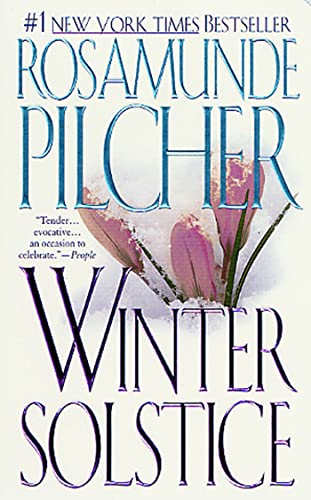
In Winter Solstice Rosamunde Pilcher brings her readers into the lives of five very different people....
Elfrida Phipps, once of London's stage, moved to the English village of Dibton in hopes of making a new life for herself. Gradually she settled into the comfortable familiarity of village life -- shopkeepers knowing her tastes, neighbors calling her by name -- still she finds herself lonely.
Oscar Blundell gave up his life as a musician in order to marry Gloria. They have a beautiful daughter, Francesca, and it is only because of their little girl that Oscar views his sacrificed career as worthwhile.
Carrie returns from Australia at the end of an ill-fated affair with a married man to find her mother and aunt sharing a home and squabbling endlessly. With Christmas approaching, Carrie agrees to look after her aunt's awkward and quiet teenage daughter, Lucy, so that her mother might enjoy a romantic fling in America.
Sam Howard is trying to pull his life back together after his wife has left him for another. He is without home and without roots, all he has is his job. Business takes him to northern Scotland, where he falls in love with the lush, craggy landscape and set his sights on a house.
It is the strange rippling effects of a tragedy that will bring these five characters together in a large, neglected estate house near the Scottish fishing town of Creagan.
It is in this house, on the shortest day of the year, that the lives of five people will come together and be forever changed. Rosamunde Pilcher's long-awaited return to the page will warm the hearts of readers both old and new. Winter Solstice is a novel of love, loyalty and rebirth.
Die Inhaltsangabe kann sich auf eine andere Ausgabe dieses Titels beziehen.
Über die Autorin bzw. den Autor
ROSAMUNDE PILCHER (1924- 2019) wrote such worldwide bestselling novels as The Shell Seekers, September, Coming Home, Winter Solstice, and Voices in Summer. Her breakthrough novel, The Shell Seekers, sold more than 10 million copies. Pilcher also authored the photographic autobiography, The World of Rosamunde Pilcher. She was an Officer of the Order of the British Empire (OBE) and lived in Perthshire, Scotland.
Auszug. © Genehmigter Nachdruck. Alle Rechte vorbehalten.
Excerpt
ELFRIDA
Before Elfrida Phipps left London for good and moved to the country, she made atrip to the Battersea Dogs' Home, and returned with a canine companion. It tooka good-and heart-rending-half-hour of searching, but as soon as she saw him,sitting very close to the bars of his kennel and gazing up at her with dark andmelting eyes, she knew that he was the one. She did not want a large animal, nordid she relish the idea of a yapping lap-dog. This one was exactly the rightsize. Dog size.
He had a lot of soft hair, some of which fell over his eyes, ears that couldprick or droop, and a triumphant plume of a tail. His colouring was irregularlypatched brown and white. The brown bits were the exact shade of milky cocoa.When asked his ancestry, the kennel maid said she thought there was Bordercollie there, and a bit of bearded collie, as well as a few other unidentifiedbreeds. Elfrida didn't care. She liked the expression on his gentle face. Sheleft a donation for the Battersea Dogs' Home, and her new companion travelledaway with her, sitting in the passenger seat of her old car and gazing from thewindow in a satisfied fashion, as though this were the life to which he washappy to become accustomed.
The next day, she took him to the local Poodle Parlour for a cut, shampoo, andblow-dry. He returned to her fluffy and fresh and smelling sweetly of lemonade.His response to all this sybaritic attention was a show of faithful, grateful,and loving devotion. He was a shy, even a timid, dog, but brave as well. If thedoorbell rang, or he thought he spied an intruder, he barked his head off for amoment and then retreated to his basket, or to Elfrida's lap. It took some timeto decide on a name for him, but in the end she christened him Horace.
Elfrida, with a basket in her hand, and Horace firmly clipped to the end of hislead, closed the front door of her cottage behind her, walked down the narrowpath, through the gate, and set off down the pavement towards the post officeand general store.
It was a dull, grey afternoon in the middle of October, with nothing much tocommend about it. The last of autumn's leaves fell from trees, with anunseasonably icy breeze too chill for even the most ardent of gardeners to beout and about. The street was deserted, and the children not yet out of school.Overhead, the sky was low with clouds, that shifted steadily and yet neverseemed to clear. She walked briskly, Horace trotting reluctantly at her heels,knowing that this was his exercise for the day and he had no alternative but tomake the best of it.
The village was Dibton in Hampshire, and here Elfrida had come to live eighteenmonths ago, leaving London forever and making for herself a new life. At firstshe had felt a bit solitary, but now she couldn't imagine living anywhere else.From time to time, old acquaintances from her theatre days made the intrepidjourney from the city and came to stay with her, sleeping on the lumpy divan inthe tiny back bedroom that she called her work-room, which was where she kepther sewing machine and earned a bit of pin money making elaborate and beautifulcushions for an interior decorating firm in Sloane Street.
When these friends departed, they needed reassurance: "You're all right, aren'tyou, Elfrida?" they would ask. "No regrets? You don't want to come back toLondon? You're happy?" And she had been able to set their minds at rest. "Ofcourse I am. This is my geriatric bolt-hole. This is where I shall spend thetwilight of my years."
So, by now, there was a comfortable familiarity about it all. She knew who livedin this house, in that cottage. People called her by her name. "Morning,Elfrida," or "Lovely day, Mrs. Phipps." Some of the inhabitants were commutingfamilies, the man of the house setting out early each morning to catch the fasttrain to London and returning late in the evening to pick up his car from thestation park and drive the short distance home. Others had lived here all theirlives in small stone houses that had belonged to their fathers and theirgrandfathers before that. Still others were new altogether, inhabiting thecouncil estates that ringed the village, and employed by the electronics factoryin the neighbouring town. It was all very ordinary, and so, undemanding. Just,in fact, what Elfrida needed.
Walking, she passed the pub, newly furbished and now called the DibtonCoachhouse. There were wrought-iron signs and a spacious car-park. Farther on,she passed the church, with its yew trees and lych-gate, and a notice-boardfluttering with parish news. A guitar concert, an outing for the Mothers andToddlers group. In the churchyard, a man lit a bonfire and the air was sweetwith the scent of toasting leaves. Overhead, rooks cawed. A cat sat on one ofthe churchyard gate posts, but luckily Horace did not notice him.
The street curved, and at the end of it, by the dull bungalow which was the newVicarage, she saw the village shop, flying banners advertising ice-cream, andnewspaper placards propped against the wall. Two or three youths with bicycleshung about its door, and the postman, with his red van, was emptying thepost-box.
There were bars over the shop window, to stop vandals' breaking the glass andstealing the tins of biscuits and arrangements of baked beans which were Mrs.Jennings's idea of tasteful decoration. Elfrida put down her basket and tiedHorace's lead to one of these bars, and he sat looking resigned. He hated beingleft on the pavement, at the mercy of the jeering youths, but Mrs. Jenningsdidn't like dogs in her establishment. She said they lifted their legs and weredirty brutes.
Inside, the shop was bright with electricity, low-ceilinged and very warm.Refrigerators and freezers hummed, and it had strip lighting and an up-to-datearrangement of display shelving which had been installed some months ago, a hugeimprovement, Mrs. Jennings insisted, more like a mini-market. Because of allthese barriers, it was difficult to know at first glance who was in the shop andwho wasn't, and it was not until Elfrida rounded a corner (instant coffee andteas) that she saw the familiar back view, standing by the till and paying hisdue.
Oscar Blundell. Elfrida was past the age when her heart leaped for joy, but shewas always pleased to see Oscar. He had been almost the first person she metwhen she came to live in Dibton, because she had gone to church one Sundaymorning, and after the service the vicar had stopped her outside the door, hishair on end in the fresh spring breeze, and his white cassock blowing like cleanwashing on a line. He had spoken welcoming words, made a few noises about doingflowers and the Women's Institute, and then, mercifully, was diverted. "Andhere's our organist. Oscar Blundell. Not our regular, you understand, but asplendid spare wheel in times of trouble."
And Elfrida turned, and saw the man emerging from the darkness of the interiorof the church, walking out into the sunshine to join them. She saw the gentle,amused face, the hooded eyes, the hair which had probably once been fair but wasnow thickly white. He was as tall as Elfrida, which was unusual. She toweredover most men, being five feet eleven and thin as a lath, but Oscar she met eyeto eye and liked what she saw there. Because it was Sunday, he wore a tweed suitand a pleasing tie, and when they shook hands, his grip had a good feel to it.
She said, "How clever. To play the organ, I mean. Is it your hobby?"
And he replied, quite seriously, "No, my job. My life." And then smiled, whichtook all pomposity from his words. "My profession," he amended.
A day or two later, and Elfrida received a telephone call.
"Hello, Gloria Blundell here. You met my husband last Sunday after church. Theorganist. Come and have dinner on Thursday. You know where we live. The Grange.Turreted red brick at the end of the village."
"How very kind. I'd love to."
"How are you settling...
„Über diesen Titel“ kann sich auf eine andere Ausgabe dieses Titels beziehen.
Suchergebnisse für Winter Solstice

Beispielbild für diese ISBN
Winter Solstice
Verlag:
St. Martin's Paperbacks, 2001
ISBN 10: 0312978383
ISBN 13: 9780312978389
Gebraucht
Softcover
Anbieter: World of Books (was SecondSale), Montgomery, IL, USA
Verkäuferbewertung 5 von 5 Sternen

Zustand: Good. Item in good condition. Textbooks may not include supplemental items i.e. CDs, access codes etc. Artikel-Nr. 00103552532
Gebraucht kaufen
EUR 3,57
Versand gratis
Versand innerhalb von USA
Versand innerhalb von USA
Anzahl: 5 verfügbar
Beispielbild für diese ISBN
Winter Solstice
Verlag:
St. Martin's Paperbacks, 2001
ISBN 10: 0312978383
ISBN 13: 9780312978389
Gebraucht
Softcover
Anbieter: World of Books (was SecondSale), Montgomery, IL, USA
Verkäuferbewertung 5 von 5 Sternen
Zustand: Acceptable. Item in acceptable condition! Textbooks may not include supplemental items i.e. CDs, access codes etc. Artikel-Nr. 00099250201
Gebraucht kaufen
EUR 3,57
Versand gratis
Versand innerhalb von USA
Versand innerhalb von USA
Anzahl: 10 verfügbar
Beispielbild für diese ISBN
Winter Solstice
Verlag:
St. Martin's Paperbacks (edition First Edition), 2001
ISBN 10: 0312978383
ISBN 13: 9780312978389
Gebraucht
Mass Market Paperback
Erstausgabe
Anbieter: BooksRun, Philadelphia, PA, USA
Verkäuferbewertung 5 von 5 Sternen
Mass Market Paperback. Zustand: Fair. First Edition. The item might be beaten up but readable. May contain markings or highlighting, as well as stains, bent corners, or any other major defect, but the text is not obscured in any way. Artikel-Nr. 0312978383-7-1
Gebraucht kaufen
EUR 4,49
Versand gratis
Versand innerhalb von USA
Versand innerhalb von USA
Anzahl: 2 verfügbar
Beispielbild für diese ISBN
Winter Solstice
Verlag:
St. Martin's Press, 2001
ISBN 10: 0312978383
ISBN 13: 9780312978389
Gebraucht
Softcover
Erstausgabe
Anbieter: Better World Books: West, Reno, NV, USA
Verkäuferbewertung 5 von 5 Sternen
Zustand: Good. 1st. Pages intact with minimal writing/highlighting. The binding may be loose and creased. Dust jackets/supplements are not included. Stock photo provided. Product includes identifying sticker. Better World Books: Buy Books. Do Good. Artikel-Nr. GRP16787224
Gebraucht kaufen
EUR 5,95
Versand gratis
Versand innerhalb von USA
Versand innerhalb von USA
Anzahl: 2 verfügbar
Beispielbild für diese ISBN
Winter Solstice
Verlag:
St. Martin's Press, 2001
ISBN 10: 0312978383
ISBN 13: 9780312978389
Gebraucht
Softcover
Erstausgabe
Anbieter: Better World Books, Mishawaka, IN, USA
Verkäuferbewertung 5 von 5 Sternen
Zustand: Good. 1st. Pages intact with minimal writing/highlighting. The binding may be loose and creased. Dust jackets/supplements are not included. Stock photo provided. Product includes identifying sticker. Better World Books: Buy Books. Do Good. Artikel-Nr. GRP16787224
Gebraucht kaufen
EUR 5,95
Versand gratis
Versand innerhalb von USA
Versand innerhalb von USA
Anzahl: 2 verfügbar
Beispielbild für diese ISBN
Winter Solstice
Anbieter: ThriftBooks-Phoenix, Phoenix, AZ, USA
Verkäuferbewertung 5 von 5 Sternen
Paperback. Zustand: Fair. No Jacket. Readable copy. Pages may have considerable notes/highlighting. ~ ThriftBooks: Read More, Spend Less. Artikel-Nr. G0312978383I5N00
Gebraucht kaufen
EUR 6,06
Versand gratis
Versand innerhalb von USA
Versand innerhalb von USA
Anzahl: 1 verfügbar
Beispielbild für diese ISBN
Winter Solstice
Anbieter: ThriftBooks-Reno, Reno, NV, USA
Verkäuferbewertung 5 von 5 Sternen
Paperback. Zustand: Fair. No Jacket. Readable copy. Pages may have considerable notes/highlighting. ~ ThriftBooks: Read More, Spend Less. Artikel-Nr. G0312978383I5N00
Gebraucht kaufen
EUR 6,06
Versand gratis
Versand innerhalb von USA
Versand innerhalb von USA
Anzahl: 1 verfügbar
Beispielbild für diese ISBN
Winter Solstice
Anbieter: ThriftBooks-Dallas, Dallas, TX, USA
Verkäuferbewertung 5 von 5 Sternen
Paperback. Zustand: Good. No Jacket. Pages can have notes/highlighting. Spine may show signs of wear. ~ ThriftBooks: Read More, Spend Less. Artikel-Nr. G0312978383I3N00
Gebraucht kaufen
EUR 6,07
Versand gratis
Versand innerhalb von USA
Versand innerhalb von USA
Anzahl: Mehr als 20 verfügbar
Beispielbild für diese ISBN
Winter Solstice
Anbieter: ThriftBooks-Dallas, Dallas, TX, USA
Verkäuferbewertung 5 von 5 Sternen
Paperback. Zustand: Fair. No Jacket. Readable copy. Pages may have considerable notes/highlighting. ~ ThriftBooks: Read More, Spend Less. Artikel-Nr. G0312978383I5N00
Gebraucht kaufen
EUR 6,07
Versand gratis
Versand innerhalb von USA
Versand innerhalb von USA
Anzahl: 2 verfügbar
Beispielbild für diese ISBN
Winter Solstice
Anbieter: ThriftBooks-Atlanta, AUSTELL, GA, USA
Verkäuferbewertung 5 von 5 Sternen
Paperback. Zustand: Fair. No Jacket. Readable copy. Pages may have considerable notes/highlighting. ~ ThriftBooks: Read More, Spend Less. Artikel-Nr. G0312978383I5N00
Gebraucht kaufen
EUR 6,07
Versand gratis
Versand innerhalb von USA
Versand innerhalb von USA
Anzahl: 2 verfügbar