
Verwandte Artikel zu The Way of the Coyote
Inhaltsangabe
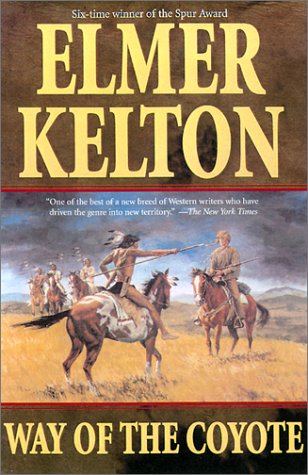
The third installment in the powerful series about the Texas Rangers follows Rusty Shannon, once a Comanche captive, as he tries to resume a normal life after the end of the Civil War, but instead finds himself confronted by racial tension, murderous outlaws, brutal Comanche bands, night-riders, and his nemesis--the deadly Oldham brothers. 35,000 first printing.
Die Inhaltsangabe kann sich auf eine andere Ausgabe dieses Titels beziehen.
Über die Autorin bzw. den Autor
Elmer Kelton, author of more than forty novels, grew up on a ranch near Crane, Texas, and earned a journalism degree from the University of Texas. His first novel, Hot Iron, was published in 1956. For forty-two years he had a parallel career in agricultural journalism.
Among his awards have been seven Spurs from Western Writers of America and four Western Heritage awards from the National Cowboy Hall of Fame. Among his best-known works have been The Time It Never Rained and The Good Old Boys, the latter made into a television film starring Tommy Lee Jones.
He served in the infantry in World War II. He and his wife, Ann, a native of Austria, live in San Angelo, Texas. They have three children, four grandchildren and five great-grandchildren.
Among his awards have been seven Spurs from Western Writers of America and four Western Heritage awards from the National Cowboy Hall of Fame. Among his best-known works have been The Time It Never Rained and The Good Old Boys, the latter made into a television film starring Tommy Lee Jones.
He served in the infantry in World War II. He and his wife, Ann, a native of Austria, live in San Angelo, Texas. They have three children, four grandchildren and five great-grandchildren.
Auszug. © Genehmigter Nachdruck. Alle Rechte vorbehalten.
1
An old arrow wound in Rusty Shannon’s leg had been aching all day, but the sudden appearance of Indians made the pain fall away.
“Them damned Comanches,” he declared to the boy. “They don’t ever give up.”
Sitting on his black horse, Alamo, he squinted anxiously over the edge of a dry ravine toward half a dozen horsemen three hundred yards away. They milled about, studying the tracks marking the way Rusty and young Andy Pickard had come.
An afternoon sun glared upon the summer-curing grass. Open prairie stretched to the uneven horizon like a wind-rippled sea. To run would be futile, for both horses had come a long way and were as tired as their riders. This ravine was the only place to hide, though it seemed more likely to be a trap than a refuge.
“They’re comin’ on,” he said. He drew the rifle from its scabbard beneath his leg.
Dread was in the boy’s eyes. “It is for me they come, not you. I go to them.”
“Hell no! I didn’t bring you this far…”
He did not finish, for the boy drummed moccasined heels against his horse’s ribs and put it up out of the ravine before Rusty could move to stop him. Andy could easily be taken for an Indian. His hair was braided. He wore a breechcloth and carried a boy-sized bow. A quiver of arrows lay across his back, a rawhide strap holding it against his shoulder. He made no move to bring the bow into use.
He stopped his pony and looked over his shoulder as Rusty spurred to catch up. The boy said, “You stay back. They are friends of the one I shot. They want me.”
Andy avoided speaking the name of Tonkawa Killer. To do so might anger the dead man’s dark spirit and spur it to mischief against the living.
Rusty checked the cartridge in the chamber. “Maybe this rifle can convince them they don’t want you all that bad.”
He stepped down, putting the horse between him and the oncoming Indians. He steadied the barrel across the saddle.
The boy’s eyes widened. “Don’t shoot. They are my people.”
“Not if they’re out to kill you. They’re not your people, and they sure ain’t mine.”
Andy Pickard had been taken from a Texas settler family as a small boy and raised Comanche. Rusty guessed him to be around ten, too young to carry such a heavy burden on thin shoulders. His sun-browned skin gave him an Indian appearance, but in close quarters his blue eyes would give him away. They were deeply troubled as he watched the warriors move toward him and Rusty.
“They come because I did a bad hing,” Andy said.
He had violated a basic tribal taboo; he had killed a Comanche warrior. Now he was subject to retribution in kind by the dead man’s friends and family.
Rusty said, “You had to do it. That evil-eyed Comanche was set on killin’ the both of us.” His hand sweated against the stock of the rifle. Andy might foolishly consent to yield himself up, but Rusty had no intention of letting him. “Soon’s they come in range, I’ll knock down a horse. Show them we mean business and maybe they’ll turn back.”
“They not turn back.”
As the Indians came close enough, Rusty thumbed the hammer. The click seemed almost as loud as a shot.
Andy said, “Wait. They are not Comanche.”
Rusty’s lungs burned from holding his breath. He gasped for air. “Are you sure?”
“They are Kiowa.”
Rusty wiped a sweaty hand against his trouser leg. “I don’t see where that’s any improvement.” Kiowas shared the Comanches’ implacable hostility toward Texans. Rusty had seen people killed by Kiowas. They were no less dead than those who fell to Comanches.
The boy said, “Kiowas no look for me. I go talk.”
He did not ask for Rusty’s approval. He raised one hand and rode forward. Surprised, the Kiowas paused for council. Rusty quickly remounted and caught up to Andy.
“Damn it, young’un, you’re askin’ to be killed.”
The boy did not respond. Instead, he began moving his hands, talking in sign language. The motions took Rusty by surprise, but they amazed the Indians more…a white boy communicating in the silent language common to the plains tribes. Rusty kept a strong but nervous grip on the rifle, careful not to point it directly at the Indians. He was keenly aware that several stared at him with hating eyes that bespoke murder. It would not take much to provoke the thought into the deed.
One Kiowa responded with hand signals. A single thick braid hung down over a shoulder, past his waist, the hair augmented by horsehair and fur. The other side was cut short to show off ear pendants of bear claws and a shining silver coin. Rusty sensed a gradual easing of the Indians’ attitude. He saw grudging acceptance, though he perceived that some warriors remained in favor of hanging his scalp from a lodge pole. Red hair was a novelty to them.
He said, “They must think it’s strange to see a white Comanche boy.”
“There are others. Not just me.”
Like Andy, numbers of Texan and Mexican children had been taken captive and raised Comanche. Such forced adoption was one way the tribe offset losses caused by war and accidents of the hunt.
Andy said in a low voice, “I tell them you are my white brother. We been to trade with the Comanche.”
“Let’s bid them goodbye before their thinkin’ changes.”
The boy resumed the sign talk. The only part Rusty understood was when he pointed southeastward and indicated that to be their chosen direction. The Kiowas quarreled among themselves. Rusty could tell that a couple of the youngest favored freeing the boy but killing his white brother. Fortunately the older warriors prevailed.
Andy said, “No look back.” He set his pony to moving in a walk to demonstrate that he had no fear.
Rusty forced himself to stare ahead and not turn in the saddle. He wished he could be certain the two hotheads were not following. After a couple of hundred yards Andy let his pony move into an easy trot. Rusty sneaked a quick glance. He was relieved to see that the Kiowas were riding westward, all of them.
He wiped his sleeve across his face to take up the cold sweat that stung his eyes. “You sure pulled our bacon out of the fire that time.”
“Bacon? We got no bacon.” Andy’s puzzled look showed that he did not understand. Many expressions went over his head. He had only lately begun hearing the English language again after years of exposure only to Comanche.
Rusty said, “We’ve still got a ways to go before we can take an easy breath. We’d better ride into the night as far as these horses can travel.”
Andy looked back over his shoulder toward the broad prairie and everything he was leaving behind. He appeared about to weep.
Gently Rusty said, “I know it’s hard. Go ahead and cry. Ain’t nobody around to hear you but me.”
Andy squared his shoulders. “I would hear.”
* * *
The Red River was behind them, but caution prevailed upon Rusty to stop occasionally and survey their back trail. The boy asked, “You think they follow so far?”
Rusty saw no sign of pursuit, yet experience had taught him not to place too much trust in appearances.
“Depends on how bad they want you.”
Another long look to the north showed him nothing to arouse anxiety, at least no more than he had carried in the pit of his stomach during the days since he and Andy had hurriedly left the Comanche encampment. They had been two solitary figures on the open plains. The Llano Estacado...
An old arrow wound in Rusty Shannon’s leg had been aching all day, but the sudden appearance of Indians made the pain fall away.
“Them damned Comanches,” he declared to the boy. “They don’t ever give up.”
Sitting on his black horse, Alamo, he squinted anxiously over the edge of a dry ravine toward half a dozen horsemen three hundred yards away. They milled about, studying the tracks marking the way Rusty and young Andy Pickard had come.
An afternoon sun glared upon the summer-curing grass. Open prairie stretched to the uneven horizon like a wind-rippled sea. To run would be futile, for both horses had come a long way and were as tired as their riders. This ravine was the only place to hide, though it seemed more likely to be a trap than a refuge.
“They’re comin’ on,” he said. He drew the rifle from its scabbard beneath his leg.
Dread was in the boy’s eyes. “It is for me they come, not you. I go to them.”
“Hell no! I didn’t bring you this far…”
He did not finish, for the boy drummed moccasined heels against his horse’s ribs and put it up out of the ravine before Rusty could move to stop him. Andy could easily be taken for an Indian. His hair was braided. He wore a breechcloth and carried a boy-sized bow. A quiver of arrows lay across his back, a rawhide strap holding it against his shoulder. He made no move to bring the bow into use.
He stopped his pony and looked over his shoulder as Rusty spurred to catch up. The boy said, “You stay back. They are friends of the one I shot. They want me.”
Andy avoided speaking the name of Tonkawa Killer. To do so might anger the dead man’s dark spirit and spur it to mischief against the living.
Rusty checked the cartridge in the chamber. “Maybe this rifle can convince them they don’t want you all that bad.”
He stepped down, putting the horse between him and the oncoming Indians. He steadied the barrel across the saddle.
The boy’s eyes widened. “Don’t shoot. They are my people.”
“Not if they’re out to kill you. They’re not your people, and they sure ain’t mine.”
Andy Pickard had been taken from a Texas settler family as a small boy and raised Comanche. Rusty guessed him to be around ten, too young to carry such a heavy burden on thin shoulders. His sun-browned skin gave him an Indian appearance, but in close quarters his blue eyes would give him away. They were deeply troubled as he watched the warriors move toward him and Rusty.
“They come because I did a bad hing,” Andy said.
He had violated a basic tribal taboo; he had killed a Comanche warrior. Now he was subject to retribution in kind by the dead man’s friends and family.
Rusty said, “You had to do it. That evil-eyed Comanche was set on killin’ the both of us.” His hand sweated against the stock of the rifle. Andy might foolishly consent to yield himself up, but Rusty had no intention of letting him. “Soon’s they come in range, I’ll knock down a horse. Show them we mean business and maybe they’ll turn back.”
“They not turn back.”
As the Indians came close enough, Rusty thumbed the hammer. The click seemed almost as loud as a shot.
Andy said, “Wait. They are not Comanche.”
Rusty’s lungs burned from holding his breath. He gasped for air. “Are you sure?”
“They are Kiowa.”
Rusty wiped a sweaty hand against his trouser leg. “I don’t see where that’s any improvement.” Kiowas shared the Comanches’ implacable hostility toward Texans. Rusty had seen people killed by Kiowas. They were no less dead than those who fell to Comanches.
The boy said, “Kiowas no look for me. I go talk.”
He did not ask for Rusty’s approval. He raised one hand and rode forward. Surprised, the Kiowas paused for council. Rusty quickly remounted and caught up to Andy.
“Damn it, young’un, you’re askin’ to be killed.”
The boy did not respond. Instead, he began moving his hands, talking in sign language. The motions took Rusty by surprise, but they amazed the Indians more…a white boy communicating in the silent language common to the plains tribes. Rusty kept a strong but nervous grip on the rifle, careful not to point it directly at the Indians. He was keenly aware that several stared at him with hating eyes that bespoke murder. It would not take much to provoke the thought into the deed.
One Kiowa responded with hand signals. A single thick braid hung down over a shoulder, past his waist, the hair augmented by horsehair and fur. The other side was cut short to show off ear pendants of bear claws and a shining silver coin. Rusty sensed a gradual easing of the Indians’ attitude. He saw grudging acceptance, though he perceived that some warriors remained in favor of hanging his scalp from a lodge pole. Red hair was a novelty to them.
He said, “They must think it’s strange to see a white Comanche boy.”
“There are others. Not just me.”
Like Andy, numbers of Texan and Mexican children had been taken captive and raised Comanche. Such forced adoption was one way the tribe offset losses caused by war and accidents of the hunt.
Andy said in a low voice, “I tell them you are my white brother. We been to trade with the Comanche.”
“Let’s bid them goodbye before their thinkin’ changes.”
The boy resumed the sign talk. The only part Rusty understood was when he pointed southeastward and indicated that to be their chosen direction. The Kiowas quarreled among themselves. Rusty could tell that a couple of the youngest favored freeing the boy but killing his white brother. Fortunately the older warriors prevailed.
Andy said, “No look back.” He set his pony to moving in a walk to demonstrate that he had no fear.
Rusty forced himself to stare ahead and not turn in the saddle. He wished he could be certain the two hotheads were not following. After a couple of hundred yards Andy let his pony move into an easy trot. Rusty sneaked a quick glance. He was relieved to see that the Kiowas were riding westward, all of them.
He wiped his sleeve across his face to take up the cold sweat that stung his eyes. “You sure pulled our bacon out of the fire that time.”
“Bacon? We got no bacon.” Andy’s puzzled look showed that he did not understand. Many expressions went over his head. He had only lately begun hearing the English language again after years of exposure only to Comanche.
Rusty said, “We’ve still got a ways to go before we can take an easy breath. We’d better ride into the night as far as these horses can travel.”
Andy looked back over his shoulder toward the broad prairie and everything he was leaving behind. He appeared about to weep.
Gently Rusty said, “I know it’s hard. Go ahead and cry. Ain’t nobody around to hear you but me.”
Andy squared his shoulders. “I would hear.”
* * *
The Red River was behind them, but caution prevailed upon Rusty to stop occasionally and survey their back trail. The boy asked, “You think they follow so far?”
Rusty saw no sign of pursuit, yet experience had taught him not to place too much trust in appearances.
“Depends on how bad they want you.”
Another long look to the north showed him nothing to arouse anxiety, at least no more than he had carried in the pit of his stomach during the days since he and Andy had hurriedly left the Comanche encampment. They had been two solitary figures on the open plains. The Llano Estacado...
„Über diesen Titel“ kann sich auf eine andere Ausgabe dieses Titels beziehen.
Suchergebnisse für The Way of the Coyote

Foto des Verkäufers
The Way of the Coyote (Texas Rangers)
Anbieter: Dream Books Co., Denver, CO, USA
Verkäuferbewertung 5 von 5 Sternen

Zustand: good. Gently used with minimal wear on the corners and cover. A few pages may contain light highlighting or writing, but the text remains fully legible. Dust jacket may be missing, and supplemental materials like CDs or codes may not be included. May be ex-library with library markings. Ships promptly! Artikel-Nr. DBV.0312873182.G
Gebraucht kaufen
EUR 3,83
Versand gratis
Versand innerhalb von USA
Versand innerhalb von USA
Anzahl: 1 verfügbar
Beispielbild für diese ISBN
The Way of the Coyote (Texas Rangers)
Verlag:
Forge Books (edition First Edition), 2001
ISBN 10: 0312873182
ISBN 13: 9780312873189
Gebraucht
Hardcover
Erstausgabe
Anbieter: BooksRun, Philadelphia, PA, USA
Verkäuferbewertung 5 von 5 Sternen
Hardcover. Zustand: Very Good. First Edition. With dust jacket. It's a well-cared-for item that has seen limited use. The item may show minor signs of wear. All the text is legible, with all pages included. It may have slight markings and/or highlighting. Artikel-Nr. 0312873182-8-1-29
Gebraucht kaufen
EUR 5,02
Versand gratis
Versand innerhalb von USA
Versand innerhalb von USA
Anzahl: 1 verfügbar
Beispielbild für diese ISBN
The Way of the Coyote
Anbieter: World of Books (was SecondSale), Montgomery, IL, USA
Verkäuferbewertung 5 von 5 Sternen
Zustand: Good. Good condition ex-library book with usual library markings and stickers. Artikel-Nr. 00107491983
Gebraucht kaufen
EUR 5,31
Versand gratis
Versand innerhalb von USA
Versand innerhalb von USA
Anzahl: 1 verfügbar
Beispielbild für diese ISBN
The Way of the Coyote (Texas Rangers)
Anbieter: ThriftBooks-Dallas, Dallas, TX, USA
Verkäuferbewertung 5 von 5 Sternen
Hardcover. Zustand: Very Good. No Jacket. Former library book; May have limited writing in cover pages. Pages are unmarked. ~ ThriftBooks: Read More, Spend Less. Artikel-Nr. G0312873182I4N10
Gebraucht kaufen
EUR 5,83
Versand gratis
Versand innerhalb von USA
Versand innerhalb von USA
Anzahl: 1 verfügbar
Beispielbild für diese ISBN
The Way of the Coyote (Texas Rangers)
Anbieter: ThriftBooks-Atlanta, AUSTELL, GA, USA
Verkäuferbewertung 5 von 5 Sternen
Hardcover. Zustand: Very Good. No Jacket. Former library book; May have limited writing in cover pages. Pages are unmarked. ~ ThriftBooks: Read More, Spend Less. Artikel-Nr. G0312873182I4N10
Gebraucht kaufen
EUR 5,83
Versand gratis
Versand innerhalb von USA
Versand innerhalb von USA
Anzahl: 2 verfügbar
Beispielbild für diese ISBN
The Way of the Coyote (Texas Rangers)
Anbieter: ThriftBooks-Atlanta, AUSTELL, GA, USA
Verkäuferbewertung 5 von 5 Sternen
Hardcover. Zustand: Very Good. No Jacket. May have limited writing in cover pages. Pages are unmarked. ~ ThriftBooks: Read More, Spend Less. Artikel-Nr. G0312873182I4N00
Gebraucht kaufen
EUR 5,83
Versand gratis
Versand innerhalb von USA
Versand innerhalb von USA
Anzahl: 1 verfügbar
Beispielbild für diese ISBN
The Way of the Coyote (Texas Rangers)
Anbieter: ThriftBooks-Atlanta, AUSTELL, GA, USA
Verkäuferbewertung 5 von 5 Sternen
Hardcover. Zustand: Fair. No Jacket. Former library book; Readable copy. Pages may have considerable notes/highlighting. ~ ThriftBooks: Read More, Spend Less. Artikel-Nr. G0312873182I5N10
Gebraucht kaufen
EUR 5,83
Versand gratis
Versand innerhalb von USA
Versand innerhalb von USA
Anzahl: 1 verfügbar
Beispielbild für diese ISBN
The Way of the Coyote (Texas Rangers)
Anbieter: ThriftBooks-Dallas, Dallas, TX, USA
Verkäuferbewertung 5 von 5 Sternen
Hardcover. Zustand: Fair. No Jacket. Former library book; Readable copy. Pages may have considerable notes/highlighting. ~ ThriftBooks: Read More, Spend Less. Artikel-Nr. G0312873182I5N10
Gebraucht kaufen
EUR 5,83
Versand gratis
Versand innerhalb von USA
Versand innerhalb von USA
Anzahl: 1 verfügbar
Beispielbild für diese ISBN
The Way of the Coyote (Texas Rangers)
Anbieter: ThriftBooks-Phoenix, Phoenix, AZ, USA
Verkäuferbewertung 5 von 5 Sternen
Hardcover. Zustand: Very Good. No Jacket. Former library book; May have limited writing in cover pages. Pages are unmarked. ~ ThriftBooks: Read More, Spend Less. Artikel-Nr. G0312873182I4N10
Gebraucht kaufen
EUR 5,83
Versand gratis
Versand innerhalb von USA
Versand innerhalb von USA
Anzahl: 1 verfügbar
Beispielbild für diese ISBN
The Way of the Coyote (Texas Rangers)
Anbieter: ThriftBooks-Reno, Reno, NV, USA
Verkäuferbewertung 5 von 5 Sternen
Hardcover. Zustand: Very Good. No Jacket. Former library book; May have limited writing in cover pages. Pages are unmarked. ~ ThriftBooks: Read More, Spend Less. Artikel-Nr. G0312873182I4N10
Gebraucht kaufen
EUR 5,83
Versand gratis
Versand innerhalb von USA
Versand innerhalb von USA
Anzahl: 1 verfügbar