
Verwandte Artikel zu P.O. Box Love: A Novel of Letters
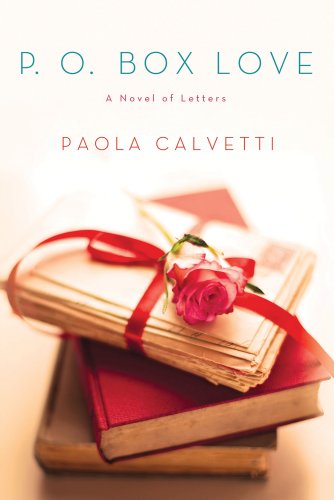
Inhaltsangabe
A charming epistolary novel that chronicles the love story between Emma and Frederico, former high school sweethearts who meet again thirty years later.
At Dreams & Desires, 50-year-old Emma’s quaint bookshop in Milan dedicated to romantic fiction, the passionate bookseller serves coffee and tea to her customers and completes order slips in pen rather than using a computer. One day, she finds a mysterious handwritten note stuck between the pages of a novel. The message is from her high school sweetheart Frederico, who is now a successful architect in New York and whom she hasn’t seen in thirty years. When she finally meets Frederico again, Emma is convinced that her life is about to turn into a romance novel – an intercontinental fairy tale between Milan and New York, between two post office boxes and two lovers that are separated by the Atlantic Ocean and half a life. But Frederico is married, and their epistolary romance, punctuated by once-a-year sojourns on the island of Belle Ile, seems to have no future. Paola Calvetti's PO Box Love is an ode to old-fashioned relationships (the ones that last a lifetime), old-fashioned habits (such as writing letters by hand in fountain pen) and old-fashioned notions (such as politeness, and the great lost art of conversation), and will enchant readers of such perennial favorites as 84 Charing Cross Road by Helene Hanff and Same Time Next Year by Bernard Slade.
Die Inhaltsangabe kann sich auf eine andere Ausgabe dieses Titels beziehen.
Über die Autorin bzw. den Autor
PAOLA CALVETTI has been a journalist with La Repubblica and a publicist for Milan's La Scala Opera. She is the author of five novels and lives in Milan.
Auszug. © Genehmigter Nachdruck. Alle Rechte vorbehalten.
I wake up early now.
But first, that very first blissful moment between sleep and wakefulness is given over to Alice and the bookshop. The moment comes around 6:00 A.M., 6:15 at the latest, when the herbal potion that has replaced the dream-suppressing pills has done its job and I find myself riveted to the bed with my eyes wide-open and a unique surprise: It is in the empty silence of my room that my best ideas are formed.
And my heart settles down.
There is an annoying aspect to my precocious awakenings: Right after lunch, I slip into a deplorable state of lethargy and my eyelids lower like shutters. If I could, I would fold my arms on the bookshop counter and rest my head there for a nap, even just a brief one. Or I would stretch out on the Persian rug beneath my feet, nose between my paws and tail lying sideways like Mondo, Gabriella’s Gordon setter.
Naturally, I can’t, and I restrain myself.
To rouse myself from this torpor, I go upstairs with the excuse of having to refill the thermoses, and take refuge in the coffee nook. Oh, nothing special, not an actual café, just two armchairs and some bistro tables and chairs purchased at the Porte de Clignancourt flea market and shipped at an inordinate cost—you’d think they were the treasured relics of a saint.
At exactly ten o’clock, Dreams & Desires opens its doors to the public.
The schedule was not chosen by chance. One rarely feels the urge to skim through the pages of a romance right after breakfast or just before sitting down to business at the office computer. My artisanal salle de thé is not the right place for readers who are insomniacs. Complex moods, such as the euphoria of falling in love, the pain of an inexplicable rejection, regret over a lost opportunity, the languor of the first time, or the urgency of a quickie, cannot be drowned in a latte, despite the reassuring nicety of the porcelain cups and real glass tumblers set out in rows like a battalion of stout soldiers. No paper cups from a vending machine here, but also no croissants, raisin scones, or slices of jam tarts out of a Victorian novel. I don’t have a permit to sell solid types of comfort and I have never in my life made a soufflé.
Before opening, I inhale my hour of freedom and apply myself to dusting. A light touch of the wrist, little more than a flick from top to bottom, guides the feather duster as it dances along the spines and dust jackets. With its bamboo handle and swirl of goose down on top, it is a nod of deference to my old nanny. Her name was Maria (“like Callas,” she used to say, proud of having a well-established, respectable name), and as she polished the furniture in the small dining room, she would sing popular Sanremo hits like “Grazie dei Fior” and “Vóla Colomba.” In the afternoon, I would come home from school and find her and Mama sitting there in the kitchen, chattering away. I would eavesdrop as Maria poured out her wretched life, and in the eyes of a child considerably inclined toward an overactive imagination, Maria seemed to be an untiring model of tolerance in the face of adversity.
As I dust, I sing softly to myself. Pop tunes from the seventies, selections from Lucio Battisti, the Beatles, and Bruce Springsteen. I stay away from operatic arias, too demanding for my frail little voice. Dust motes flutter in the air, causing me to sneeze in allergic syncopation. Still, dusting is a necessary exercise and the feather duster a reliable ally: It comes in close contact with titles and writers, memorizes the covers, steals a peek at the plots from the jacket flaps, finds books that are missing, retrieves those unjustly forgotten. The morning’s silent roll call gladly welcomes new arrivals, affording a kind of intimacy with novels I’m not acquainted with, the possibility of mingling stories and plots without constraints of genre, time period, or setting. From the gloomy dwelling of Thornfield Hall, Jane Eyre confides her hopeless adoration for Rochester to the stony Elizabeth Bennet in simulated flight from the astute Mr. Darcy, while Mr. Stevens, bundled up in the “Love Under Ice” section, pines in obstinate silence for Miss Kenton as he polishes the silverware and broods, green with envy, over The French Lieutenant’s Woman. The latter, autographed by John Fowles, resides in the display case of the “Untouchables” alongside a letter from Mary McCarthy to Hannah Arendt, a gift from Gabriella for the shop’s opening.
This mingling of genres is an infraction, I know.
Manuals for booksellers dictate precise rules about dusting, insisting that the merchandise—as those who don’t know any better call it—must be tidied up in the evening, before closing. I, on the other hand, prefer to let the volumes doze on the tables. Let them do what they like, at night, unrestrained, with no one in charge.
* * *
It was not an easy step to take.
The alarm bell went off when a guillotine dropped into place at the mouth of my stomach no matter what I ate. Usually in the afternoon, around four o’clock. I tried to keep things light, I reexamined the chromatic solitude of rice with olive oil, I developed a passion for hospital diets, I eliminated red meat, and I gobbled up cooked vegetables, processed and bland. Nothing helped. The invisible blade came back punctually in time for tea. I lived in a vague state of expectancy; I had a presentiment of change, but I had no idea what to do or where to start.
I was seeking simplicity.
I needed space, to start listening, to get out of airplanes. And so, before I ceased to exist, I gave up years of grueling business trips around the world and took off. Alone, in the snow-white anonymity of Arvidsjaur, a village in Swedish Lapland, amid reindeer steaks and pitchers of dark beer, I worked out plans based on the endless possibilities of a decent life. When the blond giant booked by the hotel took me on a “unique and unforgettable” tour of that icy wilderness, most of my five foot, three inches bundled up in a sled, the signal lit up and a single sentence flashed on my internal monitor: IT’S TIME FOR A CHANGE. It was like being born a second time, though I didn’t have the slightest recollection of what the first time had been like.
Back in Italy, I found a message from the office of a notary named Predellini, who turned out to be a charming woman of about forty, whom my aunt had gone to. An opportunity that only knocks once, I thought. Grab it without thinking too much, no matter where it leads.
“You are naïve, rash, and stubborn. I say this fondly, Emma, but you’ve taken leave of your senses.” The statement has the baritone ring of my Faithful Enemy. His name is Alberto, he’s an accountant, he’s been married to my best friend, Gabriella, for twenty-five years, and he has opposed my plan since its inception. After his lapidary “It won’t work,” the specter of insolvency, failure, and poverty in which I would plunge within six months haunted me like Banquo’s ghost, no doubt partly due to my ignorance in business matters, as abysmal as my incompetence with crossword puzzles, petit point embroidery, the sciences, and any kind of dog breeding.
“It won’t work.” The Faithful Enemy went on chanting his mantra. I invited him to dinner, just the two of us, to at least show him the photographs.
He was on a diet.
I abandoned the idea of a pasta al sugo and set my sights on steamed sea bass with new potatoes, green beans in olive oil, and a Trebbiano d’Abruzzo that cost me a fortune. On the off chance that he might waive his strict regime, I bought a chocolate cake...
„Über diesen Titel“ kann sich auf eine andere Ausgabe dieses Titels beziehen.
Suchergebnisse für P.O. Box Love: A Novel of Letters

Beispielbild für diese ISBN
P.O. Box Love: A Novel of Letters
Anbieter: Wonder Book, Frederick, MD, USA
Verkäuferbewertung 5 von 5 Sternen

Zustand: Very Good. Very Good condition. Very Good dust jacket. A copy that may have a few cosmetic defects. May also contain light spine creasing or a few markings such as an owner's name, short gifter's inscription or light stamp. Artikel-Nr. I14L-00649
Gebraucht kaufen
EUR 6,43
Versand gratis
Versand innerhalb von USA
Versand innerhalb von USA
Anzahl: 1 verfügbar
Beispielbild für diese ISBN
P. O. Box Love : A Novel of Letters
Anbieter: Better World Books, Mishawaka, IN, USA
Verkäuferbewertung 5 von 5 Sternen
Zustand: Very Good. Former library copy. Pages intact with possible writing/highlighting. Binding strong with minor wear. Dust jackets/supplements may not be included. Includes library markings. Stock photo provided. Product includes identifying sticker. Better World Books: Buy Books. Do Good. Artikel-Nr. 3186095-6
Gebraucht kaufen
EUR 6,57
Versand gratis
Versand innerhalb von USA
Versand innerhalb von USA
Anzahl: 1 verfügbar
Beispielbild für diese ISBN
P. O. Box Love : A Novel of Letters
Anbieter: Better World Books, Mishawaka, IN, USA
Verkäuferbewertung 5 von 5 Sternen
Zustand: Good. Pages intact with minimal writing/highlighting. The binding may be loose and creased. Dust jackets/supplements are not included. Stock photo provided. Product includes identifying sticker. Better World Books: Buy Books. Do Good. Artikel-Nr. 7513424-6
Gebraucht kaufen
EUR 6,57
Versand gratis
Versand innerhalb von USA
Versand innerhalb von USA
Anzahl: 1 verfügbar
Beispielbild für diese ISBN
P.O. Box Love: A Novel of Letters
Anbieter: ThriftBooks-Atlanta, AUSTELL, GA, USA
Verkäuferbewertung 5 von 5 Sternen
Hardcover. Zustand: Very Good. No Jacket. May have limited writing in cover pages. Pages are unmarked. ~ ThriftBooks: Read More, Spend Less. Artikel-Nr. G0312625707I4N00
Gebraucht kaufen
EUR 7,80
Versand gratis
Versand innerhalb von USA
Versand innerhalb von USA
Anzahl: 1 verfügbar
Beispielbild für diese ISBN
P.o. box love
Anbieter: LiLi - La Liberté des Livres, CANEJAN, Frankreich
Verkäuferbewertung 5 von 5 Sternen
Zustand: fair. vendeur professionnel. envoi soigne dans les 24/48h. ancien ouvrage de bibliotheque tampon sur la tranche. Artikel-Nr. 2607150010804
Gebraucht kaufen
EUR 13,63
EUR 65,00 Versand
Versand von Frankreich nach USA
Versand von Frankreich nach USA
Anzahl: 1 verfügbar