
Verwandte Artikel zu Happy: Simple Steps to Get the Most Out of Life
Inhaltsangabe
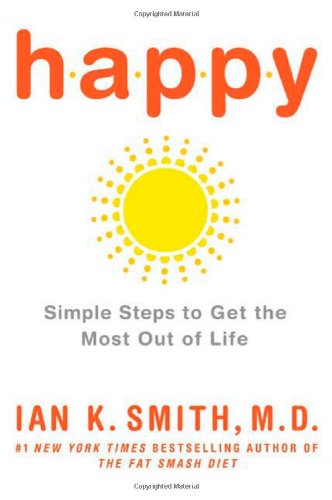
Ian K. Smith, M.D., has inspired millions to lose weight - both through his effective diet books and through his outreach work with the "50 Million Pound Challenge". By counselling dieters, he's learned that achieving hard-fought goals can make a person happy for a time, but that these accomplishments don't necessarily lead to long-term happiness. In "Happy", Dr. Ian has created a programme that will motivate readers to tap into behaviours and mindsets that work and last. It's not euphoria Smith is after. With his expertise he can help anyone reach their personal high-mark of positive feelings. You don't have to overhaul your life for enduring happiness; simple steps you start today can spark big and permanent change. By focusing on ideas like these, "Happy" gives you all the tools and exercises you need for a fulfilled and happy life: how to be optimistic; why optimism and realism are not opposites; the importance of family and community; how to get outside of yourself; why involvement leads to contentment; tapping the power of simple pleasures; and, how to be, not just do. From one of America's most compelling and trusted voices, "Happy" delivers what its title promises.
Die Inhaltsangabe kann sich auf eine andere Ausgabe dieses Titels beziehen.
Über die Autorin bzw. den Autor
Ian K. Smith, M.D., is the number one bestselling author of The Fat Smash Diet, Extreme Fat Smash Diet, The 4 Day Diet, The 4 Day Detox and EAT. He is a medical contributor on The View and The Rachael Ray Show, the diet expert on VH1’s Celebrity Fit Club, and host of the nationally syndicated radio show Healthwise on American Urban Radio Networks. He writes a medical column for Men’s Health magazine. He has written for various publications including Time and Newsweek, and been featured in People, Essence, Ebony and Cosmopolitan, among others. He is a former medical correspondent for NBC and for NewsChannel 4 in New York, where he filed reports for NBC’s Nightly News and The Today Show. In 2007, he created the 50 Million Pound Challenge, a free national weight loss initiative with a growing list of more than 1.9 million people registered. Dr. Smith graduated from Harvard College with an AB and received a master’s in science education from Columbia University. He attended Dartmouth Medical School and completed the last two years of his medical education and graduated from the University of Chicago Pritzker School of Medicine. A native of Danbury, Connecticut, Dr. Smith currently resides in Manhattan.
Von der hinteren Coverseite
Become the person you want to be!
In Happy, Smith reveals the sometimes surprising secrets of enduring happiness: you don’t have to overhaul your life to change its tone. Simple steps you can start today will put you on the path to your own personal high-water mark of positive feelings.
Auszug. © Genehmigter Nachdruck. Alle Rechte vorbehalten.
1
What Is Happiness?
What Is Happiness?
We tend to forget that happiness doesn’t come as a
result of getting something we don’t have, but rather of
recognizing and appreciating what we do have.
—FREDERICK KOENIG1
What is the definition of happiness? In my search for this slippery answer, I decided to start the old-fashioned way—with the dictionary.
n 1: a state of well-being and contentment; also: a
pleasurable satisfaction
MERRIAM–WEBSTER DICTIONARY
Sounds reasonable. But if you line up one hundred psychologists and social scientists and ask them to give their definition, you’re likely to get one hundred different answers. And while we tend to like for things to fall into neat little boxes, the definition of happiness certainly doesn’t accommodate our desire for neatness. Despite all the research, especially that of the last ten years, and all the advances of those acclaimed positive psychologists who are churning out groundbreaking research, there is no unanimous or correct definition of happiness.
What about my own definition of happiness? I know what it feels like, but it takes more effort than I expected to be able to put it into words. I think of different moments of happiness in my life, starting in my early childhood. The first experience that comes to mind is the annual pilgrimage my family made to the Danbury State Fair, an event that always brought great anticipation and joy. Located on more than 130 acres in the southwestern part of Danbury, Connecticut, the fair came to life for seven days every October, and for that one magical week every kid thought our small town was the center of the universe. The fair attracted hundreds of thousands of people from all over Connecticut, New York, and even Massachusetts. Whether it was a chance to ride the giant Ferris wheel, to ogle a 320-pound squash, to watch the sweaty and snorting ox pull, or to fill up on sweet potato pie and cotton candy, the fair was a dream come true for the entire town. In fact, the fair was so important that school was offcially closed for one day during that week, and every student was given a free pass to walk through those big gates and explore the rambling grounds. The Danbury State Fair made me not just happy but extremely happy.
Things You’d Assume Would Bring Happiness
Financial security
New car
Big house
Winning the lottery
Nice clothes
Good sex
Success at work
Time away from work
Reading a good book
Acknowledgment from others of your success
As I tried to understand the source of my happiness, I couldn’t help but think about the simple and nonmaterialistic events that made my life growing up feel meaningful and engaged. Performing the lead in my Sunday school Christmas and Easter plays, having a perfect attendance record in elementary school, bringing in cans of soup to donate to the holiday food drives, graduating at the top of my class from high school, spending long holidays with my extended family crammed into one house—these were the things that made me happy. Sure, I always wanted to own a fancy house and a luxury car and be able to purchase expensive designer clothes, but as my family’s financial position improved through the years and I was able to realize some of these materialistic dreams, one thing became surprisingly clear: The happiness I derived from a coveted sports car and designer clothes was explosive, but the fire burned out relatively quickly. In contrast, nonmaterialistic sources of happiness, such as the plays, family holidays, and soup-can donations, stayed with me for many years. To this day when I think of those times, a warmth overtakes me.
Why did holidays with my family in a cramped house with little in the way of material gifts but lots in the way of love and fun have a more lasting impact on my happiness than the gorgeous and expensive M3 BMW my brother and I were given in our late teens when our family’s financial condition improved dramatically? I wanted that car so badly, and when I got to drive it off the lot, I could barely feel my feet on the pedals because I was so full of adrenaline. Not only did I love the muscular look of the car, but I yearned for the groan of the engine and the stares it brought from drivers and pedestrians alike. But something strange happened about seven months later. It was still a lot of fun to open up the engine on the highway at speeds that were decidedly illegal and unsafe, but I wouldn’t say the car was adding to my happiness. Surprisingly, the love affair had cooled.
I wouldn’t have been so surprised had I seen the research, which has consistently shown that material-based happiness is transient at best. One famous study looked at lottery jackpot winners and found that their level of happiness five years after receiving their windfall had returned to the same level it had been prior to their winning. If on a scale zero to ten someone’s happiness level before the big lottery win was a six, the study showed that for a few years that number jumped, but at the fifth year, regardless of how great the increase, the happiness level returned to a six. An even more revealing study of lottery winners was conducted by Dr. Richard Tunney of the University of Nottingham’s School of Psychology in England.2 Lottery winners were asked how satisfied they were in relation to different parts of their life, how often they treated themselves, and what types of treats they enjoyed. Much to everyone’s surprise, it turned out that flashy cars and diamond jewelry weren’t responsible for the increased happiness of the jackpot winners, but listening to music, reading a book, or enjoying a good bottle of wine really made a difference. These winners liked rather inexpensive treats: long baths, going swimming, enjoying their hobbies, and having fun playing games.
So what does this say about happiness? The experts suggest that happiness becomes more sustained and impactful because of the characteristics surrounding the experience—meaning, pleasure, and engagement. Martin Seligman, one of the father of positive psychology, defines happiness this way:
I believe happiness dissolves into three different ideas, each of which is separately buildable and measurable. The first is the (i) pleasant life (having as much positive emotion and as little negative emotion as possible), (ii) the engaged life (being completely absorbed by the challenges you face at work, love, play, etc.), (iii) the meaningful life (knowing what your highest strengths are and using them to belong to and serve something that is bigger than you are).3
Seligman’s definition—in whole or at least in part—appears to be widely accepted by many leading researchers and thinkers in the field. Former Harvard lecturer, Tal Ben-Shahar, a noted positive psychologist, had this to say on the highly sought-after definition:
I define happiness as “the overall experience of pleasure and meaning.” A happy person enjoys positive emotions while perceiving her life as purposeful. This definition does not pertain to a single moment, but to a generalized aggregate of one’s experiences: a person can endure emotional pain at times and still be happy overall.4
Ben-Shahar’s definition, taken along with Seligman’s, appears to imply a type of philosophical sophistication. Does it mean that if your life isn’t Zen-like and purposeful, you can’t be happy? Do you have to embark on a mission to do good for mankind or the environment in order to qualify as a happy person? Is there some ranking of what endeavors have the most meaning, thus giving us a guide to the missions that will make us happiest?
Happiness Is a Crowded Dinner Table
Socializing with friends and family is one of the most effective ways to boost happiness....
result of getting something we don’t have, but rather of
recognizing and appreciating what we do have.
—FREDERICK KOENIG1
What is the definition of happiness? In my search for this slippery answer, I decided to start the old-fashioned way—with the dictionary.
n 1: a state of well-being and contentment; also: a
pleasurable satisfaction
MERRIAM–WEBSTER DICTIONARY
Sounds reasonable. But if you line up one hundred psychologists and social scientists and ask them to give their definition, you’re likely to get one hundred different answers. And while we tend to like for things to fall into neat little boxes, the definition of happiness certainly doesn’t accommodate our desire for neatness. Despite all the research, especially that of the last ten years, and all the advances of those acclaimed positive psychologists who are churning out groundbreaking research, there is no unanimous or correct definition of happiness.
What about my own definition of happiness? I know what it feels like, but it takes more effort than I expected to be able to put it into words. I think of different moments of happiness in my life, starting in my early childhood. The first experience that comes to mind is the annual pilgrimage my family made to the Danbury State Fair, an event that always brought great anticipation and joy. Located on more than 130 acres in the southwestern part of Danbury, Connecticut, the fair came to life for seven days every October, and for that one magical week every kid thought our small town was the center of the universe. The fair attracted hundreds of thousands of people from all over Connecticut, New York, and even Massachusetts. Whether it was a chance to ride the giant Ferris wheel, to ogle a 320-pound squash, to watch the sweaty and snorting ox pull, or to fill up on sweet potato pie and cotton candy, the fair was a dream come true for the entire town. In fact, the fair was so important that school was offcially closed for one day during that week, and every student was given a free pass to walk through those big gates and explore the rambling grounds. The Danbury State Fair made me not just happy but extremely happy.
Things You’d Assume Would Bring Happiness
Financial security
New car
Big house
Winning the lottery
Nice clothes
Good sex
Success at work
Time away from work
Reading a good book
Acknowledgment from others of your success
As I tried to understand the source of my happiness, I couldn’t help but think about the simple and nonmaterialistic events that made my life growing up feel meaningful and engaged. Performing the lead in my Sunday school Christmas and Easter plays, having a perfect attendance record in elementary school, bringing in cans of soup to donate to the holiday food drives, graduating at the top of my class from high school, spending long holidays with my extended family crammed into one house—these were the things that made me happy. Sure, I always wanted to own a fancy house and a luxury car and be able to purchase expensive designer clothes, but as my family’s financial position improved through the years and I was able to realize some of these materialistic dreams, one thing became surprisingly clear: The happiness I derived from a coveted sports car and designer clothes was explosive, but the fire burned out relatively quickly. In contrast, nonmaterialistic sources of happiness, such as the plays, family holidays, and soup-can donations, stayed with me for many years. To this day when I think of those times, a warmth overtakes me.
Why did holidays with my family in a cramped house with little in the way of material gifts but lots in the way of love and fun have a more lasting impact on my happiness than the gorgeous and expensive M3 BMW my brother and I were given in our late teens when our family’s financial condition improved dramatically? I wanted that car so badly, and when I got to drive it off the lot, I could barely feel my feet on the pedals because I was so full of adrenaline. Not only did I love the muscular look of the car, but I yearned for the groan of the engine and the stares it brought from drivers and pedestrians alike. But something strange happened about seven months later. It was still a lot of fun to open up the engine on the highway at speeds that were decidedly illegal and unsafe, but I wouldn’t say the car was adding to my happiness. Surprisingly, the love affair had cooled.
I wouldn’t have been so surprised had I seen the research, which has consistently shown that material-based happiness is transient at best. One famous study looked at lottery jackpot winners and found that their level of happiness five years after receiving their windfall had returned to the same level it had been prior to their winning. If on a scale zero to ten someone’s happiness level before the big lottery win was a six, the study showed that for a few years that number jumped, but at the fifth year, regardless of how great the increase, the happiness level returned to a six. An even more revealing study of lottery winners was conducted by Dr. Richard Tunney of the University of Nottingham’s School of Psychology in England.2 Lottery winners were asked how satisfied they were in relation to different parts of their life, how often they treated themselves, and what types of treats they enjoyed. Much to everyone’s surprise, it turned out that flashy cars and diamond jewelry weren’t responsible for the increased happiness of the jackpot winners, but listening to music, reading a book, or enjoying a good bottle of wine really made a difference. These winners liked rather inexpensive treats: long baths, going swimming, enjoying their hobbies, and having fun playing games.
So what does this say about happiness? The experts suggest that happiness becomes more sustained and impactful because of the characteristics surrounding the experience—meaning, pleasure, and engagement. Martin Seligman, one of the father of positive psychology, defines happiness this way:
I believe happiness dissolves into three different ideas, each of which is separately buildable and measurable. The first is the (i) pleasant life (having as much positive emotion and as little negative emotion as possible), (ii) the engaged life (being completely absorbed by the challenges you face at work, love, play, etc.), (iii) the meaningful life (knowing what your highest strengths are and using them to belong to and serve something that is bigger than you are).3
Seligman’s definition—in whole or at least in part—appears to be widely accepted by many leading researchers and thinkers in the field. Former Harvard lecturer, Tal Ben-Shahar, a noted positive psychologist, had this to say on the highly sought-after definition:
I define happiness as “the overall experience of pleasure and meaning.” A happy person enjoys positive emotions while perceiving her life as purposeful. This definition does not pertain to a single moment, but to a generalized aggregate of one’s experiences: a person can endure emotional pain at times and still be happy overall.4
Ben-Shahar’s definition, taken along with Seligman’s, appears to imply a type of philosophical sophistication. Does it mean that if your life isn’t Zen-like and purposeful, you can’t be happy? Do you have to embark on a mission to do good for mankind or the environment in order to qualify as a happy person? Is there some ranking of what endeavors have the most meaning, thus giving us a guide to the missions that will make us happiest?
Happiness Is a Crowded Dinner Table
Socializing with friends and family is one of the most effective ways to boost happiness....
„Über diesen Titel“ kann sich auf eine andere Ausgabe dieses Titels beziehen.
Suchergebnisse für Happy: Simple Steps to Get the Most Out of Life

Beispielbild für diese ISBN
Happy: Simple Steps to Get the Most Out of Life
Anbieter: World of Books (was SecondSale), Montgomery, IL, USA
Verkäuferbewertung 5 von 5 Sternen

Zustand: Good. Item in good condition. Textbooks may not include supplemental items i.e. CDs, access codes etc. Artikel-Nr. 00019352132
Gebraucht kaufen
EUR 3,21
Versand gratis
Versand innerhalb von USA
Versand innerhalb von USA
Anzahl: 4 verfügbar
Beispielbild für diese ISBN
Happy: Simple Steps to Get the Most Out of Life
Verlag:
St. Martin's Press (edition 1), 2010
ISBN 10: 0312606354
ISBN 13: 9780312606350
Gebraucht
Hardcover
Anbieter: BooksRun, Philadelphia, PA, USA
Verkäuferbewertung 5 von 5 Sternen
Hardcover. Zustand: Fair. 1. The item might be beaten up but readable. May contain markings or highlighting, as well as stains, bent corners, or any other major defect, but the text is not obscured in any way. Artikel-Nr. 0312606354-7-1
Gebraucht kaufen
EUR 4,33
Versand gratis
Versand innerhalb von USA
Versand innerhalb von USA
Anzahl: 1 verfügbar
Beispielbild für diese ISBN
Happy: Simple Steps to Get the Most Out of Life
Anbieter: ThriftBooks-Phoenix, Phoenix, AZ, USA
Verkäuferbewertung 5 von 5 Sternen
Hardcover. Zustand: As New. No Jacket. Pages are clean and are not marred by notes or folds of any kind. ~ ThriftBooks: Read More, Spend Less. Artikel-Nr. G0312606354I2N00
Gebraucht kaufen
EUR 6,30
Versand gratis
Versand innerhalb von USA
Versand innerhalb von USA
Anzahl: 1 verfügbar
Beispielbild für diese ISBN
Happy: Simple Steps to Get the Most Out of Life
Anbieter: ThriftBooks-Atlanta, AUSTELL, GA, USA
Verkäuferbewertung 5 von 5 Sternen
Hardcover. Zustand: As New. No Jacket. Pages are clean and are not marred by notes or folds of any kind. ~ ThriftBooks: Read More, Spend Less. Artikel-Nr. G0312606354I2N00
Gebraucht kaufen
EUR 6,30
Versand gratis
Versand innerhalb von USA
Versand innerhalb von USA
Anzahl: 1 verfügbar
Beispielbild für diese ISBN
Happy: Simple Steps to Get the Most Out of Life
Anbieter: Wonder Book, Frederick, MD, USA
Verkäuferbewertung 5 von 5 Sternen
Zustand: Very Good. Very Good condition. Very Good dust jacket. A copy that may have a few cosmetic defects. May also contain light spine creasing or a few markings such as an owner's name, short gifter's inscription or light stamp. Artikel-Nr. V06P-00097
Gebraucht kaufen
EUR 6,41
Versand gratis
Versand innerhalb von USA
Versand innerhalb von USA
Anzahl: 2 verfügbar
Beispielbild für diese ISBN
Happy: Simple Steps to Get the Most Out of Life
Anbieter: Wonder Book, Frederick, MD, USA
Verkäuferbewertung 5 von 5 Sternen
Zustand: Very Good. Very Good condition. Very Good dust jacket. With remainder mark. A copy that may have a few cosmetic defects. May also contain light spine creasing or a few markings such as an owner's name, short gifter's inscription or light stamp. Artikel-Nr. V18B-04940
Gebraucht kaufen
EUR 6,41
Versand gratis
Versand innerhalb von USA
Versand innerhalb von USA
Anzahl: 1 verfügbar
Beispielbild für diese ISBN
Happy : Simple Steps for Getting the Life You Want
Anbieter: Better World Books, Mishawaka, IN, USA
Verkäuferbewertung 5 von 5 Sternen
Zustand: Good. Former library copy. Pages intact with minimal writing/highlighting. The binding may be loose and creased. Dust jackets/supplements are not included. Includes library markings. Stock photo provided. Product includes identifying sticker. Better World Books: Buy Books. Do Good. Artikel-Nr. GRP61915932
Gebraucht kaufen
EUR 7,00
Versand gratis
Versand innerhalb von USA
Versand innerhalb von USA
Anzahl: 1 verfügbar
Beispielbild für diese ISBN
Happy: Simple Steps to Get the Most Out of Life
Anbieter: Roundabout Books, Greenfield, MA, USA
Verkäuferbewertung 4 von 5 Sternen

hardcover. Zustand: Near Fine. Condition Notes: Excellent, unmarked copy with little wear and tight binding. We ship in recyclable American-made mailers. 100% money-back guarantee on all orders. Artikel-Nr. 1637708
Gebraucht kaufen
EUR 13,78
Versand gratis
Versand innerhalb von USA
Versand innerhalb von USA
Anzahl: 1 verfügbar
Beispielbild für diese ISBN
Happy: Simple Steps to Get the Most Out of Life
Anbieter: Revaluation Books, Exeter, Vereinigtes Königreich
Verkäuferbewertung 5 von 5 Sternen
Hardcover. Zustand: Brand New. 1st edition. 232 pages. 8.50x5.75x1.25 inches. In Stock. Artikel-Nr. 0312606354
Neu kaufen
EUR 25,32
EUR 11,92 Versand
Versand von Vereinigtes Königreich nach USA
Versand von Vereinigtes Königreich nach USA
Anzahl: 1 verfügbar
Beispielbild für diese ISBN
Happy: Simple Steps to Get the Most Out of Life
Anbieter: Buchpark, Trebbin, Deutschland
Verkäuferbewertung 5 von 5 Sternen
Zustand: Sehr gut. Zustand: Sehr gut | Sprache: Englisch | Produktart: Bücher | Keine Beschreibung verfügbar. Artikel-Nr. 6516118/2
Gebraucht kaufen
EUR 11,90
EUR 105,00 Versand
Versand von Deutschland nach USA
Versand von Deutschland nach USA
Anzahl: 1 verfügbar