
Verwandte Artikel zu This Time Tomorrow
Inhaltsangabe
Winner of an International Latino Book Award for Best Novel!
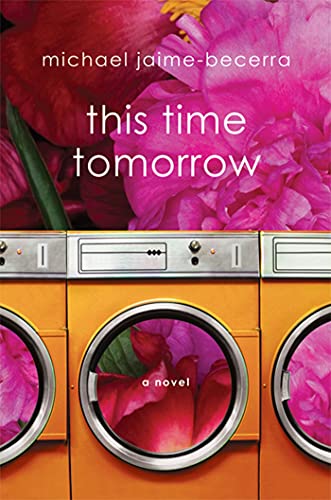
Gilbert Gaeta, a forklift operator in a dairy, can barely make payments on the house where he lives with his thirteen-year-old daughter, Ana. When a month of overtime shifts comes his way, he begins to envision a new life, one in which he can save enough money for an engagement ring and finally propose to his girlfriend, Joyce. He works the night shift, exhausted but making good money, and it's looking like his plan will work. Then Ana is chased home from the Laundromat by bullies, and she begins pushing him to buy a washer and dryer. Gilbert tries to stay firm, but when Ana's trouble follows her to school, the pressure mounts to put her first, and delay his future with Joyce.
Joyce, who at thirty-six has never lived on her own, can't move out of her father's traditional Mexican house until she is married. Feeling her life with Gilbert slipping away, she starts to despair. And then one day, standing before her impressive collection of vintage purses, she sees a way to take control of her future. But it won't be easy.
Writing from three distinct and equally moving perspectives, award-winning author Michael Jaime-Becerra tells a story about the painful balance between love and responsibility. An intimate and poignant first novel, This Time Tomorrow casts a new light on Southern California's working class and its struggles for happiness.
Die Inhaltsangabe kann sich auf eine andere Ausgabe dieses Titels beziehen.
Über die Autorin bzw. den Autor
Michael Jaime-Becerra grew up in El Monte, California, a working-class suburb of Los Angeles. He received his MFA from the University of California, Irvine, and currently teaches creative writing at University of California, Riverside. His short-story collection, Every Night Is Ladies' Night, was named one of the best of the year by The Washington Post and the San Francisco Chronicle. It was awarded a California Book Award, the Silver Medal for a First Work of Fiction. Michael is a winner of an International Latino Book Award. He lives in El Monte, California.
Auszug. © Genehmigter Nachdruck. Alle Rechte vorbehalten.
This Time Tomorrow
A NovelBy Jaime-Becerra, MichaelThomas Dunne Books
Copyright © 2010 Jaime-Becerra, MichaelAll right reserved.
ISBN: 9780312605025
Gilbert Gaeta’s shoulders were sore, tired from another week at the Blue Bell Dairy, from stacking crates onto pallets and wrapping them in plastic sheeting, from guiding them off the ground with the forklift and .lling the trailers on his docks with gallon after gallon of milk. He was a large man, had played halfback on his high school football team. In his senior year he’d been good enough to start the second half of the season. He didn’t mind the bare mattress awaiting him, much less the pillow without its pillowcase. Joyce always found this prospect appalling, the mattress with its faint yellow sweat rings and occasional black spots of dried blood. Ana, Gaeta’s daughter, shared this disgust, so that when he came home from work on Friday morning, he wasn’t surprised to .nd a sheet of paper neatly folded atop the Tupperware in the refrigerator. He popped last night’s guisado in the microwave and smiled at Ana’s note:
Dear Mr. Hobo, Don’t forget that in this house there are sheets and these sheets go on the bed where you like to sleep.
P.S. We need quarters.
The Tupperware came steaming out of the microwave, and while it cooled, Gaeta called Joyce at work. He found her extension busy, as he’d expected, for it seemed that today, like most days, everyone had thought to call the cable company .rst thing in the morning. He listened to the Muzak and ate straight from the bowl, waiting for her recording to come on the line. Over the last eleven months he’d come to enjoy this morning habit. After hearing Joyce, his little house didn’t seem so empty. Gaeta would dream nothing and would awake six hours later refreshed and ready for whatever awaited him. He poured a glass of water from the gallon in the refrigerator. He .nished half and stopped drinking so that he could hear Joyce’s prerecorded voice: “Crown Cable appreciates your business. The next available representative will soon be with you.”
Gaeta let the recording cycle around two more times. He unzipped his rubber boots and rinsed the dishes. He emptied his pockets into the candy dish on the kitchen table, then hung up the phone.
The laundry was already sorted in Ana’s room for their weekly Saturday trip to the Laundromat. There were two piles on her bed, one of her darks and one of her whites, and on the .oor was a pile of Gaeta’s work clothes and a pile of towels and sheets. He pulled off his shirt and pants and tossed them onto the other grubby ones.
Aside from the dirty clothes, Ana’s room was clean and orderly as usual. Her neatness always seemed like some instinctual reaction to life before the house, even if she wasn’t quite old enough to remember that time, a time that felt to Gaeta like little more than greasy pizza boxes and the same stack of unwashed dishes in the sink. Still, she was old enough to remember the divorce, to know that Linda hadn’t tried that hard to be a mother. After she left for San Antonio, Gaeta and Ana .gured out how to wash dishes and make each other dinner. He learned to wrap her birthday presents and she learned to wrap his, and in this way they had gotten by.
Sometimes Gaeta worried that he hadn’t given Ana much of a childhood, and these anxious moments weren’t eased when he looked at her dresser and saw the pictures of her friends from school, other thirteen-year-old girls wearing too much dark makeup too soon, girls Gaeta had mostly never met, but whom he received troubling updates about when Ana served dinner.
His spare gray sheets were in the hallway closet, although at this point the effort of readying the bed was beyond him. He’d shower when he woke up and then he’d make the bed and Ana wouldn’t know the difference. He fell onto the mattress and pulled the comforter over his shoulders, bunching it up so that his feet were exposed. The weekend would be on the other side of this nap. He wondered about dinner later and scooted to the left, the right side reserved for Joyce, who, after being with Gaeta for almost a year, had yet to sleep overnight in his bed.
Gaeta had been waiting for the tires on his truck to be rotated and balanced on the April morning when he met Joyce. She wore a lavender jacket over a gray blouse, a matching lavender skirt with silver . owers embroidered around the hem. She was pretty, curvy in ways that Gaeta thought attractive. She reminded him of the secretaries at the dairy, the ones upstairs in the managers’ offi ces, and he worried that the chair she was sitting on might leave her dirty. He looked at the cars in the service bays and couldn’t picture her driving anything parked between his truck and the old black Honda at the far end of the garage.
Gaeta fought off sleep and .ipped through the magazines on the small table between their seats. He and Joyce both went for the same ragged copy of the National Enquirer, and he let her take it. He felt stupid for appearing curious about celebrity gossip.
“Thank you,” she said, saying it so that he felt noted.
She .ipped through the Enquirer, stopping to mention Madonna and shake her head. Gaeta knew the singer from the magazines Ana got at Vons, from the bootleg cassettes she sometimes bought from the vendors who wandered the supermarket’s parking lot. “My daughter,” he said. “She likes her songs.”
“Sure,” Joyce said. “A few years ago it seems all the girls had the lace gloves, the arms covered in plastic bracelets.” She laughed a slight laugh and touched Gaeta’s arm as if they were old friends.
He would learn that Joyce was the oldest of three children, that during Vietnam, her brother, Daniel, had gone missing in action and was since presumed dead. Joyce regularly went to Rose Hills to visit the stone the Saucedos had purchased together. She always went on his birthday in October as well as the day after Christmas. Phyllis was the youngest. She had married a Bengali named Huq and eventually they’d gone to Reno, where they dealt blackjack.
Joyce herself had never married. She’d been close twice, once after high school and once because, at thirty, she’d found herself lonely. She spent the years caring for her father, a steady pattern of doctors’ appointments and visits with his physical therapist, of occasional dates that con.rmed a long-standing mistrust of men. And because she’d never married, at thirty-six she’d never lived away from home. Aside from trips to Reno to see her sister’s family and visits to see relatives in Sonora, she didn’t spend the night away from her father. He had never allowed her to stay with any of the men she’d dated, Gaeta included.
At .rst, Gaeta empathized. He had raised Ana in the same traditional fashion and was .rmly against her sleeping elsewhere, for in the homes of others she’d be out of his sight, and, out of his sight, shameful things could occur.
Ana had regularly complained about this. As she’d grown older, a simple yet threatening “no” became less and less eff ective. Two years ago she had fought to spend the night at her friend Deliz’s slumber party. Gaeta had tugged away her backpack and forced her...
Dear Mr. Hobo, Don’t forget that in this house there are sheets and these sheets go on the bed where you like to sleep.
P.S. We need quarters.
The Tupperware came steaming out of the microwave, and while it cooled, Gaeta called Joyce at work. He found her extension busy, as he’d expected, for it seemed that today, like most days, everyone had thought to call the cable company .rst thing in the morning. He listened to the Muzak and ate straight from the bowl, waiting for her recording to come on the line. Over the last eleven months he’d come to enjoy this morning habit. After hearing Joyce, his little house didn’t seem so empty. Gaeta would dream nothing and would awake six hours later refreshed and ready for whatever awaited him. He poured a glass of water from the gallon in the refrigerator. He .nished half and stopped drinking so that he could hear Joyce’s prerecorded voice: “Crown Cable appreciates your business. The next available representative will soon be with you.”
Gaeta let the recording cycle around two more times. He unzipped his rubber boots and rinsed the dishes. He emptied his pockets into the candy dish on the kitchen table, then hung up the phone.
The laundry was already sorted in Ana’s room for their weekly Saturday trip to the Laundromat. There were two piles on her bed, one of her darks and one of her whites, and on the .oor was a pile of Gaeta’s work clothes and a pile of towels and sheets. He pulled off his shirt and pants and tossed them onto the other grubby ones.
Aside from the dirty clothes, Ana’s room was clean and orderly as usual. Her neatness always seemed like some instinctual reaction to life before the house, even if she wasn’t quite old enough to remember that time, a time that felt to Gaeta like little more than greasy pizza boxes and the same stack of unwashed dishes in the sink. Still, she was old enough to remember the divorce, to know that Linda hadn’t tried that hard to be a mother. After she left for San Antonio, Gaeta and Ana .gured out how to wash dishes and make each other dinner. He learned to wrap her birthday presents and she learned to wrap his, and in this way they had gotten by.
Sometimes Gaeta worried that he hadn’t given Ana much of a childhood, and these anxious moments weren’t eased when he looked at her dresser and saw the pictures of her friends from school, other thirteen-year-old girls wearing too much dark makeup too soon, girls Gaeta had mostly never met, but whom he received troubling updates about when Ana served dinner.
His spare gray sheets were in the hallway closet, although at this point the effort of readying the bed was beyond him. He’d shower when he woke up and then he’d make the bed and Ana wouldn’t know the difference. He fell onto the mattress and pulled the comforter over his shoulders, bunching it up so that his feet were exposed. The weekend would be on the other side of this nap. He wondered about dinner later and scooted to the left, the right side reserved for Joyce, who, after being with Gaeta for almost a year, had yet to sleep overnight in his bed.
Gaeta had been waiting for the tires on his truck to be rotated and balanced on the April morning when he met Joyce. She wore a lavender jacket over a gray blouse, a matching lavender skirt with silver . owers embroidered around the hem. She was pretty, curvy in ways that Gaeta thought attractive. She reminded him of the secretaries at the dairy, the ones upstairs in the managers’ offi ces, and he worried that the chair she was sitting on might leave her dirty. He looked at the cars in the service bays and couldn’t picture her driving anything parked between his truck and the old black Honda at the far end of the garage.
Gaeta fought off sleep and .ipped through the magazines on the small table between their seats. He and Joyce both went for the same ragged copy of the National Enquirer, and he let her take it. He felt stupid for appearing curious about celebrity gossip.
“Thank you,” she said, saying it so that he felt noted.
She .ipped through the Enquirer, stopping to mention Madonna and shake her head. Gaeta knew the singer from the magazines Ana got at Vons, from the bootleg cassettes she sometimes bought from the vendors who wandered the supermarket’s parking lot. “My daughter,” he said. “She likes her songs.”
“Sure,” Joyce said. “A few years ago it seems all the girls had the lace gloves, the arms covered in plastic bracelets.” She laughed a slight laugh and touched Gaeta’s arm as if they were old friends.
He would learn that Joyce was the oldest of three children, that during Vietnam, her brother, Daniel, had gone missing in action and was since presumed dead. Joyce regularly went to Rose Hills to visit the stone the Saucedos had purchased together. She always went on his birthday in October as well as the day after Christmas. Phyllis was the youngest. She had married a Bengali named Huq and eventually they’d gone to Reno, where they dealt blackjack.
Joyce herself had never married. She’d been close twice, once after high school and once because, at thirty, she’d found herself lonely. She spent the years caring for her father, a steady pattern of doctors’ appointments and visits with his physical therapist, of occasional dates that con.rmed a long-standing mistrust of men. And because she’d never married, at thirty-six she’d never lived away from home. Aside from trips to Reno to see her sister’s family and visits to see relatives in Sonora, she didn’t spend the night away from her father. He had never allowed her to stay with any of the men she’d dated, Gaeta included.
At .rst, Gaeta empathized. He had raised Ana in the same traditional fashion and was .rmly against her sleeping elsewhere, for in the homes of others she’d be out of his sight, and, out of his sight, shameful things could occur.
Ana had regularly complained about this. As she’d grown older, a simple yet threatening “no” became less and less eff ective. Two years ago she had fought to spend the night at her friend Deliz’s slumber party. Gaeta had tugged away her backpack and forced her...
„Über diesen Titel“ kann sich auf eine andere Ausgabe dieses Titels beziehen.
Suchergebnisse für This Time Tomorrow

Beispielbild für diese ISBN
This Time Tomorrow
Anbieter: World of Books (was SecondSale), Montgomery, IL, USA
Verkäuferbewertung 5 von 5 Sternen

Zustand: Good. Good condition ex-library book with usual library markings and stickers. Artikel-Nr. 00108017702
Gebraucht kaufen
EUR 5,51
Versand gratis
Versand innerhalb von USA
Versand innerhalb von USA
Anzahl: 1 verfügbar
Beispielbild für diese ISBN
This Time Tomorrow
Anbieter: ThriftBooks-Atlanta, AUSTELL, GA, USA
Verkäuferbewertung 5 von 5 Sternen
Hardcover. Zustand: Very Good. No Jacket. May have limited writing in cover pages. Pages are unmarked. ~ ThriftBooks: Read More, Spend Less. Artikel-Nr. G0312605021I4N00
Gebraucht kaufen
EUR 5,96
Versand gratis
Versand innerhalb von USA
Versand innerhalb von USA
Anzahl: 1 verfügbar
Beispielbild für diese ISBN
This Time Tomorrow
Anbieter: ThriftBooks-Atlanta, AUSTELL, GA, USA
Verkäuferbewertung 5 von 5 Sternen
Hardcover. Zustand: Fair. No Jacket. Missing dust jacket; Readable copy. Pages may have considerable notes/highlighting. ~ ThriftBooks: Read More, Spend Less. Artikel-Nr. G0312605021I5N01
Gebraucht kaufen
EUR 5,96
Versand gratis
Versand innerhalb von USA
Versand innerhalb von USA
Anzahl: 1 verfügbar
Beispielbild für diese ISBN
This Time Tomorrow
Anbieter: ThriftBooks-Dallas, Dallas, TX, USA
Verkäuferbewertung 5 von 5 Sternen
Hardcover. Zustand: Very Good. No Jacket. May have limited writing in cover pages. Pages are unmarked. ~ ThriftBooks: Read More, Spend Less. Artikel-Nr. G0312605021I4N00
Gebraucht kaufen
EUR 5,96
Versand gratis
Versand innerhalb von USA
Versand innerhalb von USA
Anzahl: 1 verfügbar
Beispielbild für diese ISBN
This Time Tomorrow
Anbieter: ThriftBooks-Atlanta, AUSTELL, GA, USA
Verkäuferbewertung 5 von 5 Sternen
Hardcover. Zustand: Very Good. No Jacket. Missing dust jacket; May have limited writing in cover pages. Pages are unmarked. ~ ThriftBooks: Read More, Spend Less. Artikel-Nr. G0312605021I4N01
Gebraucht kaufen
EUR 5,96
Versand gratis
Versand innerhalb von USA
Versand innerhalb von USA
Anzahl: 1 verfügbar
Beispielbild für diese ISBN
This Time Tomorrow
Anbieter: ThriftBooks-Dallas, Dallas, TX, USA
Verkäuferbewertung 5 von 5 Sternen
Hardcover. Zustand: Good. No Jacket. Former library book; Pages can have notes/highlighting. Spine may show signs of wear. ~ ThriftBooks: Read More, Spend Less. Artikel-Nr. G0312605021I3N10
Gebraucht kaufen
EUR 5,96
Versand gratis
Versand innerhalb von USA
Versand innerhalb von USA
Anzahl: 1 verfügbar
Beispielbild für diese ISBN
This Time Tomorrow
Anbieter: ThriftBooks-Reno, Reno, NV, USA
Verkäuferbewertung 5 von 5 Sternen
Hardcover. Zustand: Very Good. No Jacket. May have limited writing in cover pages. Pages are unmarked. ~ ThriftBooks: Read More, Spend Less. Artikel-Nr. G0312605021I4N00
Gebraucht kaufen
EUR 6,13
Versand gratis
Versand innerhalb von USA
Versand innerhalb von USA
Anzahl: 1 verfügbar
Beispielbild für diese ISBN
This Time Tomorrow: A Novel
Verlag:
Thomas Dunne Books (edition First Edition), 2010
ISBN 10: 0312605021
ISBN 13: 9780312605025
Gebraucht
Hardcover
Erstausgabe
Anbieter: BooksRun, Philadelphia, PA, USA
Verkäuferbewertung 5 von 5 Sternen
Hardcover. Zustand: Fair. First Edition. The item might be beaten up but readable. May contain markings or highlighting, as well as stains, bent corners, or any other major defect, but the text is not obscured in any way. Artikel-Nr. 0312605021-7-1
Gebraucht kaufen
EUR 9,43
Versand gratis
Versand innerhalb von USA
Versand innerhalb von USA
Anzahl: 1 verfügbar
Foto des Verkäufers
This Time Tomorrow
Verlag:
St. Martins Press-3PL Feb 2010, 2010
ISBN 10: 0312605021
ISBN 13: 9780312605025
Neu
Hardcover
Anbieter: AHA-BUCH GmbH, Einbeck, Deutschland
Verkäuferbewertung 5 von 5 Sternen
Buch. Zustand: Neu. Neuware - Winner of an International Latino Book Award for Best Novel!Gilbert Gaeta, a forklift operator in a dairy, can barely make payments on the house where he lives with his thirteen-year-old daughter, Ana. When a month of overtime shifts comes his way, he begins to envision a new life, one in which he can save enough money for an engagement ring and finally propose to his girlfriend, Joyce. He works the night shift, exhausted but making good money, and it's looking like his plan will work. Then Ana is chased home from the Laundromat by bullies, and she begins pushing him to buy a washer and dryer. Gilbert tries to stay firm, but when Ana's trouble follows her to school, the pressure mounts to put her first, and delay his future with Joyce.Joyce, who at thirty-six has never lived on her own, can't move out of her father's traditional Mexican house until she is married. Feeling her life with Gilbert slipping away, she starts to despair. And then one day, standing before her impressive collection of vintage purses, she sees a way to take control of her future. But it won't be easy. Writing from three distinct and equally moving perspectives, award-winning author Michael Jaime-Becerra tells a story about the painful balance between love and responsibility. An intimate and poignant first novel, This Time Tomorrow casts a new light on Southern California's working class and its struggles for happiness. Artikel-Nr. 9780312605025
Neu kaufen
EUR 41,40
EUR 35,00 Versand
Versand von Deutschland nach USA
Versand von Deutschland nach USA
Anzahl: 2 verfügbar
Foto des Verkäufers
This Time Tomorrow
Anbieter: moluna, Greven, Deutschland
Verkäuferbewertung 5 von 5 Sternen
Zustand: New. Über den AutorMichael Jaime-BecerraKlappentextWinner of an International Latino Book Award for Best Novel!Gilbert Gaeta, a forklift operator in a dairy, can barely make payments on the h. Artikel-Nr. 446878396
Neu kaufen
EUR 30,96
EUR 48,99 Versand
Versand von Deutschland nach USA
Versand von Deutschland nach USA
Anzahl: Mehr als 20 verfügbar